Month: April 2023

The Poll Winners – Poll Winners Three!

More of The Poll Winners

More Contemporary Label Jazz Recordings

  • An excellent Contemporary stereo pressing with Double Plus (A++) sound or BETTER from the first note to the last – fairly quiet vinyl too
  • Tubier, more transparent, and more dynamic than most other copies we played, with plenty of that “jumpin’ out of the speakers” quality that only The Real Thing (an old record) ever has
  • Roy DuNann always seemed to get phenomenally good sound out of the sessions he recorded – amazingly realistic drums in a big room; Tubey Magical guitar tone; deep, note-like string bass, and on and on
  • 4 stars: “From 1956-1959, it seemed as if guitarist Barney Kessel, bassist Ray Brown, and drummer Shelly Manne won just about every jazz poll. For their third joint recording, the musicians contributed an original apiece and also performed seven standards. Highlights of the fairly typical but swinging straightahead set include ‘Soft Winds,’ ‘It’s All Right with Me,’ ‘Mack the Knife,’ and ‘I’m Afraid the Masquerade Is Over.'”

(more…)

Energy Is Key to Dem Ol’ Kozmic Blues

More of the Music of Janis Joplin

ENERGY is the key element missing from the average copy of I Got Dem Ol’ Kozmic Blues Again Mama!, but not on this bad boy (or girl if you prefer). 

Drop the needle on the song Try and just listen to how crisp, punchy, and BIG the drums sound.

On many copies — too many copies — the vocals are pinched and edgy. Here they’re breathy and full — a much better way for Janis to sound. There’s some grit to the vocals at times and the brass as well, but the life force on these sides is so strong that we much preferred it to the smoother, duller, deader copies we heard that didn’t have that issue.

On copy after copy we heard pinched squawky horns and harsh vocals, not a good sound for this album.

Janis’ voice needs lots of space up top to get good and loud, and the best sides give her all the space she needs.

This record, along with the others linked below, is good for testing the following qualities:

(more…)

Art Pepper+Eleven – Modern Jazz Classics

Contemporary Jazz Records Available Now

Reviews and Commentaries for Contemporary Jazz

  • A superb vintage Contemporary stereo pressing of this exceptional Art Pepper release from 1960 with solid Double Plus (A++) sound – exceptionally quiet vinyl too
  • If you buy only one Large Group Hot Stamper jazz record from us, make it this one – the music is swingin’ fun and the sound is going to blow your mind
  • And that’s doubly true if you own any modern reissue (really, almost any reissue at all to be honest) – this is the kind of sound no later pressing from ANY era can compete with
  • Here is the Tubey Magic of the originals without the problems that too often cause the originals to be opaque and uninvolving
  • A personal favorite – 5 stars: “This is a true classic. Essential music for all serious jazz collections.”

(more…)

My Aim Is True Can Really Rock – If You Have the Speaker System to Play It

Hot Stamper Pressings of Elvis’s Albums Available Now

Yet another in the long list of recordings that really comes alive when you Turn Up Your Volume.

There is a line in the Hot Stamper commentary on the site concerning driving punk rock bass. Man, this record lives or dies by your ability to reproduce the powerful bottom end that propels this music.

Pardon me for cueing up a broken record again, and with all due respect to the things they do well — they must do something well, right? People keep buying them — small speakers and screens are not going to cut it on My Aim Is True.

This is precisely the kind of album they don’t do well with.

’70s-era JBLs, the ones with the 15 inch woofers, as awful as they may be in most respects, do a better job with an album like this than the average audiophile speaker system being sold today.

Two six or seven inch woofers, even three six or seven inch woofers, is not what anybody had in mind when they pictured the playback system for My Aim Is True — and they were right about that.

We’re talking about one of the best records in the history of rock and roll. It will never sound dated. It will never go out of style. It will reward repeated listening from now until you lose your hearing.

In that respect it’s like all the best records both you and I own: they are timeless, priceless treasures. 

What to Listen For on Quadrophenia

Hot Stamper Pressings of the Music of The Who Available Now

Moon’s drums need to blast away like cannons. This is the quintessential Who sound. Everybody who’s ever seen them live knows it. I saw them back in the day when Moon was still behind his kit and it’s a sound I’ll never forget. 

Most copies don’t have nearly this much Tubey Magic — you aren’t going to believe all the richness, sweetness, and warmth here. The clarity and transparency are superb in their own right, and the impressive dynamics really allows this copy to communicate the explosive energy of The Who at their peak.

(more…)

The Piano Stylings of Carole King

More of the Music of Carole King

Reviews and Commentaries for Tapestry

One quality that we had no trouble recognizing on the better copies was transparency.

The more transparent copies made it possible to hear through the mix to focus on Carole’s piano, which is usually placed behind the other instruments and, of course, her voice. There it serves to underpin the music, playing more of a supporting role than a leading one, very unlike the piano on a Joni Mitchell album for example. 

The best copies let you easily follow Carole’s playing all the way through every song, from start to finish, no matter how quiet her part or how far back in the mix the piano may be placed.

If the pressing has a thinner sound, obviously it becomes easier to pick up on the percussive nature of the instrument and “see” it more clearly. However, a thin piano tone on this album is the kiss of death. The best copies allow you to hear the full range of notes — including those played with the left hand — and for that you need both richness and transparency.

This is a tricky balancing act; rarely in our experience do any two copies find precisely the same balance throughout an entire side.

Pianos are very good for testing your system, room, tweaks, electricity and all the rest, not to mention turntable setup and adjustment. More records that are good for testing and improving your playback can be found here.

We used to say this in our listings:

Tough Sledding with Tapestry

There’s a reason you don’t see Tapestry Hot Stampers on the site very often. Folks, take it from us, even in Mint Minus Minus condition it ain’t that easy to find them. People loved Tapestry — it was Number One on the Billboard 200 for fifteen straight weeks, which is still the record for a female solo artist, and charted for more than 300 (!).

It’s a classic and it got played to death. Furthermore, the Ode vinyl the originals were pressed on was not all that quiet to begin with. We probably look at twenty or thirty for every one we find that’s not scratched or worn out. So Mint Minus Minus with no scratches that play and no groove damage to speak of is about the best that we are going to be able to do surface-wise. Sound-wise our copies will trounce any copy you’ve ever heard, or your money back.

Tapestry may not be the quietest title we sell, but we have plenty of perfectly playable copies regularly hitting the site, mostly because we can clean and play them better these days than we could ten or fifteen years ago.


Further Reading

What Kind of (Audio) Fool Was I?

Thinking Critically About Records Is Key to Understanding Them

This commentary was written in 2007 or thereabouts.


Today’s audiophile seems to be making the same mistakes I was making as a budding audiophile more than thirty forty five years ago.

Heavy Vinyl, the 45 RPM 2 LP pressing, the Half-Speed Limited Edition — aren’t these all just the latest audiophile fads, each with a track record more dismal than the last?

And isn’t it every bit as true today as it was in the past that the audiophiles who buy these “special” pressings rarely seem to notice that many of them don’t actually sound very good?

Was Devo right? Is everything in audio getting worse?

Our Story Begins

One Man Dog has long been a favorite James Taylor album of mine. It didn’t catch on too well with the general public when it came out but it caught on just fine with me. I used to play it all the time. As a budding but misguided audiophile back in the early ’70s, I foolishly bought the import pressing at my local record store, The Wherehouse, assuming it would sound better and be pressed on quieter vinyl. The latter may have been true, probably was true, but the former sure wasn’t. Turns out even the average domestic original is far better sounding, but how was I to know?

Compare and Contrast? What For?

Back in those days it would never have occurred to me to buy more than one copy of a record and do a head to head comparison to see which one sounded better. I approached the subject Platonically, not scientifically: the record that should sound better would of course sound better, so what is the point of testing?

Later on in the decade a label by the name of Mobile Fidelity would come along claiming to actually make better sounding pressings than the ones the major labels put out, and — cluelessly — I bought into that nonsense too.

(To be fair, sometimes they did — Touch, Waiting for Columbus and American Beauty come to mind, but my god, Katy Lied, Year of the Cat and Sundown have to be three of the worst sounding records I’ve ever played in my life.)


UPDATE 2015

Obviously, we no longer agree with much of that except for the one MoFi record that has stood the test of time, Touch.


The Learning Curve Is Looking Awfully Flat

Pardon my pessimism, but it seems to me the learning curve these days is looking awfully flat. There doesn’t seem to be a whole lot of learning going on. If such learning were actually going on, how would most of these audiophile labels still be in business?

Don’t get me wrong: some progress has been made. Reference, Chesky and Audioquest thankfully no longer burden us with their awful LPs. But is the new Blue or Fragile really any better than the average MoFi from 1979? Different yes, but better? I know one thing: I couldn’t sit through an entire side of either of them on the remastered pressings. And I love both of those albums.

Compared to the real thing, can any of these records pretend to compete sonically? A few, I guess, but too few, and they seem to be pretty darn far between.

(more…)

Liszt / Les Preludes / Mehta

Decca and London Hot Stamper Pressings Available Now

More Recordings conducted by Zubin Mehta

This London UK pressing from 1967 has excellent sound on both sides. Some of what we’ve always liked about Decca/London from the period (mid- to late-’60s, in this case 1967) can be heard on this pressing: transparency; the texture on the strings; the natural timbre of the instruments.  

These London pressings are quite hard to find in our experience. The music is wonderful throughout, perhaps the reason that so few of these have found their way to the record bins here in L.A. 

Here Mehta is conducting the Vienna Philharmonic, not to be confused with the recordings he made in Los Angeles with the L.A. Philharmonic in Royce Hall.

A Word about Mehta and the L.A. Phil

Unlike many audiophiles and the reviewers who write for them, we have never been impressed by the recordings Zubin Mehta made with the L.A. Philharmonic.

In a review of another Mehta recording, we noted:

They almost always suffer from exactly the same problems that we heard on this album. We had about five copies on hand in preparation for a shootout, some of which I had noted seemed to sound fine, but once we listened more critically we started to hear the problems that eventually caused us to abandon the shootout and give away the stock to our good customers for free.

The exceptionally rare copy of Mehta’s Planets can sound good, but 90% of them do not — just don’t make the mistake of telling that to the average audiophile who owns one. Harry told him it was the best, he paid good money for it, and until someone tells him different it had better be “the one Planets to own.” (In Harry’s defense, Previn’s recording of the work for EMI is also on the TAS list, just not at the top with the Best of the Bunch.)

We see one of our roles here at Better Records as being the guys who actually will “tell you different,” and, more importantly, can back up our opinions with the records that support our case.


This is an Older Classical/Orchestral Review

Most of the older reviews you see are for records that did not go through the shootout process, the revolutionary approach to finding better sounding pressings we started developing in the early 2000s and have since turned into a veritable science.

We found the records you see in these older listings by cleaning and playing a pressing or two of the album, which we then described and priced based on how good the sound and surfaces were. (For out Hot Stamper listings, the Sonic Grades and Vinyl Playgrades are listed separately.)

We were often wrong back in those days, something we have no reason to hide. Audio equipment and record cleaning technologies have come a long way since those darker days, a subject we discuss here.

(more…)

Azimuth, VTA, Anti-Skate and Tracking Weight – We Got to Live Together

More Record Playback Advice

With a shout out to my man Sly!

The commentary was written in 2005.

One of the reasons this record is sounding so good today (1/12/05) is that I spent last weekend adjusting my Triplanar tonearm. The sound was bothering me somewhat, so I decided to start experimenting again with the azimuth adjustment.

I changed the azimuth in the smallest increments I could manage, which on this turntable are exceedingly small increments, until at some point the following changes became evident:

  1. The bass started to go deeper,
  2. The dynamics improved, and
  3. The tonal balance became fuller and richer.

In essence the cartridge was becoming perfectly vertical to the record.

I don’t think this can be done any other way than by ear, although I don’t know that for a fact.

Azimuth, VTA, anti-skate and tracking weight all work in combination to create the sound you hear. They are like trying to juggle four balls at the same time. They all interact with each other in mysterious ways.

This is one of the reasons why I think everyone needs to know how to set up their own front end. Nobody you could ever pay is going to put the time and effort into getting it just right. I have at least 30 or 40 and probably closer to 50 hours of set up time in this arm. [It is in the many hundreds by now.]

This is, of course, over a period of two years. But as I have played around and experimented in different ways with the setup, I have managed to tailor the sound to my taste while maintaining what I consider to be the highest levels of accuracy.

Robert Brook has some advice for those who would like to learn more about analog setup, and you can find it here.

(more…)

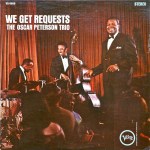
Oscar Peterson on Speakers Corner Heavy Vinyl

More of the Music of Oscar Peterson

Reviews and Commentaries for the Music of Oscar Peterson

Sonic Grade: F

More vinyl dreck from Speakers Corner. I played this record back in the ’90s and was astonished at how bad the sound was.

They eventually realized that the tapes they had available to them should never have been used. The newer version has been remixed from the three-track masters. It may be fine, it may not, we will never bother to get one in and play it, but if you do decide to buy one, make sure to have a return guarantee.

Nothing this label does can be trusted.

It’s an Audiophile Hall of Shame pressing and yet another Disastrous Heavy Vinyl release that proves this label had no shame.

Is it the worst version of the album ever made? Hard to imagine it would have much competition. The CD I have is dramatically better.

If you put your faith in what Speakers Corner said about their process and bought this crappy remaster, I hope you learned at least one lesson from your mistake: never believe anything an audiophile label has to say about anything. 

Cut from original master tapes, pure analog mastering on Neumann VMS 80

Superior sound quality

(more…)