Month: April 2023

Led Zeppelin – Our Old Shootout Winner and Lessons We’ve Learned

Hot Stamper Pressings of the Music of Led Zeppelin Available Now

A textbook case of live and learn.

In 2007 we simply had no idea just how good this recording could sound on vintage vinyl. We needed to do a lot more homework, a subject we discussed in some depth here for Led Zeppelin III.

My guess is that we discovered the right pressings, with the right stampers, pressed in the right era, and mastered by the right guy, sometime in 2014. That was the year this copy came along.

Which, according to my audiophile math, means we needed 7 more years of buying, cleaning and playing copies of the album until we stumbled upon the hottest stampers of them all. And in the many years since, nothing has come along to take the crown away from this bad boy. Our customers seem pretty happy with the pressing we sold them, too.

Yes, it turned out to be quite the breakthrough, and it could not have happened to a better record, as Zep’s first album is my favorite rock album of all time. (Please excuse the all caps writing.)

(more…)

Roy Wallace Is One of Our Favorite Engineers

More Recordings Engineered by Roy Wallace

More of Our Favorite Engineers

The Complete List of Roy Wallace Engineered Albums We’ve Reviewed

Roy Wallace was the engineer for many of our favorite sessions in Geneva’s glorious sounding Victoria Hall. 

The gorgeous hall the Suisse Romande recorded in was possibly the best recording venue of its day, possibly of all time. More amazing sounding recordings were made there than any other hall we know of. There is a richness to the sound that exceeds all others, yet clarity and transparency are not sacrificed in the least. It’s as wide, deep and three-dimensional as any, which is of course all to the good, but what makes the sound of these recordings so special is the weight and power of the brass and the timbral accuracy of the instruments in every section. 

These are the kinds of records that will make you want to take all your heavy vinyl classical pressings and put them on Ebay.

Quality record production is a lost art, and it’s been lost for a very long time.


New to the Blog? Start Here

Basic Concepts and Realities Explained 

Important Lessons We Learned from Record Experiments 

Making Audio Progress 

Hot Stampers Rule

(more…)

Gounod / Borodin / The World of Ballet, Vol. 2

More Orchestral Music Conducted by Ernest Ansermet

Reviews and Commentaries for Guonod / Faust Ballet Music

Side one contains one of the most famous and sought-after pieces of music in the entire Living Stereo catalog, the wonderful Faust Ballet Music that takes up side one of LSC 2449. (The Carmen that makes up side two of the original Shaded Dog has never impressed us sonically. There are so many better recordings of the piece, the Ansermet recording on London being one of the best.) 

The hall is HUGE — so spacious and three-dimensional it’s almost shocking, especially if you’ve been playing the kind of dry, multi-miked modern recordings that the ’70s ushered in for the major labels such as London and RCA. (EMI is super spacious but much of that space is weird, coming from out of phase back channels folded in to the stereo mix. And often so mid-hall and distant. Sorry, just not our sound.)

Or maybe you own a batch of dense Londons from the ’70s. How many Solti records are not ridiculously thick and opaque? One out of ten? If that. We’re very wary of records recorded in the ’70s; we’ve been burned too many times.

And to tell you the truth we are not all that thrilled with most of what passes for good sound on Mehta’s London output either. If you have a high-resolution system these recordings, like those on Classic Heavy Vinyl we discuss below, leave a lot to be desired. (The Planets is a favorite whipping boy around here as you may know.)

Opacity is a real dealbreaker for us. Most of the classical records we play from later eras simply do not have the transparency that’s essential to us suspending our disbelief. (more…)

Bob Dylan – Empire Burlesque

More Bob Dylan

  • This vintage pressing was doing pretty much everything right, with both sides earning superb (A++) grades or close to them – exceptionally quiet vinyl too
  • We guarantee there is dramatically more richness, fullness, vocal presence, and performance energy on this copy than others you’ve heard, and that’s especially true if you made the mistake of buying whatever Heavy Vinyl pressing is currently on the market
  • 4 1/2 stars: “Say what you want about Empire Burlesque – at the very least, it’s the most consistent record Bob Dylan has made since Blood on the Tracks, even if it isn’t quite as interesting as Desire. However, it is a better set of songs, all deriving from the same place and filled with subtle gems… this is as good as Dylan gets in his latter days.”

This is one of the better-sounding Dylan records from the ’80s. It’s not exactly Blood on the Tracks, the only Dylan album we think is qualified to be on our Top 100 Rock and Pop List, but it sounds good for a record from this era. (more…)

Can’t Buy Much of a Thrill – Now with Notes!

Hot Stamper Pressings of the Music of Steely Dan Available Now

At least some of the thrills are here, and for any record on Chad’s label, that is really saying something.

Sonic Grade: B+ to A-

A few comments for the UHQR have been added since this went up on 4-4-23, now that I’ve had a chance to see the notes in full. I’ve noted the additions in brackets and sectioned some off as well.

Word from the listening panel is in, and they say the new Bernie Grundman mastered UHQR is actually not bad! [Not good, but not bad.]

The tonality is much closer to correct than a lot of the Heavy Vinyl LPs we’ve played recently. Oddly enough, instead of the EQ being overly smooth, in the way that appears to be all the rage these days, the tonality instead errs on the side of somewhat thinner and brighter than ideal. (One could also use the term “correct.”)

This should not be especially surprising. Bernie Grundman has been remastering Heavy Vinyl records since the mid-’90s. Overly smooth titles that he cut are hard to find, on the hundreds of titles he did for Classic Records or anywhere else. The more of his recent work I play, the more I have come to see his disastrously dull Giant Steps as an outlier.

The instruments where these tonality issues are most easily recognized are two that we have written a great deal about on this blog: pianos and snare drums.

The snare sound on the Brothers in Arms that Chris Bellman cut at Bernie Grundman Mastering has the same problem as this new Can’t Buy a Thrill. (Review with specifics coming, sorry for the delay, it has only been two years and I’ve been busy with other things.)

The thin sounding piano on the Cisco pressing of Aja is likewise a common shortcoming we notice on many of the modern recuts we play.

With links to 29 titles to test for a correct piano sound, and 13 for the snare test, the critical listener should be able to find some records in his own collection that will shed light on the problems we heard on Chad’s UHQR.

If your system errs on the side of fat and dark, Chad’s repress has what you need to “fix” the sound of the album. Instead of a murky piano, now you have a clear one. Instead of a too-fat snare getting lost in the mix, now you have a clear snare that you can more easily separate out from the other instruments.


Added 4/5

Note that we did not play all four sides. We felt sides one and three were enough to get an idea of how thrilling this pressing was going to be. We don’t get paid to play Heavy Vinyl pressings. We play them to help audiophiles understand their strengths and weaknesses. We hope that some audiophiles will hear what we have described and perhaps consider that there is a better way. That other way can be found in the bins of their local record store or, for those with deeper pockets, on our site. Either way, settling for the kind of sound found on these modern reissues is the one choice no one should be making.

We played the following four songs, and heard the sonic qualities described below:

(more…)

Speakers Corner Mucks Up a Classic Mercury, Part Two

More of the Music of Sergei Rachmaninoff (1873-1943)

For some background, in 2005 we were still selling Heavy Vinyl. We were fans of DCC and Cisco and carried many of the Speakers Corner remasters.

But things were starting to look grim. With every improvement to our playback system, these modern reissues seem to be falling further and further behind.

In the late-’90s, Classic had released some Mercury titles which we’d auditioned and disliked immensely. In 2005 it was Speakers Corner’s turn to have at the Mercury catalog, and they went a different way, finding a “new sound” for the legendary recordings, completely unlike any vintage pressing we’d ever heard.

This was very upsetting. I felt the need to say something.

By 2007 it was clear that Heavy Vinyl was a lost cause and had no business being sold by any audiophile record dealer who cared about sound quality, most especially me. And that was the end of it. This Mercury was one of the records that helped me see the error of my ways.


Part 1 of this discussion of Speakers Corner’s Mercury Series can be found here.

A blog entry on the site from 2005 about the new Mercury reissue series that was coming out noted that:

I am expecting the new Rach 3rd (90283) later this week, and will report my findings as soon as I have a had a chance to evaluate it.

[A few weeks later I followed up with this:]

The news on 90283 is here. It came today. Are you ready? In one sentence:

The most opaque, dull and lifeless 180 gram reissue in the history of the world.

My blog entry from 2005 continues below, transcribed practically word for word.

I hope it’s becoming clear to people now that this series is an enormous fraud perpetrated against all right thinking (right listening?) audiophiles. I can’t imagine a worse sounding record. It makes the most opaque ’70s Phillips or London LP sound positively transparent next to this thick piece of crap. I pulled out my late label copy, far from the best sounding pressing I’ve ever heard, and it killed the new version. The trumpets sound like they’re playing from under a pile of blankets on this 180 gram LP. The sound is so bad it defies understanding.

And the sad thing, in some ways the saddest aspect of this very sad affair, is that I can safely predict right now, with absolutely no fear of being proved wrong, that every major record dealer will rave about it. Mark my words. Every one. Except me of course. But I’m not one of the majors. Thank god I don’t have to sell crap like this to make a living.

And every audiophile who reads a rave review in a dealer’s catalog or on a website should take it for precisely what it is: a naked grab for his money, nothing more, nothing less. It’s all about the money. It’s not about the sound. It’s not about the music. It’s just about money.

Any record dealer who would stoop low enough to take money for a record this bad is telling you something very important about his business: he either can’t tell a good record from a bad one, or he doesn’t care. Either one would make me take my business elsewhere. How do these guys stay in business? (Maybe the fact that most of their catalogs are now given over to equipment explains it.)

And you should be outraged at this kind of fraud. If you give money to retailers who so obviously have nothing but contempt for you, you share in the blame. You’re keeping these guys in business. It makes me think of the scene in Network where Howard the veteran newscaster talks directly to his audience:

So, I want you to get up now. I want all of you to get up out of your chairs. I want you to get up right now and go to the window. Open it, and stick your head out, and yell: ‘I’m as mad as hell, and I’m not gonna take this anymore!’

I want you to get up right now. Sit up. Go to your windows. Open them and stick your head out and yell – ‘I’m as mad as hell and I’m not gonna take this anymore!’ Things have got to change. But first, you’ve gotta get mad!…You’ve got to say, ‘I’m as mad as hell, and I’m not gonna take this anymore!’

After playing this new Mercury, I was filled with questions.

What is to become of the record business?

Do we really need records that sound worse than the worse sounding CDs, at twice the price?

(more…)

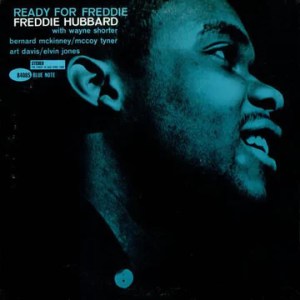
Freddie Hubbard / Ready For Freddie

More Freddie Hubbard

More Jazz Recordings Featuring the Trumpet

  • You’ll find seriously good Double Plus (A++) sound or close to it throughout this vintage Blue Note pressing
  • Spacious and three-dimensional, as well as relaxed and full-bodied (particularly on side one) – this copy was a solid step up over most others we played
  • Another triumph for Rudy Van Gelder and his unerring skill at getting all the musical elements to work together
  • 5 stars: “Trumpeter Freddie Hubbard really came into his own during this Blue Note session. . . Hubbard’s sidemen all play up to par and this memorable session is highly recommended; it’s one of the trumpeter’s most rewarding Blue Note albums.”

This Blue Note reissue pressing boasts wonderful music and sound. The reproduction of the trumpet on practically every track is nothing less than superb. It jumps out of the speakers front and center and forces you to listen to it. It’s surprisingly real and breathy, with just the right amount of bite.

The track “Crisis” on side two should particularly appeal to audiophiles — just check out the exceptionally well-recorded bass and all the cool little drum breaks.

(more…)

Letter of the Week – “I did not know this was a well known example of a below-standard re-issue…”

More of the Music of Paul Simon

Reviews and Commentaries for the Music of Paul Simon (and Art Garfunkel)

A new customer writes:

Tom,

I read about your experience with the re-issue of Paul Simon’s Graceland.

I did not know this was a well known example of  a below-standard re-issue, but your experience reflects my own  a few years ago,  over here in the Netherlands. Being very disappointed about the sound quality, I have returned my copy to the shop and asked my money back.  As I told you, I have done this more often, but always because of excessive surface noise – that does not belong on a new record at a price of €30+ .  This was the first and only time I have done this because of sound quality – apparently it was that obvious.

Peter

Peter,

This is NOT a well known example of a below standard reissue. We are the only critics of this record that I know of. The audiophile reviewers loved it!

A famously clueless audiophile reviewer even visited the hack who remastered it, that hack being a Mr. Ryan Smith, so he could learn more about the man’s approach to mastering.

Perhaps he wants to stop writing reviews for bad audiophile records and learn how to make them. If so, he is studying at the feet of a master.


A Short History of the Remastered Audiophile LP

Older audiophile records, typically those made by Mobile Fidelity in the ’70s and ’80s, suffered from a common group of problems on practically every record they released:

boosted top, a bloated bottom, and a sucked-out midrange.

Nowadays that phony sound is no longer in vogue. A new, but equally phony sound has taken its place.

What seems to be in vogue these days, judging by the Heavy Vinyl Reissue pressings we’ve played over the last few years, is a very different sound, with a very different suite of shortcomings.

These newer records, with few exceptions, tend to be compressedthickdullopaque, veiled, recessed and lacking in ambience.

These are currently the hallmarks of the Heavy Vinyl LP. Whether made by Speakers Corner, DCC, AP or any other label, starting at some point in the mid-’90s, the sound these labels apparently preferred had an infuriating tonal balance problem we noted in practically every record we played — sound that was just too damn smooth.

(more…)

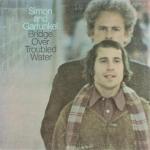
Bridge Over Troubled Water – A Price Must Be Paid

More of the Music of Simon and Garfunkel

Reviews and Commentaries for Bridge Over Troubled Water

One of the most interesting findings in this shootout was that no Red Label copy scored as high as the best 360 Label copies. The later labels can be very clean and clear, but ultimately they lack the midrange magic, warmth and sweetness of the best early pressings.

Since this recording has a problem in all those areas to start with, most red label copies suffer from a pronounced deficit of  Simon & Garfunkel magic, the kind of magic that is so wonderfully evident on their two previous outings: Parsley, Sage… and Bookends.

The Last of the Four Track Recordings

Why do the two previous albums have more magic?

They’re simpler productions, the kind that can be handled by the four track machine they were recorded on.

Bridge, on the other hand, is the boys’ Grand Musical Statement for All Time, with production and scope far exceeding their previous work. Like the Beatles with Abbey Road, they gave it their all and went out on a high note. (The Beatles planned it that way, while S and G fell victim to their ambition, which you can read about in the AMG review below.)

What a Masterpiece they achieved. Ten weeks at Number One on the charts. Depth and breadth of material only hinted at on their earlier efforts.

Who can argue with this as one of the most important achievements in popular music of the last fifty years? [Make that sixty.]

It’s on this short list for a reason.

Back Away From The Console

The sonic problems and promise of the multi-track approach can both be heard in one track: The Only Living Boy In New York. The song starts out simply, focusing on the duo’s lovely voices, with only minimal instrumentation. It sounds PHENOMENAL on the best pressings, and very good on even the typical copies. Halfway through the song, heavy-handed production kicks in, and the sound suffers significantly. You can’t fault the band for going big, but nor can you blame audiophiles for wishing they had kept it simple.

(more…)

Do Original Pressings Sound Better?

Robert Brook has a blog which he calls

A GUIDE FOR THE DEDICATED ANALOG AUDIOPHILE

Below is a link to the commentary he’s written about his experience as a guest on The Audiophile Roundtable.

(He’s the fellow in the lower right corner.)

Do ORIGINAL Pressings Sound BETTER?

All?

Wouldn’t it be better to pose the question as “Do any audiophile represses sound better?”

But better than what? That’s the $64,000 question. No one seemed interested in answering that one. Or even noticing that it needed answering.

A fellow in the comments section asked:

Here’s a question to Robert, because he said he didn’t like the sound of the Tone Poets he heard… compared to what?

I don’t remember what Robert said but here’s my answer:

Compared to the hundreds of great sounding jazz records you’ve played! Compared to Way Out West if we have to pick one.

(more…)