too-rich-mod

These modern records have been mastered to sound artificially and unnaturally rich. They are “fat” in the mid-bass. Owners of small speakers and some larger systems that are bass-deficient may not notice the inaccurate tonality these pressings exhibit, but we had no trouble spotting this particular shortcoming, which is as common as it is annoying.

Acoustic Sounds Hired Doug Sax to Ruin a Classic Chet Baker Album

Hot Stamper Pressings of Jazz Recordings Featuring the Trumpet

The less said about this awful mid-90s Doug Sax remastering for Analogue Productions the better. What a murky piece of crap it was.

Audiophile reviewers may have been impressed, but even way back then we knew a bad sounding record when we played one, and that pressing was very bad indeed.

One further note: the Heavy Vinyl pressings being made today, twenty-five thirty-one years later, have a similar suite of shortcomings, sounding every bit as bad if not worse, and fooling the same audiophile reviewers and their followers to this very day.

Nothing has changed, other than we have come along to offer the discriminating audiophile an alternative to the muddy messes these labels have been churning out for decades.

(more…)

The Dreadful Sound of the Heavy Vinyl Reissues Doug Sax Mastered in the 90s

Hot Stamper Pressings of the Music of Sonny Rollins Available Now

Longstanding customers know that we have been relentlessly critical of so-called “audiophile” LPs for years, especially in the case of these Analogue Productions releases from back in the early-90s. A well-known reviewer loved them, I hated them, and he and I haven’t seen eye to eye on much since.


(Old) Newflash!

Just dug up part of my old commentary discussing the faults with the original series that Doug Sax cut for Acoustic Sounds. Check it out.

In the listing for the OJC pressing of Way Out West we wrote:

Guaranteed better than any 33 rpm 180 gram version ever made, or your money back! (Of course I’m referring to a certain pressing from the early 90s mastered by Doug Sax, which is a textbook example of murky, tubby, flabby sound. Too many bad tubes in the chain? Who knows?

This OJC version also has its problems, but at least the shortcomings of the OJC are tolerable. Who can sit through a pressing that’s so thick and lifeless it communicates none of the player’s love for the music they’re making?

If you have midrangy transistor equipment, go with the 180 gram version (at twice the price).

If you have good equipment, go with this one.


UPDATE 2015

We are no longer fans of the OJC of Way Out West, and would never sell a record that sounds the way even the best copies do as a Hot Stamper. It’s not hopeless the way the Heavy Vinyl pressing is, but it’s not very good either. It’s yet another example of a record we was wrong about.

Live and learn, right?


(more…)

Venerable or Execrable? If It’s Athena the Chances Are Good It’s the Latter

Hot Stamper Pressings of the Music of Rachmaninoff Available Now

I spied an interesting quote on the Acoustic Sounds site many years ago:

“…Analogue Productions’ 45rpm remastering improves upon the venerable Athena LP release from the late 80s, with better dynamics and a fuller ‘middle’ to the orchestral sonority.” – Andrew Quint, The Absolute Sound, October 2010

For some reason Andrew uses the word “venerable” when a better, certainly more accurate term would have been “execrable.” Having played the record in question this strikes us as the kind of mistake that would not be easy to make.

Athena was a godawful audiophile label that managed to put out all of five records before going under, only one of which was any good, and it’s definitely not this one.

It was in fact the Debussy piano recording with Moravec, mastered by the venerable Robert Ludwig himself, a man who knows his classical music, having cut scores if not hundreds of records for Nonesuch and other labels in the 60s and 70s.

From the jacket:

Analogue Master Recording™

Unlike other remastering companies, Athena Records always uses the ORIGINAL ANALOG MASTER SESSION TAPES. In this case, The Master Lacquers were cut directly by Doug Sax at The Mastering Lab so you know it will sound superb.

Our Hot Stamper listing for the Vox pressing:

This famously good sounding Vox pressing os Symphonic Dances has been remastered a number of times, but you can be sure that the Hot Stamper we are offering here will beat any of those modern pressings by a wide margin in any area that has to do with sound (surfaces being another matter and one we won’t go into here).

The sound of this recording on the best pressings is dynamic, lively and BIG. The music just jumps out of the speakers, bringing the power and vibrant colors of a symphony orchestra right into your listening room. Guaranteed to put to shame 95% or more of all the classical records you own, even if you own lots of our Hot Stampers. [Can’t say I would agree with that in 2023.]

The bass is phenomenal on this recording, assuming you have a copy that has the bass cut and pressed right. This one sure does! Few Golden Age classical recordings from the 50s will have the kind of bass that’s found on this record.

(more…)

Jazz Impressions of Black Orpheus Is a Bloated Mess at 45 RPM from Hoffman, Gray and Kassem

Hot Stamper Pressings of Jazz Piano Recordings Available Now

We played an amazing Hot stamper copy that got the bottom end on this album as right as we’ve ever heard. The contribution of the bass player was clear and correctly balanced in the mix, which we soon learned to appreciate was fundamentally important to the rhythmic drive of the music.

The bass was so tight and note-like you could see right into the soundstage and practically picture Monte Budwig plucking and bowing away.

This is precisely where the 45 RPM pressing goes off the rails.

The bloated, much-too-heavy and poorly-defined bass of the Heavy Vinyl remaster makes a mess of the Brazilian and African rhythms inherent in the music. If you own that $50 waste of money, believe me, you will not be tapping your foot to Cast Your Fate to the Wind or Manha de Carnival.

Our rule of thumb: he better the system, the more second-rate Hoffman’s remastered records will sound when they aren’t just terrible.

Is this the worst version of the album ever made? That’s hard to say.

But it is the worst sounding version of the album we’ve ever played, and that should be good enough for any audiophile contemplating spending money on this kind of trash. Take our advice and don’t do it.

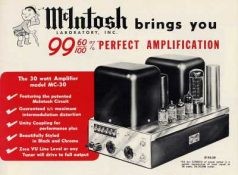
If you like the sound of old McIntosh tube equipment like the Mac 30s shown here, a sound Steve Hoffman apparently cannot get enough of, these remastered records have your name all over them.

We don’t sell junk like this, but every other audiophile record dealer does, because most of the current group of mastering engineers making records for audiophiles have somehow gotten into their heads that this is the way records should sound.

We’ve been telling them they are wrong about that for years now, that good records have never sounded this way, but the collectors and audiophiles of the world keep buying their wares, so why should they listen to us?

If you want to know what a properly-mastered, properly-pressed copy sounds like, we put the last one up in 2023.

(more…)

A Midsummer Night’s Dream on Speakers Corner Heavy Vinyl

More of the music of Felix Mendelssohn (1809-1847)

The Speakers Corner pressing earned something like a “B’ grade from us, which makes it one of the better releases on that label. (I would guess that one or two out of ten would rate a “B.” I also don’t know of any record of theirs that rates a higher grade than “B.”)

It’s overly rich, a case of being too fat in the mid-bass, but otherwise it mostly sounds right.

As you may already know, we stopped carrying Heavy Vinyl pressings of any kind in 2011.

By then, the quality of our playback and record cleaning had improved to the point that even the best Heavy Vinyl LPs were no longer competitive with the vintage vinyl we were then offering as Hot Stamper pressings.

(more…)

What to Think When a New Version of Graceland Is Completely Unrecognizable?

Hot Stamper Pressings of the Music of Paul Simon Available Now

Where did this thick, dull, bloated, opaque turd come from?

Having played at least 50-75 copies of the album over the last ten years, I can honestly say I have never heard one that sounded like this new version (maybe some record club copy we picked up by accident did, can’t say it never happened).

Can that possibly be a good thing?

Well, in favor of that proposition, I guess you could say it sounds less like a CD now.

On the other side of the ledger, it now sounds a great deal more like a bad LP.

We listen to piles of pressings of Graceland regularly. We know what the album generally sounds like, the range from bad to good, and we know what qualities the very best copies must have in order to win one of our shootouts.

Above all the one thing Graceland has going for it sonically is CLARITY. It can be open and spacious, tonally correct, with punchy, tight bass and present, breathy vocals. The best of the best copies have all these qualities, but the one quality any good copy must have is clarity, because that’s what’s good about the sound of the record. Without clarity the music doesn’t even work.

The new version has been “fixed.” It got rid of all that pesky grit and grain and CD-like sound from the original digital mix by simply equalizing them away.

Cut the top, cut the upper mids, boost the lower mids and upper bass and voila – now it’s what Graceland would have sounded like had it been all analog from the start, AAA baby!

Or at least analog for those who don’t know what good analog sounds like.

But it never was all analog, and trying to make it sound that way just ruins the one quality that it actually had going for it — clarity.

VTA

You can adjust your VTA and other table settings until you’re blue in the face, you’ll never get this pressing to sound right, and you’ll certainly never get it to sound very much like any Sterling original pressing I’ve ever heard.

The digital spit and grit is still there, under the darker EQ. And now it’s even worse — Simon’s voice has a thick, dull blanket over it, but you can still hear the spit underneath it.

You could probably take the CD and equalize it to sound like this record. But what would be the point?

The Bright Side

Well, perhaps there is a point to this equalization madness.

The CD already exists. It has a sound.

The original record has a sound too, and it’s a fairly common LP in the used bins. You could buy two or three for not that much money and try to find one you like better than the vinyl version you probably already own.

(more…)

The Electric Recording Company Does My Favorite Things No Favors

Hot Stamper Pressings of the Music of John Coltrane Available Now

My Favorite Things happens to be one of our favorite Coltrane records, but we much prefer the stereo pressing of the album. (This is almost always the case when an album has been recorded in stereo, as My Favorite Things was in 1960, later released on Atlantic vinyl in 1961.)

We even tell you what to listen for to help you separate the best pressings from the merely good ones: the piano.

A solid, full-bodied, clear and powerful piano. As we focused on the sound of the instrument, we couldn’t help but notice how brilliant McCoy Tyner is. This may be John Coltrane’s album, but Tyner’s contribution is critically important to the success of My Favorite Things.

The engineering duties were handled by Tom Dowd (whose work you surely know well) and Phil Iehle, who happens to be the man who recorded some of Coltrane’s most iconic albums for Atlantic: Giant Steps (1960) and Coltrane Jazz (also in 1961).

Our last shootout for My Favorite Things was in 2018, not exactly yesterday, but in our defense let me just say that we have done plenty of other Coltrane albums from this period and feel as though we would have no trouble recognizing the sound his engineers were going for.

Unfortunately for those of you who have bought into the idea that the Electric Recording Company produces records with audiophile quality sound, you will find an utterly alien My Favorite Things, one nobody has ever heard before and one that no audiophile should want anything to do with.

Allow us to lay out the specifics of our complaints:

Notes for Side One

  • Big and full but smeary, flat and dull sax
  • No space or depth anywhere
  • Bloated bass
  • A mess

Notes for Side Two

  1. Side two is even worse
  2. Where is the breathy detail of the sax?

Electric Recording Company

We’ve played a few other ERC releases produced by the gentleman who owns The Electric Recording Company, a Mr. Pete Hutchison.

As you no doubt know, we would not be correct in using the term “mastered.” He does no mastering. He does “transferring.” He transfers the tapes to disc and puts them in nice jackets of his own design.

(more…)

After the Gold Rush – Because Sound Matters?

Hot Stamper Pressings of the Music of Neil Young Available Now

I don’t know why I wasted so much time critiquing the sound of this remastered (2009) pressing. Frankly, it wasn’t worth it.

However, I make my living listening to records so I figured I might as well listen to this one, head to head with an excellent vintage pressing, of course. What other way to do it is there?

Since we do shootouts for this album regularly, we know just how good the best pressings of After the Gold Rush can sound, and this newly remastered vinyl is missing almost everything that makes the album essential to any right thinking music lover’s collection.

We can summarize the sound of this dreadful record in one word: boring.

Since some of you reading this review are no doubt fans of Chris Bellman, the engineer credited on the album, and a man apparently held in some esteem by many audiophiles, perhaps we owe it to his fans to break down the sonic strengths and weaknesses of this pressing in more detail.

What It Does Right

It’s tonally correct. Unlike many modern pressings, it is not overly smooth.

Uh, can’t think of anything else…

What It Does Wrong

Where to begin?

(more…)

Morph The Cat – Mastered by the Cats from DCC

More of the Music of Steely Dan

Yet another disastrous Heavy Vinyl release with godawful sound, and in this case, equally godawful music, a fitting entry for our audiophile hall of shame.

Hopelessly murky, muddy, opaque, ambience-free sound, and so artificial I honestly cannot make any sense of it.

This is someone’s idea of analog? It sure ain’t mine.

Is this music for robots? That would explain a lot. Audiophile robots, perhaps?

Why do audiophiles waste their money on crap like this?

(more…)

Steppenwolf Gold – Their Great (But Awful Sounding) Hits

Record Collecting for Audiophiles – A Guide to the Fundamentals

There is an interesting story behind how I got my mitts on this particular Heavy Vinyl pressing.

Months ago [now years], a fellow contacted us to buy some of our Hot Stamper pressings.  We sent him one or two, and he soon wrote back to say he was not happy with the sound. We exchanged emails with him for a while, trying to rectify the situation in the hopes that we could get him some records that he would be happy with.

In the middle of all this back and forth, we thought it would be worthwhile knowing what this gentleman thought was a good sounding record, seeing as how ours were not meeting his standards. Our discussion soon crossed over into Heavy Vinyl territory. We asked, “Were there any that he liked the sound of?”  Why yes, there were.

You guessed it. The above-pictured album from Analogue Productions is one he recommended. (There was another he also said we should try, but after playing this one we decided against buying any more records he recommended, for reasons that will soon be evident.)

So we bought a copy. Soon enough we found ourselves playing our newly remastered Heavy Vinyl LP.

Right from the get-go, thick, murky, compressed, lifeless, ambience-free, dead-as-a-doornail sound was now coming out of my speakers. Like sludge from a sewer you might say. The stereo had sounded fine moments before. What the hell was happening?

I quickly grabbed a Super Hot copy of the album off the shelf and put it on the table.

Here was the energy, clarity, presence, space and more that had been missing mere moments ago while the Heavy Vinyl pressing played. Now, coming out my speakers was everything that makes a good vintage pressing such a joy to listen to.

I felt like turning it up and rocking out. The first song is Born to Be Wild. Who doesn’t love to blast Born to Be Wild?

What a difference. Night and Day. Maybe more!

If this Steppenwolf LP isn’t the perfect example of a Pass/Not-Yet record, I can’t imagine what would be.

As I was thinking about the turgid, compressed, veiled, overly smooth but not tonally incorrect sound coming out of my speakers, I thought back about the kinds of stereo systems that can produce that sound on command. They often look like the one you see below.

(more…)