Hot Stamper Pressings of the Music of John Coltrane Available Now
My Favorite Things happens to be one of our favorite Coltrane records, but we much prefer the stereo pressing of the album. (This is almost always the case when an album has been recorded in stereo, as My Favorite Things was in 1960, later released on Atlantic vinyl in 1961.)
We even tell you what to listen for to help you separate the best pressings from the merely good ones: the piano.
A solid, full-bodied, clear and powerful piano. As we focused on the sound of the instrument, we couldn’t help but notice how brilliant McCoy Tyner is. This may be John Coltrane’s album, but Tyner’s contribution is critically important to the success of My Favorite Things.
 The engineering duties were handled by Tom Dowd (whose work you surely know well) and Phil Iehle, who happens to be the man who recorded some of Coltrane’s most iconic albums for Atlantic: Giant Steps (1960) and Coltrane Jazz (also in 1961).
Our last shootout for My Favorite Things was in 2018, not exactly yesterday, but in our defense let me just say that we have done plenty of other Coltrane albums from this period and feel as though we would have no trouble recognizing the sound his engineers were going for.
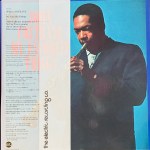
Unfortunately for those of you who have bought into the idea that the Electric Recording Company produces records with audiophile quality sound, you will find an utterly alien My Favorite Things, one nobody has ever heard before and one that no audiophile should want anything to do with.
Allow us to lay out the specifics of our complaints:
Notes for Side One
- Big and full but smeary, flat and dull sax
- No space or depth anywhere
- Bloated bass
- A mess
Notes for Side Two
- Side two is even worse
- Where is the breathy detail of the sax?
Electric Recording Company
We’ve played a few other ERC releases produced by the gentleman who owns The Electric Recording Company, a Mr. Pete Hutchison.
As you no doubt know, we would not be correct in using the term “mastered.” He does no mastering. He does “transferring.” He transfers the tapes to disc and puts them in nice jackets of his own design.
In the video embedded in the Washington Post article “In Search of the Perfect Sound,” while listening to the ERC pressing of Quiet Kenny you can hear me exclaim “This guy makes mud pies!”
I am happy to stand behind that judgment, and my friend and colleague Robert Brook seems to see things the way I do in his review for the album.
Hutchison writes:
Both the mono and stereo versions of this release were cut on our all valve Lyrec equipment at 33rpm. Separate Ortofon mono and stereo tape heads, amplifiers and cutterheads were used respectively. Original master tapes from the Van Gelder studio were used as our source. All type featured on record labels and liner notes have been set in metal and letterpressed. Jackets have been manufactured only by hand using 100 per cent cotton paper on card.
We’ve reviewed ERC’s Forever Changes. (For the benefit of our readers, this is what a good pressing should sound like.)
We’ve reviewed ERC’s Quiet Kenny. (Again, this is what a good pressing should sound like.)
Our commentary making the case that these albums are aimed primarily at collectors and speculators, not audiophiles, can be found here. An excerpt:
As a lifelong skeptic, I know a crackpot when I see one, and Pete Hutchison is the dictionary definition of a crackpot. The idea that records don’t need to be mastered is not quite the same as the earth is hollow or the government is run by lizard people, but it falls into the same category: anything for which supporting evidence is non-existent.
crackpot: “one given to eccentric or wildly foolish notions.”
Transferring the tapes without the benefit of mastering equalization? That is a crackpot idea. Nobody does that except under the rarest of circumstances.
Are the great mastering engineers of the past — men like Robert Ludwig, Doug Sax, Bernie Grundman and others — known for their flat transfers? Did they ever hook up archaic tube equipment to their cutting lathes?
Further down we added:
Which is what makes The Electric Recording Company’s records so interesting.
They take a different approach to the market.
They offer the worst sound with the best packaging at the highest prices.
They engage in the pretense of offering audiophile sound when in fact they are doing no such thing.
But the audiophiles who are falling for this scam apparently cannot tell how bad sounding these ERC records are.
Perhaps they are so impressed by the packaging, the backstory, the collectability and who knows what else that they fail to notice how bad the sound is.
That would be the most charitable way of understanding how this label came to be so successful. I’m quite sure Mr. Hutchison is a millionaire many times over.
His snake oil is no cure for anything, but the story behind it and the fancy bottle it comes in are all that matter to the gullible types who are standing in line to fork over their cash and take their punishment.
Below you will find our reviews and commentaries for the hundreds of Heavy Vinyl pressings we’ve played over the years.
We confess that even as recently as the early 2000s we were still impressed with some of the better Heavy Vinyl pressings. If we’d never made the progress we’ve worked so hard to make over the course of the last twenty or more years, perhaps we would find more merit in the Heavy Vinyl reissues many audiophiles are impressed by these days.
We’ll never know of course; that’s a bell that can be unrung. We did the work, we can’t undo it, and the system that resulted from it is merciless in revealing the truth — that these newer pressings are second-rate at best and much more often than not third-rate or even worse.
Some audiophile records sound so bad, I was pissed off enough to create a special list for them.
Setting higher standards — no, being able to set higher standards — in our minds is a clear mark of progress. Judging by the hundreds of letters we’ve received, we know that our customers see — and hear — things the same way.