12-2022

Listening in Depth to JT

Hot Stamper Pressings of the Music of James Taylor Available Now

There are five or six James Taylor records that are Desert Island Discs for me. His albums really do set a standard that few other singer/songwriters’ albums can meet.

Start with the first album, which we can’t find for you because only the British ones sound good and they are just to hard to find in clean condition [not true, we did the shootout in 2022], Sweet Baby James and JT.

The next group to pursue would contain Mud Slide Slim, One Man Dog and Dad Loves His Work, and then maybe Flag.

As audiophiles we all know that sound and music are inseparable. After dropping the needle on a dozen or so copies, all originals by the way, you KNOW when the music is working its magic and when it’s not. As with any pop album there are always some songs that sound better than others, but when you find yourself marvelling at how well-written and well-produced a song is, you know that the sound is doing what it needs to do. It’s communicating the Musical Values of the material.

The most important of all these musical values is energy, and boy do the best copies have plenty of it.

Side One

Your Smiling Face

Our favorite test track for side one. The best copies have punchy bass and drums that are hard to beat!

(more…)

The First Classic Record We Ever Played – Thus Spake Zarathustra

Hot Stamper Pressings of Living Stereo Titles Available Now

Way back in 1994, long before we had anything like the system we do now, we were finding fault with the “Classic Records Sound.”

With each passing year — 28 and counting — we like that sound less.  Some Classic Records pressings may be on Harry’s TAS list — disgraceful but true — but that certainly has no bearing on whether or not they are very good records. 

I had a chance to play LSC 1806 (pictured above) not long ago and I was dumbfounded at how bright, shrill and aggressive it was.

I still remember playing my first Classic Records title, their first release, which would probably have been in 1994. The deep bass of the organ at the start of Also Sprach Zarathustra, the horns and the tympani blasting out from a dead silent background, put a lump in my throat. Had they actually managed to remaster these old recordings so well that the vintage pressings I was selling for such high prices would soon be worthless? I really do remember having that thought race through my mind.

But then the strings came in, shrieking and as bright as the worst Angel or DG pressing I’d ever heard. It was as if somebody had turned the treble control up on my preamp two or three clicks, into ear-bleeding territory. All my equipment at the time was vintage and tube, and even though my system erred on the dark side tonally, the first Classic release was clearly off the charts too bright and transistory, with none of the lovely texture and sheen that RCA was famous for in the early days of Living Stereo.

I knew right then that my vintage record business was safe.

Here is our review from the ’90s, written shortly after the release of Classic’s first three titles. (With minor additions and changes for clarity and context.)

Hall of Shame Pressings, Every One

I’m reminded of the nonsense I read in TAS and elsewhere in the mid-’90s regarding the reputed superiority of the Classic Records Living Stereo reissues. After playing their first three titles: 1806, 1817 and 2222 (if memory serves), I could find no resemblance between the reviews I read and the actual sound of the records I played. The sound was, in a word, awful.

To this day I consider them to be the single worst reissue series in history.


UPDATE 2025

Analogue Productions now holds that crown, surely. Still going strong, producing one crap pressing for the mid-fi collector market after another, there is simply no recording they won’t see fit to ruin.


When Harry Pearson (of all people! — this is the guy who started the Living Stereo craze by putting these forgotten old records on the TAS list in the first place) gave a rave review to LSC 1806, I had to stand up (in print anyway) and say that the emperor clearly had removed all his clothes, if he ever had any to begin with.

This got me kicked out of TAS by the way, as Harry does not take criticism well. I make a lot of enemies in this business with my commentary and reviews, but I see no way to avoid the fallout for calling a spade a spade.

Is anybody insane enough to stand up for LSC 1806 today? Considering that there is a die-hard contingent of people who still think Mobile Fidelity is the greatest label of all time, there may well be “audiophiles” with crude audio equipment or poorly developed critical listening skills, or both (probably both, as the two go hand in hand), that still find the sound of the shrill, screechy strings of the Classic pressing somehow pleasing to the ear. Hey, anything is possible.

As I’ve said again and again, the better a stereo gets, the more obvious the differences between good vintage pressings and most current reissues become. Modest front ends and mediocre playback systems can disguise these differences and mislead the amateur audiophile.

And the “professional” too. We’ve all had the experience of going back to play a record from years ago that we remember as being amazing, only to find it amazingly bad.

The Japanese Led Zeppelin series from the 90s comes immediately to mind. How could my system have been so dull that those bright pressings actually fooled me into thinking they sounded good all those years ago? I’ve done a few Mea Culpas over the years, and that’s one of the bigger ones.

Remember when Chesky Records were all the rage? Does anybody in his right mind play that shit anymore?

A short anecdote: A good customer called me up one night many years ago. He had just finished playing the Chesky pressing of Spain, and had pulled out his Shaded Dog original to compare. The sound of his Shaded Dog pressing was so much better that he took his Chesky and, with great satisfaction, ceremoniously dropped it in the trash can, noting, “Of course I could have sold it or traded it away, but nobody should have to listen to sound like that.”

Another anecdote: when Chesky first got started in the remastering business, a friend picked up their pressing of LSC 2150, Prokofiev’s Lt. Kije with Reiner. He played it for me when I came over to hear his system, and he and I were both shocked that his ’70s Red Seal pressing was better in every way.

We wanted to know: What kind of audiophile label can’t even go head to head with a cheap reissue put out twenty years after the initial release just to keep the bins stocked and satisfy the needs of the low-budget classical record buyer?

The answer: Plenty of them, and definitely Chesky. Playing most Classic Records classical titles is a painful experience these days. I do not recommend it to anyone with good equipment. If you love the Living Stereo sound and cannot afford vintage pressings, consider playing the CDs RCA remastered. The one I know well is clearly better than Classic’s and AP’s LPs.

(more…)

The Warm Moods – The Reissue Is So Good, How Can the Original Be Better?

Our review from years ago for the Discovery reissue of The Warm Moods can be found below.

We loved the sound, so much so that we found it hard to fault.

Imagine our surprise when we discoverd that that the original was clearly better.

Much better. At least a full grade better.

When we did the shootout again, a rare (in stereo anyway) original Reprise showed us just how wrong we were.

The best original pressing we found took the sound of The Warm Moods to another level, and a pretty high one at that.

It’s yet another example in which the most important question in all of audio had been overlooked: compared to what?

Who knew the recording could sound any better than the wonderful Discovery pressing we’d played?

(more…)

Turntable Tweaking Advice – Try This at Home, It Worked for Us

More Setup Advice for Turntables and Cartridges

UPDATE 2020

This commentary was written around 2010 or so. Mapleshade stopped sending me catalogs not long after this commentary, probably not because of anything I’d written. More likely it was because I never bought anything from them. And why would I? They give out some good advice, sure, but it’s mixed in with a lot of audiophile nonsense, the purest kind of nonsense that the audio world is currently drowning in.


The Mapleshade website has a piece of audio advice that caught the eye of one our customers, who sent me the excerpt below.  

Like most advice, especially audio advice, we find that some of it accords well with our own experience and some of it clearly does not. The relationship of good to bad is hard to determine without making a more careful study, but let’s just say that there is plenty of both and let that suffice.

That being the case, we thought it would be of service to our customers to break it down in more detail, separating the wheat from the chaff so to speak.

Here is the complete quote:

To get first rate sound and to get your money’s worth from any expensive cartridge, you MUST meticulously adjust VTA or tracking force every 3-4 months — that’s because stylus suspensions always sag with use. This lowers VTA and seriously kills dynamics and treble sparkle. Lots of people misinterpret this as a worn-out cartridge, an expensive error. Instead, raise VTA or lighten tracking force until your test record’s treble sounds too harsh, then drop VTA or lighten tracking force a hair. Your test record must not be thicker or thinner than the bulk of your record collection. Adjusting tracking force yields slightly better sonic results and longer cartridge life than adjusting VTA — and adjusting tracking force on most arms is WAY easier than adjusting VTA.

The basic idea here is that your cartridge sags over time, causing the VTA (Vertical Tracking Angle) to change, which results in less dynamics and “treble sparkle.”

(By the way, this is a term you will encounter on this blog as a criticism. Treble should never “sparkle,” but we get the point. We make fun of the sparkly sound Mobile Fidelity records are famous for, a sound which bugs the hell out of us, but which does not seem to bother some audiophiles. We assume their speakers or systems lack top end and could use a bit of a boost there. Our Townshend super tweeters allow us to hear all the top end there is on the records we play, unboosted, thank you very much.)

(more…)

Beware of Fooling Yourself with Pseudo Shootouts

Record Shootouts Are Tricky – Here Are Some of the Lessons We’ve Learned
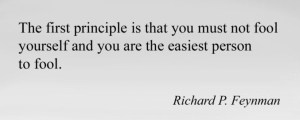
We encourage any audiophile who wants to improve the quality of his record collection to start doing his own shootouts.

Freeing up an afternoon to sit down with a pile of cleaned copies of a favorite LP (you won’t make it through any other kind) and playing them one after another is by far the best way to learn about records and their mysterious pressing variations.

Be sure to take extensive notes.

Shootouts are a great deal of work if you do them right.

If you have just a few pressings on hand and don’t bother to clean them carefully, or follow rigorous testing protocols, that kind of shootout anyone can do. We would not consider that a real shootout.

Art Dudley illustrates this approach, but you could pick any reviewer you like — none of them have ever undertaken a shootout worthy of the name to our knowledge.

With only a few records to play – a woefully inadequate sample size — you probably won’t learn much of value and, worse, you are unlikely to find a top copy, although you may be tempted to convince yourself that you have.


Further Reading

Listening in Depth to Led Zeppelin II

More of the Music of Led Zeppelin

Reviews and Commentaries for Led Zeppelin II

The best copies of Zep II have the kind of rock and roll firepower that’s guaranteed to bring any system to its knees.

That’s what makes it a Top Test Disc.

And if you’re looking for rock and pop albums that are very hard to reproduce, here are some that should fit the bill nicely.

Side One

Whole Lotta Love

This album is unique in one sense: both sides of ZEP II start our with MONSTER ROCK AND ROLL tracks with unbelievable dynamics, energy and bass. Most bands would be lucky to get one song like this on an album. This album has about five!

The middle section with the cymbals and panning instruments is key to the best copies. When it starts they goose the volume — not subtly mind you — and a big room opens up in which everything starts bouncing around, reflecting off the walls of the studio. It’s a cool effect, there’s no denying it.

This is the loudest, most dynamic cut on side one. If it doesn’t knock you out, keep turning up the volume and playing it again until it does.

What Is and What Should Never Be

Amazing presence. Plant is right there!

The Lemon Song

The bass parts always sounded muddy on the sub-gen copies I often found. The definition and note-like quality here is superb and it’s only found on these good originals.

There are real dynamics here — the middle part is at a much lower level than the guitars that follow. This song, like so many on II, is really designed to assault you, to give you the sense that guitars are being broken over your head. That’s the kind of power this track has. It’s also relatively smooth and sweet compared to the rest of the album as a whole.

(more…)

Our Planets Shootout Was Years in the Making, and We Got It Wrong Anyway

Hot Stamper Pressings of Orchestral Spectaculars Available Now

This is a VERY old commentary providing the evidence for just how wrong we were about the sound of Steinberg’s 1971 recording for DG.

We did the shootout in 2008 and picked a winner, the Steinberg.

Somewhere in the neighborhood of five years later we picked a new winner, the Previn on EMI, and we have never wavered from that choice. It’s still our favorite.

In fact, the Previn gets better with every improvement we make to our system. That’s one of the ways you can be sure that it’s good: the better your system gets, the better your good records get. The inverse of that effect occurs right alongside your good records. Now your not-so-good records start to show you how not-so-good they always were. (For you fans of Heavy Vinyl and Half-Speeds, this can be painful, but we all have to go through it, so, looking on the bright side, the sooner your system can show you what’s wrong with those audiophile records, the less money you will have wasted on them.)


In July of 2005 we noted on the site that Hot Stampers for this album were discovered, and interested parties should watch the site for killer copies in the coming months. Obviously we didn’t know at the time that the number of coming months would be THIRTY TWO. That’s how long it would be before we could offer our loyal customers truly Hot Stampers, but hey, good things come to those who wait, right?

We had to wait for two things: the revolutionary cleaning techniques that we developed during that time (the heart of which is our $7000 record cleaning machine) which allowed us to get these records to sound better and play quieter, and, secondly, better equipment. 

One Long Shootout

This was one long shootout, two and a half years in the making. And I spent at least ten years before that collecting enough copies to be able to find some pattern in the stampers that clued me in as to what to look for. It was a long time coming but we expect you will find it was all worth it in the end. This music is so important and moving; it belongs in every audiophile’s collection. To get Steinberg’s version into your collection has not been easy, until now. This is the one. 

The Story from 2005

Below you will find an example of a title that will show up on the site someday (I hope): Holst’s The Planets with Steinberg and the BSO on DG. My favorite performance of all time.

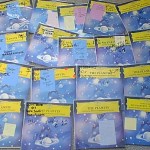
But the copies you see pictured above all sound different! If you could read my post-its on the covers you would see that each of them has strengths and weaknesses. Some are quite good, some are quite awful. Some are noisy, some are quiet. Some are grainy, some are sweet, some have powerful bass, some are bass shy. They all sound different, and they all sound different in their own way.

So what we need to do now is winnow this group down to the best 4 or 5 copies, and then shoot them out. First all the side ones, then all the side twos.

This is a big job. A job that will take more than one day. I could probably spend a week playing these records. You can only do so many until fatigue sets in.

I regret to say I just haven’t felt sufficiently inspired to take on a project of this size. What will probably get me going is the next copy I pick up that really sounds good. It will make me want to hear how good it sounds compared to the other copies I like. I have 3 or 4 pretty good sounding copies in my own collection . But which is the best?

Someday I hope to find out.

And when I do I’ll be sure to let you know. It will be my pleasure. Finding really good records is a thrill. Especially when they have music like this on them.

(more…)

For the Best Kinks Sound, Stick with the Tri-Tone Mono Pressings

Hot Stamper Pressings of the Music of The Kinks Available Now

This Pink and Green Reprise original MONO pressing is lively, balanced and vibrant, with a healthy dose of the Tubey Magical richness The Kinks’ recordings need in order to sound the way we want them to, which is less irritatingly bright, thin and harsh.

“Tired of Waiting For You” is the big hit here, and like most Kinks albums from back in the day, they put the hit at the end of the side, so you had better make sure whatever copy you find has not been played much or it will be full of inner groove distortion.

Inner Groove Distortion caused by the non-anti-skate-equipped turntables of the day is a chronic problem with rock and pop records from this era. We check all our records for Inner Groove Damage (IGD) as a matter of course when condition checking the surface quality of the vinyl.

The Poster Boy for Inner Groove Distortion is the song “Thank You” on this album from 1969. That record got played a lot back in the day, on the only turntables that we had available to us at the time, crappy ones.

My first “audiophile” table was the extremely plasticky Garrard 40B. I think I bought mine in 1973  and I probably paid about $69 for it. As I recall, this was their entry level model. If any table had been cheaper I would have bought it, which shows you what my starving-college-student budget must have been. Sounded just fine to me, though. What did I know about sound in 1973?

By 1976 I would have some of the best audiophile electronics in the world and the massive speakers you see below. That’s some head-spinning progress if you ask me. Once I had heard how good all my favorite albums were sounding, I got very motivated. This is key: For real progress to occur, the music must do the driving.

(more…)

Blue – Play The Game, Not the Album

Hot Stamper Pressing of the Music of Joni Mitchell Available Now

Another in our series of Home Audio Exercises, one we created all the way back in 2007. If you want to learn more about doing your own shootouts, this listing has lots of good advice on how to go about it.

In 2007, a milestone year for us here at Better Records, we mentioned to our customers that we would not be carrying the new 180 gram Rhino pressing of Blue. We noted:

Since Kevin and Steve are friends of mine I won’t belabor its shortcomings. Let’s just say I think you can do better.

Down the road when we’ve had a chance to do a shootout amongst all our best copies, we will be offering something more to our liking. I recommend instead — and this is coming from a die-hard LP guy, someone who disconnected his home CD player over two years ago and only plays the damn things in the car — that you pick yourself up a nice used copy of the gold CD Hoffman mastered for DCC. It’s wonderful.

Some people are already upset with us over this decision, actually going so far as to question our motives, if not our sanity. Without a doubt we feel this will end up being the single most controversial stance we’ve ever taken. I predict that a great number of audiophiles are going to get really upset over our criticism of this new pressing. We are going to get emails like crazy asking us to explain what on earth could possibly be wrong with such a wonderful sounding LP. The writers of these emails will no doubt extoll its virtues relative to the other pressings they may have heard, and, finding no other reasonable explanation, these writers will feel impelled to question both the quality of our playback equipment and — yes, it’s true — even our ability to recognize a good record when it’s spinning right on our very own turntable.

(more…)

Rubber Soul – Twin Track for Me But Not for Thee

Hot Stamper Pressings of the Music of The Beatles Available Now

How is it that none of the critics of “twin track stereo” — the two-track recording approach used on the first two albums, with the elements hard-panned left and right — has ever come clean about the obvious twin track stereo sound of Rubber Soul?

We used tracks four, five and six to test side two with, and in all three the vocals are hard-panned right with most of the instruments hard-panned left. Why is it wrong for Please Please Me to sound that way — the mono mix being the critic’s choice — but fine for Rubber Soul to be heard that way? 

Tons of energy on the drums in the left channel are a key test.

In the right channel the shakers and tambourines are way up in the mix.

The bass is a bit lean compared to the other tracks and tends to get a bit lost. If you can follow the bass throughout the song, that’s a good sign.

Balancing the bass and drums in the left channel with the vocals and percussion in the right channel is not easy to do, which of course is what makes it a great test.

(more…)