wapo-video

“It’s the best record Chad ever made, because it’s not terrible.”

Hot Stamper Pressings of Recordings by Rudy Van Gelder Available Now

In the award winning video Geoff Edgers produced for the Washington Post, a sequence has me listening to a copy of Quiet Kenny that I had never heard before. The record sounded decent enough, better than the ERC mono pressing we had played against it. When told that it was an Analogue Productions release, I say something along the lines of “Then it’s the best record Chad ever made, because it’s not terrible.”

True, it wasn’t terrible, but I didn’t think it was very good either. It had the kind of sound Kevin Gray, the mastering engineer responsible for it, can be relied on to deliver. I didn’t know who cut it until after I’d looked it up, but knowing The Reliable KPG (his rapper name, mine is The Notorious TTP) was involved fit perfectly with my opinion of his work in general, which can be summed up in one word: workmanlike.

There’s nothing wrong with that, and Kevin is a nice guy. I’m sure he means well.

(more…)

Letter of the Week – “I have 4 other copies and this beats them all.”

More of the Music of Paul Simon

One of our good customers had this to say about some Hot Stampers he purchased recently:

Hey Tom,   

Indeed this album sounds amazing! I have 4 other copies and this beats them all. The closest is a German pressing I have but still yours sounds better. Thank you. I never thought I would spend $200 for a record but I do hear the difference.

Cheers,
Ryan

Ryan,

So glad to hear it!

If that’s a favorite record of yours, you can now enjoy it for the rest of your life knowing you have a killer copy in your collection to play whenever you damn well please (assuming the kids and the wife are out of the house).

Based on what I am reading, the pressing we sent you is so good it’s practically priceless. But somebody had to put a price on it, and the price we landed on was two hundred bucks.

This is an outrageous amount of money for one record to some people. But not to someone who loves the album and will play it for the rest of his life. Once a month for 40 years comes to $4 a spin. To quote Pete Townshend, I call that a bargain.

(more…)

Our Filmed Tapestry Shootout Was a Real Shocker

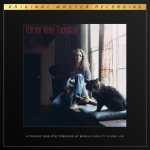
The Washington Post article that Geoff Edgers wrote includes a video of a little shootout we did for Tapestry, using, without my knowledge, the MoFi One-Step, a Hot Stamper pressing, and a current, modern, standard reissue of the album. Could I spot the Hot Stamper without knowing what record was playing?

First up (and of course unbeknownst to me), the MoFi. My impressions from the video:

That’s probably tonally correct for this record. It’s just missing everything that’s good about this record, which is a meaty, rich piano. And the vocal sounds very dry. There’s no Tubey Magic. It’s tonally correct. If you were playing me a CD right now, I wouldn’t be able to tell you weren’t. 

Next up, the cheap ($20?), current reissue:

Piano’s better.

Voice is better!

Richer and smoother.

That’s what this is supposed to sound like.

Her voice sounds mostly correct.

This might not be a particularly good record. If I played a real one for you, you might just say, oh, my God, there’s so much more.

But this is not a wrong record. It’s not awful. It’s doing something… I don’t know if I would say most things right. I’ll just say something right.

At least the person understands what she’s supposed to sound like.

Then the Hot Stamper (a Super Hot copy as it turns out):

She sounds pretty right on this copy.

I think there’s more space.

You hear more space, more three-dimensional space.

The piano: there’s more richness to the tone of the various notes that she’s playing.

I would probably pick this one.

Geoff sums it all up as follows:

So we have a winner, and I couldn’t fool the Hot Stamper king.

Without knowing what he was listening to, he chose the hot stamper of Tapestry.

If he still had it, that copy would be sold for about $400 on the Better Records website.

When we went back and played each of the pressings again, the differences were much more pronounced. The MoFi still sounded like a CD, the current Columbia reissue was still no better than passable, and the Hot Stamper became even better sounding than it had been earlier, with sound the other two could not begin to offer.

Our grades for the three pressings would have been F, C and A, in that order.

In the video, you can see that it took me a few minutes to get deep into the sound, but once I was there, it turned out to be no contest. The Hot Stamper was the only pressing capable of showing us just how good Tapestry can sound.

Colorations Are Bad Now?

The MoFi was by far the worst sounding of the three. As I said, it sounded to me like a CD.

(more…)

The Search for the Perfect Sound Wins the 2023 Excellence in Audio Digital Storytelling Award

Winner: 2023 Excellence in Audio Digital Storytelling, Use of Audio Storytelling

Apparently readers could not get enough of this old man and his big speakers.

For the story behind the story, and the award it has now won, please click on the link below.

More on the Shootout Video

The Washington Post talks more about the project:

In “The search for the perfect sound,” arts reporter Geoff Edgers explores the boom in vinyl record sales and the often contentious world of extreme audiophiles through an immersive mix of video, interactive audio and narrative reporting. This multimedia feature revealed the characters behind this growing subculture, from audio elites hunting down rare pressings to populists sharing their hobby with their community.

Edgers had rocked the audiophile world earlier in the year with his reporting on a record company scandal. Through more than two dozen interviews and over a year of reporting; original photography and video; and interactive audio, this project took both newcomers and experts into the debates and technicalities of this growing market — and captured the artistry that make fans so passionate to begin with.

To open the story, Edgers and video journalist CJ Russo joined the controversial audio entrepreneur Tom Port during one of his “shootouts,” sessions in which Port listens to many pressings of the same record to find the best-sounding version.

How could we re-create this scene for readers? Nothing could match the experience of sitting in front of one of these deluxe sound systems.

With the help of contacts in the music world, the team designed the next best thing. Edgers and audio producer Bishop Sand traveled to Brooklyn with a binaural microphone and a stereo microphone to record the same tracks, the Miles Davis Quintet’s “Oleo” and Neil Young’s “Out on the Weekend,” playing once as a digital file and once on vinyl through Jonathan Weiss’s $363,000 Oswalds Mill Audio speakers. Sand matched the loudness of the recordings postproduction.

The team embedded those tracks as audio quizzes in the story, challenging readers to listen and guess which version was the digital file and which was the vinyl track. After meeting the characters who organize their lives around the search for the perfect sound, readers could get a taste of the difference for themselves.


Further Reading

Dire Straits Gets the Mobile Fidelity Treatment (Just Updated)

More of the Music of Dire Straits

Geoff Edgers watched me and my lovely assistant, Sunshine, do a lengthy shootout for Dire Straits first album, but licensing problems prevented the Washington Post from using the footage. You can still see Sunshine in the video, and the yellow Phonogram label you see at one point is attached to one of the Dire Straits pressings we played that day.

Toward the end of the shootout for the first side, we put on the Mobile Fidelity pressing, and, interrupted from time to time by the sound of howling and gnashing of teeth, I pointed out for Geoff’s edification everything that was wrong with their pressing.

This took some time.

I will be writing more about their dismal effort one of these days, but for now let me leave you with this thought.

When you read the comments section for the article, it seems that quite a number of those discussing my lifelong interest in the world of audio and records go out of their way to state the obvious: that folks my age cannot hear high frequencies.

This is true, and I have never denied it. Case in point: After playing the MoFi pressing of Dire Straits, Sunshine, sitting at the turntable, asked what all that weirdly high-pitched, swirling, shusshing sound was. It wasn’t on the Phonogram pressings she had played. Only the MoFi.

I looked at her and asked “What shusshing sound?”

Sunshine had clearly heard it, Geoff may have, I don’t remember, but I had no idea there was anything untoward happening way up in that area of the frequency range. [1]

In my defense, not that I need one, I had no trouble telling how bad that Mobile Fidelity pressing was, or which of the five Dire Straits pressings sounded the best, or what each of them were doing, good, bad and otherwise.

What I was noting and explaining about the sound of these identical-looking UK pressings, their strengths and weaknesses, was clear enough for everyone in the room to hear over the course of the hour or so we spent doing it.

My goal was to walk Geoff through the steps of the shootout, and as far as I could tell he was with me all the way.

Those commenting about high frequency hearing loss are engaging in the fallacy of “begging the question,” assuming what they are trying to prove instead of proving it, which I suppose is the kind of thing you can expect to read in the comments left by those with a great deal of regard for their own opinions but little for the evidence required to support them. More here.


Robert Brook has a blog which he calls

A GUIDE FOR THE DEDICATED ANALOG AUDIOPHILE

Below you will find his review of a record I too know a fair bit about, the first Dire Straits album on Mobile Fidelity. I hope to write my review of the Mobile Fidelity pressing soon.

Ugh! Mobile Fidelity’s Remaster of DIRE STRAITS

As of 2015, this label may have entered a new and even more disgraceful era, but considering how bad their records have been from the very start — something that should be obvious to any audiophile with a high quality playback system, the kind of system that should have no difficulty exposing the manifold shortcomings of their remastered pressings — how much lower can they possibly fall?

Only time will tell.


[1.] Did Mobile Fidelity’s engineers hear this high-frequency hash? Will any audiophile come forward to expose this problem? The answers to both questions are very likely to be no.

The Tapestry Shootout Video Is Here!

Geoff Edgers’ Washington Post article “The Search for the Perfect Sound,” in which he talks to lots of audiophiles and music lovers about his personal journey into the world of audiophile equipment and records, is now active on their website.

NEWSFLASH! This is currently the most popular story/video on the WAPO website! Number One with a bullet, baby. [Alas, no longer.]

Don’t miss the video below of yours truly doing a shootout for Tapestry.

It’s actually not a real shootout. For Tapestry we would typically play 8-10 early pressings and grade them for sound. This was more of a test, to see if I could spot the Hot Stamper among the pretenders, more What’s My Line than a shootout.

Part of the attraction of course is that I’m the guy they love to hate. Just check out the comments.

And please add some of your own. You are the only people on the planet qualified to talk about Hot Stampers because you are the only ones who have heard them on your own stereos with your own two ears.

Why should anyone care what somebody else has to say about something that that person has never experienced? The reason we stopped posting on the Hoffman website back in 2002 was simply the fact that I was tired of arguing with people that have strong opinions about the results of experiments they have never run.

Hot Stamper Shootouts are simply our way of doing blinded experiments on various pressings of records. We eschew theories and conjecture. We prefer observations and data. We write about these issues a lot here on the blog for those who would like to learn more about records. If you already know it all, this is probably not a blog you will find of much value.

I will be posting some comments soon, mostly about all the stuff that got left on the cutting room floor. We spent most of the time with some orange label Vertigo pressings of Dire Straits’ first album, finding a White Hot Stamper LP out of the batch we played, then comparing our records to the execrable Mobile Fidelity 45 RPM 2 disc pressings, pressings so bad they defy understanding. But that is another story for another day! (The MoFi was mastered by Krieg Wunderlich, so if you see his name in the credits of a record you may be interested in, don’t waste your money. He is hopelessly incompetent and can be counted on to produce some of the worst sounding audiophile records ever made.)

I had eye surgery on my right earlier on the day of the interview, so hopefully that accounts for some of my squinty appearance.

I have also been invited to participate in a Reddit Q&A sometime next week, discussing the issues raised in the article or video anyone would like to ask about, so stay tuned for that, and I hope you will participate as well.

Our customers have plenty of their own Hot Stamper stories to tell, and I hope to hear from some of you on that Reddit panel.

You are the only audiophiles with real, first-hand knowledge of what a Hot Stamper sounds like. Perhaps you will wish to share with other audiophiles what they don’t know they are missing.

And if you have any questions of any other kind, I hope you will give me a chance to answer them.

Just email tom@better-records.com

(more…)