*Reviewing the Reviewers

These commentaries illustrate how following the advice of most reviewers will more than likely inhibit your progress in this hobby.

Following our advice, on the other hand, can take your enjoyment of recorded music to levels never before imagined.

To learn more, click on Start Here, found at the top of every page.

Tea for the Tillerman – This Is Your Idea of Analog?

Dear Record Loving Audiophiles of Earth,

I’m afraid we have some bad news. [This was written back in 2011 when the record came out so it’s hard to imagine that what I am about to say is news to anyone after all these years.]

Regrettably we must inform you that the 2011 edition of Tea for the Tillerman pressed by Analogue Productions on Heavy Vinyl doesn’t sound very good. We know you were all hoping for the best. We also know that you must be very disappointed to hear this unwelcome news.

But the record is what it is, and what it is is not very good. Its specific shortcomings are many and will be considered at length in our review below.

Yes, we know, the folks over at Acoustic Sounds, in consultation with the late George Marino at Sterling Sound, supposedly with the real master tape in hand, and supposedly with access to the best mastering equipment money can buy, labored mightily, doing their level best to master and press the Definitive Audiophile Tea for the Tillerman on Vinyl of All Time.

It just didn’t come out very good, no matter what the reviewers say. And what do they say? Allow me to quote one.

…superbly dynamic, spacious and detailed…The attack of the pick on the guitar strings is astonishingly clean and detailed.

Depth is pronounced…

…the resolution of low level detail reveals a host of details that are either buried or glossed over on the other versions I’ve heard…

Uh-oh, wait a minute, here’s a blindingly red flag:

If you have the edition, you’ll find this similar in one way: there’s nothing “mellow” about the overall production and when the music gets loud (and Marino lets it get so) it can get a bit hard, but better that than to soften it and lose the clarity, focus and detail of this superb recording, especially in the quieter passages where the resolution of low level detail is astonishing.

More about that later.

(more…)

Sgt. Peppers on Heavy Vinyl – The Reviewers from 1982 Blow It Again

beatlessgtHot Stamper Pressings of Sgt. Peppers Available Now

You might agree with some reviewers that EMI’s engineers did a pretty good job with the new Pepper.

In the March 2013 issue of Stereophile, Art Dudley weighed in, finding little to fault on this title but being less impressed with most of the others in the new box set.

His reference disc? The MoFi UHQR. Gadzooks!

Oh, and he also has some old mono pressings and a domestic Let It Be. Now there’s a man who knows his Beatles. Fanatical? Who can blame him? We’re talkin’ The Beatles for Chrissake!

When I read the reviews by writers such as these I often get the sense that I must’ve fallen through some sort of Audio Time Warp and landed back in 1982.

How is it that our so-called experts evince so little understanding of how records are made, how variable the pressings can be, and, more importantly, how absolutely crucial it is to understand and implement rigorous protocols when attempting to carry out comparisons among pressings.

Critically comparing LPs is difficult and time-consuming.

It requires highly developed listening skills that I could not possibly have had because I had no clue as to what they were or how to go about acquiring them.

I see no evidence that the audiophile reviewers of today are better at it than I was in 1982, and I was terrible.

What does one well-known reviewer have to say, keeping in mind that he’s using his original British pressing for comparison? I quote at length — without prejudice so to speak — so there can be no misunderstanding. (Emphasis added.)

(more…)

1A, or Is 1B Better on Parsley, Sage, Rosemary and Thyme? Your Guess Is As Good As Mine

Hot Stamper Pressings of the Music of Simon and Garfunkel Available Now

UPDATE 2024

Speaking of 1A and 1B, the evidence is in. We have now confirmed that one of these sets of stampers (one for each side) can win shootouts. Which of the two it is we will leave to you to discover, as we make it a point never to give out the shootout winning stampers except under the rarest of circumstances. We give out plenty of stamper information, just not the stampers of the winners.


We now return to our commentary from many years ago:

Before we go any further, I have one question:

Why are we guessing?

I received an email recently from a customer who had gone to great pains to do his own shootout for a record; in the end he came up short, with not a lot to show for his time and effort. It had this bit tucked in toward the end:

Some of [Better Records’] Hot Stampers are very dear in price and most often due to the fact that there are so few copies in near mint condition. I hate to think of all the great Hot Stampers that have ended up in piles on the floor night after night with beer, Coke, and seeds being ground into them.

Can you imagine all the 1A 1B or even 2A 2B masters that ended up this way or were just played to death with a stylus that would be better used as a nail than to play a record!

To be clear, it’s extremely unlikely than any Hot Stampers have ever ended up in piles on the floor. Hot Stampers are not just originals or good sounding records.

They are pressings that have been cleaned, gone through the shootout process and found to be superior to their competition. Until they prove themselves, records like the ones whose unfortunate fate this reviewer fantasizes about are just old records that had the potential to sound good but never got the chance to demonstrate they had better sound than other pressings.

As it so happens, shortly thereafter I found myself on Michael Fremer’s old website of all places, where I saw something eerily similar in his review for the (no doubt awful) Sundazed vinyl. I quote below the relevant paragraphs.

(more…)

You Mean to Say You Don’t Have the Nautilus Half-Speed in Your Collection?

Hot Stamper Pressings of the Music of The Cars Available Now

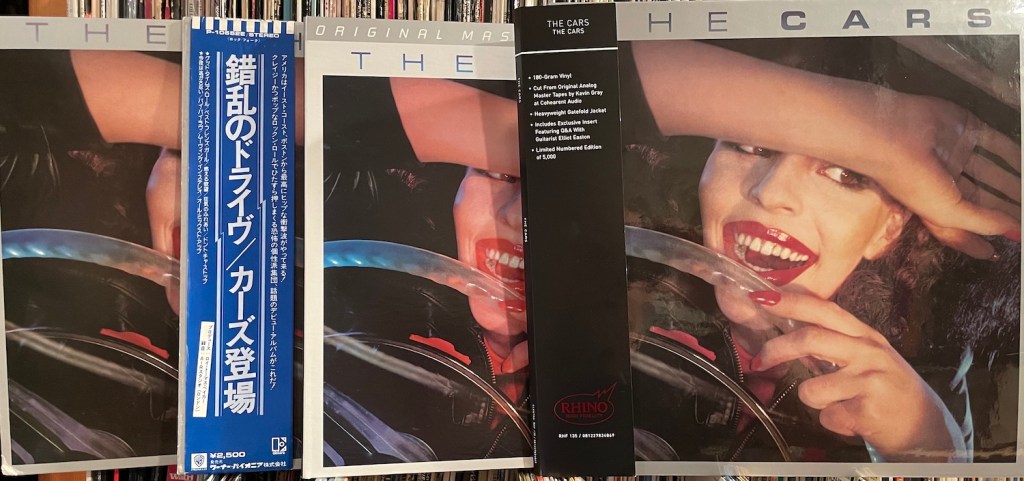
A well-known audiophile reviewer posted pictures of the Cars albums you see below.

As would be expected, it looks like he has rounded up the usual suspects from his collection:

  • A domestic pressing (probably), perhaps even an early one.
  • A Japanese pressing.
  • A Mobile Fidelity pressing (notice how contrasty the jacket photo is), and
  • The Rhino Heavy Vinyl pressing, which we reviewed recently here.

What are the chances that any of these pressings are any good?

Let me guess. One out of four?

(more…)

This Craft Pressing Was Definitely Born Under a Bad Sign

Hot Stamper Pressings of Electric Blues Albums Available Now

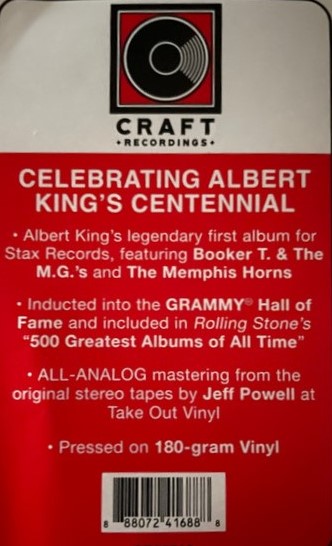
About a year ago we played the Craft pressing (CR00513) that had come out in 2023.

We have audition notes for lots of these dreadful Heavy Vinyl pressings sitting around. Sometimes they sit around for years. Obviously we are in no hurry to put them up.

The notes I took for the Craft pressing of Lush Life that Geoff Edgers played me still has not been posted, and he played me that record all the way back in 2022. For those of you who can’t wait for the complete review, I told him it sounded like a CD and proceeded to take it off the turntable.

At the time, I don’t think he understood how that could even be possible. He’d visited Bernie Grundman and read all the rave reviews for his work in the audiophile press. What do you mean his record sounds like a CD? Who the hell do you think you are anyway?

Geoff knows what that means now. I will leave it at that.

We were not surprised to find that the sound of this Craft pressing was terrible. Whoever this Jeff Powell is, I admit I’ve never heard of him, if you see his name on a remastered record, you might want to consider that if he can make a record that sounds this bad, he may not know what he is doing.

This strikes us as a safe bet.

Our notes for the album comprise all of five words. They read:

  • Not good
  • Blurry and congested

As you can see, we didn’t feel the need to spend too much time with it. When a record shows you right off the bat how badly mastered it is, we move on pretty quickly.

We admitted to having liked the Sundazed pressing when it came out in the late-90s, something that you can imagine embarrasses us no end now. In our defense, let me just say 1998 was a long time ago, before we had ever heard a properly cleaned, really good sounding original pressing.

We know how good the originals can sound. We’ve played them. What we have not been able to do is to find enough quiet, good sounding copies to do a shootout. Even at more than a hundred bucks a pop, it’s the rare copy that does not go back to the seller for excessive noise and groove damage. This record was not bought by audiophiles to play on expensive equipment.  The opposite of that demographic cohort would be closer to the truth.

As for the record collecting public, one guy on Discogs thought it didn’t sound good, but for some reason he gave it three stars anyway. Our review would have been one star out of five, assuming that even the worst sounding record must get at least one star. The other three who reviewed the album seemed to really like it.

(more…)

Michael Fremer Says You Should Own the Classic 45 of Time Out

Hot Stamper Pressings of the Music of Dave Brubeck Available Now

Michael Fremer spends two hours and ten minutes on his site going through a list of 100 All Analog In Print Reissued Records You Should Own.

On this list is the 45 RPM Bernie Grundman cutting of Time Out. Fremer apparently liked it a whole lot more than we did. We think it is just plain awful.

The MoFi Kind of Blue is on this same list, another pressing that is astonishingly bad, or, at the very least, really, really wrong.

If you’re the kind of person who might want to give Michael Fremer the benefit of the doubt when it comes to All Analog records he thinks sound good, ones he thinks you should own, try either one of them. If you think they sound just fine, you sure don’t need me to tell you that they’re completely and utterly awful.

There might be some decent records on the list, but if it has two massive failures that I just happened to come across in the five minutes I spent watching the video — I have very little tolerance for the sort of amateurishness he displays — I would suspect the winners are few and the losers many.

As a practical rule, if you want good sounding vinyl, you should avoid anything on his list.

And if you do try some and do like them, let me know which ones you think sound good and I will try to get hold of some copies and listen to them for myself.

Here is what we had to say about the Brubeck that Mikey recommends. We called it:

An audiophile hall of shame pressing and another Classic Records jazz LP poorly mastered for the benefit of audiophiles looking for easy answers and quick fixes. Sonic Grade: F.

Our story:

Not long ago we found a single disc from the 45 RPM four disc set that Classic Records released in 2002 and decided to give it a listen as part of a shootout. My notes can be seen below, but for those who have trouble reading my handwriting, here they are:

  • Big but hard
  • Zero (0) warmth
  • A bit thin and definitely boring
  • Unnatural
  • No fun
  • No F***ing Good (NFG)

Does that sound like a record you would enjoy playing? I sure didn’t.

(more…)

We Were So Sure We Had The Pink Floyd’s Ticket, But We Were Wrong

Hot Stamper Pressings of the Music of Pink Floyd Available Now

In a reply to some questions Robert Brook asked about Revolver and Sticky Fingers — see here and here — I made mention of the advice, found on Hoffman’s forum and other sites, that is commonly offered regarding the superiority of specific pressings of albums discussed by those who post there and purport to know well.

This often-arcane advice includes labels, pressing plants, stamper numbers, specific mastering credits, etc. The practice is so common that audiophiles “in the know” are now expected to share their findings with other members for the benefit of all.

That’s the background for my comment below. I was explaining where I stood with respect to the recommendations I often read, in my typically undiplomatic language:

We do not respect the opinions of those who appear to have little understanding of records and their pressing variations. The faulty conclusions they invariably arrrive at lack evidentiary support because they don’t know how to do what we do and can’t be bothered to learn.

Regardless of what these folks believe, by now we’ve heard dozens and dozens of amazing originals [referring to Sticky Fingers]. This made us extremely skeptical that any other mastering house could compete with the right original’s sound. It was just too good.

Yes, we were skeptical, and it has turned out, at least so far, that we were right to be skeptical. Nothing has come close to the best early domestic pressings of Sticky Fingers, the ones that win shootouts and that we have long known to be the best pressings of the album.

But sometimes we are skeptical and we turn out to be wrong.

Specifically we were wrong about some albums by Pink Floyd (but not the title you see pictured). I wrote:

We’re not always correct about these things. We were dead wrong about a couple of famous Pink Floyd albums from the “wrong” country that we’d heard good things about.

They have been winning shootouts for many years now.

Our judgments concerning the best sounding pressings for any given title must be seen in the light of any information arrived at scientifically: it’s considered provisionally true. (We may not be the smartest guys in the room, but we’re sure as hell smart enough to know that much.)

I felt it was important to point all this out. The impression I did not want to leave in the reader’s mind is that we know all the answers.

(more…)

It Ain’t Easy Being a One-Man Band

How to Go About Improving Your Critical Listening Skills
I should know. I was a one-man band working 60 to 80 hours a week with very little help until about 2000. I had someone cleaning records and packing and shipping, but everything else was on me. It was a lot.

In order to evaluate the qualities of the titles I was selling back then, whether on Heavy Vinyl or thin, imported or domestic, original or reissue, the process was the same.

I would play the record, and I would listen for the qualities that were important to me, qualities you might say were of a “make it or break it” nature.

What I mostly wanted to know about the record was whether it was:

  • Tonally correct.
  • Big enough.
  • Clear enough.
  • Balanced from top to bottom.
  • Energetic.
  • Present in the midrange.
  • Not bass shy.
  • Not rolled off in the high frequencies.
  • Not compressed.
  • And, finally, whether it would appeal to a wide enough audience to make carrying it worthwhile.

If I had other pressings of the same title to audition, which, to be honest, sometimes I did not, I would play those to see how they compared.

For some records this was not easy. To give just one example, for many of the Speakers Corners Decca classical pressings, I rarely had especially good pressings to judge them by.

I might have had some Londons and some Stereo Treasurys I could throw on, but good sounding, brand new Heavy Vinyl pressings on quiet German vinyl for $35 each did not warrant a big shootout back in those days. I was too busy doing other, more profitable things to keep the business alive.

If the Heavy Vinyl reissue sounded right to me, I said as much and sold it, figuring for $35 the customer who bought it was getting a good record at a fair price. (In constant dollars, those records would be more than $60 today.)

And of course the stereo I had back then (all tube and very powerful, but richer, darker and dramatically less revealing) set a low bar, one that was a great deal easier to get over than the ruthlessly revealing stereo we use now. (More on that subject here.)

I had someone cleaning records for me, sure, but to take the time to clean and play a pile of classical pressings was simply not the best use of my time. I would approve of the sound of whatever pressing I had just auditioned, something along the lines of “good” to “great,” and then write a short review to go in the next catalog.

Many of the records that passed these tests don’t sound all that good to me now. I clearly had a lot to learn.

And I had no other option but to understand records and audio at a higher level because the success of the business depended on it.

There was just too much money on the line at the prices we needed to charge. We, as a company, were forced to deliver a clearly superior product or the discipline of the market would come crashing down on our heads and put an end to our crazy experiment in “Hot Stampers.”

Lack of Resources

When you operate as a one-man band, you simply do not have the resources to clean and play enough copies of a given album to make accurate judgments about their sound.

Everybody makes mistakes, but small sample sizes increase the frequency of mistakes by orders of magnitude, especially a sample size as small as one. More on that here.

Here is another example of a sample size of one, because the three other pressings have very little chance of offering top quality sound. They’re what an audiophile who’s been asleep for the last twenty years might find on his record shelf. We find it hard to take seriously anything such an audiophile would say.

No Resources Needed

The current crop of audiophile reviewers appears to be writing for those who are generally satisfied with the Heavy Vinyl pressings being made today.

The reviews they do are easily carried out by those with an obvious aversion to the serious, disciplined, intense work it would take to do them properly.

They get one of these new records in, they give it a spin and they tell everybody how great it is. The advertisers like it, their readers like it, the labels like it, and everybody is happy as a clam.

When troublemakers like us come along, we upset that one-hand-washes-the-other arrangement, and before long everybody gets real upset real fast. Nobody wants that. They want to keep selling Heavy Vinyl because that is what can be produced, in volume, at a reasonable cost, then advertised and distributed easily and, most importantly, priced affordably.

Win win win win win. So much winning!

If you want something better sounding, from us, it will most likely cost you a pretty penny. It will be every bit as good as we say it is, but it will not be cheap and it will rarely be have any collector value.

Collecting for the Sake of Collecting

It appears as though the vast majority of record loving audiophiles really like collecting records. If I had to guess, I would venture it’s at least 95% and perhaps more. The five per cent that do not fall into that category are unlikely to want to spend their life savings on our pricey, not-especially-collectible pressings.

Our records have virtually no resale value. All their value is tied up in their sound.

That leaves our potential pool of customers at less than one per cent of all the record-loving audiophiles who want better sound and can afford it. Subtract the number of them who don’t like me personally — judging by what I read on Hoffman’s forum it seems like a lot — and you have a fairly small cohort of customers from which to draw.

Thankfully, it is big enough to keep our business going and food on the table for the ten dedicated. music-loving men and women who supply the world with Hot Stamper pressings. Nobody is getting rich, even at these prices, but we’re making a living and providing a service which people really appreciate, or at least that’s what they tell us.

(more…)

Was It Even Possible for Harry Pearson to Create a Meaningful Super Disc List?

Hot Stamper Pressings of TAS Super Disc Recordings Available Now

A customer brought up Harry Pearson in a discussion we were having about the best sounding records, which went a little something like this:

“You’re as much a pioneer as Harry Pearson ever was, and your authenticity is unchallengeable…”

Even I wouldn’t go that far! We make plenty of mistakes, and we learn new things about records all the time, so calling us “unchallengable” is a bit off the mark. However, we are always up for the challenge, and are happy to put our records up against any and all comers.

As far as Harry Pearson, I had this to say about the man:

Very kind of you to say. I think Harry could have been much better at his job if he had had access to modern record cleaning technology, better playback, and a staff of people playing thousands of records every year to help him discover the best sounding pressings.

No one can succeed as a one man show in audio. Audio is too complicated. It takes a team of dedicated professionals with expertise in every area of audio and record collecting to do it right.

He never understood stampers and the like because he didn’t have the research staff to get the data he would have needed to test all the stamper variations and learn from them.

He was stuck at the level of labels, and also not nearly skeptical enough of the idea that “the original is better,” a myth audiophiles cling to to this very day. That, and the superiority of the Heavy Vinyl remaster, which we both know is a crock of sh*t.

TP

Our comments for The Fantasy Film World of Bernard Herrmann have something to say about these same issues.

Decca Versus London

There’s a reason this record is on the TAS List of Super Discs — if any LP should be called a Super Disc, this one should. (With Phase Four sound you might even call it a Super-Duper-Disc.)

But Harry is, not atypically, rather misinformed about the catalog number and country of manufacture. He exclusively admits the Decca pressing to his list, and that is clearly contrary to our experience in general as well as our findings for this shootout. The best Decca pressing we played rated no better than a B+ for either side. That’s five — count them, five — sonic grades lower than the A Triple Plus sides of our best London copy.

If you are one of those audiophiles who’s been following Harry down the rabbit hole for years, discovering a little site called Better Records may just turn out to be a life-changing event. Here you can find records that live up to the hype, ours and his.

Selling the Hype

Record dealers that sell records based on their reputation — and that means pretty much all of them — are selling the hype.

If they haven’t played the record, they can’t tell you what it sounds like, TAS List or no TAS List.

The catalog number may be right, but finding the sound that lives up to the description can only be done one way: by playing the record.

Most copies of The Fantasy Film World, whether they have a Decca label or a London one (all of the ones we are selling are mastered and pressed by Decca; some get one label and some get the other) leave much to be desired.

How Can Anybody Not Hear What’s Wrong with Old Records Like These?

beatlrubbeoriginalRecord Collecting – A Guide to the Fundamentals

It is our strongly held belief that if your equipment (regardless of cost) or your critical listening skills do not allow you to hear the kinds of sonic differences among pressings we describe, then whether you are just getting started in audio or are a self-identified audio expert writing for the most prestigious magazines and websites, you still have a very long way to go in this hobby.

Purveyors of the old paradigms — original is better, money buys good sound — may eventually find their approach to records and equipment unsatisfactory (when it isn’t just plain wrong), but they will only do so if they start to rely more on empirical findings and less on convenient theories and received wisdom.

A reviewer we know all too well is clearly stuck in the old, mistaken paradigm, illustrated perfectly by this comment:

It’s not my pleasure to be so negative but since I have a clean UK original (signed for me by George Martin!) I’ll not be playing this one again. Yes, there are some panning mistakes and whatever else Martin “cleaned up” but really, sometimes it’s best to leave well-enough (and this album was well-enough!) alone.

We can’t imagine how anyone can have a system in this day and age that can obscure the flaws of the original Parlophone pressings of Rubber Soul (or any other Yellow and Black label Parlophone pressing for that matter, other than Yellow Submarine and Oldies but Goldies).


UPDATE 2022

Here is another exception to that “rule.”


This reviewer apparently does (as do some of our customers, truth be told), but we have something very different indeed. One might even consider it the opposite of such a system.

Our system is designed to relentlessly and ruthlessly expose the flaws of every record we play.

Only the best of the best can survive that level of scrutiny. Our system (comprising equipment, setup, tweaks, room treatments, electricity) operates at the highest level of fidelity we have been able to achieve to date. We are constantly making improvements to our playback system in search of even better sound.

Real Progress

But wait a minute, who are we to talk about being fooled? Bear in mind that as recently as 2000 or so we were still recommending DCC and other Heavy Vinyl pressings. These are records that, with few exceptions, I would have a hard time sitting through nowadays.

My system couldn’t show me how colored and lifeless they were then, but it sure can now.

It’s amazing how far you can get in 10 years [now 20] if you’re obsessive enough and driven enough, and are also willing to devote huge amounts of your time and effort to the pursuit of better audio. This will be especially true if you are perfectly happy to let your ears, not your brain, inform your understanding of the sound of the records you play.

If we thought like most audiophiles, that money buys good sound and original pressings are usually the best, there would be no such thing as Hot Stampers. Old thinking and wrong thinking can really slow down your progress.

(more…)