brubetimeo

Reproducing the Phenomenal Size and Space of Time Out

More Columbia 30th Street Studio Recordings

Time Out is a jazz album that’s been a personal favorite of mine for a very long time, as well as a record I’ve been obsessed with for decades. I spent a lot of time working on my system in order to get this album to sound its best.

It taught me a lot, and for that reason it is a recording that deserves a fair amount of credit for helping me become a better listener.

Here is how we described a copy that won one of our shootouts a while back:

Spacious and transparent, this copy has the big three-dimensional soundstage that makes this record such a joy to listen to. The piano has weight and heft, the drums are big and dynamic, and everything is relaxed and sweet — in short, this copy is doing pretty much everything we want a top quality Time Out to do. 

Listen to the drums on Everybody’s Jumpin’. This album was recorded on a big sound stage and there is a HUGE room which can clearly be heard surrounding the drum kit. Add to that that some of the drums are in the left channel and some of the drums are in the right channel and you have one big drum kit — exactly the way it was intended to sound.

Size and Space

One of the qualities that we don’t talk about on the site nearly enough is the SIZE of the record’s presentation. Some copies of the album just sound small — they don’t extend all the way to the outside edges of the speakers, and they don’t seem to take up all the space from the floor to the ceiling. In addition, the sound can often be recessed, with a lack of presence and immediacy in the center.

Other copies — my notes for these copies often read “BIG and BOLD” — create a huge soundfield, with the music positively jumping out of the speakers. They’re not brighter, they’re not more aggressive, they’re not hyped-up in any way, they’re just bigger and clearer.

And most of the time those very special pressings just plain rock harder. When you hear a copy that does all that, it’s an entirely different listening experience.

More letters, reviews and commentaries for recordings made at Columbia’s 30th Street studio.

(more…)

Michael Fremer Says You Should Own the Classic 45 of Time Out

Hot Stamper Pressings of the Music of Dave Brubeck Available Now

Michael Fremer spends two hours and ten minutes on his site going through a list of 100 All Analog In Print Reissued Records You Should Own.

On this list is the 45 RPM Bernie Grundman cutting of Time Out. Fremer apparently liked it a whole lot more than we did. We think it is just plain awful.

The MoFi Kind of Blue is on this same list, another pressing that is astonishingly bad, or, at the very least, really, really wrong.

If you’re the kind of person who might want to give Michael Fremer the benefit of the doubt when it comes to All Analog records he thinks sound good, ones he thinks you should own, try either one of them. If you think they sound just fine, you sure don’t need me to tell you that they’re completely and utterly awful.

There might be some decent records on the list, but if it has two massive failures that I just happened to come across in the five minutes I spent watching the video — I have very little tolerance for the sort of amateurishness he displays — I would suspect the winners are few and the losers many.

As a practical rule, if you want good sounding vinyl, you should avoid anything on his list.

And if you do try some and do like them, let me know which ones you think sound good and I will try to get hold of some copies and listen to them for myself.

Here is what we had to say about the Brubeck that Mikey recommends. We called it:

An audiophile hall of shame pressing and another Classic Records jazz LP poorly mastered for the benefit of audiophiles looking for easy answers and quick fixes. Sonic Grade: F.

Our story:

Not long ago we found a single disc from the 45 RPM four disc set that Classic Records released in 2002 and decided to give it a listen as part of a shootout. My notes can be seen below, but for those who have trouble reading my handwriting, here they are:

  • Big but hard
  • Zero (0) warmth
  • A bit thin and definitely boring
  • Unnatural
  • No fun
  • No F***ing Good (NFG)

Does that sound like a record you would enjoy playing? I sure didn’t.

(more…)

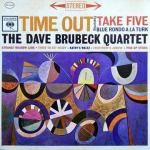
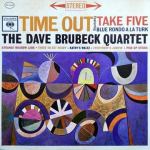
Dave Brubeck – Time Out

More of the Music of Dave Brubeck

  • This Six-Eye Stereo pressing boasts out of this world Demo Disc sound
  • Time Out captures the ambience and huge space of Columbia’s studio like practically no other record has (with a little reverb thrown in for good measure)
  • A knockout pressing of Brubeck’s astonishingly well recorded Jazz Classic, this is a record that belongs in every audiophile’s collection
  • Early stereo LPs in clean condition like this one are getting awfully tough to find nowadays…
  • “Buoyed by a hit single in Desmond’s ubiquitous Take Five, Time Out became an unexpectedly huge success, and still ranks as one of the most popular jazz albums ever. That’s a testament to Brubeck and Desmond’s abilities as composers, because Time Out is full of challenges both subtle and overt — it’s just that they’re not jarring.”
  • If you’re a fan of Brubeck and company, this 1959 album belongs in your collection, along with quite a few others from the classic jazz era

(more…)

We Happily Admit the Originals of Time Out Are (Potentially) the Best Sounding

More of the Music of Dave Brubeck

This time around [2014] no other copy of Time Out could touch our good Six Eye Stereo pressings. They were simply in a league of their own.

If you’ve been with us for a long time you may remember that this was not always the case. We used to really like some 360s as I recall, as well as the original mono pressing. This time around, not so much. 

This time around most everything is different. Allow us to explain.

1. Our stereo is different; we’ve made quite a number of changes to it since our last big shootout for Time Out a few years back. We are strong proponents of making audio progress.

2. We’re different; we have better (I would hope) listening skills. In fact I’m sure we listen for different qualities in a recording than we might have years ago.

3. Even more importantly, we don’t have the same pile of pressings we had years ago. They’re gone, replaced by a new batch. This new batch had some killer original pressings, some good 360s, and not much to speak of on the later labels. 

With a different batch we might have found a great sounding 360 pressing; we have to believe they exist, and we certainly can’t say that our best copy here could not have been bettered in some way. That would be foolish; anything can be bettered.

The next time we run this experiment, the results could be different.

[Update from 2021: we have run the experiment a number of times in the five years since this commentary was written, and the best Six Eye in the shootout has not been beaten yet. Yet.]

For us, in 2014 (and probably through 2015), this is it.

This is the right sound.

(more…)

The 45 RPM Classic Records Repress Is Another in a Long String of Failures

More of the Music of Dave Brubeck

Sonic Grade: F

An Audiophile Hall of Shame pressing and another Classic Records Jazz LP.

Not long ago we found a single disc from the 45 RPM four disc set that Classic Records released in 2002 and decided to give it a listen as part of our shootout for the album.

My notes can be seen below, but for those who have trouble reading my handwriting, here they are:

  • Big but hard
  • Zero (0) warmth
  • A bit thin and definitely boring
  • Unnatural
  • No fun
  • No F***ing Good (NFG)

Does that sound like a record you would enjoy playing? I sure didn’t.

But this is the kind of sound that Bernie Grundman managed to find on Classic Record after Classic Record starting in the mid-90s when he began cutting for them.

We’ve been complaining about the sound of these records for more than twenty years but a great many audiophiles and the reviewers who write for them told us we wrong.  If you have a copy of this album on Classic, at 33 or 45, play it and see if you don’t hear the problems we ascribe to it.

To see what we had to say about the 33 RPM version on Classic many years ago, click here.

Maybe we got a bad 45 and the others are better. That has not been our experience.

In these four words we can describe the sound of the average Classic Records pressing.

Not all of their records are as bad sounding as Time Out. We favorably review some of the better ones here.

(more…)

Time Out Is a Classic Case of Live and Learn

More of the Music of Dave Brubeck

Reviews and Commentaries for Time Out

Another example of We Was Wrong

When we did a shootout for this album way back in October of 2007, we took the opportunity to play the Classic Records 200 gram pressing. Maybe we got a bad one, who knows, but that record did not sound remotely as good as the real thing. (6 eye or 360, both can be quite good. Skip the Red Label ’70s reissues.)

The piano sounded thin and hard, which was quite unexpected given the fact that we used to consider the Classic LP one of their few winners and actually recommended it.

As we said in our shootout: “We dropped the needle on the Classic reissue to see how it stacked up against a serious pressing. Suffice it to say, the real Time Out magic isn’t going to be found on any heavy vinyl reissue!”

If I were in charge of the TAS Super Disc List, I would not have put this record on it.

Here are some others that we think do not qualify as Super Discs.

(more…)