*Collecting Better Records

Ideas and methods for collecting the best sounding pressings of your favorite music.

Remind Me, What Is the Point of Listening to a Quiet Record with Mediocre Sound?

Hot Stamper Pressings of the Music of Igor Stravinsky Available Now

A lackluster reissue from Philips, bad enough to qualify for our hall of shame.

This is some truly dead as a doornail sound, sound which is not remotely competitive with the real Mercury pressings we’ve played. The FR pressings of the recording can be phenomenally good.  Even the later M2 pressings from Philips can be excellent. 

Back in the 80s and 90s, I actually used to like some of the Golden Import pressings.  That was a long time go, and thankfully our playback system is quite a bit more revealing than the one I had back in those days.

After playing literally tens of thousands of records since then, my critical listening skills are better too.

Now when I play these imports, they sound veiled, overly smooth, smeary and compressed, not too different from the average Philips pressing, which of course is exactly what they are. They’re all remastered by Philips, to give the Mercury tapes the sound that Philips thinks they should have. Sadly, not much of the Mercury Living Presence sound has survived.

We complain about mixing and mastering engineers who felt compelled to bring a new sound to old favorites.

The Philips label that produced the Golden Import series are serial offenders in this regard.

The Golden Import pressings might be good for audiophiles who care more about quiet surfaces than good sound.  We are firmly staked at the opposite side of that trade-off.

Quiet vinyl means nothing if the sound is poor, or, at the very least, wrong for the recording.

(more…)

The Real Eagles Sound Comes From the Real Eagles Master Tape

Hot Stamper Pressings of the Music of The Eagles Available Now

This commentary may be roughly twenty years old, but we think it holds up just fine.

At one time this was my single favorite Demo Disc.

A customer who bought one of these once told me it was the best sounding record he had ever heard in his life. I don’t doubt it for a minute. It’s certainly as good as any rock record I have ever heard, and I’ve heard an awful lot of very good ones.

There’s an interesting story behind this album, which I won’t belabor here. One listen to a later reissue or Heavy Vinyl pressing or Greatest Hits and you’ll know I speak the truth when I say that the tape used to cut this pressing was never used again to cut another.

It is GONE. LOST FOREVER. Most copies of this album are mediocre at best, and positively painful to listen to once you’ve heard the right pressing, the one cut from the real tape.

Which mostly explains why I never had any respect for this first album. The average copy sounds so bad that the musical values just aren’t communicated to the listener. Isn’t this why we have all this fancy equipment in the first place, to allow the musicians to communicate with us the way they intended? And when the record is a poor reproduction of the artist’s work, it prevents this communication from taking place. (And don’t get me started about CDs.)

Accidental Discoveries

Those poor reproductions are probably the ones you have, if you even have a copy of the album at all. I’ve been buying Eagles records for more than 30 40 years and I only discovered my first hot stamper pressing around 2001. Of course I found it entirely by accident, with no inkling beforehand that the album could possibly sound remotely as good as that amazing copy was sounding all those years ago. I played Train Leaves Here This Morning for anyone who wanted to hear the system at its best (back when I had the monstrous Whisper system in my living room).

Before that I had heard a number of flat sounding versions and concluded, as most audiophiles would, that the album must be poorly recorded. I stopped thinking like that soon after, which is one of the main reasons you can find amazing sounding pressings of albums on our site that aren’t supposed to sound any good. (Do a quick Google search and see if any audiophile has anything good to say about the album. We came up empty-handed.)

If you own one of those bad later pressings, it’s a record you might have played once or twice, gotten little out of, and put it back on the shelf, wondering why those stupid Eagles couldn’t get their act together and record their music better.

But they did! They were recorded brilliantly. Glyn Johns, the recording engineer, is a genius. The sound is smooth, rich, sweet and Tubey Magical beyond belief.

I would say it’s as good a pop/rock recording as any I have ever heard, and better than 99.99% of the competition.

(more…)

1A, or Is 1B Better on Parsley, Sage, Rosemary and Thyme? Your Guess Is As Good As Mine

Hot Stamper Pressings of the Music of Simon and Garfunkel Available Now

UPDATE 2024

Speaking of 1A and 1B, the evidence is in. We have now confirmed that one of these sets of stampers (one for each side) can win shootouts. Which of the two it is we will leave to you to discover, as we make it a point never to give out the shootout winning stampers except under the rarest of circumstances. We give out plenty of stamper information, just not the stampers of the winners.


We now return to our commentary from many years ago:

Before we go any further, I have one question:

Why are we guessing?

I received an email recently from a customer who had gone to great pains to do his own shootout for a record; in the end he came up short, with not a lot to show for his time and effort. It had this bit tucked in toward the end:

Some of [Better Records’] Hot Stampers are very dear in price and most often due to the fact that there are so few copies in near mint condition. I hate to think of all the great Hot Stampers that have ended up in piles on the floor night after night with beer, Coke, and seeds being ground into them.

Can you imagine all the 1A 1B or even 2A 2B masters that ended up this way or were just played to death with a stylus that would be better used as a nail than to play a record!

To be clear, it’s extremely unlikely than any Hot Stampers have ever ended up in piles on the floor. Hot Stampers are not just originals or good sounding records.

They are pressings that have been cleaned, gone through the shootout process and found to be superior to their competition. Until they prove themselves, records like the ones whose unfortunate fate this reviewer fantasizes about are just old records that had the potential to sound good but never got the chance to demonstrate they had better sound than other pressings.

As it so happens, shortly thereafter I found myself on Michael Fremer’s old website of all places, where I saw something eerily similar in his review for the (no doubt awful) Sundazed vinyl. I quote below the relevant paragraphs.

(more…)

Got Old Records? Played ‘Em Lately? What Did You Think of the Sound?

Hot Stamper Pressings of Pop and Rock Records Available Now

It’s not that most copies of Lee Michaels’ 5th sound bad; it’s that most of them just sound like old records — thick, dull, opaque, smeary, closed-in, two-dimensional, lifeless and uninspired.

You know that sound. It’s on a lot of the records we play, and no doubt on a lot of the records you own, especially the records you haven’t cleaned and played in a while. It’s there; you just aren’t aware of it.

Pull out your old copy of 5th. Back in the day it sounded just fine, but if you’ve been listening to mostly better records lately (assuming you haven’t fallen into the Heavy Vinyl trap), doubtlessly on much improved equipment than you had 40 years ago, your old A&M copy probably doesn’t sound as good as you remember it.

The records may not have changed, but your stereo and your standards should have.

Couple that with improved listening skills and before long the average old record starts to sound a lot more average than you wish it did. Even today’s better pot can’t fix the problems of most vintage pressings (or the Heavy Vinyl and CD reissues, which have to be seen for what they are: two of the biggest jokes ever played on the audiophile public).

But we can fix the problems — well, not really: we’re just finding the copies that managed to be mastered and pressed without the problems, and then giving them a good cleaning — and our Hot Stampers are 100% legal to boot.

(more…)

In 2008 We Had a Lot More R&D Ahead of Us

Hot Stamper Pressings of the Music of Led Zeppelin Available Now

A classic example of live and learn.

In 2008 we simply had not done our homework well enough. I had been an audiophile for at least 33 years by then, and a professional audiophile record dealer for 21, but we still hadn’t cracked the code for Zep III.

Sure, by 2008 we had auditioned plenty of the pressings that we thought were the most likely to sound good: the original and later domestic pressings, the early and later British LPs, some early and later German pressings, maybe a Japanese import or two. In other words, the usual suspects.

We already knew the Classic Records Heavy Vinyl was unbelievably bad; no need to put that in a shootout. It earned an “F” right out of the gate for its bright and harsh sound.

The result? We were roughly in the same position as most serious record collecting audiophiles, if not actually in a better one: who do you know that has played at least ten different pressing Led Zeppelin III, or any other album for that matter?

We had auditioned a number pressings of the album and thought we knew enough about the sound to pick a winner. We thought the best original British Plum and Orange label pressings had the goods that no other copies could or would have. (Years later we would get hold of another one, clean it up and put it in a shootout.)

But of course, like most audiophiles who judge records with an insufficiently large sample size, we turned out to be quite mistaken.

Logic hadn’t worked. None of the originals would end up winning another shootout once we’d discovered the right reissues.

But in 2008, we hadn’t stumbled upon the best pressings because we hadn’t put enough effort into the only approach that actually works.

What approach is that? It’s trial and error. Trial and error would eventually put us on the path to success. We had simply not conducted enough trials and made enough errors by 2008 to find out what we know now.

We hadn’t made the breakthrough we needed to make in order to know just how good the album could sound.

Can you blame us? The pressings that have been winning shootouts for years are from the wrong country (not the UK) and the wrong era (not the original).

We reproduce below the commentary for the 2008 listing that gets it wrong.

The best British originals are good records, but none of them would win a shootout these days up against the superior import pressings we discovered around 2015 or so.

(more…)

Heretics and True Believers Clash on the Battlefield in Cyberspace, Part Two

More Letters from Customers and Critics Alike

Part one of this conversation can be found here. [Some bolding and such added.]

Hi, Tom,

Are there other great sounding stereos out there? I’m sure there are. Just as there are great sounding records still to be found out in the wild.

But, the stereo I’ve built by rapidly copying what you did painstakingly over decades is giving me better sound from recorded music than I’ve encountered almost anywhere else, including on far more expensive systems. It’s also more honest, direct, and revealing than stereos usually are.

First, I trusted you on records, and you were right. Then, I trusted you on stereos, and you were right again.

As for how people can find great sounding records. I expressed three pieces of the advice I’ve come to realize are true. All controversial enough, apparently, to get a thread shut down.

First, they can buy records from you.

If they don’t yield sound commensurate with price, just return the darned thing. A couple Better Records a year will probably build somebody a better-sounding vinyl collection than the same amount of money dumped in a shop or on Discogs. Tom, I have never encountered a disappointed *customer* of yours.

Second, don’t ascribe to hard and fast rules.

No, it is not true that all records from a given pressing house or mastering engineer are the definitive versions. There are better-sounding copies sitting in bins at used shops. Not all of them, but some, and they are often cheaper. This is a reality that is hard to find online, because it turns out it is hard to state it online.

Third, if you want to find great-sounding records on your own, plan to buy lots of copies of a particular title.

Avoid original pressings – those are not guaranteed to sound better, and they come at a premium.

[I take issue with this idea, see below.]

Play them all, pick your favorite (one, in my experience, is likely to stand out). Then, hope that your local shop takes returns, or that you are able to unload them on Discogs. Might somebody save themselves some money doing it this way, compared to buying a record from you? Maybe? But then, if they decide to “check their work” by buying a record from you, yours is going to sound better.

When I offered this advice on that forum, I got told I was wrong. Instead, those guys have a formula that works for them. I’d say it’s a formula for ending up with Pretty Good Records. First, you search the forums to find the deadwax for a copy that somebody has commented is THE one to have.

They usually don’t mention what type of equipment they have, or how many other copies of that record they’ve heard, or even what in particular about it sounds good. For me, going after pressings recommended online has never been a reliable way to find a great-sounding record.

And, when I get a Better Record, I check to see if it is a stamper that’s already known to sound good. Almost always, there’s no mention of it anywhere. Second piece of accepted wisdom on the forums: NM always sounds better than VG+. Here’s something I said that seemed to really piss people off: Good-sounding records got played a lot. Somebody really took me to task for suggesting that I had purchased from you a copy of a record I love that would probably grade VG+ based on the appearance of its surfaces, but that was delivering sound so good, I had zero desire to hunt for another copy, even the same deadwax in NM condition. Sure, I’d buy it if I ever came across it, but I would not expect it to sound better than the copy I already had. So, even among a group of seasoned vinyl listeners that understand certain truths they still seem to live by certain principles in collecting records that simply do not work consistently.

I’ve spent a lot of time blaming myself for the money and time I wasted on pretty-good records, played on a pretty-good stereo. I trusted the magazines and the salesmen. I don’t think they were being disingenuous; I just think they didn’t know any better. I trusted the splashy websites, the satisfied customer reviews, the youtube gushes, and the forum posters. This many people can’t all be wrong. They must know what they are talking about. And, I wasn’t hearing any other information.

Now I know why I wasn’t hearing any countervailing views – they get deleted. For somebody who wants to attain better sound, there’s your shop, and more importantly, your blog. I know the vast majority of people who come across either of these will dismiss them outright. Their loss. A few will return, and be better off for it – even, financially.

The most painful accusation I encountered on the forum was that I am doing people a disservice by leading them to spend their money and not get anything in return. It hurt to read that. Of course, I would never want to do that. To anybody who becomes your customer because I said they should give it a try, I’d give them the same advice you gave me early on: Take it slow. Once you discover how good these records can sound, there’s a real urge to start snapping them up. Instead, just take it slow. Enjoy each one. Better Records isn’t going anywhere.

(more…)

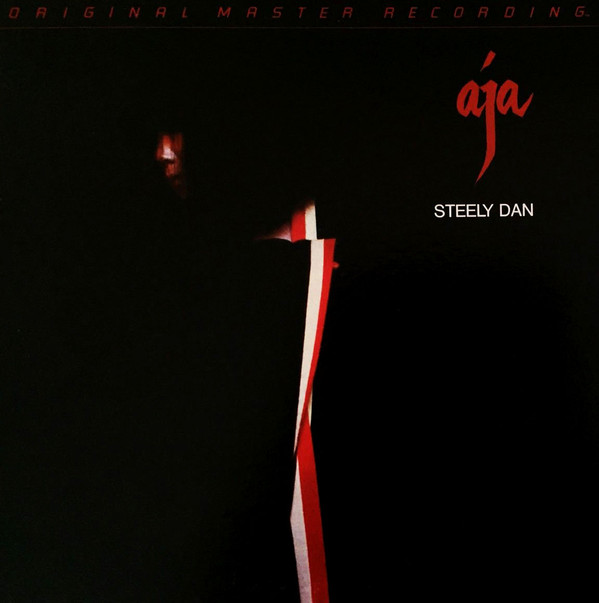
Question about Aja: “Are these all original issues from September 1977…?”

Hot Stamper Pressings of the Music of Steely Dan Available Now

Got this letter a while back:

Hey Tom,   

I’m very interested in purchasing one of your copies of Steely Dan’s Aja. Are the catalog numbers the same for all 3 albums? Are these all original issue from September 1977 when the album was first released?

I’m new to your website (and vinyl collecting in general) so any commentary you have would be appreciated. $200 is probably the most I can afford for this album.

Thanks,
Joe

Joe, yes, only the early pressings of the album are any good and we would not sell anything else. They would not have all come out in September but they look as original as any others would. You will get a lot of sound and music for your money on this album, and you should hear a world of difference between our copy and any other you may own.

Best, TP

Got it – Can you just confirm the catalog number is AB 1006? I’m specifically looking at the version that’s $199 on your site.

Thanks,
Joe

Dear Joe,

Keep in mind that we’re the guys who are all about sound, not originality.

We discussed it in our FAQ as a matter of fact:

This listing gets to the point:

(more…)

Building a Good Sounding Record Collection – Hot Stampers Versus Collector Pressings

Record Collecting for Audiophiles – A Guide to the Fundamentals

I defy anyone who has not made a lifelong study of pressing variations to tell me which of the hundreds of records pictured below is likely to have audiophile quality sound.

There is not a chance in the world the owner knows either, and I suspect he does not care one way of the other. If this fellow describes himself as an audiophile, he is either mistaken or setting a very low bar for hinself.

An audiophile is defined as someone who “loves sound.” The owner of this collection may love sound on some level — he plays records, and they have sound, and if he loves the sound he hears on his records, that would make him an audiophile according to the dictionary.

For those of you who spend much time on this blog, to us an audiophile is a “lover of good sound,” not just any sound.

This fellow is not really an audiophile as we would define the term, certainly not much of one.

He is a record collector, plain and simple.

And that’s not a hard thing to be. Most anyone can amass a collection of records — one this big, ten times its size or one-tenth its size, the process of going about it is the same. You just buy whatever kinds of records you happen to like and organize them in whatever way you find most pleasing.

There is no limit to the kinds of records a person might collect: originals, imports, audiophile pressings, picture discs, the TAS List – you name it, you are free to collect it to your heart’s desire.

There are literally millions of records for sale around the world on any given day. They’re not hard to find, and being so common, collecting them could not be easier. A single collection for sale as of this writing contains more than 3 million records. That works out to a thousand records each for three thousand collectors. Do you really have time to play more than a thousand records? That’s a different record every day for almost three years!

Why Collect?

Some people see records as an investment.

We do not. We think audiophile-oriented music lovers should pursue good sounding records for the purpose of playing them and enjoying them, understanding that the better their records sound, the more enjoyable they will be.

Collecting records primarily to build a record collection that can be sold at a profit in the future should be the last thing on anyone’s mind.

Most of the following was written in response to a customer who wanted to know how original our Hot Stamper pressings were since he preferred to collect first pressings — which were also worth more money should he decide to sell them at a later date. We asked:

Why would you want a first pressing if it doesn’t sound as good? Or, if a later pressing sounded better, why would that make any difference in your desire to buy it? Isn’t the idea to get good sound?

If you buy records principally to collect original pressings, you will end up with one mediocre sounding collection of records, that I can tell you without fear of contradiction. The formula goes like this: Average pressing, original or otherwise = average sound.

On the other hand, if you want the best sounding pressings, we are the only record sellers on the planet who can consistently offer them to you. This is precisely the service we offer, unique in the world as far as we know. Hence the name Better Records.

Anyone can sell originals. Only we can offer the discriminating audiophile records with the best sound.

Others could of course, but none of them have ever bothered to try, so the practical effect is the same.

Finding the best sound is far more difficult and far more rewarding for both the seller and the buyer, as any of our customers will be happy to tell you.

(more…)

After You’ve Played 100 Copies of the Album, What’s Left to Learn?

bloodchildHot Stamper Pressings of the Music of Blood, Sweat and Tears Available Now

This commentary is at least ten years old. We can’t say that a red label reissue like the one discussed below would do as well under the improved shootout conditions in our new studio, but the possibility exists, which is the point of the story we are telling here.

A common misconception of many of those visiting the site for the first time is that we think we know it all.

Nothing could be further from the truth. We definitely do not know it all. We learn something new about records with practically every shootout.

Not This Title

Case in point: the record you do NOT see pictured above. (The record we recently learned something new about — this, after having played scores and scores of copies over the years — will remain a secret for the time being. At least until we find another one.)

In 2013 we played a red label Columbia reissue of a famous 60s rock record (again, not shown) that had the best side two we had ever heard. Up to that point no copy other than the 360 original had ever won a shootout, and we’ve done plenty. Lo and behold, here was a reissue that put them all to shame.

I’m still in shock from the experience to tell you the truth, but what a blast it was to hear it!

The recording, which I first played more than 40 years ago at the tender age of 16, was now bigger, less murky and more energetic than ever before. Had you asked me, I would have confidently told you not to waste your time with the second pressing, to stick to the 360s on that title, and I would have been wrong wrong wrong.

How Wrong?

But wait a minute. The 360 original will probably beat 49 out of 50 red label reissue copies on side two, and the best 360 original could not be beaten on side one by any other pressing. When you stop to think about it, we weren’t very wrong at all.

Let’s just say our understanding was incomplete.

This is why we prefer to offer actual physical records rather than just advice, although it’s clear for all to see that we happily do both, and, moreover, we certainly feel qualified — as qualified as anyone can be — to offer up our opinions, since our opinions are based on a great deal of experimental data.

Having big piles of cleaned records at one’s disposal is fundamentally important to this kind of operation. In our experience, shootouts using only a small number of pressings have relatively little value. They are best seen as a guide for the next, more comprehensive attempt to find out what might be the truly killer pressings of any given album.

(more…)

Before and After Science – Rules Are Made to Be Broken

Hot Stamper Pressings of Art Rock Recordings Available Now

The domestic pressings of Before And After Science are typically grainy, low-rez and hard sounding — they’re simply not competitive with the smoother British Polydors.

But our best Hot Stamper pressing isn’t an import; it was made right here in the good old US of A.

Say what? Yes, it’s true. We were SHOCKED to find such hot stamper sound lurking in the grooves of a domestic Eno LP. It’s the One and Only.

In thirty plus years of record playing I can’t think of any domestic Eno LP that ever sounded this good.

Now hold on just a minute. The British pressings of Eno’s albums are always the best, aren’t they?

For the first three albums, absolutely. But rules were made to be broken. This pressing has the knockout sound we associate with the best British originals of Eno’s albums, not the flat, cardboardy qualities of the typical domestic reissue.

Kinda Blind Testing

Since the person listening and making notes during the shootouts has no idea what the label or the pressing of the record is that he is evaluating — this is after all a quasi-scientific enterprise, with blind testing being the order of the day — when that domestic later label showed up at the top of the heap, our jaws hit the floor.

(more…)