too-smooth-vin

Vintage pressings that we thought were too smooth.

Rossini Overtures – Reissues Versus Originals

Hot Stamper Pressings on Decca & London Available Now

The London and Decca original pressings of Decca’s recordings are the best sounding, right?

Sometimes they are, sometimes they aren’t.

We were a bit surprised that some of the (expensive) originals didn’t sound very good to us in recent shootouts.

Bad vinyl, bad mastering, who knows why so many early copies suffer from thick, dull and veiled sound? 

The Stereo Treasury pressing of Maag’s 1958 recording you see here is shockingly good in many ways. It sure doesn’t sound like a budget reissue.

If anything it sounds more original than the originals we played against it!

It’s yet another remarkable disc from the Golden Age of Vacuum Tube Recording Technology, with the benefit of mastering by means of the modern cutting equipment of the mid- to late- ’60s. (We are of course here referring to the good modern mastering of many years ago, not the bad modern mastering of today.)

The combination of old and new works wonders on this title, as you will surely hear for yourself on both of these Super Hot or better sides.

(more…)

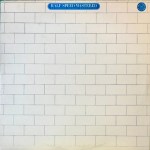
The Wall Sounds Terrible on these “Audiophile” Rip-offs

Hot Stamper Pressings of the Music of Pink Floyd Available Now

This Japanese import is one of the dullest, muddiest, worst sounding copies of The Wall we have ever played. It is clearly made from a second generation tape (or worse!).

Is it the worst version of the album ever made? Hard to imagine it would have much competition.

And somehow this pressing, or one very much like it, ended up as on the TAS Super Disc List. I would hope that the copy Harry played sounded a whole lot better than this one.

The version on the TAS Super Disc list is EMI 4814, which I believe is the British original. Conventional wisdom? Is The Absolute Sound capable of any other?

And the CBS Half-Speed is every bit the mudfest that the Half-Speed is.

How is it that the worst sounding pressings are so often marketed to audiophiles as superior to their mass-produced counterparts? In our experience, more often than not they are just plain awful, inferior in every way but one: surface quality.

And the knock on these CBS Half-Speeds is that they are made from the same vinyl CBS used to press all their other records.

I remember buying them back in the late-70s at Tower Records. They were only $12.99 when Mobile Fidelity pressings were $17.99, garnering a premium price because they were pressed in Japan. Fool that I was, I bought plenty of both, not to mention those made by Nautilus, Direct Disk Labs and plenty of others too painful to think about.

Dear audiophiles, stop collecting crappy audiophile pressings with quiet vinyl and just switch to CD already. You’ll be getting better sound and saving yourself a lot of money to boot. You simply cannot defend analog with this kind of junk.

(more…)

On Sweetnighter, Watch Out for Sourness, Slowness and Smear

Hot Stamper Pressings of the Music of Weather Report

What surprised us most about the dozen or so copies that we played years ago for a shootout was how wrong most copies of this album sound. They’re SOUR in the midrange. On this kind of music, a sour midrange is the kiss of death.

Those copies that aren’t sour are frequently just plain dull. On a recording like this, so full of percussion — which, to be honest, it’s a record that LIVES OR DIES on the quality of its percussion — dullness is devastating.

And so is slowness. If you have old school tube equipment — great for vintage RVG recordings but way too slow to keep up with this fast-paced and percussion-heavy music — this record is not going to do what it desperately wants to do: get your feet tappin’.

Smear is also another thing to watch out for — smear kills what’s good about this record. The percussion transients lose their snap and the harmonics get lost. The less smeary sides really bring out the funky magic of the recording.

(more…)

Remind Me, What Is the Point of Listening to a Quiet Record with Mediocre Sound?

Hot Stamper Pressings of the Music of Igor Stravinsky Available Now

A lackluster reissue from Philips, bad enough to qualify for our hall of shame.

This is some truly dead as a doornail sound, sound which is not remotely competitive with the real Mercury pressings we’ve played. The FR pressings of the recording can be phenomenally good.  Even the later M2 pressings from Philips can be excellent. 

Back in the 80s and 90s, I actually used to like some of the Golden Import pressings.  That was a long time go, and thankfully our playback system is quite a bit more revealing than the one I had back in those days.

After playing literally tens of thousands of records since then, my critical listening skills are better too.

Now when I play these imports, they sound veiled, overly smooth, smeary and compressed, not too different from the average Philips pressing, which of course is exactly what they are. They’re all remastered by Philips, to give the Mercury tapes the sound that Philips thinks they should have. Sadly, not much of the Mercury Living Presence sound has survived.

We complain about mixing and mastering engineers who felt compelled to bring a new sound to old favorites.

The Philips label that produced the Golden Import series are serial offenders in this regard.

The Golden Import pressings might be good for audiophiles who care more about quiet surfaces than good sound.  We are firmly staked at the opposite side of that trade-off.

Quiet vinyl means nothing if the sound is poor, or, at the very least, wrong for the recording.

(more…)

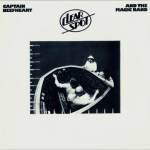
Domestic Pressings of Clear Spot? Forget ‘Em!

Hot Stamper Pressings of the Music of Captain Beefheart Available Now

We did this shootout many years ago, so many years ago that I cannot find a record of it.

I remember we thought the German pressings were perhaps a bit boosted on both ends and not as natural sounding as the domestic pressings.

After a multitude of improvements in our cleaning and playback, we would agree with our previous understanding that the German pressings are often wrong, but now we also know how right the right ones can be.

It turns out tha some German pressings are not particularly good, another piece of the puzzle that fell into place during our most recent shootout, as painful as that turned out to be considering the money wasted on them.

Did we have the bad German stamper pressings last time around? Who knows?

The producer, Ted Templeman, (Doobie Brothers, James Taylor) brought his mainstream talents to bear on this music, and when the Captain’s free-form tendencies smashed into Templeman’s conservatism, the result was this musical supernova — out there, but not too far out there.

(Play Trout Mask Replica sometime if you miss that feeling from your old hippie days of being on acid. With that music, drugs are entirely superfluous.)

I don’t know how many audiophiles like Captain Beefheart, probably not too many, but if you’re ever going to try one of his albums, this is the place to start: his masterpiece.

(more…)

Respighi / The Birds on Golden Import Reissue

Hot Stamper Mercury Pressings Available Now

These days, most Golden Import reissues we play sound much too much like the bulk of the Philips pressings we’ve played over the years: smooth, smeary, compressed, recessed and veiled. 

Can’t say what this one sounds like, it sold many years ago, but I would not expect very many Golden Imports to sound good to me now.

More than anything the changes we hear in the records we play now tie into the idea of progress in audio, since without progress the records that sounded good to me in 2006 would still sound good to me now, and I’m glad to say they don’t.

Live and Learn is our motto, onward and upward, and we have made that approach to audio the very foundation of our business.

If you are stuck in a Heavy Vinyl rut, we can help you get out of it. We did precisely that for these folks, and we can do it for you.

You may of course not be aware that you are stuck in a rut. Most audiophiles aren’t. The best way out of that predicament is to hear how mediocre these modern records sound compared to the vintage Hot Stampers we offer. Once you hear the difference, your days of buying newly remastered releases will most likely be over. Even if our pricey curated pressings are beyond your budget, you can avail yourself of the methods we describe to find killer records on your own.

A TAS List Mistake?

The famous Bolero on the TAS List had seemed to me to be a Harry Pearson mistake from the old days, a record he clearly liked at one time and simply had not played later in life on better equipment.

In 2006, mostly what we were doing in the commentary you see below was bashing the Just Plain Awful Speakers Corner Mercury series that seemed to please everyone else. We thought those remastered pressings were disgraceful, the worst of the worst. Every title from that series that I played was so wrong as to defy understanding. I stopped after two. Two was all I could take.

And where, may I ask, are those awful Mercury’s now?

On the trash heap of Heavy Vinyl Rip-offs from the past I hope. I hope — audiophiles seem to like so many bad sounding records that it would not surprise me if there were still some die-hard fans of the series.

How bad does a stereo have to be to keep you from hearing what is wrong with the sound of these awful records?

(more…)

Atlantic Crossing – Thick, Dull and Dubby on British Vinyl

Another Well Recorded Album that Should Be More Popular with Audiophiles

The copies we liked best were the biggest and richest, the least thin and dry. Many of the brighter copies also had sibilance problems which the richer and tubier ones did not.

On some of the Rod Stewart albums that we happen to know well, the British pressings are clearly superior; the first two Rod Stewart albums come immediately to mind. After that, strange as it may seem, all the best pressings are domestic. This album is certainly no exception.

I remember bringing back a few Brit copies from England many years ago and being surprised that they were so thick, dull and dubby sounding. Of course, they were; the album was recorded right here in the good old US of A. The master tapes are here. The Brit pressings sound dubby because they are made from copy tapes.

If there is any doubt, the following is a list of the studios in which Atlantic Crossing was recorded.

  • A&R, NY
  • Criteria, Miami, FL
  • Wally Heider, Los Angeles, CA
  • Hi Recording and
  • Muscle Shoals Sound, AL

(more…)

How Do You Like Your Sky Dive – Blurry, Thick, Veiled, Dull or Slow?

Hot Stamper Pressings of the Music of Freddie Hubbard Available Now

That’s too often the sound we hear on the Heavy Vinyl records being pressed these days. From time to time we get hold of some to audition just to see what they’ve done with (to?) the titles we know well.

We sure don’t have any intention of selling them. That would violate our principles. And the very name of our operation: Better Records. It’s rare for anything pressed on Heavy Vinyl to qualify as a Better Record, which is why so many of them can be found in our Heavy Vinyl disasters section.

Not sure why so few reviewers and audiophiles notice these rather obvious shortcomings, but we sure do, and we don’t like it when records sound that way.

But that sound can be found on plenty of vintage pressings too. We should know, we’ve played them by the tens of thousands!

Smear is by far the most common problem with the copies we played. When the transient bite of the trumpet is correctly reproduced, maintaining its full-bodied tone and harmonic structures, you know you have a very special copy of Sky Dive (or First Light or Red Clay, etc., etc.).

When the sound is blurry, thick, veiled, dull or slow, you have what might be considered something more like the average copy.

Rudy gets one hell of a lively trumpet sound in this period of his career. If you have a good pressing of one of his early ’70s jazz recordings the sound can be positively EXPLOSIVE, with what feels like all the size and power of live music.

If you don’t have a hot copy of Red Clay, get one. It’s some of the best funky jazz ever recorded. No collection should be without it.

I Am the Blues – First Question: How Big Is the Sound?

Hot Stamper Pressings of Soul, Blues and R&B Albums Available Now

It was pretty easy to separate the men from the boys in this shootout. A quick drop of the needle on each side would immediately answer our number one question: “How BIG is the sound?”

The copies that lacked top end extension or heft in the bottom end were just too uninvolving. This is the BLUES, baby — you think it’s supposed to sound small and distant?

Another problem we ran into on many copies was excessive smoothness. When a copy was overly rich or smeary, it usually lacked the “gritty” feel that music like this should have.

I don’t know about you, but if I’m listening to the blues, I am not looking for glossy sound. Give me the raw texture and the detail that was put on the tape. I don’t want the sound to be “fixed” after the fact, and I definitely don’t want it to be modified to give it more audiophile appeal.

The sound and the arrangements here are perfectly suited to Willie’s material. Since most vintage blues recordings leave a lot to be desired sonically, and most modern “hi-fi” blues recordings are less-than-engaging musically, this album is the cure for the blues-lovin’ audiophile’s blues!

The material here is TOP NOTCH — Dixon was one of the blues’ greatest songwriters, responsible for Spoonful, Hoochie Coochie Man, Little Red Rooster, Back Door Man and other songs you’ve probably heard your favorite classic rock band covering.

We had an absolute blast with this one. It’s the rare blues recording that has the audiophile goods, so it was a real treat to hear an album that could deliver authentic blues music with such strong sonics.

(more…)

Delibes / Coppelia Reviewed in 2008 on Golden Import

Hot Stamper Pressings of Mercury Recordings Available Now

Not a bad Mercury Golden Import, but not a very good one either — there aren’t too many of those by the way — and certainly not in the same league with the better recordings of the work. 

Best to give this one a pass if you are looking for audiophile sound.

These days, practically all of the Golden Import reissues we play sound much too much like the bulk of the Philips pressings we’ve auditioned over the years have a tendency to sound:

  • overly smooth,
  • smeary,
  • compressed,
  • recessed and
  • veiled. 

Hot Stamper pressings of Mercury classical and orchestral recordings can be found here.

More than anything, the changes we hear in the records we play now tie into the idea of progress in audio, since without progress the records that sounded good to me in 2006 would still sound good to me now, and thank goodness they don’t.

Live and learn is our motto, onward and upward, and we have made that approach to audio the very foundation of our business.

If you are stuck in a Heavy Vinyl rut, we can help you get out of it. We did precisely that for these folks, and we can do it for you.

(more…)