mystery-rock

The Dutch Pressings Can Sound Good, Sure, But Great? Not a Chance

Hot Stamper Pressings of British Blues Rock Albums Available Now

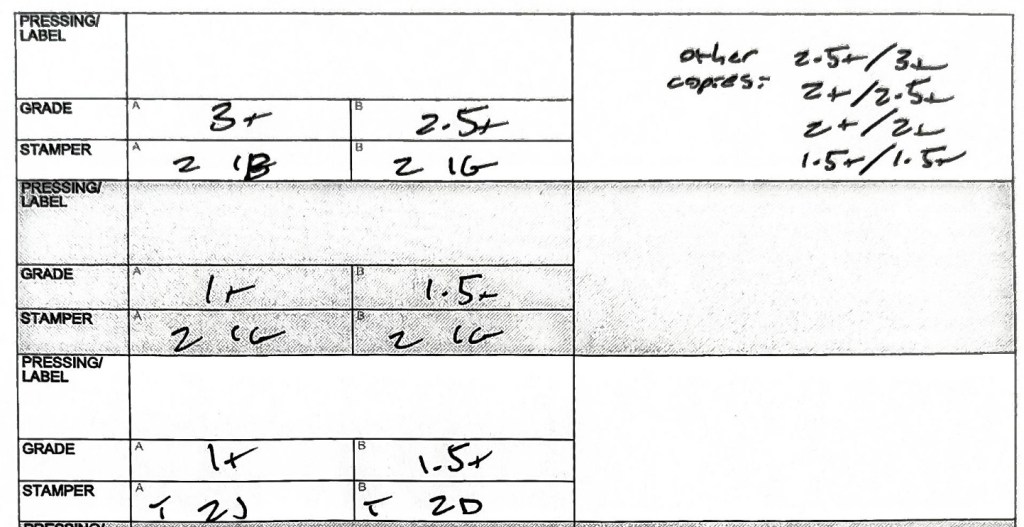
Below you will see part of a stamper sheet that was generated for a shootout we did recently.

Please note that the album you see pictured — Cream’s Goodbye — is not the one we are discussing here. What it has in common with the mystery record we are writing about is both albums were made by British rock bands, both were recorded in England, and both sound their best on the pressings that were made in the UK.

For years we would buy any and all copies of this album on the early Polydor label as long as they looked original and had TML in the dead wax. The band was British, the production was British, but for some reason all the early pressings were mastered by The Mastering Lab right here in the states. Apparently somebody involved in the production thought they could do the best job, and they were probably right.

(The Mastering Lab was one of the great mastering houses in the 70s and 80s. There is no one alive today who can make a record remotely as good sounding as the ones they produced by the thousands in those days. If you know of any, please contact me at tom@better-records.com.)

Woops

Then we noticed that some of the Red Polydor pressings said “Made in Holland” on the label. We also noticed that the Holland pressings were never the winners of our shootouts.

It’s not as if they weren’t very good sounding pressings. They could earn grades of 2+ on both sides, as two of the seven copies shown below did, but most of the time their grades were a bit lower than those, and never as good as the best Brits.

Our appreciation of these facts, facts that had been staring us in the face for a decade or more, was lacking. We didn’t connect dots that were so obvious it was hard to miss them. Why I have no idea.

Eventually, after more shootouts had shown us again and again the limitations of the Dutch pressings, the penny dropped and we finally saw the labels for what they were: a clue to what pressings could win and what pressings couldn’t. Mind you: Every record still had to go through a shootout, and the person hearing and evaluating the record had no idea which of the two countries it might have been made in. But now we knew to pay a premium for the Brit-pressed records and only buy the Dutch at the right price.

Why did we keep at it until we had if figured out? Because we get paid to.

(more…)

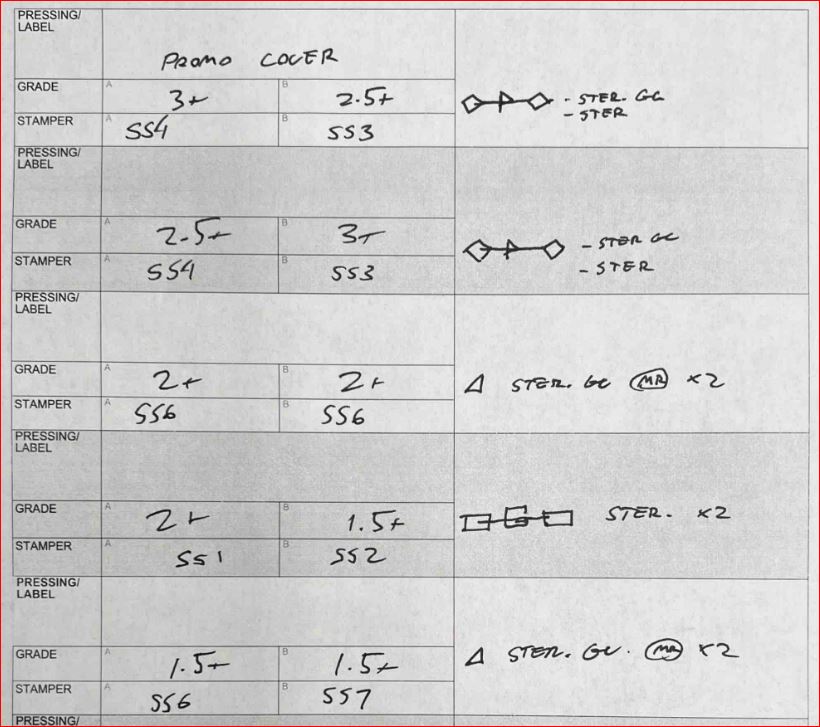
Today’s Rock Record Mystery – How Can Stampers 3, 4 & 6 Beat 1 & 2?

Hot Stamper Pressings of the Music of Tom Petty Available Now

The earliest stampers for this mysterious Tom Petty album — not the one you see pictured — were some of the worst sounding in our shootout.

Most audiophiles, when given a choice between earlier stampers and later stampers, all other things being equal, would take the early ones, right?

As a matter of fact, so would we. Most of the stamper sheets we put up on this blog show the early numbers beating the later numbers.

As a rule of thumb it’s not a bad one, but unless you actually do a shootout, how would you know that your SS1/SS2 copy isn’t the best?

How could you possibly know that the SS4/SS3 murdered it?

The promo cover might be helpful, but lots of promo pressings don’t win shootouts, or even do all that well in them.

Like so many realities of the world of records, these are all mysteries, ones that are very unlikely to be solved.

The winners of the next shootout could have the exact same stampers as the record that did the worst in this one. It happens!

One of the best reasons mysteries such as this have little chance of being solved is that no one with any real expertise, using methodologies that are reliable and reproducible in any serious way, is taking on this kind of work — other than us.

We actually like testing records, and over the many years we have been in business we’ve refined* a method for doing it that is as reliable and reproducible as any method can be in the world of audio: the record shootout.


*As far as I know, my friend Robert Pincus was the one who invented the record shootout. He would evaluate each side of a record independently against other copies of the same album, taking notes that described the strengths and weaknesses he heard on each copy he played.

He assumed nothing, and neither do we. Our rigorous controls, blinded experiments and use of the scientific method to arrive at reproducible results are simply advances on his original approach.

(One of the most important differences between his shootouts and ours is that we have someone whose only job is to play the records, and another person to do the listening and take the notes. When the listener has no idea what pressing is being played, there is little chance of the kinds of psychological biases that are the scourge of the record shootout.)

(more…)

Is This Really Robert Ludwig’s Doing? I Thought He Was One of the Good Guys

Hot Stamper Pressings of Rock and Pop Albums Available Now


Below is the complete shootout stamper sheet for a rock record whose name we do not plan to reveal at this time.

We could reveal it, since knowing the “right” stamper numbers appears to be of no help at all — the best stampers and the worst stampers are exactly  the same stampers! (Nothing new there.)

RL stands for Robert Ludwig and MD stands for Masterdisk.  As you can see, Robert Ludwig cut all seven of the pressings that made it to the shootout.

One of them actually won. “Robert Ludwig’s stuff cannot be beat!” might be the post on whatever audiophile forum you frequent. (If it’s Hoffman’s forum, it would more likely read “Robert Ludwig’s stuff cannot be beat except by Steve Hoffman!”)

Another pressings with those same markings came in next to last, with such mediocre-at-best sound that it would not qualify as a Hot Stamper at all. (1.5+ on both sides or better is the minimum grade for any record we sell.)

Robert Ludwig really screwed up the mastering of this title, another forum member might post.

Can they both be wrong? Of course they can. When has any information posted on a forum been reliable or free from error?

If you were to tell me you have the Robert Ludwig-mastered original pressing for this record and it sounds amazing, I would be inclined to agree with you that that is very possible. If, on the other hand, you were to tell me you have the Robert Ludwig-mastered original pressing for this record and it sounds terrible, I would say I happen to know firsthand that that’s possible too.

The most likely sound for any copy you might have is “good, not great,” because only two copies earned grades of 2+ or better on both sides. Two out of seven. (Which is disappointing because it hurts our bottom line when so few copies in a shootout will end up selling for much more than we invested in them in money and labor.)

(more…)

How Is It that the Earliest Pressings from the Tube Era Often Lack the Sound of Tubes?

Hot Stamper Pressings of Music on Island Records Available Now

Please note that the album you see pictured on the left is not the one we are discussing here.

It has been our experience going back many years that the earliest pressings for many records on the Island label are not very good.

To be fair, this one — again, not Mr. Fantasy — is not a bad sounding pressing.

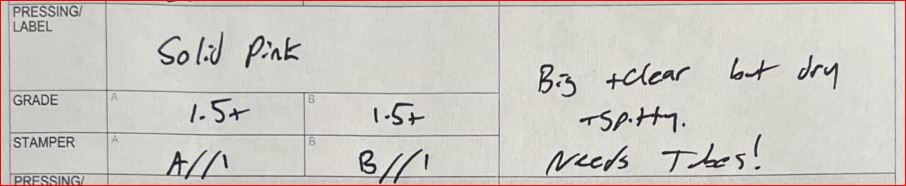
With grades of 1.5+ on both sides, it fits comfortably in our section for good, not great sounding LPs. But the right reissues are a big step up in class sonically. They’re the ones that win shootouts, not these Pink Label LPs.

It’s big and clear but dry and spitty and badly needs tubes — or the sound of tubes — in the cutting chain.

That’s not supposed to happen, the early pressings are supposed to be the most Tubey Magical ones, with the reissues being less Tubey Magical — but in the world of records, when has that rule of thumb ever counted for anything?

Been There, Done That

We’ve run into so many sonically-flawed Pink Label Islands by now that hearing one sound lackluster if not actually awful doesn’t phase us in the least. Some of the other Pink Labels that never win shootouts can be found here.

(more…)

These Pink Label Pressings Can Sound Good, But Great? Not a Chance

Hot Stamper Pressings of Music on Island Records Available Now

Below you will see the bottom part of the stamper sheet for a shootout we did recently.

Please note that the album you see pictured is not the one we are discussing here.

It very well could have been been a Jethro Tull album, but all we can say for sure is that it was definitely an album on Island, which just happens to be one of our favorite labels, for sound and music.

The earliest pressings for many records on the Island label are not very good. This one — again, not for This Was, for some other record — is not a bad sounding pressing.

With grades of 1.5+ on both sides, it fits comfortably in our section for good, not great sounding LPs — but the right reissues from the 70s are a big step up in class sonically. They’re the ones that win shootouts, not these Pink Label LPs.

It’s big and clear but dry and spitty and badly needs tubes in the cutting chain.

Do the record collectors who prize the Pink Label pressings above all others notice these things?

Do the audiophiles who play them?

Been There, Done That

We’ve run into so many sonically-flawed Pink Label Islands by now that hearing one sound lackluster if not actually awful doesn’t phase us in the least. Some of the other Pink Labels that never win shootouts can be found here.

(more…)

THE Hot Ticket, or Just One of a Bunch of Potentially Hot Tickets?

Hot Stamper Pressings of Rock and Pop Albums Available Now

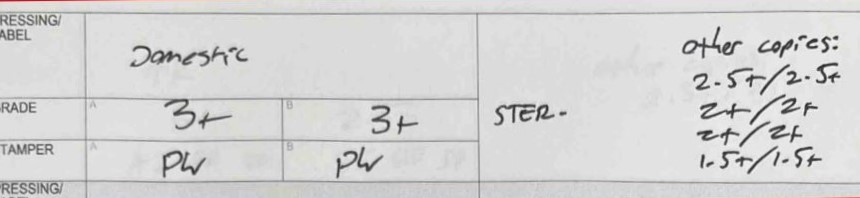
Below you will find the stampers for the pressing from a recent shootout we did for a rock record whose name we are not revealing. You may have noticed that when we give out the stampers for the top copies, we rarely identify the title of the record with those Shootout Winning stampers.

As you can well imagine, our sizable investments in research and development over the course of decades make up a big part of the costs we must pass on to our customers.

I can’t say this title is typical of most of the rock and pop we play, but it’s not all that unusual either.

Obviously, knowing the “right” stamper information in this case gets you in the ballpark, but it won’t help you hit the grand slam home run you want to. To do that you have to clean and play about five copies the way we did.

Hot Stamper shootouts may be expensive, they may be a lot of work, but our experience tells us there is simply no other way to find top quality pressings — the ones that earn the 3+ grades, not the 1.5+ grades.

They might all look the same, but they sure don’t sound the same.

In this particular case, the import pressings we played — the ones we expected to do the best as a matter of fact — had by far the worse sound.  There were a couple of them, there was a domestic reissue, and there were five originals: eight records in total.

Changes for 2024

Beginning in 2024 we decided to make available to our readers a great deal of the pressing information we’ve compiled over the last twenty years, under these headings:

(more…)

The Wrong Stampers on Some Albums Are Shockingly Bad

Hot Stamper Pressings of the Music of Carly Simon Available Now

Below you will see the bottom part of the stamper sheet for a shootout we did recently.

Please note that the album you see pictured is not the record we are discussing here. It very well could have been been a Carly Simon album, or something from some other artist, but all we can say for sure is that it was definitely an album from the 70s on Elektra.

We are not revealing what record had these stampers and earned these grades for the simple reason that avoiding these bad labels for the record in question would make it fairly easy to figure out what the better pressings of the album might be.

As I’m sure you can understand, we want you to buy the copy with the Hottest Stampers from us, not find one on your own.

We’re happy to be moderately helpful, but naturally we find it necessary to draw the line somewhere, and giving out the kind of information that makes it is easy to find the best pressings is where we have chosen to draw it. The top copies are the ones that pay the bills around here, and with a staff of ten, in California no less, the bills are sizable.

We appreciate your understanding.

(more…)

After You’ve Played 100 Copies of the Album, What’s Left to Learn?

bloodchildHot Stamper Pressings of the Music of Blood, Sweat and Tears Available Now

This commentary is at least ten years old. We can’t say that a red label reissue like the one discussed below would do as well under the improved shootout conditions in our new studio, but the possibility exists, which is the point of the story we are telling here.

A common misconception of many of those visiting the site for the first time is that we think we know it all.

Nothing could be further from the truth. We definitely do not know it all. We learn something new about records with practically every shootout.

Not This Title

Case in point: the record you do NOT see pictured above. (The record we recently learned something new about — this, after having played scores and scores of copies over the years — will remain a secret for the time being. At least until we find another one.)

In 2013 we played a red label Columbia reissue of a famous 60s rock record (again, not shown) that had the best side two we had ever heard. Up to that point no copy other than the 360 original had ever won a shootout, and we’ve done plenty. Lo and behold, here was a reissue that put them all to shame.

I’m still in shock from the experience to tell you the truth, but what a blast it was to hear it!

The recording, which I first played more than 40 years ago at the tender age of 16, was now bigger, less murky and more energetic than ever before. Had you asked me, I would have confidently told you not to waste your time with the second pressing, to stick to the 360s on that title, and I would have been wrong wrong wrong.

How Wrong?

But wait a minute. The 360 original will probably beat 49 out of 50 red label reissue copies on side two, and the best 360 original could not be beaten on side one by any other pressing. When you stop to think about it, we weren’t very wrong at all.

Let’s just say our understanding was incomplete.

This is why we prefer to offer actual physical records rather than just advice, although it’s clear for all to see that we happily do both, and, moreover, we certainly feel qualified — as qualified as anyone can be — to offer up our opinions, since our opinions are based on a great deal of experimental data.

Having big piles of cleaned records at one’s disposal is fundamentally important to this kind of operation. In our experience, shootouts using only a small number of pressings have relatively little value. They are best seen as a guide for the next, more comprehensive attempt to find out what might be the truly killer pressings of any given album.

(more…)