*Collecting Better Records

Ideas and methods for collecting the best sounding pressings of your favorite music.

Our Search for Shootout Winning Sound on Modern Vinyl Finally Pays Off

Our (Incomplete) List of Potentially Very Good Sounding OJC Pressings

It has finally come to pass. A modern pressing has won a shootout.

Having auditioned more than a dozen modern (post-2000) OJC pressings and having had them fall far short of the mark again and again — when they weren’t just plain awful — we have now discovered one that can win a shootout.

As you imagine, this came as quite a shock.

We weren’t sure precisely which of the many OJC pressings our shootout winner was until we looked up the stamper numbers on Discogs. To our surprise, it had clearly been made sometime in the the 21st century.

That Never Happens

This has never happened before. No record made since 2000 has ever won a shootout against a vintage pressing of the same title.

Modern records range from awful to very good, but one quality they have never had is the ability to be the best of the best.

Now one has.

(more…)

Was It Even Possible for Harry Pearson to Create a Meaningful Super Disc List?

Hot Stamper Pressings of TAS Super Disc Recordings Available Now

A customer brought up Harry Pearson in a discussion we were having about the best sounding records, which went a little something like this:

“You’re as much a pioneer as Harry Pearson ever was, and your authenticity is unchallengeable…”

Even I wouldn’t go that far! We make plenty of mistakes, and we learn new things about records all the time, so calling us “unchallengable” is a bit off the mark. However, we are always up for the challenge, and are happy to put our records up against any and all comers.

As far as Harry Pearson, I had this to say about the man:

Very kind of you to say. I think Harry could have been much better at his job if he had had access to modern record cleaning technology, better playback, and a staff of people playing thousands of records every year to help him discover the best sounding pressings.

No one can succeed as a one man show in audio. Audio is too complicated. It takes a team of dedicated professionals with expertise in every area of audio and record collecting to do it right.

He never understood stampers and the like because he didn’t have the research staff to get the data he would have needed to test all the stamper variations and learn from them.

He was stuck at the level of labels, and also not nearly skeptical enough of the idea that “the original is better,” a myth audiophiles cling to to this very day. That, and the superiority of the Heavy Vinyl remaster, which we both know is a crock of sh*t.

TP

Our comments for The Fantasy Film World of Bernard Herrmann have something to say about these same issues.

Decca Versus London

There’s a reason this record is on the TAS List of Super Discs — if any LP should be called a Super Disc, this one should. (With Phase Four sound you might even call it a Super-Duper-Disc.)

But Harry is, not atypically, rather misinformed about the catalog number and country of manufacture. He exclusively admits the Decca pressing to his list, and that is clearly contrary to our experience in general as well as our findings for this shootout. The best Decca pressing we played rated no better than a B+ for either side. That’s five — count them, five — sonic grades lower than the A Triple Plus sides of our best London copy.

If you are one of those audiophiles who’s been following Harry down the rabbit hole for years, discovering a little site called Better Records may just turn out to be a life-changing event. Here you can find records that live up to the hype, ours and his.

Selling the Hype

Record dealers that sell records based on their reputation — and that means pretty much all of them — are selling the hype.

If they haven’t played the record, they can’t tell you what it sounds like, TAS List or no TAS List.

The catalog number may be right, but finding the sound that lives up to the description can only be done one way: by playing the record.

Most copies of The Fantasy Film World, whether they have a Decca label or a London one (all of the ones we are selling are mastered and pressed by Decca; some get one label and some get the other) leave much to be desired.

Did Carlos Santana want to make music or produce fireworks?

Hot Stamper Pressings of the Music of Santana Available Now

Our good customer Aaron has lately been putting a great deal of time and money into the pursuit of perfect sound. His progress in audio since he discovered Hot Stampers and the kind of high quality vintage equipment we’ve recommended he use to play them has been remarkable.

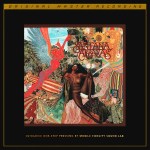
In 2022 he wrote to tell us that the Super Hot Stamper Abraxas we had sent him and the Mofi One-Step he already owned were comparable in sound quality. Knowing what an awful label Mobile Fidelity is, and what a foolish idea Half-Speed Mastering is, you can imagine that we might have been a wee bit skeptical of this estimation, and we asked him to clarify his position.

Aaron also has made many improvements to his system since then. He carefully listened to both versions of Abraxas again and reported his findings. We believe that there is much to be learned from the kind of shootout that Aaron did for the album.

Hey Tom,

Oh, it’s a fascinating comparison! Here’s some data points, with the final one being the most relevant to your question.

I did another series of shootouts yesterday with my new vintage amp and speakers, and I included Abraxas in it. The bass on the onestep is monstrous and unreal. Sometimes the cymbals and chimes leap out of the speakers. I understand why people go gaga for this record. If you listen for sound, it doesn’t get any better than this.

Then I put on the hot stamper. The bass was back under control. Driving, but not dominating. The overall character was lighter and less ponderous. It was more listenable, more musical, and overall it was a relief to be less distracted by the fireworks. The vocals are back in front where they belong, and more palpable.

But, the hot stamper simply doesn’t grab ahold of you the way the one-step does.

When you describe the sound of the MoFi One-Step of Abraxas, with bass that’s “monstrous and unreal. Sometimes the cymbals and chimes leap out of the speakers,” all I hear in my head is a classic case of smile curve equalization, the kind MoFi has been using since the day they produced their first rock record in 1978, Crime of the Century. Years ago we noted:

We get these MoFis in on a regular basis, and they usually sound as phony and wrong as can be. They’re the perfect example of a hyped-up audiophile record that appeals to people with lifeless stereos, the kind that need amped-up records to get them to come to life.

I’ve been telling people for years that the MoFi was junk, and that they should get rid of their copy and replace it with a tonally correct version, easily done since there is a very good sounding Speakers Corner 180g reissue currently in print which does not suffer from the ridiculously boosted top end and bloated bass that characterizes the typical MoFi COTC pressing. [Of course, we no longer recommend anyone buy Crime of the Century on Speakers Corner. The better our system gets, the less we like them.]

That’s the sound of MoFi all right. The Hot Stampers we offer would never have those “qualities,” if you care to call them that.

Leaping cymbals and chimes? Are they supposed to do that?

Also, the bass on our early pressing would have to be “back under control” or we wouldn’t have sold it to you as a Hot Stamper.

Unsurprisingly, without all that extra added bass, the sound is “lighter and less ponderous.” Saints be praised.

Smile Curve Redux

With the smile curve adding to the top and the bottom, what suffers the most? The midrange. There’s less of it relative to the  now-boosted frequency extremes. We described the effect here:

The Doors first album they released was yet another obvious example of MoFi’s predilection for sucked-out mids. Scooping out the middle of the midrange has the effect of creating an artificial sense of depth where none belongs. Play any original Bruce Botnick engineered album by Love or The Doors and you will notice immediately that the vocals are front and center.

The midrange suckout effect is easily reproducible in your very own listening room. Pull your speakers farther out into the room and farther apart and you can get that MoFi sound on every record you own. I’ve been hearing it in the various audiophile systems I’ve been exposed to for more than 40 years.

Nowadays I would place it under the general heading of My-Fi, not Hi-Fi. Our one goal for every tweak and upgrade we make is to increase the latter and reduce the former.

Or as Aaron might have phrased it, “The vocals are back in front where they belong, and more palpable.” You sure got that right.

Musicality

Aaron was impressed with how much more musical our pressing is, noting: “It was more listenable, more musical, and overall it was a relief to be less distracted by the fireworks.”

Then he concludes with this, sending my head into a spin: “But, the hot stamper simply doesn’t grab ahold of you the way the onestep does.”

(more…)
Letter of the Week – “…most of my LP purchases over the years, whether heavy vinyl or not, were lousy representations…”


More Hot Stamper Testimonial Letters

One of our good customers had this to say about some Hot Stampers he purchased recently:

Hey Tom, 

Thanks to you guys, I finally get it. I realize now that most of my LP purchases over the years, whether heavy vinyl or not, were lousy representations of what was out there. I think that conditions you.

If you’ve only ever known sex with a condom, you have no idea how much better sex is without. Hope that wasn’t too out of line. Thanks again, guys, for fighting the good fight.

Cheers,
Dave R.

Dave,

Not out of line, I know what you mean!

As for run-of-the-mill records, I wrote a commentary many years ago criticizing the idea of buying lots of music on the cheap as a good way to get your money’s worth.

The micro-budget guys in audio and record collecting really have almost no chance to get good at either audio or record collecting. Both are difficult and expensive if you are actually serious about them.

It’s simply not a hobby that lends itself to doing it on the cheap, especially these days. (It used to be; I bought my monster Fulton J speaker system for under $2,000 a pair in 1975 ($11,000 is today’s money). That speaker today would sell for perhaps as much as fifty times that two grand.)
The Heavy Vinyl crowd are getting not-especially-good pressings at an affordable price, but they fool themselves into thinking all such pressings are better than mediocre in order to justify collecting them. Apparently this is where some folks think the real fun is. We obviously do not subscribe to that view, nor would we recommend it. Years ago we wrote:

We like to play records, not just collect them, and we like to play records with the best sound we can find, using the shootout process we developed over the last two decades. We call those kinds of records Hot Stamper pressings, and finding them, and making them available to other like-minded audiophiles, has been the focus of our work for close to twenty years.

Audiophiles collect records for lots of reasons, and if they enjoy having a collection of audiophile pressings, and find that they derive satisfaction from owning and discussing them with other similarly-interested individuals, then more power to them. Who am I to tell them what they should be doing with their spare time?

One good copy of Way Out West was all Robert Brook needed in order to see how pointless an exercise and how wasteful an approach this turns out to be, assuming you, like him and plenty of readers of this blog, are willing to devote the time and effort it takes to get to the next level.

(more…)

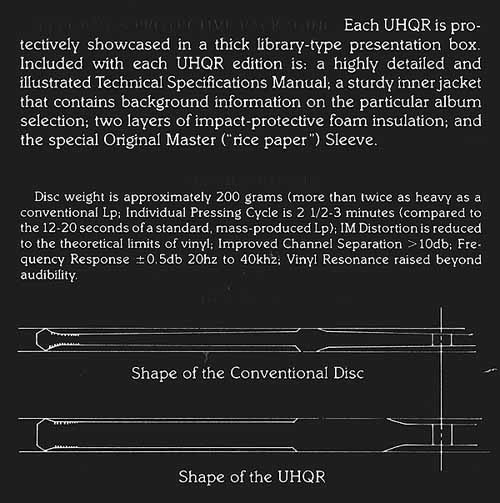
“Ultra High Quality Records” or “Lipstick on a Pig”?

Hot Stamper Pressings of Audiophile Recordings Available Now

Today’s vinyl-loving audiophile seems to be making the same mistakes I was making more than forty years ago. Heavy Vinyl, the 45 RPM 2 LP pressing, the Half-Speed Limited Edition — aren’t these all just audiophile fads, each with a track record of underperformance that seems to worsen with each passing year? Would you really want to defend this piece of junk in 2023?

In my formative years in audio, starting in the mid-70s, it would never have occurred to me to buy more than one copy of a record. I didn’t need to do a head-to-head comparison in order to find out which one sounded better. I approached the subject Platonically, not scientifically: the record that should sound better, would sound better.

uhqrb

Later on in the decade, a label by the name of Mobile Fidelity would come along claiming to actually make better sounding pressings than the ones the major labels put out, and cluelessly I bought into that nonsense too. (To be fair, sometimes they did — Waiting for Columbus and American Beauty come to mind if you don’t have properly-pressed, properly-mastered originals, but my god, Katy Lied, Year of the Cat and Sundown have to be three of the worst sounding records I’ve ever played in my life.)

And isn’t it every bit as true today as it was in the past that the audiophiles who buy these “special” pressings, like the ones I bought back in the 70s and 80s, rarely seem to notice that many of them don’t actually sound good? (Some of the worst can be found here, the worst of the worst here.)

CofAEasy Answers and Quick Fixes

Turns out there are no easy answers. There are no quick fixes. In audio there’s only hard work and more hard work. That’s what gives the learning curve its curvature — the more you do it, the better you can do it.

And if doing all that work is also your idea of fun, you just might get really good at it.

If you actually enjoy playing five or ten or even fifteen copies of the same album to find the few that really sound good, and the one that sounds amazing — because hearing your favorite music the way it was meant to be heard is a positive thrill — then you just might end up with one helluva record collection, worlds better than one filled with audiophile pressings from any era, most especially the present.


Further Reading

Original Is Better? Sez Who?

Hot Stamper Pressings that Sound Their Best on the Right Reissue Available Now

Which albums sound better on the right vintage reissue pressing?

These do.

Just to take one example: The original Reprise pressing of Jazz Waltz, whether in mono or stereo, has never sounded very good to us. The mono is quite a bit worse than the stereo – no surprise there – but both must be considered poor reflections of the master tape.

We sold one many years ago, describing it this way: “Beautiful Original with decent sound — rich, smooth and sweet.” Which it was, but from us that’s little more than damning it with faint praise.

The Discovery pressing is so much bigger, clearer and livelier it’s almost hard to imagine it and the 1962 Reprise original were both made from the same tape.

Something sure went wrong the first time around — I think it’s safe to say at least that much.

Does the Original Always Have the Best Sound?

Not for those of us who play records rather than merely collect them.

Leave the originals for the Jazz Guys. The Hot Stamper pressings of the reissues are perfect for us music loving audiophiles.
Don’t be put off by the title; these are not some sleepy old-fashioned waltzes. This is swingin’ West Coast jazz at its best. Of course, the arrangements are done in waltz time, but that doesn’t keep them from swingin’.

And the amazingly good sound? Credit Bones Howe, a man who knows Tubey Magic like practically no one else in the world. The Association, The Mamas and the Papas, The Fifth Dimension, and even Tom Waits — all these brilliant recordings are the result of Bones Howe’s estimable talents as producer and engineer.

(more…)

Every Day Is Record Store Day at The Electric Recording Company

Our Review of The Electric Recording Company’s Release of Forever Changes

Recently we took the Electric Recording Company to task for their botched mastering of Love’s Forever Changes.

At ERC they like to point out they are doing things differently, and boy are they ever. They do not remaster the tapes, they simply transfer the tapes onto disc without any interference from equalizers, compressors and the like.

Naturally, they seem less willing to discuss the sludge-like sound their vintage tube cutting amplifiers bring to every tape that’s forced to go through them before it gets to the cutting stylus. I hope to discuss this issue in more depth down the road.

What Is It, Exactly

For now, let’s try to get to the heart of what this pressing is.

This is not an audiophile record, properly understood.

No member of the audiophile community, those lovers of sound you’ve heard so much about, could possibly put up with a record that sounds as bad as this one does.

Having played two of their releases and knowing how all of them are made, I would be surprised if any of this company’s records are any better than awful.

No, this is plain and simply a collectible.

It exists because it could be made as a very limited edition at a profit.

It exists because it could be made with exceptionally high quality packaging.

The vinyl inside the fancy packaging is only there to make sure that all the elements of a collectible release are accounted for.

All the value is tied up in the collector appeal of the release, none in the vinyl, because the vinyl is junk.

(more…)

What, You’re Selling Your TAS Super Disc List LPs? Say It Isn’t So!

Hot Stamper Pressings of the Music of David Crosby Available Now

UPDATE 2025

The bulk of this listing was written more than ten years ago and updated last year. Please to enjoy!

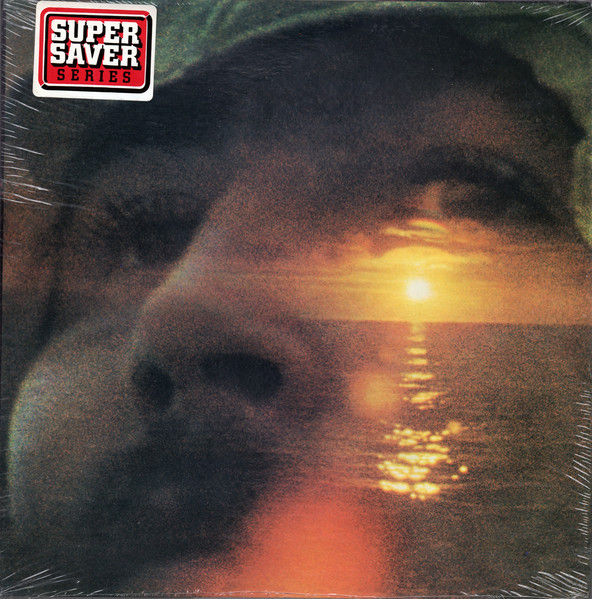
Also, whatever you do, don’t buy the Super Saver pressing of David Crosby’s debut like the one you see pictured, assuming you want to hear the album sound the way it should. Original only, and the right one of course.


We ran across a website years ago that confirmed our worst prejudices regarding audiophiles and their apparent desire to rely on gurus such as Harry Pearson to tell them which recordings sound good and which don’t.

This flies in the face of everything we stand for here at Better Records.

Since no two records sound the same, a list of so-called Super Discs is practically meaningless.

“Practically meaningless” hits the nail right on the head as far as we are concerned.

Picture yourself standing in your local record store with a record in your hands, one you happen to know is on the TAS List. This knowledge makes the record slightly more likely to sound better than any other record you might have randomly picked up in the store. Insignificantly, trivially more likely. In other words, as a practical matter, not all that much more likely.

Why is this? Three reasons:

  1. Many Super Discs are not on the TAS List;
  2. Some of the records on the TAS List are not deserving of Super Disc status; and most importantly,
  3. Most pressings of titles on the TAS List don’t sound especially good — only the right ones do. (I pictured the David Crosby album you see above with the cover you definitely don’t want in order to hammer home that point.)

But that’s not even the point. Ask yourself this:

Why on earth would anyone want to collect the records on The TAS List, when most of those records contain music that appeals to a very small group of people not named Harry Pearson?

(more…)

What Kind of (Audio) Fool Was I?

Thinking Critically About Records Is Key to Understanding Them

This commentary was written in 2007 or thereabouts.


Today’s audiophile seems to be making the same mistakes I was making as a budding audiophile more than thirty forty five years ago.

Heavy Vinyl, the 45 RPM 2 LP pressing, the Half-Speed Limited Edition — aren’t these all just the latest audiophile fads, each with a track record more dismal than the last?

And isn’t it every bit as true today as it was in the past that the audiophiles who buy these “special” pressings rarely seem to notice that many of them don’t actually sound very good?

Was Devo right? Is everything in audio getting worse?

Our Story Begins

One Man Dog has long been a favorite James Taylor album of mine. It didn’t catch on too well with the general public when it came out but it caught on just fine with me. I used to play it all the time. As a budding but misguided audiophile back in the early ’70s, I foolishly bought the import pressing at my local record store, The Wherehouse, assuming it would sound better and be pressed on quieter vinyl. The latter may have been true, probably was true, but the former sure wasn’t. Turns out even the average domestic original is far better sounding, but how was I to know?

Compare and Contrast? What For?

Back in those days it would never have occurred to me to buy more than one copy of a record and do a head to head comparison to see which one sounded better. I approached the subject Platonically, not scientifically: the record that should sound better would of course sound better, so what is the point of testing?

Later on in the decade a label by the name of Mobile Fidelity would come along claiming to actually make better sounding pressings than the ones the major labels put out, and — cluelessly — I bought into that nonsense too.

(To be fair, sometimes they did — Touch, Waiting for Columbus and American Beauty come to mind, but my god, Katy Lied, Year of the Cat and Sundown have to be three of the worst sounding records I’ve ever played in my life.)


UPDATE 2015

Obviously, we no longer agree with much of that except for the one MoFi record that has stood the test of time, Touch.


The Learning Curve Is Looking Awfully Flat

Pardon my pessimism, but it seems to me the learning curve these days is looking awfully flat. There doesn’t seem to be a whole lot of learning going on. If such learning were actually going on, how would most of these audiophile labels still be in business?

Don’t get me wrong: some progress has been made. Reference, Chesky and Audioquest thankfully no longer burden us with their awful LPs. But is the new Blue or Fragile really any better than the average MoFi from 1979? Different yes, but better? I know one thing: I couldn’t sit through an entire side of either of them on the remastered pressings. And I love both of those albums.

Compared to the real thing, can any of these records pretend to compete sonically? A few, I guess, but too few, and they seem to be pretty darn far between.

(more…)

On Tarkio, Do All the Robert Ludwig Mastered Copies Have Hot Stampers?

Hot Stamper Pressings of Hippie Folk Rock Albums Available Now

UPDATE 2023

This commentary describes some observations we were able to make after doing a shootout a few years back.


Even though all the original Pink Label pressings are mastered by the great Robert Ludwig, they have a marked tendency to be dull, thick and opaque. Other records we’ve played with these same shortcomings can be found by clicking on the links below.

On too many original pressings, the sound is too smooth.

Starting at some point in the mid-’90s, many Heavy Vinyl pressings started to have the same shortcoming, one that we find insufferable to this day: they are just too damn smooth.

(more…)