Decca/London/Argo – Reviews, Commentaries, Letters, etc.

Who Can Explain Why This Cheap Reissue Sounds So Good?

Hot Stamper Pressings of the Music of Claude Debussy Available Now

This Decca reissue is spacious, open, transparent, rich and sweet.

Roy Wallace was the engineer for these sessions from 1955 to 1962 in Geneva’s glorious sounding Victoria Hall. His work here is superb in all respects.

It’s yet another remarkable disc from the Golden Age of Vacuum Tube Recording, with the added benefit of mastering using more modern, but apparently still good, cutting equipment from the ’70s, 1972 to be exact.

We are of course here referring to the often amazing modern mastering of 40+ years ago, not the mediocre-at-best modern mastering of today.

The combination of old and new works wonders on this title as you will surely hear for yourself on both of these superb sides.

We were impressed with the fact that it excelled in so many areas of reproduction. The illusion of disappearing speakers is one of the more attractive aspects of the sound here, pulling the listener into the space of the concert hall in an especially engrossing way.

Thread It Up and Just Hit Play Already

What might be seen as odd — odd to some audiophiles but not to us — was how rich and Tubey Magical the reissue can be on the best copies.

This leads me to think that most of the natural, full-bodied, smooth, sweet sound of the album is on the tape, and that all one has to do to get that vintage sound on to a record is simply to thread up the master on a good machine and hit play.

The fact that nobody seems to be able to make an especially good sounding record these days makes clear that in fact I’m wrong to think that this approach would work. It seems to me that somebody should be able to figure out how to do it. In our experience that is simply not the case today, and has not been for many years.

Old Tapes, New Tapes

The master tapes were about fifteen years old when this record was mastered.

Compare that to a current cutting which would be made from approximately fifty year old tapes.

Perhaps that explains it.

Or maybe it doesn’t.
(more…)

This Tchaikovsky 4th with Argenta Didn’t Make the Grade

Hot Stamper Pressings of the Music of Tchaikovsky Available Now
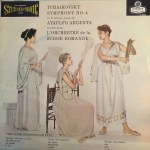
This vintage London Blueback pressing of CS 6048 was released in 1958.

(1958 just happens to be one of the best years for analog recording, as evidenced by this amazing group of albums, all recorded or released in that year.)

CS 6048 seemed to have a lot going for it so we thought we would get one in and give it a spin.

For starters, just take a look at that cover!

Roy Wallace was the engineer and many of his recordings are superb. (As of this posting there are fifteen available on our site.)

Recorded in Geneva’s world-renowned Victoria Hall with L’Orchestre De La Suisse Romande performing, many of of the best sounding records we’ve ever played boast these three elements.

Unfortunately, this London has a case of the “old record” sound we find on far too many vintage pressings, even those with credentials as promising as this one.

All the right people worked on it. How did it all go so wrong?

Who the hell knows?

The world is full of old records that just sound like old records. We’ve suffered through them by the tens of thousands in the 38 years we’ve been in the business of selling premium vinyl to audiophiles.

Our website, as well as this blog, are devoted to helping audiophiles find pressings that don’t sound anything like the millions of run-of-the-mill — and sometimes just awful, as was the case here — LPs that were stamped out over the last seven decades or so.

Even a million dollar stereo can’t make the average record sound good, and the more accurate and revealing the system, the more limited and lifeless the average record will show itself to be.

(more…)

What We’ve Learned About Peer Gynt Over the Last 20 Years

Hot Stamper Pressings of the Music of Edvard Grieg Available Now

The commentary reproduced down below is from 2005. It is unlikely that the pressing we liked at the time, a Stereo Treasury LP of the famous Fjeldstad performance, would come anywhere close to winning a shootout these days. We simply don’t buy them anymore. We stick to the pressings that have done well for us over the last twenty years in shootout after shootout.

Peer Gynt is a Masterpiece that deserves a place at the heart of any classical collection of the greatest recordings of all time.

If you want to improve the quality of pressings in your collection, by far the best way to go about it is to start doing your own shootouts. A great deal of this blog is dedicated to helping you learn how to do that.

Oddly enough, there actually are budget reissues that win shootouts. They just happen to be Ace of Diamonds pressings and not Stereo Treasurys. (You can see a picture of the pressing we like at the bottom of this post.)

The Wonderful Peer Gynt

Our favorite recording of Peer Gynt is the one by Otto Gruner-hegge and the Oslo Philharmonic from 1959.

The only other reading of the work with top quality sonics is the one that won our proto-shootout twenty years ago, the one with Fjeldstad and the London Symphony Orchestra.

Speaking of budget reissues, we are on record as having been fans of a great many budget classical LPs stretching back decades. My catalogs from the 90s were full of reissues with exceptionally good sound.

Doing things as we do them now, by following rigorous testing protocols, has made it possible for us to discover some budget pressings that are so well-mastered they have the potential — accent on the word potential — to win shootouts.

(more…)

Maazel’s Pines of Rome Is Another Title Not Fit for a Super Disc List

Hot Stamper Pressings of The Pines of Rome Available Now

Sonic Grade: C (at best)

I found a bit of commentary in a listing for Scheherazade, and right away it was clear to me that the shootout we did for that title showed us a recording that had much in common with the one we had done more recently for The Pines of Rome.

Here it is, with the necessary changes having been made.

We did a monster shootout for this music in 2021, one we had been planning for more than twenty years. On hand were quite a few copies of the Reiner on RCA; the Ansermet on London; the Maazel on Decca and London (the Decca being on the TAS List), the Kempe on Readers Digest, and quite a few others we felt had potential.

The only recordings that held up all the way through — the last movement being a real Ball Breaker, for both the engineers and musicians — were those by Reiner and Kempe. This was disappointing considering how much time and money we spent finding, cleaning and playing about twenty or so other pressings.

We learned from that first big go around something that we think will remain true for the foreseeable future: the 1960 Reiner recording with the Chicago Symphony on RCA just can’t be beat.

Could other pressings be better sounding? Of course they could.

Would we ever buy another copy? Not a chance.

The notes for the Decca pressing I played, mastered by G, Ted Burkett, can be seen above.

Hey, here’s an idea.

Why don’t you buy a bunch of them and see if any of them do not have the problems described on my notes.

If you find a good one, please let me know the stampers so I can go out and find one myself.

The above is of course all in good fun. We both know that there is not a snowball’s chance in hell that anyone reading this commentary is going to go out and buy some Decca pressings of The Pines of Rome, clean them up, play them one by one and then critique their strengths and weaknesses.

The most likely thing is that, if you have any Decca pressing of Maazel’s Pines, it’s sitting on a shelf collecting dust. Odds are it has not been played in a very long time.

Which should tell you something. Good records get played and bad ones sit on shelves.

(more…)

On Young Person’s Guide, Stick with the Unboxed Deccas

Hot Stamper Pressings of Classical and Orchestral Music Available Now

This is our favorite recording of the work. Those of you looking for a Young Person’s Guide can stop looking, this is the one.

For those who have never heard it, check out The Young Person’s Guide on YouTube – it is a tour de force of orchestral excitement, especially from the percussion section.

We’ve learned from shootouts past (and were reminded again during our most recent) that the London pressings can also be quite good, but none of them can hold a candle to the early Deccas.

However, the later Boxed Label Deccas leave a lot to be desired and should be avoided by those looking for top quality sound.

Side one of this copy was dry and hot. Side two thin and very small.

This is an amazing recording, but you’d never know it from playing the reissues.

There are about 150 orchestral recordings we think offer the best performances with the highest quality sound. This record is certainly deserving of a place on that list.

(more…)

The Early London Pressings Of Schubert’s 9th Are Awful

Hot Stamper Classical and Orchestral Imports on Decca & London

There are plenty of Deccas and Londons that we’ve cleaned and played over the years that were disappointing, and some of them can be found here.

What was most striking about this shootout was how poorly the original London Bluebacks (CS 6061) fared when going head to head with the best vintage reissues. In fact, they were so obviously inferior I doubt we would have even needed another pressing to know that they could not possibly be considered Hot Stampers.

The two we had were crude, flat, full of harmonic distortion, and both had clearly restricted frequency extremes.

In other words, it just sounded like an old record, and not a very good one at that. The world is full of them.

But I remember liking the Blueback pressings I played ten or twenty years ago.

Did I have better copies, or was my system not capable of showing me the shortcomings I so clearly heard this time around? Since this is a question that cannot be answered with any certainty, we’ll have to leave it there.

Our favorite performance of the work is this one with Krips and the LSO, but on a much later reissue pressing produced by Decca in the 70s. Imagine that!

(more…)

Pictures at an Exhibition – Uncannily Natural Piano Reproduction

More of the music of Modest Mussorgsky (1839-1881)
In a recent listing for a shootout winning pressing, we noted:

This original London pressing of the solo piano version of Pictures at an Exhibition has uncannily natural piano reproduction, which is why we are awarding this side one our highest sonic grade, A Triple Plus.

The fact that the recording takes place in Kingsway Hall in 1967 no doubt plays a large part in the natural sound. The hall is bigger here than on other copies, the piano even more solidly weighted, yet none of this comes at the expense of the clarity of the playing.

The piano has no smear, allowing both the percussive aspects of the instrument and the extended harmonics of the notes to be heard clearly and appreciated fully.

Side two has Mehta’s performance of the orchestrated work squeezed onto side two, which is never a good idea if one is looking for high quality orchestral sound. The performance itself is mediocre as well.

We are not, and never haver been, big fans of Mehta’s work with the Los Angeles Philharmonic on London.

The exceptionally rare copy of Mehta’s Planets can sound good, but 90% of them do not — just don’t make the mistake of telling that to the average audiophile who owns one. Harry told him it was the best, he paid good money for it, and until someone tells him different it had better be “the one Planets to own.” (Our favorite performance of The Planets can be found here.)

We see one of our roles here at Better Records as being the guys who actually will “tell you different,” and, more importantly, can back up our opinions with the records that make our case for us. (more…)

Brahms & Dvorak / Hungarian & Slavonic Dances – Updated

Hot Stamper Classical and Orchestral Imports on Decca & London

UPDATE 2022

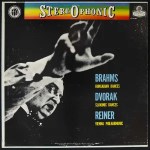
The last time we played a few copies of this London title, CS 6198, we were quite a bit less impressed than the review below might lead you to believe.

We found the sound to be plenty Tubey Magical, but the louder peaks were sour. Overall we judged the sound to be OK at best.

Having played a number of different pressings over the years, our favorite recording of the Slavonic Dances these days is the one with Kertesz on the Decca World of Great Classics budget reissue label.

It may come as a shock to some record collecting audiophiles, but there are actually budget reissues of some titles that can beat any and all comers. Here are some that we’ve come across, discoveries which we are happy to share with you.

(more…)

Letter of the Week – “I have been listening to a first pressing Decca, but your copy made it sound egregiously insipid.”

Hot Stamper Pressing of the Music of The Rolling Stones Available Now

One of our good customers had this to say about some Hot Stampers he purchased recently:

Hey Tom, 

This LET IT BLEED is a gorgeous monster. Everything just jumps off the page, so to speak. I have been listening to a first pressing Decca, which I have owned for years, but your copy made it sound egregiously insipid. As I kept turning up the volume, the room seemed to be nodding its head and egging me on to keep increasing it. I never reached the point where too much was too much. Great copy.

The Mahavishnu EMERALD was brilliant. It brought out all the exciting dimensions of my system. The exquisite strings floated above the musical melee which tattooed its obligato deliriously across its raucous underbelly. The sound reached out like tongues of flame making the speakers completely disappear in their rocking wake.

This is an amazing record that projects and dances the music in every direction and then some. Everything is alive. So completely alive. A real treat. A great recording that tells me my system is completely responsive.

Phil

Phil,

We’ve known for a very long time — since roughly 2005 — what an awful pressing the original mono Decca is of the album.

When we last heard one, it did not evn pass the laugh test, and we never bought another.

Even the original Decca stereo pressings of the album are not that good, and at the prices being charged these days, a very poor choice if you want the best sound.

(more…)

Compression Works Its Magic on The Christmas Eve Suite

Hot Stamper Pressings of the Music of Rimsky-Korsakov Available Now

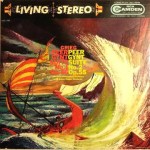
Some notes about the compression effects we heard on side two of a Blueback pressing of The Christmas Eve Suite album back in 2012. We wrote:

Side two is even more transparent and high-rez than side one. The texture on the strings and the breathy quality of the woodwinds make this a very special pressing indeed.

The horns are somewhat smeary and do get a bit congested when loud.

There is more compression on this side two than there was on the best copy we played, and that means low level detail is superb, but louder parts, such as when the more powerful brass instruments come in, can present problems.

Note how good The Flight of the Bumble Bee sounds here.

Compression is helping bring out all the ambience and detail in the recording, and there’s no downside because the orchestra is playing softly, unlike the piece that precedes it.

A classic case of compression having sonic tradeoffs.

(more…)