Hot Stamper Pressings of Living Stereo Titles Available Now
Way back in 1994, long before we had anything like the system we do now, we were finding fault with the “Classic Records Sound.”
With each passing year — 28 and counting — we like that sound less. Some Classic Records pressings may be on Harry’s TAS list — disgraceful but true — but that certainly has no bearing on whether or not they are very good records.
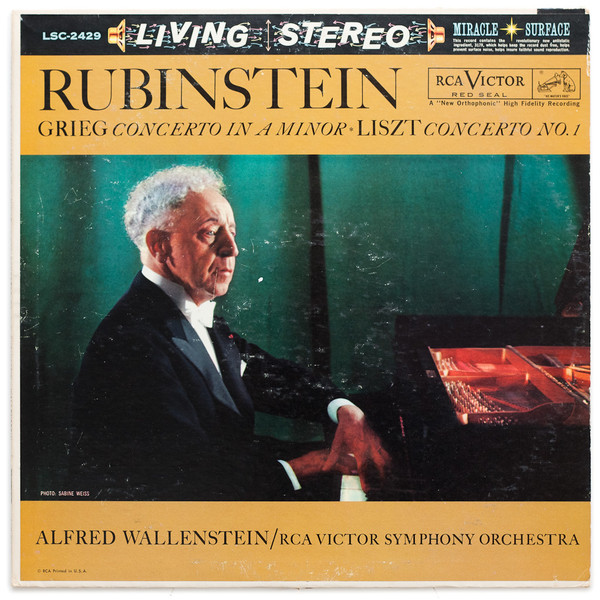
I had a chance to play LSC 1806 (pictured above) not long ago and I was dumbfounded at how bright, shrill and aggressive it was.
I still remember playing my first Classic Records title, their first release, which would probably have been in 1994. The deep bass of the organ at the start of Also Sprach Zarathustra, the horns and the tympani blasting out from a dead silent background, put a lump in my throat. Had they actually managed to remaster these old recordings so well that the vintage pressings I was selling for such high prices would soon be worthless? I really do remember having that thought race through my mind.
But then the strings came in, shrieking and as bright as the worst Angel or DG pressing I’d ever heard. It was as if somebody had turned the treble control up on my preamp two or three clicks, into ear-bleeding territory. All my equipment at the time was vintage and tube, and even though my system erred on the dark side tonally, the first Classic release was clearly off the charts too bright and transistory, with none of the lovely texture and sheen that RCA was famous for in the early days of Living Stereo.
I knew right then that my vintage record business was safe.
Here is our review from the ’90s, written shortly after the release of Classic’s first three titles. (With minor additions and changes for clarity and context.)
Hall of Shame Pressings, Every One
I’m reminded of the nonsense I read in TAS and elsewhere in the mid-’90s regarding the reputed superiority of the Classic Records Living Stereo reissues. After playing their first three titles: 1806, 1817 and 2222 (if memory serves), I could find no resemblance between the reviews I read and the actual sound of the records I played. The sound was, in a word, awful.
To this day I consider them to be the single worst reissue series in history.
UPDATE 2025
Analogue Productions now holds that crown, surely. Still going strong, producing one crap pressing for the mid-fi collector market after another, there is simply no recording they won’t see fit to ruin.
When Harry Pearson (of all people! — this is the guy who started the Living Stereo craze by putting these forgotten old records on the TAS list in the first place) gave a rave review to LSC 1806, I had to stand up (in print anyway) and say that the emperor clearly had removed all his clothes, if he ever had any to begin with.
This got me kicked out of TAS by the way, as Harry does not take criticism well. I make a lot of enemies in this business with my commentary and reviews, but I see no way to avoid the fallout for calling a spade a spade.
Is anybody insane enough to stand up for LSC 1806 today? Considering that there is a die-hard contingent of people who still think Mobile Fidelity is the greatest label of all time, there may well be “audiophiles” with crude audio equipment or poorly developed critical listening skills, or both (probably both, as the two go hand in hand), that still find the sound of the shrill, screechy strings of the Classic pressing somehow pleasing to the ear. Hey, anything is possible.
As I’ve said again and again, the better a stereo gets, the more obvious the differences between good vintage pressings and most current reissues become. Modest front ends and mediocre playback systems can disguise these differences and mislead the amateur audiophile.
And the “professional” too. We’ve all had the experience of going back to play a record from years ago that we remember as being amazing, only to find it amazingly bad.
The Japanese Led Zeppelin series from the 90s comes immediately to mind. How could my system have been so dull that those bright pressings actually fooled me into thinking they sounded good all those years ago? I’ve done a few Mea Culpas over the years, and that’s one of the bigger ones.
Remember when Chesky Records were all the rage? Does anybody in his right mind play that shit anymore?
A short anecdote: A good customer called me up one night many years ago. He had just finished playing the Chesky pressing of Spain, and had pulled out his Shaded Dog original to compare. The sound of his Shaded Dog pressing was so much better that he took his Chesky and, with great satisfaction, ceremoniously dropped it in the trash can, noting, “Of course I could have sold it or traded it away, but nobody should have to listen to sound like that.”
Another anecdote: when Chesky first got started in the remastering business, a friend picked up their pressing of LSC 2150, Prokofiev’s Lt. Kije with Reiner. He played it for me when I came over to hear his system, and he and I were both shocked that his ’70s Red Seal pressing was better in every way.
We wanted to know: What kind of audiophile label can’t even go head to head with a cheap reissue put out twenty years after the initial release just to keep the bins stocked and satisfy the needs of the low-budget classical record buyer?
The answer: Plenty of them, and definitely Chesky. Playing most Classic Records classical titles is a painful experience these days. I do not recommend it to anyone with good equipment. If you love the Living Stereo sound and cannot afford vintage pressings, consider playing the CDs RCA remastered. The one I know well is clearly better than Classic’s and AP’s LPs.

 Hot Stamper Pressings of Living Stereo Titles Available Now