respipines

Maazel’s Pines of Rome Is Another Title Not Fit for a Super Disc List

Hot Stamper Pressings of The Pines of Rome Available Now

Sonic Grade: C (at best)

I found a bit of commentary in a listing for Scheherazade, and right away it was clear to me that the shootout we did for that title showed us a recording that had much in common with the one we had done more recently for The Pines of Rome.

Here it is, with the necessary changes having been made.

We did a monster shootout for this music in 2021, one we had been planning for more than twenty years. On hand were quite a few copies of the Reiner on RCA; the Ansermet on London; the Maazel on Decca and London (the Decca being on the TAS List), the Kempe on Readers Digest, and quite a few others we felt had potential.

The only recordings that held up all the way through — the last movement being a real Ball Breaker, for both the engineers and musicians — were those by Reiner and Kempe. This was disappointing considering how much time and money we spent finding, cleaning and playing about twenty or so other pressings.

We learned from that first big go around something that we think will remain true for the foreseeable future: the 1960 Reiner recording with the Chicago Symphony on RCA just can’t be beat.

Could other pressings be better sounding? Of course they could.

Would we ever buy another copy? Not a chance.

The notes for the Decca pressing I played, mastered by G, Ted Burkett, can be seen above.

Hey, here’s an idea.

Why don’t you buy a bunch of them and see if any of them do not have the problems described on my notes.

If you find a good one, please let me know the stampers so I can go out and find one myself.

The above is of course all in good fun. We both know that there is not a snowball’s chance in hell that anyone reading this commentary is going to go out and buy some Decca pressings of The Pines of Rome, clean them up, play them one by one and then critique their strengths and weaknesses.

The most likely thing is that, if you have any Decca pressing of Maazel’s Pines, it’s sitting on a shelf collecting dust. Odds are it has not been played in a very long time.

Which should tell you something. Good records get played and bad ones sit on shelves.

(more…)

Our Pines of Rome Shootout Was Twenty Years in the Making

Hot Stamper Pressings of Classical and Orchestral Music Available Now

We did a monster shootout for this music in 2021, one we had been planning for more than twenty years. On hand were quite a few copies of the Reiner on RCA; the Ansermet on London; the Maazel on Decca and London (the Decca being on the TAS List), the Kempe on Readers Digest, and quite a few others we felt had at least the potential to sound good.

Allow me to back up a bit.

When I first started paying attention to the TAS Super Disc list in the late-70s,  I read about the famous Pines of Rome RCA pressing with 1S stampers that was so dynamic that it had to be recut so that it would play on all turntables. I could never find one, and the Shaded Dogs and Red Seals that I did find never sounded all that good to me.

I know now that I did not have the stereo system back then (equipment, room, etc.) that could reproduce a recording of such difficulty.

In the 80s, the Mobile Fidelity pressing of the Pines of Rome came out, and it never sounded right to me either. This was true of all their classical releases, without exception. To me they epitomized the kind of bright, phony, “audiophile” sound commonly found in audio showrooms but rarely if ever heard in concert halls.

The Classic Records release from 1995 of the Reiner Pines was no better. That record was just too harsh sounding, with the shrill strings that Bernie Grundman was cutting on practically every title put out by that awful label.

I fell for some of them — I actually raved about Witches’ Brew on Classic back then, an endorsement that mortifies me to this day — but most of their classical records were junk that I was selling for cheap to the audiophiles who bought into the reviews written about them in the audio mags.

(more…)

This Pines Of Rome Is Yet Another Mediocre Speakers Corner Reissue

Hot Stamper Pressings of the Pines of Rome Available Now

We were only slightly impressed with this Speakers Corner pressing of Maazel conducting The Cleveland Orchestra, writing at the time:

The famous TAS List recording. Very good sound. You can do better but it’s not easy. This work is just too difficult to record.

Mostly true. Not sure about very good sound but difficult to record is spot on.

(more…)

The Pines of Rome with Maazel – Not the Pressing You Want

Hot Stamper Pressings of Orchestral Music Available Now

I played a lot of different pressings of this music a while back, trying to find recordings worthy of a shootout.

My notes for this one read:

  • Very multi-miked.
  • No depth, but the stage is wide.
  • Not warm but dynamic.

There are a lot of DG recordings that have this kind of sound. We’ve played them by the score. Most went directly into the trade bin.

We simply do not sell classical records with this kind of second-rate sound regardless of how good the performances may be.

We learned from our first big shootout for these works something that we think will remain true for the foreseeable future: the 1960 Reiner recording with the Chicago Symphony on RCA just can’t be beat.

Our Job

Our job is to find you good sounding pressings.

That’s the reason we carry:

(more…)

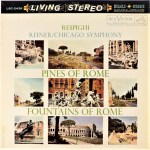
Respighi / Pines of Rome – Our Favorite for Performance and Sound

More Music Conducted by Fritz Reiner

  • This Shaded Dog pressing of Reiners’s excellent 1960 recording had the glorious Living Stereo sound we were looking for
  • It’s also fairly quiet at Mint Minus Minus, a grade that even our most well-cared-for vintage classical titles have trouble playing at
  • There were only three performances with audiophile quality sound in our shootout, and the Shaded Dog pressings not only had the best performances, but the sound that the team of Mohr/Layton managed to achieve was second to none
  • In other words, Harry was right to put this on his TAS Super Disc list – it really is a super disc
  • If you know anything about these works, you know that have tons of top and bottom end, and it is the rare pressing that can capture both
  • The texture and harmonic overtones of the Living Stereo strings are near perfection – as we listened we became completely immersed in the music on the record, transfixed by the remarkable virtuosity Reiner and the CSO brought to these difficult and demanding works so many years ago
  • There are roughly 150 orchestral recordings that we think offer the discriminating audiophile the best combination of superior performances with top quality soundThis record has moer than earned a place on that list.

This shootout has been at least five years in the making, and the case could be made that something like fifteen is closer to the truth. Around 2016 we surveyed the recordings of the work we had on hand — close to a dozen different performances, I think — and found them all wanting, save three: this one (which is still on the TAS list), a Reader’s Digest pressing with Kempe (our second favorite), and a London with Kertesz.

If a particular performance had any distortion or limitation problems in the higher frequencies, it was quickly rejected out of hand. Same with low end whomp and weight. On these works both are crucial.

No other pieces of music of which we are aware have so much going on up high and down low. This narrowed the field of potential Hot Stampers considerably. Great performances by top conductors could not get over these hurdles — high and low — time and time again.

For these reasons, it took us years to find the right recordings. We knew the Reiner would be hard to beat, but we kept trying record after record hoping that we could find one to wrest the crown away from what is widely considered the greatest recording of the works ever made.

We never did find something better. Our best Shaded Dog ended up winning the shootout. The best RCA pressings were doing everything right. There was plenty of top end, with virtually no harmonic distortion, and when I say plenty, I mean the right amount. Not many engineers managed to get all the highs correctly onto the tape, but Lewis Layton nailed it — in 1960!

So many recordings had screechy strings and horns. When the music would get loud — and both the Pines and the Fountains get very loud indeed, assuming the recording will let it — the sound would become unbearably harsh and unpleasant. This is the opposite of what should happen, and it was obvious that those recordings would not make it past the first round.

All three of the finalists could claim enthusiastic performances with powerful energy and top quality orchestral playing. Still, with the best copies going head to head with each other, Reiner had more of all the qualities we were looking for.

How did the famous 1S/1S pressing fare? No idea. I haven’t seen one in twenty years. It may be better than the White Hot copy we are offering here. I certainly would not make the mistake of saying what it sounds like without having played it. If someone has one and wants to send it to me to audition, I would love to give it a spin.

Some recordings we played lacked transparency, as well as the relaxed sense of involvement that eases one’s ability to be tricked into thinking “you (really) are there.”

The famous 1977 Maazel recording for Decca, which was on the TAS List for a long time, suffered from a bad case of multi-miking and the transparency issue mentioned above. What do you expect from 1977?

This is, of course, the knock on the Modern Heavy Vinyl Pressing — where is the transparency? The space? The three-dimensional depth? If your stereo can reproduce these qualities — a big if, since even as recently as twenty years ago mine could not — you should have given up on these opaque and airless frauds years ago.

(more…)

Pines and Fountains of Rome – Our Mistaken Review from 2006

More of the music of Ottorino Respighi (1879-1936)

Back in 2006 we liked Red Seal pressings of Living Stereo recordings a lot more than we do now, so take this commentary with a huge grain of salt.

Only the advent of top quality cleaning equipment and much improved playback made it possible for us to hear the earlier pressings in all their glory.

A lot of records that I used to like because they were cleaner and brighter — later Red Seal Living Stereos, some OJC jazz, some reissues of rock — sounded much better when my system was darker and less revealing.

There are a lot of live and learn entries about these records, and this is one from many years ago that could not be more wrong (probably, the record is long gone and not around to be played).

(more…)

Skip this Ridiculously Compressed London Pines of Rome

Hot Stamper Pressings of The Pines of Rome

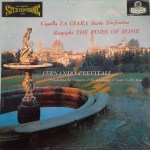
The Prevatelli on London you see pictured was way too compressed to be taken seriously by us.

When the music is supposed to get loud at the end of the Pines, it never does!

The Stereo Treasury you see below was equally bad sounding. It did not last more than a few minutes on our turntable.

If more vintage Londons had sound as bad as the three or four copies we had on hand (it’s a fairly common used record, now I know why), we would happily admit that going the Heavy Vinyl route is a good idea.

(more…)

Ansermet’s Recording of Pines of Rome Did Not Make the Cut

Click Here to See Our Favorite Pines of Rome

This review was written at least ten years ago. Since then we have done extensive shootouts for both The Pines and The Fountains of Rome.

The London with Ernst Ansermet you see pictured, though good, did not make the cut.

No Hot Stamper pressings — correction, no Hot Stamper pressings hot enough to offer our customers — were found of this recording from 1964.

Below you will find our old review. Needless to say, we have learned a lot since then.

EXCELLENT SOUND! Not a Demo Disc by any means, but a well-recorded, well-mastered Pines.

The problem with Pines is normally too much close miking. This London places the orchestra in a more natural perspective, which I much prefer.

Side two, the Pines, also has the best sound. 

(more…)

Respighi / Strauss – Pines of Rome / Don Juan / Kempe

More Orchestral Spectaculars

More Reviews and Commentaries for The Pines of Rome

  • With two top quality sides, we guarantee you’ve never heard The Pines of Rome sound remotely as good as it does here (unless you own one of killer Living Stereo LPs of the work)
  • This Readers Digest pressing of Kempe’s superb 1964 recording for Decca has glorious sound on both sides and plays reasonably quietly for any LP produced by this notoriously difficult label for audiophiles
  • There were only three performances with top quality audiophile sound, and our Wilkinson-engineered pressing here was right up there with the best we heard in our massive shootout
  • If you know anything about these works, you know that they have tons of top and bottom end, and it is the rare pressing that captures both
  • The texture and harmonic overtones of the strings are superb – as we listened we became completely immersed in the music on the record, transfixed by the remarkable virtuosity Kempe and the Royal Philharmonic Orchestra brought to these difficult and demanding works 50 plus years ago

This shootout has been at least thirty years in the making — that’s how long I have been picking up these RDG sets, ever since my friend Robert Pincus turned me on to them all those years ago.

Around 2016 we surveyed the recordings of the work we had on hand, close to a dozen different performances I  think, and found them all wanting, save three: the Reiner (which is still on the TAS List), this Reader’s Digest pressing with Kempe (our second favorite, and a close second at that), and a London with Kertesz.

If a particular performance had any distortion or limitation problems in the higher frequencies, it was quickly rejected out of hand. Same with low end whomp and weight. On The Pines both are crucial.

No other pieces of music of which we are aware have so much going on up high and down low. This narrowed the field of potential Hot Stampers considerably. Great performances by top conductors could not get over these hurdles — high and low — time and time again.

For these reasons, it took us years to find the right recordings. We knew the Reiner would be hard to beat, but we kept trying record after record hoping that we could find one to wrest the crown away from what is widely considered the greatest recording of the works ever made.

The best pressings were doing everything right. There was plenty of top end, with virtually no harmonic distortion, and when I say plenty, I mean the right amount. Not many engineers managed to get all the highs correctly onto the tape, but Lewis Layton and Kenneth Wilkinson sure did.

So many recordings had screechy strings and horns. When the music would get loud — and the Pines gets very loud indeed, assuming the recording will let it — the sound would become unbearably harsh and unpleasant. This is the opposite of what should happen, and it was obvious that those recordings would not make it past the first round.

All three of the finalists could claim enthusiastic performances with powerful energy and top quality orchestral playing.

(more…)

Back to the Stone Age with The Pines of Rome on Mobile Fidelity

Click Here to See Our Favorite Pines of Rome

An audiophile hall of shame pressing and another MoFi LP reviewed and found wanting.

MoFi’s version of this The Pines of Rome (#1-507) is one of the worst sounding classical records they ever made, and that’s saying something, because most of their classical catalog is awful.

Thin, bright, with sloppy bass and completely unnatural string tone — the MoFi makes the typical Classic Record sound good.

And that’s REALLY saying something.

The UHQR is somewhat better, especially in the lower octaves, but it’s maybe a D+ or C-, not a Better Record by any means.

How dull and opaque does a stereo have to be to make this record listenable?

The answer is VERY dull and VERY opaque.

Stone Age audio systems are the only ones that can play junk like this and get away with it.       

(more…)