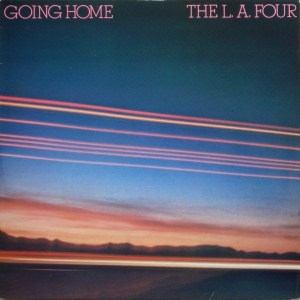
- A vintage East Wind 33 RPM Japanese import pressing with outstanding sound from start to finish
- A top album in both rarity and demand – you’d be hard pressed to find another copy with this kind of transparency, clarity, presence, and sound (assuming you could find one)
- This is one of the best sounding copies with all 7 tracks we have ever played
- This 33 RPM version features all seven of the original tracks – “Greensleeves” and “Django” were omitted from the shorter 45 RPM pressing
- Lee Herschberg recorded these sessions direct to disc – he’s the guy behind the most amazing piano trio recording I have ever heard, a little album called The Three
- The star of this record is Shelly Manne, who really plays up a storm
Month: January 2025
Letter of the Week – “I really thought that was a nice repress until I heard yours.”

Hot Stamper Pressinsg of the Music of Jennifer Warnes Available Now
One of our good customers had this to say about some Hot Stampers he purchased recently:
Hey Tom,
So that Jennifer Warnes blew the repress away, absolutely wiped the floor with it. I couldn’t believe the difference, sigh. I really thought that was a nice repress until I heard yours.
Bloody Hell. Lol.
Thanks as always.
T.
T.,
Some Heavy Vinyl records sound good enough to fool you.
Up against a properly-mastered, properly-pressed LP — our handy name for such an animal is “Hot Stamper” — the differences become much more obvious.
That’s why we say that the only way to find a Hot Stamper pressing is through the shootout process.
Any record can sound good, but up against five or ten others? That’s a test that only the best pressings can pass.
Ambrosia – Somewhere I’ve Never Travelled

- An original pressing of this truly phenomenal 70s big rock production (one of only a handful of copies to hit the site in years) with solid Double Plus (A++) grades or close to them from top to bottom
- Side two was sonically very close to our Shootout Winner – you will be shocked at how big and powerful the sound is
- The reason you never see this album on the site is that it’s extremely difficult to find good sounding pressings that play quietly — most of our best copies are just too noisy to sell, making this shootout pretty much a bust
- This copy gives you the harmonic coherency, richness, body and Tubey Magic that nothing being pressed today can begin to offer
- The better sides have the trademark Alan Parsons sound, with huge amounts of space in the studio, and the kind of musical energy that made the first Ambrosia album (which he mixed) such a joy to play
- I’ve been listening to this album a lot lately — even though I was never that big of a fan of their sophomore effort, now that I’ve played thousands of albums since this one came out, I can tell you that I became obsessed with trying to understand all the musical influences that went into the heads of these four guys and came out on this album
- “There is an unusual dreamlike quality that pervades its work. The songs seem to be reaching the listener direct from some strange and beautiful realm of the unconscious. It is an experience rare in popular music today or at any time.” – Billboard
Alan Parsons produced this album, and at its best, it is truly a Demo Disc — if you have the system to play it.
This album needs lots of space and a big, wide, open soundstage if it’s going to work, and the best sides deliver that sound. It’s a rare copy that manages to have real presence and top end without getting too edgy; on the good ones, the bass is big, solid and punchy and the energy is superb. (more…)
Maazel’s Pines of Rome Is Another Title Not Fit for a Super Disc List

Hot Stamper Pressings of The Pines of Rome Available Now
Sonic Grade: C (at best)
I found a bit of commentary in a listing for Scheherazade, and right away it was clear to me that the shootout we did for that title showed us a recording that had much in common with the one we had done more recently for The Pines of Rome.
Here it is, with the necessary changes having been made.
We did a monster shootout for this music in 2021, one we had been planning for more than twenty years. On hand were quite a few copies of the Reiner on RCA; the Ansermet on London; the Maazel on Decca and London (the Decca being on the TAS List), the Kempe on Readers Digest, and quite a few others we felt had potential.
 The only recordings that held up all the way through — the last movement being a real Ball Breaker, for both the engineers and musicians — were those by Reiner and Kempe. This was disappointing considering how much time and money we spent finding, cleaning and playing about twenty or so other pressings.
We learned from that first big go around something that we think will remain true for the foreseeable future: the 1960 Reiner recording with the Chicago Symphony on RCA just can’t be beat.
Could other pressings be better sounding? Of course they could.
Would we ever buy another copy? Not a chance.
The notes for the Decca pressing I played, mastered by G, Ted Burkett, can be seen above.
Hey, here’s an idea.
Why don’t you buy a bunch of them and see if any of them do not have the problems described on my notes.
If you find a good one, please let me know the stampers so I can go out and find one myself.
The above is of course all in good fun. We both know that there is not a snowball’s chance in hell that anyone reading this commentary is going to go out and buy some Decca pressings of The Pines of Rome, clean them up, play them one by one and then critique their strengths and weaknesses.
The most likely thing is that, if you have any Decca pressing of Maazel’s Pines, it’s sitting on a shelf collecting dust. Odds are it has not been played in a very long time.
Which should tell you something. Good records get played and bad ones sit on shelves.
Skip the Original OJC of West Coast Sound (C3507)
 Hot Stamper Pressings of Contemporary Jazz Albums Available Now
UPDATE 2025
A new shootout for this title gave us a better understanding of the OJC relative to the other pressings we were playing. We came across one fairly good sounding OJC pressing out of the three we played, one that earned grades of 2+/1.5+, so if you have an OJC, play it and see whether it is one of the good ones or, as is most likely the case, one of the bad ones.
Side two is the side to play to hear what we are on about. The grades ranged from decent, 1.5+, to just awful, NFG.
The sound of the early OJC pressings of West Coast Sound that we played recently were not to our liking.
They are brighter and thinner than even the worst of the real Contemporary pressings.
That is decidedly not our sound.
We have to admit that we used to find the sound of many of these OJC pressings much more tolerable in the past.
More than tolerable. Enjoyable. Recommendable. Saleable even.
Nothing to be ashamed of, that was many years ago. As you may already know, live and learn is our motto. Getting it wrong is a feature, not a bug, of collecting if your goal is to find the best sounding pressings of the music you love.
(If you have some other goal, this may not be the right blog for you. Definitely steer clear of this website. The prices there are ridiculous!)
It’s true: Our old system from the 80s and 90s was tubier, tonally darker and dramatically less revealing, which strongly worked to the advantage of leaner, brighter, less Tubey Magical titles such as this one.
That was thirty or more years ago. Pretty much every dynamic speaker system I ran into had that sound. And I was never a fan of screens or horns. Like most audiophiles, I thought my stereo sounded great. It sure sounded right to me at the time.
And the reality is that no matter how hard I worked or how much money I spent, I would never have been able to achieve substantially better sound for one simple reason: most of the critically important revolutions in audio had not yet come to pass. It would take many technological improvements and decades of effort until I would have anything like the system I do now.
Shelly Manne and His Men – Play Peter Gunn
More Contemporary Label Jazz
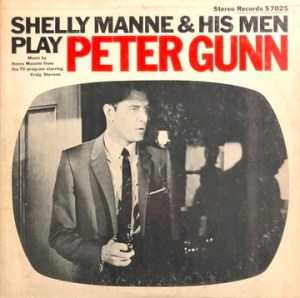
- This original Stereo Records pressing (only the second copy to ever hit the site) boasts seriously good Double Plus (A++) grades or close to them from start to finish
- Each instrument here sounds right, particularly on side one – the piano is weighty and percussive; the drums are punchy, and the brass has lovely leading edge transients, and side two is not far behind in all those areas
- Full-bodied, warm and natural with plenty of space around all of the players (also particularly on side one), this is the sound of vintage analog – accept no substitutes
- Problems in the vinyl are sometimes the nature of the beast with these early pressings – there simply is no way around them if the superior sound of vintage analog is important to you
- “[Peter Gunn composer Henry] Mancini encouraged Manne to use the songs as vehicles for extended solos, and the results are swinging, standing apart from the show.
How Does the Brass Sound on Your Copy of Sticky Fingers?
 Hot Stamper Pressing of the Music of The Rolling Stones Available Now
The best copies have texture and real dynamics in the brass.
The bad copies are smeared, grainy and unpleasant when the brass comes in.
Toss those bad ones and start shooting out the good ones.
Believe me, if you find a good one it will be worth all the work.
One customer observed that the recording was “deliberately a bit muddy and smeared…” and he was mostly right about that. We replied as follows;
You are spot on with your observation about the sound being deliberately muddy.
Glyn Johns loves his tube compressors. They can make some tracks murkier than many of us would like, but they work positive wonders most of the time.
A lot of the smearing you reference is from uncleaned or improperly cleaned vinyl. Once we got our cleaning regimen dialed in, a lot of the smear we used to hear so often stopped being a problem.
3-Dimensionality also greatly improves with clean, fully restored vinyl. A lot of old records just sound like old records until you learn how to clean them right.
Play It Loud
Even through the noise of the bad vinyl you can hear the audio magic. The sound is exactly what you want from a Stones album: deep punchy bass and dynamic grungy guitars.
This record is to be played loud like it says on the inner sleeve and the surface noise is to be ignored.
The louder you play it, the less bothersome the noise will be.
This album ROCKS and it was not made to be listened to in a comfy chair with a glass of wine.
Old Ways – After The Gold Rush This Ain’t

Hot Stamper Pressings of the Music of Neil Young Available Now
Notes from an early shootout.
I may be stating the obvious here, but After The Gold Rush this ain’t.
If you’re looking for a big and bold Neil Young rock record, this is not the one for you. This is Neil heading out to the sticks with friends including Willie Nelson, Waylon Jennings and other authentic country music figures, doing what Neil loves to do — making the music that HE wants to make, not the music that anyone else wants him to. Old friend Ben Keith (a huge part behind the sound of Harvest) shows up with his pedal steel guitar on a couple tracks.
Side one has big, open sound with exceptional presence, something we didn’t hear on too many copies. The overall sound is warm, smooth and sweet.
Side two is even better, with all of those same qualities and more. There’s an extra degree of energy here and the clarity is off the charts.
This probably wasn’t anyone’s favorite Neil Young album, but when it sounds like this it sure makes a lot more sense than it did when we heard it on the average pressing.
The Riddle of the Vastly Different Sides Has Been Solved
 Hot Stamper Pressings of Recordings Featuring the Violin
About ten or fifteen years ago we came across a puzzling Shaded Dog pressing of the Bruch / Vieuxtemps recording from 1962 with Heifetz, LSC 2603.
We were surprised at the time how much worse one side sounded than the other. That had rarely if ever happened back in those early Living Stereo shootout days.
We sold the record as a one-sided disc with one complete performance in top quality sound, The Scottish Fantasy. Obviously the Vieuxtemps / Concerto No. 5 wasn’t worth playing; the sound was sub-par, a pale shadow of the sound of the other side of the record. You can read all about it here.
Well, we ran into those stampers again, or at the very least we ran into a copy with the same bad stampers for side one, 5s. Something sure went wrong somewhere, as you can see from our notes below.

At the time we described this curious pressing this way:
The violin is captured beautifully on side two. More importantly there is a lovely lyricism in Heifetz’s playing which suits Bruch’s Romantic work perfectly. I know of no better performance.
The performance of the Vieuxtemps Concerto No. 5 is also wonderful, but the sound is not. Want proof that two sides of the same record can have vastly different sound? Here it is. Note how oversized the violin on side one is, how smeary the orchestra, how little texture there is to anything in the soundfield. This side one is no Hot Stamper.
All true, and now that we know that 5s etched stampers are responsible for the bad sound and not just some pressing anomaly, we can all sleep peacefully once again.
Eiji Kitamura – Swing Sessions
More Eiji Kitamura
More Direct-to-Disc Recordings

- This rare Japanese import LP boasts incredible DEMO DISC sound
- The music here is wonderful – if you’re a fan of clarinet-led swing jazz, you’ll have a hard time finding a better record than this
- “This album was recorded by the direct-to-disc recording method, to capture the natural reverberation of 1,200 seat concert hall. Various kinds of recording equipment were brought in parts to the backstage of the hall for the recording then reassembled and adjusted. Two whole days were spent adjusting all the equipment.”
- If you’re a lazz fan — of swing or otherwise — this title from 1978 is surely a Must Own
- The complete list of titles from 1978 that we’ve reviewed to date can be found here