Month: October 2023

We Love Our Triplanar Arm as Much as Robert Brook Loves His, Which Is a Lot

One of our good customers has a blog which he calls

A GUIDE FOR THE DEDICATED ANALOG AUDIOPHILE

In the listing below, Robert Brook recommends you buy a Triplanar tonearm. So do we. If you would like one, as dealers for this wonderful arm we may be able to help, although it typically takes about a year to get one since they are handbuilt to order. Worth the wait I say!

I hope to write a bit about getting my first Triplanar back in the late-90s, a life-changing event in my evolution as an audiophile.

Once I had learned how to dial in the VTA adjustment for every record I played, I quickly discovered that I was able to operate at a completly different level.

This is a sophisticated piece of equipment with very fine adjustments for every aspect of playback. I confess it actually took me about five years to be in full control of all the ins and outs of the Triplanar. The more I experimented with the settings, the more I learned and the better I could play records.

In 2005 I made a breakthrough while working with a favorite Borodin record I had been trying and failing to get to sound right. I wrote about the hours I spent adjusting the azimuth, VTA, anti-skate and tracking weight for that record, and what dramatic improvements resulted from my efforts all those years ago.

If you don’t have an arm of this quality, or don’t know how to adjust it for every record you play, it is our belief that you have not begun to hear how good your records can sound.

The TRIPLANAR MK VII is at the PINNACLE OF PERFORMANCE


More on Robert’s system here. You may notice that it has a lot in common with the one we use.

Robert has approached the various problems he’s encountered scientifically, methodically and carefully, along these three fronts:

(more…)

The King James Version – What to Listen For

Hot Stamper Pressings of Large Group Jazz Recordings Available Now

More of Our Favorite Jazz Test Discs

Unlike most Direct to Disc recordings, this album actually contains real music worth listening to — but only when the pressing lets the energy of the musicians through, with actual fidelity to the sounds of the real instruments. Brass without bite is boring. Drummers who are too delicate in their drumming will put you to sleep.

Many copies of this album will do exactly that, which is a real shame. During our shootout, the more we played the good copies, the more we appreciated the music these guys were making. They were swinging, a big group of top quality players totally in the groove. When it’s played well, and the sound is as good as it is here, there’s nothing boring about these Big Band Jazz Classics. The music works. It swings. If you like the kind of big band recordings Basie made — and who doesn’t — you will find much to like here.

What to Listen For

No matter what copy you have, when you play it notice how the brass in the center of the soundfiield sounds so different from the brass on either side, where, obviously, closer mics allow their solos to be picked up and mixed more easily. There are lovely trumpet solos in the left channel and a baritone sax solo in the right that have amazingly realistic fidelity. Close your eyes and those instruments are RIGHT THERE.

One thing Sheffield got right is tonally-correct, hi-fidelity brass in a real acoustic space. (The latter is where For Duke fails so miserably, although no one ever seems to notice or bother to write about it. To me that dead acoustic is like fingernails on a blackboard, completely inappropriate to the sound.)

What to Watch Out For

As a rule two areas are especially lacking: there is a noticeable lack of presence on most copies, causing the brass to get stuck in the speakers and lose its bite; and, every bit as bad, the sound is often just plain compressed, lacking energy and life.

The musicians on most copies are just not giving it their all.

But wait a minute. This is a direct disc. How can it be compressed, or lack transients? Aren’t those tape recorder problems that are supposed to be eliminated by the direct to disc process? Maybe so, but there is some very strong evidence to the contrary, and this record is that evidence.

Even though the mastering is fixed at the live event, there are many other variables which no doubt affect the sound. The album is pressed in three different countries: the United States, Japan and Germany. Many mothers were pulled from the acetates and many, many stampers made from those mothers.

Bottom line? You got to play ’em, just like any other pressing. If no two records sound the same, it follows that no two audiophile records sound the same, a fact that became abundantly clear very early on in the listening.

Of course, not many audiophiles are in a position to shootout multiple copies of The King James Version, and I’m not sure most would even want to.

Here at Better Records we have a whole system set up to do exactly that, so we waited until we had a pile of them, got them all cleaned up, and off to the races we went.

(more…)

Our Filmed Tapestry Shootout Was a Real Shocker

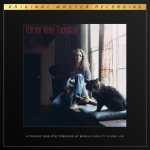
The Washington Post article that Geoff Edgers wrote includes a video of a little shootout we did for Tapestry, using, without my knowledge, the MoFi One-Step, a Hot Stamper pressing, and a current, modern, standard reissue of the album. Could I spot the Hot Stamper without knowing what record was playing?

First up (and of course unbeknownst to me), the MoFi. My impressions from the video:

That’s probably tonally correct for this record. It’s just missing everything that’s good about this record, which is a meaty, rich piano. And the vocal sounds very dry. There’s no Tubey Magic. It’s tonally correct. If you were playing me a CD right now, I wouldn’t be able to tell you weren’t. 

Next up, the cheap ($20?), current reissue:

Piano’s better.

Voice is better!

Richer and smoother.

That’s what this is supposed to sound like.

Her voice sounds mostly correct.

This might not be a particularly good record. If I played a real one for you, you might just say, oh, my God, there’s so much more.

But this is not a wrong record. It’s not awful. It’s doing something… I don’t know if I would say most things right. I’ll just say something right.

At least the person understands what she’s supposed to sound like.

Then the Hot Stamper (a Super Hot copy as it turns out):

She sounds pretty right on this copy.

I think there’s more space.

You hear more space, more three-dimensional space.

The piano: there’s more richness to the tone of the various notes that she’s playing.

I would probably pick this one.

Jeff sums it all up as follows:

So we have a winner, and I couldn’t fool the Hot Stamper king.

Without knowing what he was listening to, he chose the hot stamper of Tapestry.

If he still had it, that copy would be sold for about $400 on the Better Records website.

When we went back and played each of the pressings again, the differences were much more pronounced. The MoFi still sounded like a CD, the current Columbia reissue was still no better than passable, and the Hot Stamper became even better sounding than it had been earlier, with sound the other two could not begin to offer.

Our grades for the three pressings would have been F, C and A, in that order.

In the video, you can see that it took me a few minutes to get deep into the sound, but once I was there, it turned out to be no contest. The Hot Stamper was the only pressing capable of showing us just how good Tapestry can sound.

Colorations Are Bad Now?

The MoFi was by far the worst sounding of the three. As I said, it sounded to me like a CD.

(more…)

These Two Recordings of Steely Dan Didn’t Make the Grade

More of the Music of Steely Dan

Our advice: Stick with the seven real albums that were released between 1972 and 1980. Each and every one of them is a brilliant work of art in its own way. For audiophiles, it just doesn’t get any better than Steely Dan.

Our Pledge of Service to You, the Discriminating Audiophile 

We play mediocre-to-bad sounding pressings so that you don’t have to, a free service from your record-loving friends at Better Records.

(more…)

The Rolling Stones – Let It Bleed on Decca

More of the Music of The Rolling Stones

  • With outstanding Double Plus (A++) grades or close to it on both sides, this Boxed Decca UK pressing showcases the Stones at the peak of their Rock and Roll powers – remarkably quiet vinyl too
  • Having played a number of Decca pressings of this album, including quite a few that were just plain awful, we doubt that any UK LP is going to win a shootout
  • We have a category for records like this: imported pressings that can sound very good, but can’t beat the best domestics
  • “Love In Vain” is one of the best sounding Stones songs ever recorded – the acoustic guitar harmonics and the rich whomp of the snare prove indisputably that Glyn Johns is one of the Engineering Greats
  • Top 100, 5 stars – Jason McNeil wrote that Beggars Banquet and Let It Bleed are “the two greatest albums the band’s (or anyone’s) ever made.” [Add Sticky Fingers to complete the ultimate Stones Trilogy.]

This is, in our humble opinion, the second or third best record the Stones ever made. (Sticky Fingers is Number One, and either this or Beggar’s Banquet comes in a strong second.) With this wonderful early domestic pressing we can now hear the power and the beauty of the recording itself, a fact that we consider the very definition of a Hot Stamper.

“Love In Vain” on a copy like this is one of the best sounding Rolling Stones songs of all time. In previous listings, I’ve mentioned how good this song sounds — thanks to Glyn Johns, of course — but on these amazing Hot Stamper copies it is out of this world.

(more…)

Letter of the Week – “Then I did Street Fighting Man. The BR copy destroyed the other two!”

Hot Stamper Pressing of the Music of The Rolling Stones Available Now

Our new customer Michel wrote to tell us how much he likes his Super Hot Stamper pressing of Beggars Banquet.

Hi Tom,

Doing that shootout was really interesting. I had culled the two best I had some months ago which were two old London presses (one TH and one Monarch). So I mixed those two up so I didn’t know which was which, and then the BR copy would be third on the table.

I did Sympathy for the Devil first. I actually preferred one of my copies (monarch) for that track as the tone
of the bass was a little more forward which I really like for that one song.

Then I did Street Fighting Man. The BR copy destroyed the other two!

What a pleasure it was
to hear that song at max volume with everything just right. Turn it up more!

That was definitely the very best I’d ever heard that song in 63 years. Well done BR!Michel

Michel,

Michel,

I would agree with you that Street Fighting Man is the better test. It’s easy to be thrown off by one aspect or another of the sound of a particular track. We always use at least two in our shootouts and oftentimes three is better.

The production is heavy on strummed acoustic guitars. Those are a good test for any record.

No Expectations would have been my first choice, but the rockers are important for energy, weight, size and power, so you really have to play a number of tracks to know which pressings get Beggars right.

Thanks for your enthusiatic letter.

Best, TP

PS

We love it when our customers take the time and make the effort to do their own shootouts, especially when we win, which is what happens about 99% of the time.

It is not the least bit unusual for our customers to take another listen and become more aware of the superior sound of the Hot Stamper pressings the second time around.

When we do lose a shootout, we promptly refund the buyer’s money and wish him or her a nice day.

What do we do with the record, assuming the customer had no problem with its playing condition?

We put it right back up on the site to sell to the next customer who might want it. In only two or three cases did it ever come back to us again. Two or three out of thousand and thousands of Hot Stampers sold. Not bad.

(more…)

The Beach Boys – Endless Summer

More of The Beach Boys

More Sixties Pop

  • This 2-LP compilation set from 1974 boasts excellent Double Plus (A++) sound or close to it on all FOUR sides of these vintage Capitol pressings – fairly quiet vinyl too
  • A copy like this is a rare audiophile treat – here are The Beach Boys’ marvelous harmonies sounding as rich, warm, clear, natural and lively as you could ever hope to hear them (particularly on sides one, two, and four)
  • 5 stars: “Endless Summer, which was assembled in consultation with Mike Love, soared to number one and charted high over two subsequent summers (spending three years on the charts, the longest of any of the group’s albums).”

Like any compilation, some tracks sound better than others, but the best sounding tracks on here easily rank with any Beach Boys vinyl we’ve ever played. And the material on here is so good and so comprehensive that for most of you this and Pet Sounds should be all the Beach Boys you’ll ever need.

The sound here is big, open, rich and full, with the performers front and center (as well as left and right). The highs are extended and silky sweet. The bass is tight and punchy. And this copy gives you more life and energy than others by a long shot. Very few Beach Boys records offer the kind of realistic, lifelike sound you get from these pressings.

Fresh Tapes

These vintage LPs also have the Midrange Magic that’s no doubt missing from whatever 180g reissue has been made from the 50+ year old tapes. As good as that pressing may be, we guarantee that this one is dramatically more real sounding. It gives you the sense that all the boys (and the Wrecking Crew) are right in the room with you.

They’re no longer a representation — they’re living, breathing persons. We call that “the breath of life,” and this record has it in spades. Their voices are so rich, sweet, and free of any artificiality, you immediately find yourself lost in the music.

As any record collector knows all too well, Capitol pressings are all over the map. When you find a good one, you can be pretty sure it’s the exception, not the rule. That’s been our experience, and we’ve played them by the hundreds.

(more…)

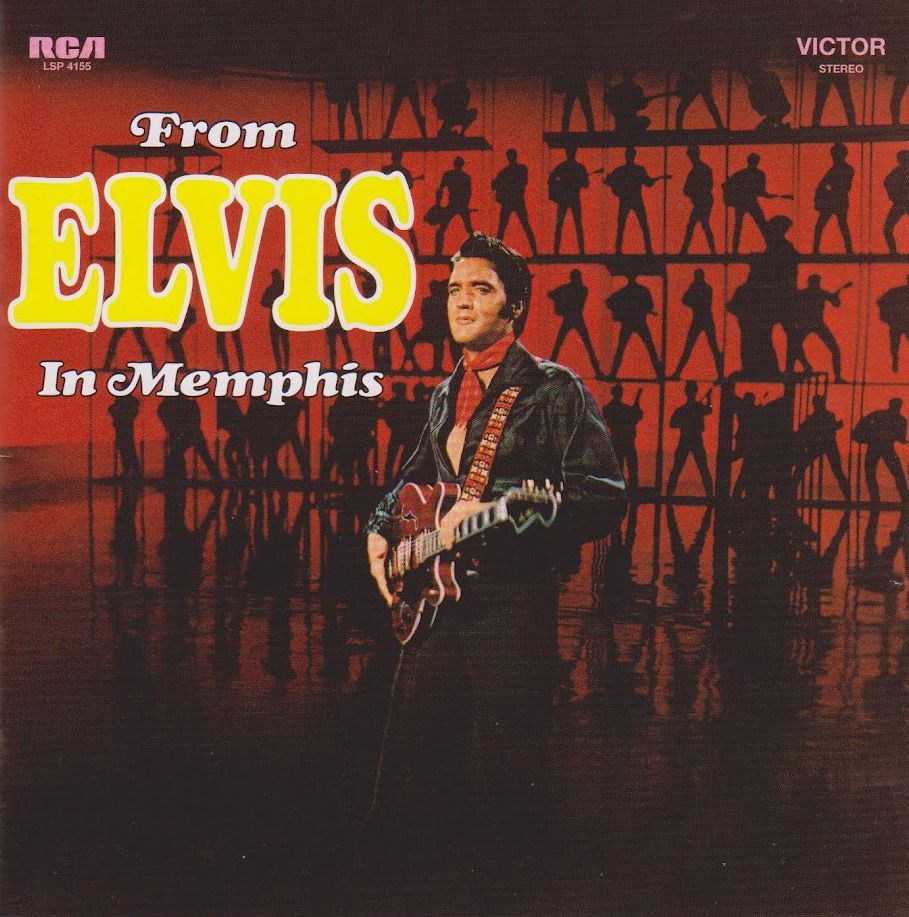
Elvis Presley / From Elvis in Memphis

More Elvis Presley

Reviews and Commentaries for the Music of Elvis Presley

  • Solid Double Plus (A++) sound brings Presley’s 1969 release to life on this vintage RCA pressing
  • Both sides here are superb – big, full-bodied and Tubey Magical yet exceptionally clear, spacious and open
  • We guarantee there is dramatically more richness, fullness, vocal presence, and performance energy on this copy than others you’ve heard, and that’s especially true if you own whatever Heavy Vinyl pressing is currently on the market, made from who-knows-what tapes
  • 5 stars: “…one of the greatest white soul albums (and one of the greatest soul albums) ever cut, with brief but considerable forays into country, pop, and blues as well. Presley sounds rejuvenated artistically throughout the dozen cuts off the original album, and he’s supported by the best playing and backup singing of his entire recording history.”

Of the handful of Elvis albums to ever make it to the site, this is clearly the critics’ favorite, and one listen will tell you why. This is the album that single-handedly revived Elvis’ fortunes, setting the stage for his record-breaking series of shows in Las Vegas doing pretty much the type of music he had recorded for it.

The next year he would go on tour for the first time since 1957 (!)

(more…)

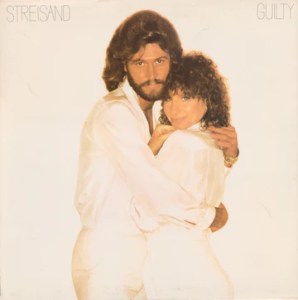
Barbra Streisand / Guilty – Bab’s Best and Most Underrated Album

More Barbra Streisand

More Pure Pop Recordings

  • Streisand’s Pop Masterpiece returns to the site on this original pressing with killer sound on both sides, just shy of our Shootout Winner – exceptionally quiet vinyl too
  • You get lovely extension up top, good weight down low, as well as exceptional transparency in the midrange, all qualities that were much less evident on the average copy we played
  • This is Barbra and The Bee Gees at the peak of their Pop Powers – it just doesn’t get any better
  • 4 1/2 stars: “The biggest selling album of Barbra Streisand’s career is also one of her least characteristic. The album was written and produced by Barry Gibb in association with his brothers and the producers of the Bee Gees, and in essence it sounds like a post-Saturday Night Fever Bee Gees album with vocals by Streisand. Still, the record was more hybrid than compromise, and the chart-topping single ‘Woman in Love’ has a sinuous feel that is both right for Streisand and new for her.”

This ain’t no zombie audiophile BS, the kind of sleep-inducing, reverb-drenched trash that passes for “female vocals” in bad audio showrooms around the globe. (Paging Diana Krall.)

This is the best album Babs ever made, and you can take that to the bank. It’s also one of the best sounding, if not the best sounding of her later Monster Pop Productions. Can’t say for sure as I haven’t played all that many. Her first album is a true Demo Disc as well, but that one’s all about the Tubey Magical ’60s Columbia era, the Golden Age of Natural Sound, a world away from Guilty and its layers and layers of tracks. Having said that, there are multi-tracks and then there are multi-tracks.

The engineers and producers here pull it off brilliantly.

If you don’t feel something deep inside when playing this record, open up a vein and let some of the ice water in your system that passes for blood run out.

(more…)

Point of Know Return – CBS Half-Speed Reviewed

Hot Stamper Pressings of Proggy Rock Albums Available Now

Both this album and Leftoverture are way too bright and thin.

What were the engineers thinking — that brighter equals better?

In the case of these two titles it most definitely does not. It’s the sound that most audiophiles are fooled by to this day.

Brighter and more detailed is rarely better. Most of the time it’s just brighter. Not many half-speed mastered audiophile records are dull. They’re bright because the audiophiles who bought them preferred that sound. I did too, a couple of decades ago [make that four decades ago].

Hopefully we’ve all learned our lessons by now, expensive and embarrassing as such lessons usually turn out to be. 

Waking Up a Dull Stereo

If your system is dull, dull, deadly dull, the way older systems tend to be, this record has the hyped-up sound to bring it to life in no time.

There are scores of commentaries on the site about the huge improvements in audio available to the discerning (and well-healed) audiophile. It’s the reason Hot Stampers can and do sound dramatically better than their Heavy Vinyl or Audiophile counterparts: because your stereo is good enough to show you the difference.

With an old school system you will continue to be fooled by bad records, just as I and all my audio buds were fooled thirty and forty years ago. Audio has improved immensely in that time. If you’re still playing Heavy Vinyl and Audiophile pressings, there’s a world of sound you’re missing. We discussed the issue in this commentary:

My advice is to get better equipment and that will allow you to do a better job of recognizing bad records when you play them.

(more…)