More of the Music of Elvis Presley
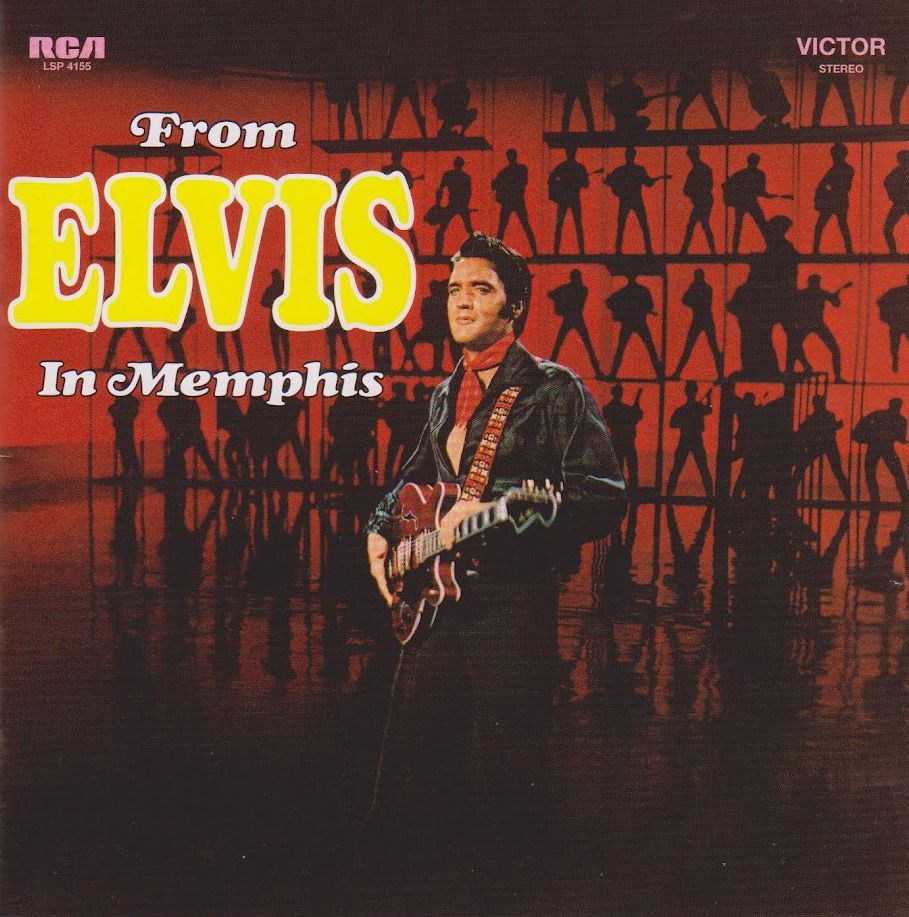
- INCREDIBLE Shootout Winning Triple Plus (A+++) sound brings Presley’s 1969 release to life on this vintage RCA pressing – remarkably quiet vinyl too
- Side two has close to the best condition grade we give out, Mint Minus – there may not be another record on the site with vinyl that quiet!
- A tough shootout, as no other copy earned a 3+ grade on either side, which simply means that when you find a top copy, it sets such a high standard that everything else ends up getting marked down
- Both sides here are amazing – big, full-bodied and Tubey Magical yet exceptionally clear, spacious and open
- We guarantee there is dramatically more richness, fullness, vocal presence, and performance energy on this copy than others you’ve heard, and that’s especially true if you own whatever Heavy Vinyl pressing is currently on the market, made from who-knows-what tapes
- 5 stars: “…one of the greatest white soul albums (and one of the greatest soul albums) ever cut, with brief but considerable forays into country, pop, and blues as well. Presley sounds rejuvenated artistically throughout the dozen cuts off the original album, and he’s supported by the best playing and backup singing of his entire recording history.”
Of the handful of Elvis albums to ever make it to the site, this is clearly the critics’ favorite, and one listen will tell you why. This is the album that single-handedly revived Elvis’ fortunes, setting the stage for his record-breaking series of shows in Las Vegas doing pretty much the type of music he had recorded for it.
The next year he would go on tour for the first time since 1957 (!)
This vintage RCA pressing has the kind of Tubey Magical Midrange that modern records can barely BEGIN to reproduce. Folks, that sound is gone and it sure isn’t showing signs of coming back. If you love hearing INTO a recording, actually being able to “see” the performers, and feeling as if you are sitting in the studio with the band, this is the record for you. It’s what vintage all analog recordings are known for — this sound.
If you exclusively play modern repressings of vintage recordings, I can say without fear of contradiction that you have never heard this kind of sound on vinyl. Old records have it — not often, and certainly not always — but maybe one out of a hundred new records do, and those are some pretty long odds.
What The Best Sides Of From Elvis in Memphis Have To Offer Is Not Hard To Hear
- The biggest, most immediate staging in the largest acoustic space
- The most Tubey Magic, without which you have almost nothing. CDs give you clean and clear. Only the best vintage vinyl pressings offer the kind of Tubey Magic that was on the tapes in 1969
- Tight, note-like, rich, full-bodied bass, with the correct amount of weight down low
- Natural tonality in the midrange — with all the instruments having the correct timbre
- Transparency and resolution, critical to hearing into the three-dimensional studio space
No doubt there’s more but we hope that should do for now. Playing the record is the only way to hear all of the qualities we discuss above, and playing the best pressings against a pile of other copies under rigorously controlled conditions is the only way to find a pressing that sounds as good as this one does.
Other Pressings
As you can imagine, this album changed everything for Elvis. I first heard it the way I heard so many albums back in the late ’70s and early ’80s: on the Mobile Fidelity pressing. I was an audiophile record collector in 1981 and if MoFi was impressed enough with the sound and the music to remaster the album and offer it to their dedicated fans, of which I was clearly one, then who was I to say no to music I had never heard? (Soon enough I would learn my lesson about MoFi’s A&R department. The MoFi release of Supersax Plays Bird, a record that had virtually nothing going for it, was the last time I took their advice seriously.)
Turns out they did a pretty good job on the Elvis album, not that I would have any way to know — back then it would not even have occurred to me to buy a standard RCA pressing and compare it to my half-speed-mastered, pressed-in-Japan, double-the-price-of-a-regular disc LP.
A decade or thereabouts later it would be obvious to me that MoFi had fooled around with the sound and that the right (heavy accent on the word “right”) real RCA pressing would be more correct and more natural (though probably not as quiet of course, but advances in cleaning technology fixed most of that and left MoFi in the dust).
What We’re Listening For On From Elvis in Memphis
- Energy for starters. What could be more important than the life of the music?
- Then: presence and immediacy. The vocals aren’t “back there” somewhere, lost in the mix. They’re front and center where any recording engineer worth his salt would put them.
- The Big Sound comes next — wall to wall, lots of depth, huge space, three-dimensionality, all that sort of thing.
- Then transient information — fast, clear, sharp attacks, not the smear and thickness so common to these LPs.
- Tight punchy bass — which ties in with good transient information, also the issue of frequency extension further down.
- Next: transparency — the quality that allows you to hear deep into the soundfield, showing you the space and air around all the instruments.
- Extend the top and bottom and voila, you have The Real Thing — an honest to goodness Hot Stamper.
Side One
Wearin’ That Loved On Look
Only The Strong Survive
I’ll Hold You In My Heart (Till I Can Hold You In My Arms)
Long Black Limousine
It Keeps Right On A-Hurtin’
I’m Movin’ On
Side Two
Power Of My Love
Gentle On My Mind
After Loving You
True Love Travels On A Gravel Road
Any Day Now
In The Ghetto
AMG 5 Star Review
After a 14-year absence from Memphis, Elvis Presley returned to cut what was certainly his greatest album (or, at least, a tie effort with his RCA debut LP from early 1956).
The fact that From Elvis in Memphis came out as well as it did is something of a surprise, in retrospect — Presley had a backlog of songs he genuinely liked that he wanted to record and had heard some newer soul material that also attracted him, and none of it resembled the material that he’d been cutting since his last non-soundtrack album, six years earlier.
And he’d just come off of the NBC television special which, although a lot of work, had led him to the realization that he could be as exciting and vital a performer in 1969 as he’d been a dozen years before.
And for what was practically the last time, the singer cut his manager, Tom Parker, out of the equation, turning himself over to producer Chips Moman.
The result was one of the greatest white soul albums (and one of the greatest soul albums) ever cut, with brief but considerable forays into country, pop, and blues as well. Presley sounds rejuvenated artistically throughout the dozen cuts off the original album, and he’s supported by the best playing and backup singing of his entire recording history.