tweaking-and-tuning

Improving your critical listening skills is what allows you to make audio progress.

More to the point for readers of this blog, better quality audio allows you to collect better sounding records.

Since we play all kinds of records all day as part of our regular shootout regimen, tweaking and tuning are much easier for us to do than they would be for most audiophiles.

As I have tried to make clear to many of my fellow hobbyists over the years, if you don’t do the work, the only person who doesn’t get to hear better sound is you.

How We Test Equipment Like the Townshend Seismic Platform

Basic Audio Advice — These Are the Fundamentals of Good Sound

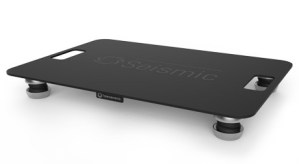
A few years back I discovered something wonderful about the Seismic Sink I was using under my turntable to control vibration.

In our experience, vibration control is one of the most important revolutionary advancements in audio of the last twenty years or so.

We sell the Seismic Sink and this is what I wrote to a customer who recently bought one:

Play your most complex test discs, the ones that are the hardest to get to sound right. Classical is the toughest test if you have some, but Pet Sounds is tough too. [I knew he was a fan and had a good copy of the album.]

Listen to one or two for a good while, at least 20-30 minutes, to know exactly what you are hearing on the tracks you know are the most difficult to get to sound right, the ones with the most problems.

Put the sink under the table. (You can also put it under your receiver, that works great too.)

Then play those tracks again.

Go back and forth a few times.

It should be pretty obvious what is going on.

Then read Robert Brook’s post.

Here is a very special tip.

The sound changes depending on how the seismic sink is “loaded.”

This means two things:

Where the weights are sitting on the sink.

    • For my integrated amp I have it all the way to the front of the sink. Sounds clearly better that way.
    • For the turntable, I have it weighted down with thin but heavy steel plates, about one quarter inch thick, about 4 inches by 8 inches. You can get them at Home Depot and similar places.

(more…)

Focus Is the Hidden Driver of Excellence

More on Developing Your Critical Listening Skills

Every day Delanceyplace sends me email book excerpts, and the one that came today struck me as particularly relevant to the devilishly difficult audio hobby many of us have been engaged in for most of our adult lives. Some of their excerpts are seen below. (Italics added by me.)

I myself wrote a commentary back in 2006 about the 10,000 hour rule, which I have linked below delanceyplace’s piece, along with other commentaries I think you might enjoy.


Focus: The Hidden Driver of Excellence by Daniel Goleman.

“The ‘10,000-hour rule’ — that this level of practice holds the secret to great success in any field — has become sacrosanct gospel, echoed on websites and recited as litany in high-performance workshops. The problem: it’s only half true.

“If you are a duffer at golf, say, and make the same mistakes every time you try a certain swing or putt, 10,000 hours of practicing that error will not improve your game. You’ll still be a duffer, albeit an older one.

“No less an expert than Anders Ericsson, the Florida State University psychologist whose research on expertise spawned the 10,000-hour rule of thumb, told me, “You don’t get benefits from mechanical repetition, but by adjusting your execution over and over to get closer to your goal” .

“Apart from sports like basketball or football that favor physical traits such as height and body size, says Ericsson, almost anyone can achieve the highest levels of performance with smart practice. …
“Ericsson argues that the secret of winning is ‘deliberate practice,’ where an expert coach takes you through well-designed training over months or years, and you give it your full concentration.

“Hours and hours of practice are necessary for great performance, but not sufficient.

How experts in any domain pay attention while practicing makes a crucial difference.

For instance, in his much-cited study of violinists — the one that showed the top tier had practiced more than 10,000 hours — Ericsson found the experts did so with full concentration on improving a particular aspect of their performance that a master teacher identified.

Smart practice always includes a feedback loop that lets you recognize errors and correct them — which is why dancers use mirrors. Ideally that feedback comes from someone with an expert eye and so every world-class sports champion has a coach. If you practice without such feedback, you don’t get to the top ranks.

“The feedback matters and the concentration does, too — not just the hours. …

(more…)

The VPI Super Platter and Testing Advice

Revolutions in Audio, Anyone?

This review was written in 2005, perhaps before. To see what comprises our current system, click here.


We love the new VPI Super Platter. It’s a big step up over the acrylic platter, which makes records sound more like CDs, kind of thin, vague, edgy. The original TNT type Aries platter is a very similar design to the Super Platter, and so when I got my super platter it was obviously better after the first five seconds of play but not dramatically better. On a customer’s TNT with the acrylic platter it was huge.

The bigger and more powerful the stereo, the bigger will be the difference, because it has to do with weight and heft and solidness and those sorts of sonic qualities, the kind that too many modern audiophiles ignore. (The CD guys don’t even know what those things are because CDs so rarely have those qualities, certainly never in abundance the way good records do.)

It has been our experience that VPI upgrades tend to be actual sonic improvements over the earlier versions of their equipment, unlike so much of what passes for “better” audio in the land of Hi-Fi, which is often just different and in many cases actually worse. [I cannot back up that claim now, as we have been out of the turntable-auditioning business for more than a decade. I simply have no idea whether VPI’s products are any good these days. Caveat emptor, as always.]

These are the kind of upgrades we love to do, and the reason is no doubt obvious to all you audiophiles out there. Pop the new platter on and thirty seconds later you can hear the difference. Not sure about the change? Don’t like it? Thirty seconds later you can have your old platter spinning to see exactly what happened to the sound.

It’s the kind of testing we do here all day long with Hot Stamper and other pressings. [1] Take ten copies of any title and play them, making notes as to their strengths and weaknesses. Assign each one an overall sonic grade. Think numbers 2 and 7 are the best of the bunch on side one, but not quite sure which of the two is better? No problem. Take one of them, throw it back on the table, listen for a minute, then pop on the other. That kind of head-to-head shootout is the easiest, most reliable way to find out which record really has the Hot Stamper Magic and which one only appears to.

(more…)

Massed Strings and Brass Section Are Difficult to Reproduce

More of the Music of Jacques Offenbach

UPDATE 2020

Our favorite recording of the work now is this one: Fistoulari recorded for Readers Digest.


It’s also an excellent record to test with. As you no doubt know, there is a lot of “action” in this piece of music.

To get the strings and the brass to sound lively yet natural is a bit of a trick. (It doesn’t help that the polarity is reversed.)

When I first played this record many years ago, I was none too happy about the string tone. After making a few tweaky adjustments, the strings became much clearer and more textured. The overall presentation still sounded rich, but was now dramatically more natural and relaxed.

It was this record that made me realize some of the changes I had made to my stereo back then had caused it to have a certain hi-fi-ish quality, which seemed to work fine on the popular and jazz recordings I was using as test discs at the time.

But the reproduction of classical music is the ultimate challenge for any stereo.

(more…)

Azimuth, VTA, Anti-Skate and Tracking Weight – We Got to Live Together

More Record Playback Advice

With a shout out to my man Sly!

The commentary was written in 2005.

One of the reasons this record is sounding so good today (1/12/05) is that I spent last weekend adjusting my Triplanar tonearm. The sound was bothering me somewhat, so I decided to start experimenting again with the azimuth adjustment.

I changed the azimuth in the smallest increments I could manage, which on this turntable are exceedingly small increments, until at some point the following changes became evident:

  1. The bass started to go deeper,
  2. The dynamics improved, and
  3. The tonal balance became fuller and richer.

In essence the cartridge was becoming perfectly vertical to the record.

I don’t think this can be done any other way than by ear, although I don’t know that for a fact.

Azimuth, VTA, anti-skate and tracking weight all work in combination to create the sound you hear. They are like trying to juggle four balls at the same time. They all interact with each other in mysterious ways.

This is one of the reasons why I think everyone needs to know how to set up their own front end. Nobody you could ever pay is going to put the time and effort into getting it just right. I have at least 30 or 40 and probably closer to 50 hours of set up time in this arm. [It is in the many hundreds by now.]

This is, of course, over a period of two years. But as I have played around and experimented in different ways with the setup, I have managed to tailor the sound to my taste while maintaining what I consider to be the highest levels of accuracy.

Robert Brook has some advice for those who would like to learn more about analog setup, and you can find it here.

(more…)

Audiophile Wire Testing with Jethro Tull and His Friend Aqualung

Hot Stamper Pressings of the Music of Jethro Tull Available Now

… who seems to have a rather nasty bronchial condition…

[This commentary is from 2008 or so I’m guessing. Still holds up though.]

Like Heart’s Little Queen album, Aqualung presents us with a Demo Disc / Test Disc that really puts a stereo through its paces, assuming it’s the kind of stereo that’s designed to play an album like Aqualung.

Not many audiophile systems I’ve run across over the years were capable of reproducing the Big Rock Sound this album requires, but perhaps you have one and would like to use the album to test some of your tweaks and components. I used it to show me how bad sounding some of the audiophile wire I was testing really was.

Here’s what I wrote:

A quick note about some wire testing I was doing a while back. My favorite wire testing record at the time (2007)? None other than Aqualung!

Part One

Here’s why: Big Whomp Factor. Take the whomp out of Aqualung and the music simply doesn’t work, at all. To rock you need whomp, and much of Aqualung wants to rock.

(more…)

I Once Fell Into a Common Audiophile Trap – Legrand Jazz Helped Me Find My Way Out

More Vintage Hot Stamper Pressings on Columbia Available Now

This 2005 commentary discusses how easy it is to be fooled by tweaks that seem to offer more transparency and detail at the expense of weight and heft. Detail is everything to some audiophiles, but detail can be a trap that’s easy to fall into if we do not guard against it.

The brass on this wonderful Six Eye Mono pressing of the album set me straight. [Since that time I have not been able to find mono pressings that sounded as good as I remember this one sounding. That sh*t happens.]

I was playing this record today (5/24/05) after having made some changes in my stereo over the weekend, and I noticed some things didn’t sound quite right. Knowing that this is an exceptionally good sounding record, albeit a very challenging one, I started playing around with the stereo, trying to recapture the sound as I remembered it from the last copy that had come in a few months back.

As I tweaked and untweaked the system around this record, I could hear immediately what was better and what was worse, what was more musical and what was more Hi-Fi. The track I was playing was Night In Tunisia, which has practically every brass instrument known to man, in every combination one can imagine.

Since this is a Mono pressing, I didn’t have to worry about issues like soundstaging, which can be misleading, or perhaps distracting is a better way to describe the problem.

I was concerned with tonality and the overall presentation of the various elements in the recording.

To make a long story short, I ended up undoing all the things that I had done to the system over the weekend! In other words, what improvements I thought I had made turned out not to be improvements at all. And this is the album that showed me the error of my ways.

Brass instruments are some of the most difficult to reproduce, especially brass choirs.

(more…)

Power Management: Suggestions and Results from Robert Brook

Robert Brook has a blog which he calls

A GUIDE FOR THE DEDICATED ANALOG AUDIOPHILE

With a bit of guidance from yours truly, Robert Brook has carried out some interesting experiments involving the electricity that feeds his stereo. These are his findings.

Power Management: Suggestions and RESULTS!

Robert has approached the various problems he’s encountered in the world of audio and records by being extremely methodical and rigorous, along these three fronts:

Everyone reading this blog can learn a lot from the work he’s done in these three areas and more besides.


More on Robert’s system here. You may notice that it has a lot in common with the one we use. This is clearly not an accident.

And it is also no accident that these two systems just happen to be very good at showing their owners the manifold shortcomings of the modern remastered LP, as well as the benefits to be gained by doing shootouts in order to find dramatically better sounding pressings to play.

(more…)