spkr-adv

Advice on speakers.

Bose Salutes the Sound Of Mercury Records (and Some Audio Lessons Learned Long Ago)

Hot Stamper Pressings of Mercury Recordings Available Now

This Bose / Mercury Demonstration LP is autographed by none other than Amar G. Bose. The autograph reads “To EMI, with regards and best wishes, Amar G. Bose.”

Bose may not have ever made very good speakers, but they sure knew good recordings when they heard them. This LP has excerpts from some of the top Mercury titles, including music by Copland (El Salon Mexico), Kodaly (Hary Janos Suite), Mussorgsky/ Ravel (Pictures At An Exhibition), and Rimsky-Korsakov (Russian Easter Overture).

I played one of these Bose records years ago and was surprised at how good it sounded. The transfers of the Mercury tapes were excellent. I guess that makes sense — if you want to show off your speakers you had better use a well-mastered record for the demonstration.

I was duped into buying my first real audiophile speaker, Infinity Monitors, when the clever salesman played Sheffield’s S9 through them. I bought them on the spot. It was only later when I got home that none of my other records sounded as good, or even good for that matter. That was my first exposure to a Direct to Disc recording.

To this day I can still picture the room the Infinity’s were playing in. It was a watershed moment in my audiophile life.

And of course I couldn’t wait to get rid of them once I’d heard them in my own system with my own records. I quickly traded them in for a pair of RTR 280-DRs. Now that was a great speaker! A 15 panel RTR Electrostatic unit for the highs; lots of woofers and mids and even a piezo tweeter for the rest. More than 5 feet tall and well over 100 pounds each, that speaker ROCKED.

(more…)

In the Market for New Speakers? See How Well They Handle the Fat Snare on Dreams

Hot Stamper Pressings of the Music of Fleetwood Mac Available Now

Rumours is a record that is good for testing your speakers’ lower midrange and mid-bass reproduction.

What do the best copies of Rumours have that the also-rans don’t?

Lots and lots of qualities, far too many to mention here, but there is one you should pay special attention to: the sound of the snare.

When the snare is fat and solid and present, with a good “slap” to its sound, you have a copy with weight, presence, transparency, energy — all the analog stuff we adore about the sound of the best copies.

Now if your speaker is not capable of getting the snare to sound that way, perhaps because you have screen speakers or a small boxed design, or a lousy copy of the album (anything without KP in the deadwax), this is still a handy test. Next time you are on the hunt to buy new speakers, see which ones can really rock the snare.

That’s probably going to be the speaker that can do justice to Rumours, and The Beatles, and Zuma, and lots of other favorite records of ours, and we hope favorites of yours too.

The speaker you see to the left is probably not the right kind of speaker for a record such as Rumours. Three 6.5 inch woofers are just not going to be enough to get that snare to sound big and fat.

Here are some other records that are good for testing the sound of the snare drum.

(more…)

This Is Why We Love Pablo in the 70s

Hot Stamper Pressings of Pablo Recordings Available Now

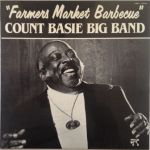
For years we have been including the followinig commentary in our Hot Stamper listings for Farmers Market Barbecue:

Musically FMB is a top Basie big band title in every way. This should not be surprising: many of his recordings for Pablo in the 70s and early 80s display the talents of The Count and his band at their best.

Sonically there’s more to the story. Based on our recent shootout for this title, in comparison to the other Basie titles we’ve done lately, we would have to say that FMB is the best Basie big band title we’ve ever played.

Since so many Basie big band recordings are so good, we don’t want to get ahead of ourselves; after all, we haven’t done shootouts for all of Basie’s Pablo large group recordings. To be safe we’ll just call this one first among equals.

Having recently done another shootout, our first in two and a half years, we would have to say that the album still sounds every bit as amazing as we thought it did when we wrote the above comments more than fifteen years ago.

Our notes for a shootout winning copy get right to the heart of what makes the recording so special.

For those who might have trouble reading our scratch, allow me to transcribe what Riley, our main listening guy, heard and noted as he played the two sides of this copy.

(more…)

Can Every Audiophile System Do Its Job Well?

More on the Subject of Speaker Advice

That depends on exactly what job you think you’re giving it to do.

If its job is to allow you to enjoy music in the comfort of your home, then the little box speakers you see pictured to the left can do that job just fine, with the caveat that you must be able to enjoy the kind of sound that comes out of little boxes.

If the job you give your stereo to do is to reproduce the full range of music with high fidelity, then the little boxes you see pictured are going to fail miserably. Until the laws of physics are repealed, however that might happen, they will never be able to reproduce music in a lifelike way.

I like big dynamic speakers because they do a better job of reproducing music in a lifelike way compared to every other speaker I have ever heard, horns included, which can be very lifelike indeed, but have other shortcomings that I cannot abide.

This is not just another post bashing small speakers. I say these things to introduce the comment sent to me that you see below.

I received this anonymous letter recently in reply to a commentary I had written entitled Tone Poets and one-legged Tarzans.

Another poster defended rl1856’s claims for the abilities of his system to judge different pressings, noting that his criticisms of these remastered records — both on Tone Poets and Classic Records — generally align with mine.

I find this ending hilarious: “Never Played One – To be clear, we have never played a Tone Poets record. We’ve played many titles mastered by Kevin Gray, and we know that he is credited with mastering some records for the label. Without exception we find that his remastered records leave a lot to be desired. You can find many of them in our Hall of Shame. Anyone defending his work to me has some heavy lifting to do.”

You condemn rl1856 for expressing an opinion regarding something YOU ADMIT YOU NEVER HEARD because you believe his equipment is not resolving enough ? The irony is that his opinion largely mirrors yours regarding the sonic virtues of original RVG recordings ! How is it that he, listening through his “inferior” system can hear the virtues you ascribe to RVG pressings, and also hear when those virtues are not present?

My reply, after a week of thinking about the points this gentleman makes, can be seen below.

Hi,
Thanks for writing.

Little box speakers do produce sound of some quality. It would be foolish for me to say that one can’t actually hear something through them. The question is how much?

I believe the answer is not much, and that nobody reviewing records, or comparing one pressing to another, should be fooling himself into thinking he can do either one with a speaker of such little fidelity to the sound of live music.

Good stereos playing good records can sound like live music. With the volume up high and a shootout winning pressing on the table, in our studio the best of RVG’s recordings sound very much like live music

Does anyone think that, brought into this gentleman’s listening room wearing a blindfold and seated in the listening chair, he could be fooled into thinking he was hearing live music instead something coming out of some boxes?

Nothing I’ve played that Kevin Gray mastered, when played on the system we use — the one we developed specifically to evaluate the sound quality of records — was ever noticeably better than mediocre.

We’ve played his records by the score. They all suffer from the same suite of shortcomings to one degree or another, the specifics of which we have described in detail in post after post throughout this blog. (Here is a good example of some of his recent work.)

(more…)

Letter of the Week – “The Nutcracker set I’d previously asked to return is sounding incredible.”

Hot Stamper Pressings of the Music of Tchaikovsky Available Now

One of our good customers had this to say about some Hot Stampers he purchased recently:

Tom, I’ll have a couple of returns for you from recent orders:

Tchaikovsky / The Nutcracker (Complete Ballet)

Surprised to be returning this, but it just doesn’t do much on my system. Sounds like any old good discogs copy, not WHS for me. Cost wouldn’t have been a factor here for a copy that ’sang’ more.

He then bought some new, bigger speakers, because if you are going to play a work like The Nutcracker, you need big speakers if you want it to sound anything like what you would hear in a concert hall.

The good news is with my new speakers + amp setup, the Nutcracker set I’d previously asked to return is sounding incredible. Previously it sounded little different to your average discogs copy, but I can hear now how much body I was missing with the smaller Harbeths. The drums are slammin’, the sweet treble notes are dropping like luminous honey, the field is deep and rich. My only beef is that this performance is a bit ‘fast’, in terms of tempo, but this is by design. So, will hang on to this (which leaves $500 in your pocket).

(more…)

Letter of the Week – “These records are all making clear that I need bigger speakers. Much bigger. Twice the size.”

Hot Stamper Pressings of the Music of Cat Stevens Available Now

One of our good customers had this to say about some Hot Stampers he purchased recently:

Goddamit Tom, these records are all making clear that I need bigger speakers. Much bigger. Twice the size. In a bigger room, with treatments. Your stuff makes the path forward very clear. They need the dynamics I’m sure you’re getting. I can hear what is missing.

I don’t know if that’s a good thing, since I was generally unaware of this previously, and can’t afford that level of upgrade for a while.

We’re talking a few years out to buy a house (we’re in an apartment on the corner of the building over a garage, so no neighbor noise problems but the room is only 15×14.5 with average height ceilings) and some big upgrades.

Dear Sir,

You and I seem to be on the same page. The vast majority of audiophiles never get to the higher levels because of all the compromises they make in their rooms, speakers, wires and everything else. They end up with a collection of crap heavy vinyl because their systems don’t let them hear what is really going on with the best vintage pressings.

Call it a breakthrough of a sort. The long road ahead is an expensive one, but I’ve always been of the belief that the money you spend on audio — if you do it right — rewards you a hundred times over in listening pleasure, and it does so for as long as you live, which I hope is many more decades, at least.

These are records that need to be played loud. Until you have a bigger room and bigger speakers, they are not going to be easy to get to sound right.

I ended up building a playback studio that is 17 by 22 with a 12 foot high ceiling, a concrete slab floor and six inch thick double drywall for walls, and dedicated electrical circuits, but it took a lot of work to get it to sound right.

Oddly enough, what made the biggest difference was getting the electricity right: computers and cleaning machines on isolation transformers, stuff unplugged, stuff left plugged in that made the sound better, lights hooked up to batteries rather than plugged in to the main circuits, etc.  Night and day better that way. (More on unplugging here.)

This work is not hard for me, I’ve been doing it for decades, but you have one advantage over everyone else: you have good sounding records to test with.

You have Hot Stampers! The records are correct. If they sound wrong, it’s not their fault. They are not the problem. (more…)

Carlos Santana Knows: Louder Is Better

santasanta_1401s

Hot Stamper Pressings of the Music of Santana Available Now

Santana’s debut is yet another in the long list of recordings that really comes alive when you turn up your volume.

The commentary below refers to an experience I had playing the album on my Legacy Whisper speakers in the late-90s.

This album needs to be played loud. I mean really loud. Years ago I used to demonstrate how important it was to have the level up good and high on the song Waiting.

Back in the mid-90s, I had somehow lucked into my first shockingly good Hot Stamper copy.

As a demonstration of what the Legacy Whisper system and its 8 fifteen inch woofer/midrange drivers could do, I would play the first minute or so of the track at a pretty good level. There’s lots of ambience, there’s a couple of guys who shout things out from way back in the studio, there’s a substantial amount of deep bass, and the whole recording has a natural smooth quality to it, which is precisely what allows you to play it at loud volumes.

Then I would turn it up a notch, say about 2-3 DB. I would announce to my friends that this is probably louder than you will ever play this record, but listen to what happens when you do. The soundstage gets wider and deeper, all those guys that shout can be heard more clearly, you start to really feel that deep bass, and when the song gets going, it really gets going. The energy of the music would jump to another level.

Then I would turn it up another 3 DB or so. At this point I would say that “this is how loud it should be played.” All the effects I mentioned earlier would become even more pronounced — wider, deeper, more clear, more powerful. The record was actually starting to sound like live music in my living room.

But of course, I was showing off a system that few could afford and that nobody in his right mind would put out in the middle of his living room. You would need a custom sound room, and a big one at that, to fit such a massive speaker and be able to turn it up.

But I was a bachelor at the time, and my live-in girlfriend at the time knew that she would have to go before the stereo did.

Unboosted

It was pointed out to me one day that the reason this record can be played loud is that, unlike most popular recordings, this album has a natural, unboosted top end, which means that the louder you play it, the more real it sounds. You can’t do that with most records. Many records have a top end that’s boosted to sound good at lower volumes. Not so with the first album by Santana. [For more records with the kind of vintage smooth sound we find so appealing, click here.]

(more…)

In the Market for New Speakers? – Will They Handle the Size and Energy of Take It Easy?

Hot Stamper Pressings of the Music of The Eagles Available Now

Take one of our killer Hot Stamper pressings with you when you go shopping for speakers. The speaker that gets the POWER and ENERGY of this music right is the one you want.

This record will separate the men from the boys thirty seconds into Take It Easy.

It will be glaringly obvious who’s got the piston power and who doesn’t.  

With big bass and huge scope, this may become your favorite disc for showing your friends just what analog is really capable of. No CD ever sounded like one of our killer Hot Stamper pressings.

When the big chorus comes in on Take It Easy — one of the toughest tests for side one — you will be amazed by how energetic and downright GLORIOUS these boys can sound. Believe us when we tell you, it’s the rare copy that can pass that test.

Choruses Are Key

The richness, sweetness and freedom from artificiality is most apparent on Breakfast in America where you most always hear it on a pop record: in the biggest, loudest, densest, climactic choruses.

We set the playback volume so that the loudest parts of the record are as huge and powerful as they can possibly grow to be without crossing the line into distortion or congestion.

On some records, Dark Side of the Moon comes instantly to mind, the guitar solos on Money are the loudest thing on the record. On Breakfast in America the sax toward the end of The Logical Song is the biggest and loudest element in the mix, louder even than Roger Hodgson’s near-hysterical multi-track screaming “Who I am” about three quarters of the way through the track.

Those are clearly exceptions though. Usually it’s the final chorus that gets bigger and louder than anything else.

(more…)

Letter of the Week – “I wonder if you’ve ever had another customer who doesn’t own a turntable buy a White Hot stamper from you?”

Hot Stamper Pressings of the Music of Fleetwood Mac Available Now

Aaron has been trying to help his audiophile friends learn the differences between good records and Heavy Vinyl records. This first story concerns Chuck, who sold Aaron the VPI table you see pictured.

Aaron writes:

Chuck’s a real record guy. I played him some hot stampers, alongside the same record in heavy vinyl format.

First up was Rumours – white hot up against the Hoffman 45 mastering. He wanted to hear “you make loving fun,” so we did.

The drums on the Hoffman are more prominent, and they grab you right away. Way out of balance to my taste.

He said, “Hoffman’s done a great job with the drums. But it comes at the expense of Christine’s voice. That’s okay, I never loved her as a singer anyway.”

Next I busted out my holy grail, and played him my Zep 2 WHS. Followed up by the Jimmy Page remastering. The latter is indeed a decent record, Tom, as you say. But the clarity on the drums is superior on the Ludwig. [Clarity is not the word I would have chosen, but that’s another story for another day.]

As Chuck put it, “I never thought of this as a vocal record.” Plant’s voice just has so much more emotion on the hot stamper than on the Page version. He said, “the Page version takes out some of the humanity.” I totally agreed with that. Chuck was amazed that you were able to find and sell me a RL copy with such clean vinyl. I took the record off the table and showed it to him – he was amazed to see how scuffed it looked. It’d grade VG at best visually, but man does it play clean.

So, record after record, Chuck could hear what the hot stampers were doing. And, no doubt, the VPI table is making the hot stampers sound better, and in comparison, the heavy vinyl sounds even duller.

That said, this turntable is so much more revealing than my Clearaudio was, that there is always something delightful to listen to on my heavy vinyl records. They don’t sound worse, they sound better than they used to. It’s just that the gap between them and the hot stampers is only continuing to grow wider.

So, my man Chuck, who sold me his VPI turntable, saw the light. But then he shielded his eyes from it. Even though Chuck’s got a stack of 25 benjamins in his hand right now, I don’t think any of that is headed your way, Tom.

(more…)

Soundstaging At All Costs – A Flawed Approach to Audio

More on the Subject of Vague Imaging

The first thing I noticed about this system is that the Hallographs are in the wrong place, or at least they are in the wrong place if you are only using one pair. The first pair should be to the outside and just behind the speakers.

What this system screams out to those of us who have heard a lot of stereos, in my case having spent about fifty years in high-end audio, is “Soundstage Freak.”

The speakers are too far apart to create a proper center image.

The sound will be exceptionally spacious this way, but it is also very likely to be washed out and vague.

If you listen exclusively to orchestral music, and you like to sit toward the back of the hall when you go to live performances, then yes, you can almost justify having the speakers this far apart.

For most other music this is not a good approach.

A good vocal recording is all you would need to demonstrate the serious shortcomings of placing your speakers this wide apart.

If this were your setup, But I Might Die Tonight could show you the error of your ways, the way it showed me some of mine (albeit different ones) when I had initially finished the speaker setup at our new studio.

I worked on my speaker placement and room treatments for weeks and months after that, but I knew something was wrong well before that two minute song was over.

Stardust would also be a good choice. Most of Julie London‘s records would work. Some of the more intimate Ella records would be ideal of course, but we rarely have much stock. Blue would work, as would any early Joni Mitchell album.

The recordings of singer songwriters rarely place them anywhere but in the center of the stage, the best of them as prominently as possible. Many of our Hot Stamper pressings would make excellent test discs for getting this aspect of speaker placement dialed in better.

(more…)