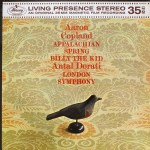
shrill-strings

These pressings suffer from shrill string tone.

Strings that are screechy or shrill are the kiss of death on classical and orchestral recordings. Any recordings, come to think of it.

Skip the Classic Records Pressing of Ballet Music From The Opera

Hot Stamper Living Stereo Orchestral Titles Available Now

Classic Records ruined this album, as anyone who has played some of their classical reissues would have expected.

Their version is dramatically more aggressive, shrill and harsh than the Shaded Dogs we’ve played, with almost none of the sweetness, richness and ambience that the best RCA pressings have in such abundance.

In fact their pressing is just plain awful, like most of the classical recordings they remastered, and should be avoided at any price. 

Apparently, most audiophiles (including audiophile record reviewers) have never heard a top quality classical recording. If they had, Classic Records would have gone out of business immediately after producing their first three Living Stereo titles, all of which were dreadful and labeled as such by us way back in 1994. I’m not sure why the rest of the audiophile community was so easily fooled, but I can say that we weren’t, at least when it came to their classical releases. 

We admit to having made plenty of mistaken judgments about their jazz and rock, and we have the we was wrong entries to prove it.

The last review we wrote for the remastered Scheherazade, which fittingly ended up in our Hall of Shame, with an equally fitting sonic grade of F.

TAS Super Disc list to this day? Of course it is!

With every improvement we’ve made to our system over the years, their records have managed to sound progressively worse. (This is pretty much true for all Heavy Vinyl pressings, another good reason for our decision to stop buying them in 2007.) That ought to tell you something.

Better audio stops hiding and starts revealing the shortcomings of bad records.
(more…)

Paganini on Heavy Vinyl – Where Is the Outrage?

Hot Stamper Pressings of the Music of Paganini Available Now

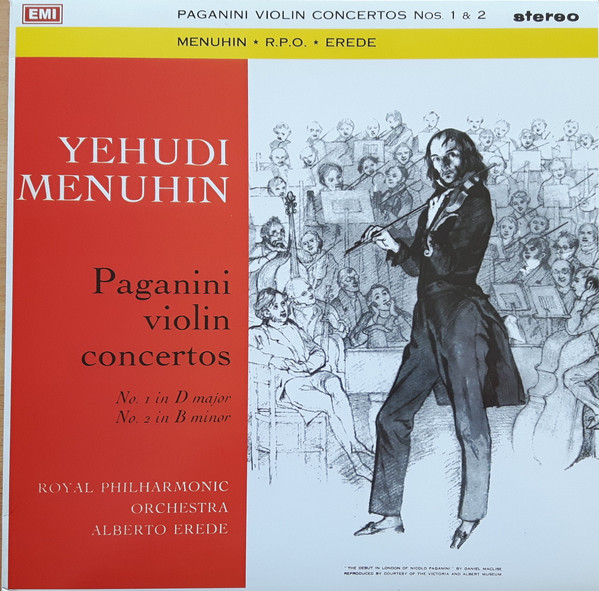
Years ago we managed to get hold of the Heavy Vinyl pressing put out by Fenn Music in Germany, about which a well known record dealer on the web (you may recognize the style) had this to say:

“Stunning Reissue Of EMI ASD 440 Recorded In Stereo In 1961. This Recording Featuring The Royal Philharmonic Conducted By Alberto Erede Provides Convincing Proof, If Any Were Needed, That Menuhin Was One Of The Great Violinists Of The 20th Century.”

The “convincing proof” provided by this record is that those responsible for it are Rank Incompetents of the Worst Kind (see what I did there?).

Screechy, bright, shrill, thin and harsh, it’s hard to imagine worse sound than this piece of Heavy Vinyl trash delivers.

Had I paid good money to buy this pressing from 2004 in the hopes of hearing the supremely talented Yehudi Menuhin of 1961 tear it up on Paganini’s legendary first two concertos, I can tell you one thing: I would be pissed.

Where is the outrage in the audiophile community over this kind of trash?

I have yet to see it. I suspect I will grow quite a bit older and quite a bit grayer before anyone from the audiophile commentariat notices just how bad this record sounds. I hope I’m proven wrong.

Screechy, bright, shrill, thin and harsh, it’s hard to imagine worse sound from this piece of Heavy Vinyl garbage.

In other words, no trace of the original’s (or the early reissue’s) analog sound. At most I may own one or two classical CDs that sound this bad, and I own quite a few. When audiophiles of an analog bent tell you they don’t like the sound of CDs, this is why they don’t like them: they sound like this junky Heavy Vinyl record.

(more…)

Every Last One of These Bartok Records with Ansermet Was No Good

Hot Stamper Pressings of the Music of Bela Bartok Available Now

Every last one of our London pressings of Concerto for Orchestra was a disaster: smeary strings, blary brass and painfully shrill throughout, with no top or bottom to speak of, the very definition of boxy sound.

The entire group of CS 6086 we had on hand — whether on Blueback or Whiteback, we had a good selection of both — were much too unpleasant to be played on high quality modern equipment.

Why had I been buying them for years?

I made the mistake of assuming that the phenomenally talented Decca engineering and producing team who worked on this project could be relied upon to produce a top quality recording of the Concerto for Orchestra.

As it turns out, my guess turned out to be wrong.

I had made the mistake of believing in the infallability of experts.

I talk about the team of producers and engineers seen below in listing after listing, raving about the amazing sound of the recordings produced by them in the 50s and 60s, many of which are right at the top of the best sounding recordings I have ever had the privilege to play.

(more…)

The “Not-So-Golden-Age” of RCA, Mercury, London and Others

Hot Stamper Pressings of Living Stereo Titles Available Now

We ran into a number of copies of this title that had what we like to call “old record sound,” which is surprisingly common on even the most revered Golden Age labels, RCA included.

No top, no real bottom, congested climaxes and a general shrillness to the sound — we’ve played Living Stereos by the dozens that have these shortcomings and many more.

Some audiophiles may be impressed by the average Shaded Dog pressing, but I can assure you that we here at Better Records are decidedly not of that persuasion.

Something in the range of five to ten per cent of the major label Golden Age recordings we play will eventually make it to the site. The vast majority just don’t sound all that good to us. (Many have second- and third-rate performances and those get tossed without ever making it to a shootout.)

The One Out of Ten Rule

If you have too many classical records taking up too much space and need to winnow them down to a more manageable size, pick a composer and play half a dozen of his works.

Most classical records display an irredeemable mediocrity right from the start. It does not take a pair of golden ears to hear it.

If you’re after the best sound, it’s the rare record that will have it, which makes clearing shelf space a lot easier than you might imagine. If you keep more than one out of ten, you’re probably setting the bar too low, if our experience is any guide.

(more…)

Mahler / Symphony No. 4 – Another Disappointing Shaded Dog

Hot Stamper Classical and Orchestral Pressings Available Now

UPDATE 2026

The Decca recording with Solti from 1961 on London (CS 6217) is still the king on this title, as far as we know.

The review below is for a White Dog pressing of the Reiner performance that we’d played way back in 2007.

We’ve played others over the years, but nothing has impressed us all that much, so we are still going through the process of acquiring more copies of the London and have yet to do a shootout for them.

Our 2025 notes for LSC 2364 on Shaded Dog is that it is rich, but the strings are somewhat shrill and it has an unfortunate tendency to become more congested than we would like in the louder passages.

The sound is passable I suppose, but it’s hardly the pressing you want to play when it comes time to hear the music properly performed, and with top quality sound. This is of course the service we offer — the actual pressing that has audiophile sound with a performance to match — so we hope to see Hot Stamper pressings of the London coming to the site in 2026.

Fun Fact

Note that this recording from 1961 was rereleased on London in 1971 with a different catalog number (CS 6781) and a different cover, as well as notably inferior sound. Audiophiles would do well to avoid it.

(more…)

Venice on Classic Records

Hot Stamper Pressings of Classical and Orchestral Music


Classic Records remastered the tapes for LSC 2313 and even the people who like the sound of Classic’s Heavy Vinyl pressings used to complain about it, so you can imagine what we think of it.

What a piece of garbage. With smeary, shrill, screechy strings, it gives no indication of the beauty that is on the tape. 

The Victrola reissue, VICS 1119, is dramatically better sounding than any other reissue of the album we have played, including of course the Classic, and may even be better sounding that the Shaded Dog original itself.


This Heavy Vinyl reissue is noticeably lacking in a number of areas that are important to the proper presentation of orchestral music. If you own a copy of this title, listen for the qualities we identified above in the sound that came up short.

Below you will find links to other records that have the same shortcomings we heard when playing the Classic Records pressing of LSC 2313.


(more…)

Hungarian Rhapsodies 1, 4, 5 & 6 – Wait a Minute

Hot Stamper Pressings of Orchestral Spectaculars Available Now

1963 was a phenomenal year for audiophile quality recordings, but this is not one of the better records produced that year. Far from it.

The sound of our vintage Mercury here, SR 90371, was awful. The overall sound was crude and the strings were shrill.

It has been our experience that many Mercury recordings suffer from these shortcomings.

But wait a minute.

Dorati recorded Hungarian Rhapsodies 2 and 3 with the London Symphony for Mercury, and those can sound amazing when you get hold of a good one.

How did they get this one so wrong?

We don’t know, and we doubt anyone else does either.

Like so many realities of the world of records, it’s a mystery, one that is very unlikely to be solved.

One of the best reasons mysteries such as this have little chance of being solved is that no one with any real expertise, using methodologies that are reliable and reproducible in any serious way, is taking on this kind of work — besides us.

We actually like testing records, and we refined* a method for doing it that is as reliable and reproducible as any method can be in the world of audio: the record shootout.

(more…)

This Carmen Ballet Is a Great Test Disc for Shrill, Gritty Strings

Hot Stamper Pressings of the Music of Georges Bizet Available Now

UPDATE 2025:

I’ve added some tubes-versus-transistors commentary at the bottom of this posting.


This Angel Melodiya pressing of Bizet’s Carmen, rearranged by Soviet composer Rodion Shchedrin for strings and 47 percussion instruments, has two incredible sides. Demo Quality Sound barely begins to do it justice. If you have the system to play it, this copy is a KNOCKOUT.

But boy is it a difficult record to reproduce. You better have everything working right when you play this one — it’s guaranteed to bring practically any audiophile system to its knees.

Speed, resolving power and freedom from distortion are what this record needs to sound its best.

Is your system up to it? There’s only one way to find out.

And if you have any peaky audiophile wire in your system, the kind that is full of detail but calls attention to itself, you are in big trouble with a record like this.

More than anything, this is a record that rewards your system’s neutrality.

Testing

This is a superb Demonstration Disc, but it is also an excellent Test Disc. The sound of the best copies is rich, full-bodied, incredibly spacious, and exceptionally extended up top. There is a prodigious amount of musical information spread across the soundstage, much of it difficult to reproduce.

Musicians are banging on so many different percussion instruments (often at the far back of the stage, or, even better, far back and left or right) that getting each one’s sonic character to clearly come through is a challenge — and when you’ve met it, a thrill. If you’ve done your homework, this is the kind of record that can show you what you’ve accomplished.

On the best copies the strings have wonderful texture and sheen. If your system isn’t up to it (or you have a copy with a problem in this area), the strings might sound a little shrill and possibly gritty as well, but I’m here to tell you that the sound on the best copies is just fine with respect to string tone and timbre. You will need to look elsewhere for the problem.

(more…)

This Mercury Copland Record Had Screechy, Shrill Strings

Hot Stamper Classical and Orchestral Pressings Available Now

Our notes for SR 90246 read:

Lively and clear but screechy strings. Dry and bright sound.

To help you avoid records with these sonic faults, we’ve linked below to others with similar problems.

Here are some titles we’ve found that tend to have dry sound, and here are some that tend to have bright sound.

And of course shrill strings are the kiss of death on any orchestral record. (Classic Records, I’m talking to you!)

None?

None of the copies of SR 90246 we played were any good, but the RFR3 / RFR6 was the worst of the bunch.

Are there good sounding pressings of the recording?

There may well be. We didn’t hear any, but that doesn’t mean they don’t exist.

However, we have no intention of spending more money trying to find them. If you know of some killer stampers for the album, please shoot us an email.

We tend to like Dorati’s work with the London Symphony Orchestra, but in this case the better Dorati/Copland record was recorded in Minneapolis in 1959, SR 90172.

If You’re a Fan

If you’re a fan of Mercury Living Presence records — and what right-thinking audiophile wouldn’t be? — have you noticed that many of them, this one for example, don’t sound very good?

If you’re an audiophile with good equipment, you should have.

But did you? Or did you buy into the hype surrounding these rare pressings and just ignore the problems with the sound?

(more…)

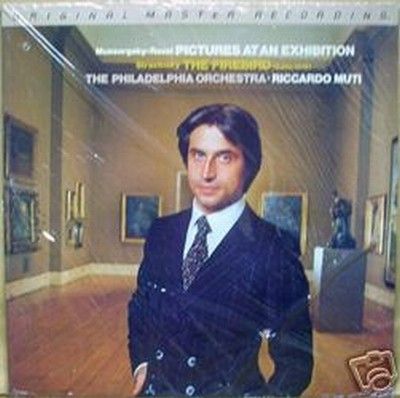
MoFi’s Pictures at an Exhibition Is as Wrong as Wrong Can Be

moussmofiHot Stamper Pressings of the Music of Mussorgsky Available Now

If you like orchestral spectaculars, have we got the record for you.

It’s the same recording of the works, but the one you want is on the real EMI label and pressed on UK import vinyl, not this awful Half-Speed recut from Japan.

The record you see pictured is awful sounding, a true hall of shame pressing.

And why are the colors of the album jacket so washed out? Compare their cover to the real thing below. As we often find ourselves asking after reviewing one of these MoFi records: What were they thinking?

The MoFi mastering of Pictures at an Exhibition and The Firebird here are a bad joke played on credulous audiophiles. And yes, I bought them both back when they came out. I was as credulous as everybody else buying these so-called superior pressings.

All that phony boosted top end makes the strings sound funny and causes mischief in virtually every other part of the orchestra as well. Not surprisingly, those boosted highs are missing from the real EMIs.

These appear to be the unbearably bright strings that Stan Ricker favors — why, we have no idea.

The proof? Find me a Mobile Fidelity classical record with that little SR/2 in the dead wax that does not have bright string tone. I have yet to hear one.

The last time I played a copy of the MFSL I found the sound so hi-fi-ish I couldn’t stand to be in the room with it for more than a minute. Of course the bass is jello as well.

The EMI with the right stampers is worlds better.

(Warning: The domestic Angel regular version and the 45 are both awful.)

MoFi had a bad habit of making bright classical records. (More reviews here.) I suppose you could say they had a bad habit of making bright records in general. A few are dull, some are just right, but most of them are bright in one way or another.

(more…)