playback-accuracy

Here are a dozen or so records that were instrumental in helping us improve the accuracy of our system.

Thick as a Brick Is a Top Test Disc for System Accuracy

Hot Stamper Pressings of the Music of Jethro Tull Available Now

From 2009 to 2010 this was our single go-to record for testing and tweaking our system.

Although we now use an amazing copy of Bob and Ray (the big band version of The Song of the Volga Boatmen located therein has to be one of the toughest tests we know of), we could easily go back to using TAAB.

Artificiality is the single greatest problem that every serious audiophile must guard against with every change and tweak to his stereo. cleaning system, room, electricity and everything else.

Since TAAB is absolutely ruthless at exposing the slightest hint of artificiality in the sound of the system, it is clearly one of the best recordings one can use to test and tune with. Here are just some of the reasons this was one of our favorite test records back in the day:

Dynamics

The better copies are shockingly dynamic. At about the three minute mark the band joins in the fun and really starts rocking. Set your volume for as loud as your system can play that section. The rest of the music, including the very quietest parts, will then play correctly for all of side one. For side two the same volume setting should be fine.

Bass

The recording can have exceptionally solid, deep punchy bass (just check out Barrie “Barriemore” Barlow’s drumming, especially his kick and floor toms. The guy is on fire).

Midrange

The midrange is usually transparent and the top end sweet and extended on the better pressings.

Tubey Magic

The recording was made in 1972, so there’s still plenty of Tubey Magic to be heard on the acoustic guitars and flutes.

(more…)

Violin Concertos Are Ideal for Testing Table Setup

Hot Stamper Pressings Featuring the Violin Available Now

This is one of the ALL TIME GREAT violin concerto records. In Ruggiero Ricci’s hands both works are nothing short of magical. If you want to know why people drool over Golden Age recordings, listen to the violin. Careful, when you hear it you may find yourself drooling too.

The staging of the orchestra and violin is exactly the way we want to hear it in our heads. Whether it would really sound this way in a concert hall is impossible to say — concert halls all sound different — but the skill and the emotion of the playing is communicated beautifully on this LP. This is a sweetheart of a record, full of the Tubey Magic for which London recordings are justly famous.

As we noted above, engineering took place in the legendary Kingsway Hall. There is a richness to the sound of the strings that is exceptional, yet clarity and transparency are not sacrificed in the least.

VTA and the Violin

This is truly The Perfect Turntable setup disc. When your VTA, azimuth, tracking weight and anti-skate are correct, this is the record that will make it clear to you that your efforts have paid off.

What to listen for you ask? With the proper adjustment the harmonics of the strings will sound extended and correct, neither hyped up nor dull; the wood body of the instrument will be more audibly “woody”; the fingering at the neck will be noticeable but will not call attention to itself in an unnatural way. In other words, as you adjust your setup, the violin will sound more and more right.

And you can’t really know how right it can sound until you go through hours of experimentation with all the forces that affect the way the needle rides the groove. Without precise VTA adjustment there is almost no way this record will do everything it’s capable of doing. There will be hardness, smear, sourness, thinness — something will be off somewhere. With total control over your arm and cartridge setup, these problems will all but vanish. (Depending on the quality of the equipment of course.)

We harp on all aspects of reproduction for a reason. When you have done the work, records like this are nothing less than GLORIOUS.

(more…)

Does Anybody Ever Talk About the Dry String Tone on London LPs?

Hot Stamper Pressings of the Music of Tchaikovsky Available Now

Not that we know of.

If audiophiles and the reviewers who write for them are listening carefully to these famous recordings on the supposedly high quality (and often very high-dollar) equipment they use, why do they never talk about this problem?

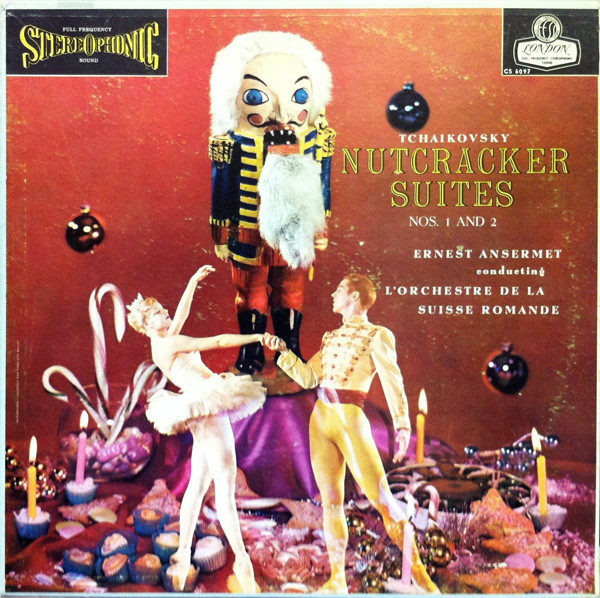
Here is what we noticed when we played a big batch of Nutcracker recordings on London and Decca:

On some copies of this album the strings are dry, lacking in that wonderful quality we like to call Tubey Magic. Dry is decidedly not our sound, although it can often be heard on the hundreds of London pressings we’ve played over the years.

And we imagined that this might be the culprit:

If you have a rich sounding cartridge, perhaps with that little dip in the upper midrange, the one that so many moving coils have these days, you may not notice this tonality issue nearly as often as we do.

Our Dynavector 17Dx Karat is ruler flat and quite tonally unforgiving in this regard. It makes our shootouts much easier, but brings out the flaws in all but the best pressings, exactly the job we require it to do.

We discussed the issue in a commentary entitled Hi-fi beats my-fi if you are at all serious about audio.

(more…)

Two Minutes that Shook My World – “But I Might Die Tonight”

After building our new studio a few years ago, we soon found out we had a whole host of problems.

We needed to work on electrical issues. We needed to work on our room treatments. We needed to work on speaker placement.

We initially thought the room was doing everything right, because our Go To setup disc, Bob and Ray, sounded super spacious and clear, bigger and more lively than we’d ever heard it. That’s what a 12 foot high ceiling can do for a large group of musicians playing live in a huge studio, in 1959, on an All Tube Chain Living Stereo recording. The sound just soared.

But Cat Stevens wasn’t sounding right, and if Cat Stevens isn’t sounding right, we knew we had a huge problem.

Some stereos play some kinds of records well and others not so well. Our stereo has to play every kind of record well because we sell every kind of record there is. You name the kind of music, we probably sell it.

And if we offer it for sale, we had to have played it and liked the sound, because no record makes it to our site without being auditioned and found to have excellent sound.

But I Might Die Tonight

The one song we played over and over again, easily a hundred times or more, was But I Might Die Tonight, the leadoff track for side two. It’s short, less than two minutes long, but a lot happens in those two minutes. More importantly, getting everything that happens in those two minutes to sound not just right, but as good as you have ever heard it, turned out to be a tall order indeed.

I could write for days about what to listen for in the song, but for now let me just point the reader to one of the most difficult parts to reproduce.

At about 50 seconds into the track, Cat repeats the first verse:

I don’t want to work away
Doing just what they all say
Work hard boy and you’ll find
One day you’ll have a job like mine, job like mine, a job like mine

Only this time he now has a multi-tracked harmony vocal singing along with him, his own of course, and he himself is also singing the lead part louder and more passionately. Getting the regular vocal, call it the “lower part,” to be in balance with the multi-tracked backing vocal, call it the “higher part,” turned out to be the key to getting the bottom, middle and top of the midrange right.

When doing this kind of critical listening we play our records very loud. Live Performance level loud. As loud as Cat could sing, that’s how loud it should be when he is singing his loudest toward the end of the song for the final “But I might die tonight!” If he is going to sing loudly, I want my stereo to be able to reproduce him singing as loud as he is actually singing on the record.

No compression.

No distortion.

All the energy.

Yes, that’s the way I want to hear it!

The last fifteen seconds or so of the song has the pianist (Cat himself) banging out some heavy chords on the piano. If you have your levels right it should sound like there is a real piano at the back of the room and that someone is really banging on it, a powerful coda perfectly fitting for such an emotionally stirring song.

(more…)

The Biggest “If” in All of Audio

Hot Stamper Pressings of Large Group Jazz Recordings Available Now

The best of the best vintage recordings are truly amazing if you can play them right.

That’s a big if.  In fact, it may just be the biggest if in all of audio.

But that is not our story for today. Our story today concerns the relationship between more accurate timbre and higher fidelity.

What do we love about vintage pressings like the Ted Heath disc you see pictured above?

The timbre of the instruments is reproduced with wonderfulfidelity.

The unique sound of every instrument in this very large ensemble has been recorded accurately. Every instrument sounds the way it would sound if you were hearing it live. Every instrument sounds real.

That’s what we mean by hi-fi, not the kind of “Audiophile Sound” that passes for hi-fidelity on some records. (Some of the worst offenders along those lines can be found here.)

(more…)

A Simple Listening Test Makes It Easy to Judge Pressings of Scheherazade

Hot Stamper Orchestral Pressings Available Now

The Classic reissue of LSC 2446, as well as the Analogue Productions version from 2013 (the original 33 is the only one I have played, mastered by Ryan Smith at Sterling), are both disasters for many reasons, but they do have one specific failing that is easy to recognize.

Both pressings are worth further discussion and analysis because they provide an easy test that can show you how wrong they are.

When reading the commentary below, keep in mind that what is bad about the Classic Records reissue from 1995 is what is bad about the Analogue Productions remaster put out many years later.

As I noted for some of the Classic Heifetz titles a while back, for all I know the CDs for his Living Stereo recordings may have better sound. That’s probably the first place to go, considering Classic’s rather poor track record regarding the remastering of his music.

Case in point: The Living Stereo CDs I own (both the CD and the SACD) of Scheherazade are dramatically better than the awful Classic Records pressing of it.

Audiophiles who don’t notice what is wrong with the Classic pressing need to get hold of a nice RCA White Dog pressing to see just how poorly the Classic stacks up. (They could even find one that’s not so nice and listen through the surface noise. The difference would still be obvious.)


UPDATE 2025

It has been many years since a White Dog pressing won a shootout. In our last listing for a Hot Stamper White Dog pressing in 2024, we noted:

Now that we know which stampers have the potential to win our shootouts, the right Shaded Dog originals have lately been coming out on top, although the White Dog pressings can still sound quite good, just not as good.

No White Dog earned a higher grade than 2+, and none of the three WD pressings we had on hand earned 2+ on both sides.

Our notes for the various sides of the WD pressings read: “a bit brash, sometimes squawky, dry and bright,” and the like.

Those of you looking for the best sound should stick to the Shaded Dog label originals. They are rich and lush in a way that the WD reissues in our experience never are. I used to swear by the WD reissues, but I see now how wrong I was. My judgments were colored by a darker, less revealing stereo than the one we use now, and that makes all the difference in the world.


Back to LSC 2446

The solo violin in the left channel at the opening of the first movement should be all it takes to hear what is wrong with the modern remastered pressings.

Anyone has ever attended a classical music concert will have no trouble recognizing that the violin on any of the Heavy Vinyl pressings, including the Analogue Productions pressing, is completely wrong and sounds nothing like a violin in a concert hall would ever sound.

And I mean ever.

No matter where you might be sitting.

No matter how good or bad the hall’s acoustics.

The violin on these Heavy Vinyl pressings is dark, it’s veiled, and it’s overly rich, as well as lacking in overtones.

Solo violins in live performance never sound like that.

They are clear, clean and present. You have no trouble at all “seeing” them, no matter where you sit.

(more…)

Massed Strings and Brass Section Are Difficult to Reproduce

More of the Music of Jacques Offenbach

UPDATE 2020

Our favorite recording of the work now is this one: Fistoulari recorded for Readers Digest.


It’s also an excellent record to test with. As you no doubt know, there is a lot of “action” in this piece of music.

To get the strings and the brass to sound lively yet natural is a bit of a trick. (It doesn’t help that the polarity is reversed.)

When I first played this record many years ago, I was none too happy about the string tone. After making a few tweaky adjustments, the strings became much clearer and more textured. The overall presentation still sounded rich, but was now dramatically more natural and relaxed.

It was this record that made me realize some of the changes I had made to my stereo back then had caused it to have a certain hi-fi-ish quality, which seemed to work fine on the popular and jazz recordings I was using as test discs at the time.

But the reproduction of classical music is the ultimate challenge for any stereo.

(more…)

Bob and Ray Produced Our Favorite Record for Cartridge Setup

Hot Stamper Pressings of Bob and Ray Available Now

Bob and Ray Throw a Stereo Spectacular just happens to be our favorite Test Disc, eclipsing all others in the areas of naturalness and difficulty of reproduction. Any tweak or new room treatment — we seem to do them almost weekly these days — has to pass one test and one test only — the Bob and Ray Test. 

This record has the power to help you get to the next level in audio like no other.

Six words hold the key to better sound: The Song of the Volga Boatman.

For the purpose of mounting new carts, our favorite track is The Song of the Volga Boatman from LSP 1773. It’s by far the most difficult track we know of to get to sound right.

There are about twenty places in the music that we use as tests, and the right setting is the one that gets the most of them to sound their best. With every change some of the twenty will sound better and some will sound worse. Recognizing when the sound is the biggest, clearest, and most balanced from top to bottom is a skill that has taken me twenty years to acquire.

It’s a lot harder than it looks. The longer you have been in audio, the more complicated it can seem, which may be counterintuitive but comports well with our day-to-day experience very well.

All our room treatments and tweaks must pass The Bob and Ray Test as well. It’s the one record we have relied on more than any other over the course of the last ten years.

Presenting as it does a huge studio full of brass players, no record we know of is more dynamic or more natural sounding — when the system is working right. When it’s not working right the first thirty seconds is all it takes to show you the trouble you are in.

If you don’t have a record like that in your collection, we highly recommend you find one.

It will be invaluable in the long run. The copy we have is so good (White Hot, the best we have ever played), and so important to our operation here, that it would not be for sale at any (well, almost any) price.

The Bob and Ray Trombone / Trumpet Test

One of the key tests on Bob and Ray that keeps us on the straight and narrow is the duet between the trombone and the trumpet about half way through The Song of the Volga Boatman. I have never heard a small speaker reproduce a trombone properly, and when tweaking the system, when the trombone has more of the heft and solidity of the real instrument, that is a tweak we want to pursue.

The trumpet interweaving with it in the right rear corner of the studio tests the transients and high frequency harmonics in the same section. With any change to the stereo, both of those instruments are going to sound different. For a change to be positive they must both sound better.

(more…)

What We Listen For – Timbre, Richness, Tubey Magic and Freedom from Artificiality

Hot Stamper Pressings of the Music of Barney Kessel Available Now

Man, when you play a Hot Stamper copy of an amazing recording such as this, the timbre of the instruments is so spot-on it makes all the hard work and money you’ve put into your stereo more than pay off. To paraphrase The Hollies, you get paid back with interest.

If you hear anything funny in the mids and highs of this record, don’t blame the record. This is the kind of record that shows up audiophile BS equipment for what it is: Audiophile BS. If you are checking for richness, Tubey Magic and freedom from artificiality, I can’t think of a better test disc. It has loads of the first two and none of the last.

A Great Test Disc

We highly recommend you make every effort to find yourself a copy of this album and use it to test your own equipment. The right pressing can be both a great Demo Disc and a great Test Disc.

Two of the best sounding jazz guitar records in the history of the world were made by Barney Kessel for Contemporary: this one, and Music To Listen To Barney Kessel By. I used to have them both in my personal collection.


UPDATE 2015

This was written many years ago when I actually had a personal collection. With 40,000 records in stock I don’t need a collection of my own anymore. Any record I might want to play is in stock, waiting to be shot out.

UPDATE 2025

I’ve retired to Georgia. All the records are back in California where we are working diligently at finding them good homes.


Such a wonderful idea for an album. The melodies from Bizet’s Carmen are unforgettable and perfect fodder for jazz improvisation. Don’t think that this is just guitar and rhythm. This is a full band with lots of horns, clarinets of all kinds, bassoons, oboes, flutes, piano, vibes — the variety of sounds to be found on this album is practically unlimited.

And with Roy DuNann’s engineering, you will never hear richer, fuller sound with more accurate timbres for all the instruments mentioned above. The guy was a genius. His recordings define High Fidelity for me. I know of none better.

The Sound We Love

For those of you who appreciate the sound that Roy DuNann (and Howard Holzer on other sessions) were able to achieve in the 50s and 60s at Contemporary Records, this LP is a Must Own (unless you already have it, which is doubtful considering how hard it is to find a copy in clean condition). Their stuff just doesn’t get any better than this. Tubey magic, richness, sweetness, dead-on timbres from top to bottom — this is a textbook example of Contemporary sound at its best.

From an audiophile point of view, how can you beat a Roy DuNann recording of so many instruments? It’s audiophile heaven. The sound is gorgeous, all tube, live-to-two-track direct from the Contemporary studio.

Warning: Stereo Editorial Follows

The same is true for audio equipment, as I’m sure you’ve experienced first-hand. Some stereos can just bore you to tears with their dead-as-a-doornail sound and freedom from dynamic contrasts. Other stereos are overly-detailed and fatiguing; they wear out their welcome with their hyped-up extremes.

As Goldilocks will gladly tell you, some stereos are just right; they have the uncanny ability to get out of the way of the music. Some equipment doesn’t call attention to itself, and that tends to be the kind of equipment we prefer around here at Better Records.

After thirty five years in this hobby [now closer to fifty], I’ve had my share of both. 90+ per cent of the stuff I hear around town makes me appreciate what I have at home. I’m sure you feel the same way.

Instruments Used on This Album

Guitar
Flute
Alto Flute
Oboe
Clarinet
Trombone
Saxophones
Bassoon
Bass Clarinet
Piano
Bass
Drums


Further Reading
I Once Fell Into a Common Audiophile Trap – This Album Helped Me Find My Way Out

More Vintage Hot Stamper Pressings on Columbia Available Now

This 2005 commentary discusses how easy it is to be fooled by tweaks that seem to offer more transparency and detail at the expense of weight and heft. Detail is everything to some audiophiles, but detail can be a trap that’s easy to fall into if we do not guard against it.

The brass on this wonderful Six Eye Mono pressing of the album set me straight. [Since that time I have not been able to find mono pressings that sounded as good as I remember this one sounding. That sh*t happens.]

I was playing this record today (5/24/05) after having made some changes in my stereo over the weekend, and I noticed some things didn’t sound quite right. Knowing that this is an exceptionally good sounding record, albeit a very challenging one, I started playing around with the stereo, trying to recapture the sound as I remembered it from the last copy that had come in a few months back.

As I tweaked and untweaked the system around this record, I could hear immediately what was better and what was worse, what was more musical and what was more Hi-Fi. The track I was playing was Night In Tunisia, which has practically every brass instrument known to man, in every combination one can imagine.

Since this is a Mono pressing, I didn’t have to worry about issues like soundstaging, which can be misleading, or perhaps distracting is a better way to describe the problem.

I was concerned with tonality and the overall presentation of the various elements in the recording.

To make a long story short, I ended up undoing all the things that I had done to the system over the weekend! In other words, what improvements I thought I had made turned out not to be improvements at all. And this is the album that showed me the error of my ways.

Brass instruments are some of the most difficult to reproduce, especially brass choirs.

(more…)