kg-bad

We often criticize Kevin Gray’s mastering skills on this blog, and for good reason: his records rarely sound any better than tolerable, and most of them are just plain awful.

We encourage the reader to read about his work in the many reviews and commentaries we’ve linked to below.

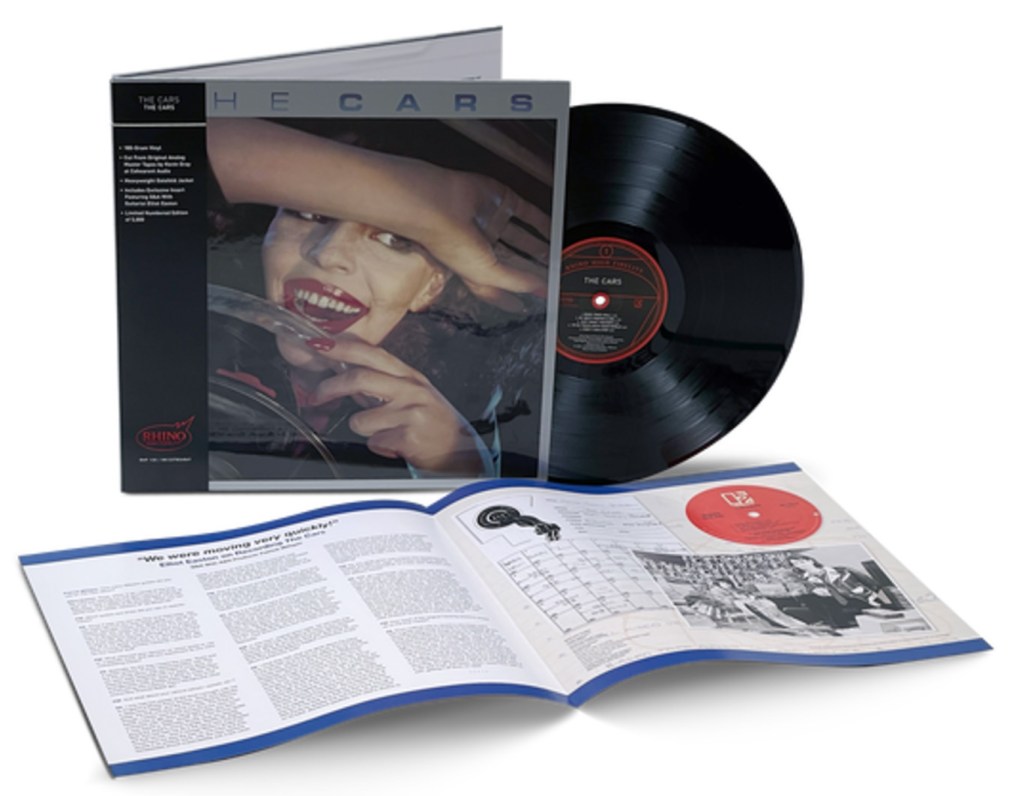
The Cars on Rhino – Man, This Record Is Bad

Hot Stamper Pressings of the Music of The Cars Available Now
I mean, really bad.

Kevin Gray has struck again. He’s a modern one man demolition crew, taking exceptionally well recorded analog albums and turning them into the vinyl equivalent of CDs, and bad CDs at that.

Steve Hoffman did the first Cars album on Gold CD and it sounds quite good. I still own mine. How can Kevin Gray, his former assistant, make such a mess of the album on vinyl?

This question has a rather obvious answer, and much of what we have to say about this record was said in our review of the disastrous Stand Up Gray cut for Analogue Productions.

Allow us to repeat ourselves:

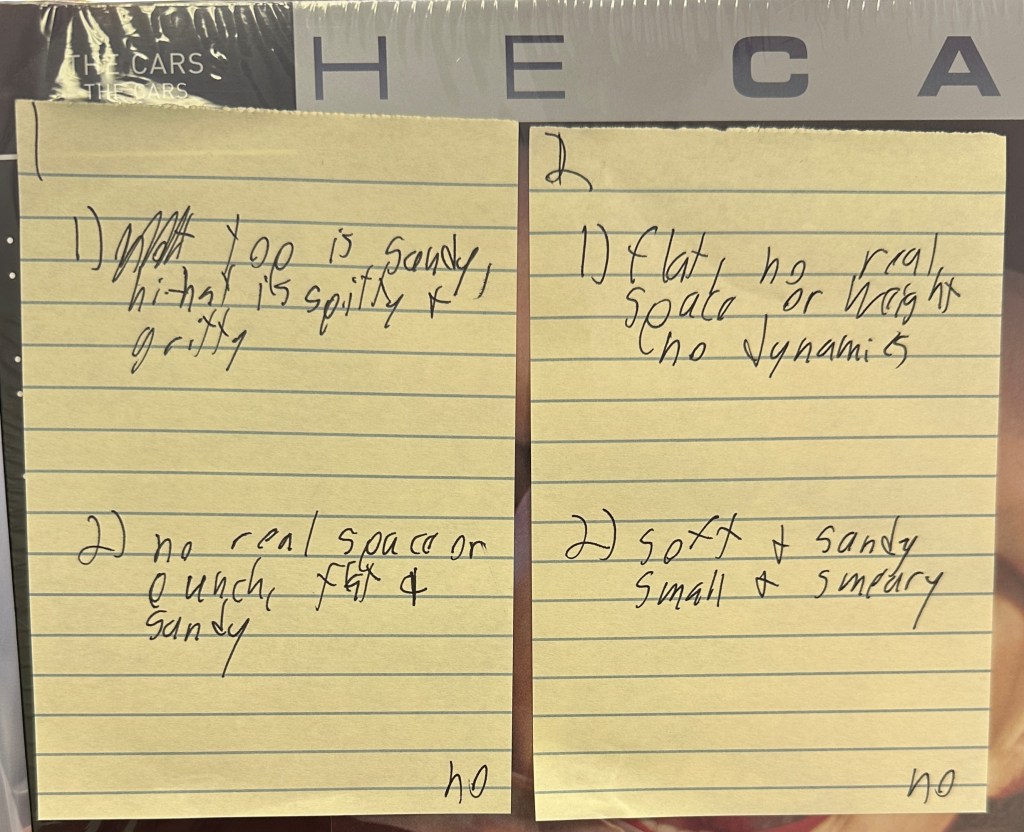
We were finally able to get our hands on the newly remastered Cars first album, a record we know well, having played them by the score. Our notes for the sound can be seen nearby.

If ever a record deserved a “no” grade, as in “not acceptable,” this new pressing mastered by Kevin Gray deserves such a grade, because it’s just awful.

Here is what we heard on side one of the new Cars remaster.

Good Times Roll

  • Top is sandy  [Sandy typically refers to transistory, dry, grainy, or gritty sound.]
  • Hi-hat is spitty and gritty

My Best Friend’s Girl

  • No real space or punch
  • Flat and sandy

You’re All I’ve Got Tonight

  • Flat
  • No real space or weight
  • No dynamics

Bye Bye Love

  • Soft and sandy
  • Small and smeary

Grant Green on Music Matters had many of these same problems. Unsurprisingly, it too was mastered by Kevin Gray.

How this guy is still getting work is beyond me.

I am clearly being facetious here. These guys get work because audiophiles will buy the records they master. The market has decided these records sound just fine, and who am I to say otherwise?

Of course, people can say anything they want about these records, opinions being worth what you pay for them.

We take a different approach. We will sell you the pressing of the album that can mop the floor with this Heavy Vinyl trash. We rarely have the first album in stock, but if you want one, just let us know and we will be glad to put you on the waiting list. Email Fred at fred@better-records.com.

Compared to What?

Is the Rhino pressing the worst version of the album ever made? In our view, it’s only competition would be this disaster, a record that also sold well back in the day. The more things change…

If I were to try to reverse engineer the sound of a system that could play this record and hide its many faults, I would look for a system that was thick, dark and fat, with plenty of tube colorations and no real top end to speak of.

I know that sound. I actually had a system thirty years ago with many of these shortcomings, but of course I didn’t have a clue about any of that. Like every audio enthusiast I met back then, I didn’t know what I didn’t know.

I’m glad to say things are different now, I think.

If you made the mistake of buying this record and can’t stand the phony top end, try covering your tweeter with something absorbent. Foam might work. Also you could try disconnecting your super tweeters if you have any. This is good advice for any record mastered by Stan Ricker as well.

Since that old school vintage tube sound takes the opposite approach to music reproduction that we’ve spent the last few decades working on here at Better Records — our goal being neutrality above all else — we are clearly not playing the record back on equipment that is capable of making it sound anything but godawful, hence our relentlessly negative reaction to the record.

On any properly setup, halfway decent stereo system, any original pressing with RTB in the dead wax should murder this Heavy Vinyl piece of junk. If you don’t have a system like that, we encourage you to get one. You will save a lot of money by not buying crap vinyl like this, only to discover later just how bad it sounds on the higher quality equipment you eventually end up with. (Here is some good news on that subject.)

Although, to be honest, if you are buying these kinds of awful records, it’s hard to see how you will ever get out of the hole you are in. Some audiophiles manage it, but I suspect that most never do.

You can also buy the CD — whether on DCC Gold or just whatever disc Elektra put out — and hear for yourself if it isn’t better sounding. I would be very surprised if it were not.

(more…)

Machine Head on Rhino Vinyl Sounds Like a CD

Hot Stamper Pressings of the Music of Deep Purple Available Now
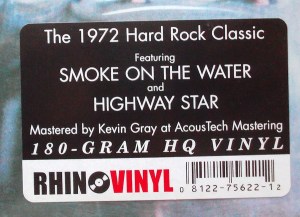
Mastered by Kevin Gray, this record has what we would call ”modern” sound, which is to say it’s clean and tonally correct, but it’s missing the Tubey Magic the British originals are swimming in.

In other words, it sounds like a CD.

I’m guessing that very few people have ever heard this record sound the way our best Hot Stamper pressings can sound.

For one thing, the domestic pressings are made from dubbed tapes, and that’s what most of us Americans would have owned. The original domestic pressings are smeary, veiled and small as a rule

Yes, the average copy may be nothing special, but this one is a boring, lifeless mess, so save your money.

Rhino Records has really made a mockery of the analog medium. Rhino touts their releases as being pressed on “180 gram High Performance Vinyl.” However, if they are using “performance” as a synonym “sound quality,” we have found the performance of their vinyl to be quite low, lower than the average copy one might stumble upon in the used record bins.

Who can be bothered to play a record that has so few of the qualities audiophiles should be looking for on vinyl?

Back in 2007 we put the question this way: why own a turntable if you’re going to play mediocrities like these?


Further Reading

Records are getting awfully expensive these days, and it’s not just our Hot Stampers that seem priced for perfection.

If you are still buying these modern remastered pressings, making the same kind of mistakes that I was making before I knew better, take the advice of some of our customers and stop throwing your money away on Heavy Vinyl and Half-Speed mastered LPs.

(more…)

Letter of the Week – “How the hell did this get released???”

Letters Comparing Hot Stamper Pressings to Their Heavy Vinyl Counterparts

One of our good customers had this to say about a record he played recently:

Hey Tom,   

Not a hot stamper update, but thought to write briefly…

I’ve been experimenting a bit with some of the Analogue Productions stuff, as unlike you I’ve had some mixed success here. However…

OMG. I just opened their pressing of Junior Welles’ Hoodoo Man Blues. It’s, pardon my crudity, not fit to wipe your ass with. The most disgusting perversion of this record imaginable. I’m choking even hearing it. Rank amateurs at the controls it seems… how the hell did this get released??? Are they deaf? Are they even listening to what they’re putting out, or just pressing money? It’s too nauseating to describe, but all your usual terms fit exactly; no ambience, bloated, unreal EQ, compressed and flat and dead, completely f*cking off. I’m just amazed.

The only reason I ventured here is that I have had some good luck with them on various jazz recordings, where the tricks do seem to help (45rpm, master tapes all analogue, etc.). Not so here. Everything you rage about holds true and is possibly the worst case of it I’ve ever come across.

Just sharing with the thought that there is a RANGE of AP stuff; it’s not all this bad. This pressing is escort-it-off-the-property-and-dispose-of-in-someone-else’s-garbage-can-bad.

C

(Meanwhile, latest box of hot stampers arrived today, and are glorious as usual.)

Conrad,

I take issue with any of AP’s records being any good.  None of their “tricks” ever managed to help them produce a record I would want to own. The best one I heard was Fragile, and even that was mediocre. [More recent reviews of AP’s records can be found here. Even though some of them are better than Fragile, I still would not want to have anything they’ve ever pressed in my own collection. In 2007 I swore off mediocrities and feel no need to go back on my word.]

You are mistaken about the “Rank amateurs at the controls it seems…”

The man at the controls was Kevin Gray. He is a professional mastering engineer and has been for a very long time. His records don’t sound very good though, as our reviews make clear for those who care to read them.

Here is a typical review for one of this label’s godawful remasterings:

Vince Guaraldi – a bloated mess at 45 RPM from Acoustech

We flushed good money down the drain in order to suffer through the 45 Analogue Productions cutting of the album. What a mess. Ridiculously overblown bass is its major shortcoming, but dynamic compression and an overall lifeless quality are obvious problems that made us give up on it pretty quickly.

This is the kind of sound that audiophiles want? I find that hard to believe. It’s what they’re stuck with because the good early pressings are just too hard to find and noisy and groove damaged when you do find them.

Most pressings of this album, the OJC and the later reissues especially, are just plain awful, so for the typical audiophile record collector the 45 might actually be a step up over those pressings. Like so much of the heavy vinyl we have played in the last few years, we did not find the sound enjoyable or compelling. I would venture a guess that the DCC gold CD is clearly better overall.

Some audiophiles have complained that we spend too much time bashing Heavy Vinyl, but if ever a record deserved it, it’s that one. It’s a failure as a remastering and an insult to the analog buying audiophile public at large. Searching the web I am glad to see that no one seems to have anything nice to say about it as of this writing. No one should, but that has not deterred the reviewers and forum posters in the past.

Chad was interviewed at the AXPONA show in 2022 by a writer for The Absolute Sound and this is how the conversation went:

“Everything here that I reissued, I wouldn’t have reissued it if I didn’t think it was killer,” Chad said. “At Analogue Productions I’m doing my favorite records, the ones that I think are killer. Otherwise I wouldn’t do it.

“All of those records, you won’t go wrong. If they don’t impress or satisfy you, you might oughta find another hobby.”

Chad also praised the remastered Analogue Productions pressing of Junior Wells’ Hoodoo Man Blues on the Delmark label.

“We’re in Chicago, so if you got a preference for Chicago blues, you need this.”

Our customer is pretty convinced that he “did go wrong.”

Since he was not able to return the record owing to Chad’s “no returns for bad sound” policy, I guess Chad would say that he “might oughta find another hobby.”

Or wise up and stop buying records from someone who apparently doesn’t have faith in his own product.

Why Would Anyone Want to Take All the Fun Out of CCR’s Music? Part Two

More of the Music of Creedence Clearwater Revival

This commentary is at least ten years old. Still holds up though!

The last time I played one of Chad’s CCR pressings, which I confess was close to a decade ago, it had all the bad qualities of the Bonnie Raitt disc on DCC, a sound that I’ve grown to dislike more with each passing year.

But what the new AP version really gets wrong is the guitar sound.

Creedence’s music lives or dies by its grungy guitars, and the AP pressing is as wrong as they come.


Latest Findings as of 2022

This commentary used to end this way:

The fat, smeary, overly-smooth guitars you hear on the record, lacking any semblance of the grungy energy that are the true hallmarks of this band’s recordings, probably means that some audiophile mastering engineer got hold of the tapes and tried to “fix” what he didn’t like about the sound.

You know, the sound that is all over the radio to this very day. Something was apparently wrong with it. So now that it’s been fixed, everything that’s good about CCR’s recordings is missing, and everything that has replaced those sonic elements has made the sound worse.

Nice job! Keep up the good work. Chad is proud of ya, no doubt about it.

It has now become clear that the various mastering engineers Chad hires are not the ones trying to fix what they don’t like about the sound. Chad is El Jefe, the one telling them what to fix and rejecting their work until these remastered albums sound the way he wants them to sound.

There is no use complaining about the awful work Doug Sax, Steve Hoffman, Kevin Gray, George Marino or anyone else did when hired to master for Analogue Productions. Their task was to please Chad. He is the customer, he is the one paying their fees, and he is the one getting the sound he wants.

He apparently thinks he is saving the world from bad sound, but we sure don’t see it that way. Just the opposite in fact.

If Chad wanted better sounding records — records that are more lively, more tonally accurate, less bloated down low and less smoothed-over up top — veteran engineers such as the gentlemen named above would surely have been able to master these titles more correctly than the evidence provided by the records would lead you to believe.

But Chad, like many other audiophiles, is a My-Fi guy, not a Hi-Fi guy, and he likes the sound he likes, regardless of what is on the master tapes or what other pressings — mastered by a number of different engineers, often over the course of many decades — might sound like.

He wants the sound he wants, and their job is to give it to him.

Bernie Grundman, the man in charge of remastering Aja, is finding out that his way is not going to work for Chad. If it takes seven test pressings before Aja has the sound Chad likes, then he will just have to keep working it until Chad hears “his Aja” sounding the way it should.

When it finally comes out, I have no doubt that it will be very different from any pressing of Aja you or I have ever heard. It won’t sound much like the early pressings that Bernie Grundman mastered for ABC in 1977, which are of course the ones we sell. Unless I miss my guess, it will be very different from the master tape. (Something I freely admit I have no way of ever knowing.)

It will sound the way Chad likes music to sound. He paid a small fortune for the privilege of making Steely Dan sound the way he wants them to sound. Now that the die is cast, those of us with good stereos and basic critical listening skills can go pound sand. The mid-fi guys are being pandered to — in the audiophile world, that’s where the Heavy Vinyl money is — and expecting anything else from this atrocious label means you haven’t been listening very carefully to the records they’ve been releasing for more than 30 years.

Will I Like the New Steely Dan Remasters?

If you think this pressing of Tea for the Tillerman sounds good, it’s a near certainty you will want to be the first on your block to collect all the newly remastered Steely Dan Heavy Vinyls.

The same goes for this pressing of Stand Up. If this is the sound you are looking for, you can be sure Chad will give it to you, good and hard (apologies to H.L. Mencken).

Do these records sound fine to you? You’re happy with them, are you?

Then you have much to look forward to with the release of the complete Steely Dan LP collection!

These Analogue Productions releases will no doubt share many of the sonic characteristics of the above-mentioned titles.

How could they not? They are guaranteed to sound the way Chad wants them to sound. Chad is the customer, and the customer is always right.

If you’re Bernie Grundman, it might take you six or seven runs at it until you find that indescribable and elusive “Chad” sound, but you will have to keep at it until you do, assuming you want to get paid.

Our review for the first of the series that we’ve had the chance to play is in, and here it is.

Could it have been worse? Absolutely. Is it really very good? No, it’s not.

Considering his dismal track record, it’s probably as good sounding a record as Chad is able to make.

To paraphrase Cormac McCarthy:

It’s a mess of a record, ain’t it, Tom?

If it ain’t, it’ll do till a mess gets here.

(more…)

A Night at the Opera – A DCC Disaster

Hot Stamper Pressings of the Music of Queen Available Now

Sonic Grade: F

This DCC pressing is a disaster, one of the worst releases that Kevin Gray and Steve Hoffman ever mastered.

Murky, opaque and compressed: yes, we can agree it has never been an especially good sounding record on anything but the most difficult to find UK pressings [and we know exactly which ones those are now, which only makes this record sound even worse in comparison], but does it deserve this kind of mastering disrespect?

Isn’t the idea to try and FIX what is wrong, rather than to make it worse?

Whether made by DCC or any other label, starting at some point in the mid-90s many audiophile pressings started to have a shortcoming that we find insufferable these days — they are just too damn smooth.

At collector prices no less. Don’t waste your money.

Is it the worst version of the album ever made?

That’s hard to say. But it is the worst sounding version of the album we’ve ever played, and that should be good enough for any audiophile contemplating spending money on this kind of trash. Our advice: don’t do it.

(more…)

Chad Has Served Poor Jethro Tull Most Barbarously

More of the Music of Jethro Tull

With a nod to our old friend, John Barleycorn.

We were finally able to get our hands on Analogue Productions’ newly remastered Stand Up, an album we know well, having played the British copies from every era by the score. Our notes for the sound can be seen below.

If ever a record deserved a “no” grade, as in “not acceptable,” this new 45 RPM pressing mastered by Kevin Gray deserves such a grade, because it’s just awful.

But let’s put that grade in context. The last time a good sounding version of Stand Up was released, as far as we can tell, was 1989, and that version was the Mobile Fidelity Gold CD. I bought mine soon after it came out. I wasn’t even planning on buying a CD player when the Compact Disc was first invented, but then Mobile Fidelity played a dirty trick on me. Instead of releasing Loggins and Messina’s first album on vinyl, they put it out exclusively on CD as part of their Silver MFCD series.

As a die-hard MoFi fan, that sealed the deal: now I had to buy a CD player. I picked up a cheap Magnavox player, the 1040. I think it ran me less than $100, and played my new Sittin’ In CD, which, as I recall, sounded pretty good. (One of my other early CD purchases was Tumbleweed Connection, the regular label release, and it was dreadful.)

I still own Stand Up on Gold CD, and I still find it superb in every way. (Many of the MFSL Gold CDs from this era are excellent and worth seeking out.)

It sounds nothing like this new vinyl release, and that’s a good thing.

On vinyl, Stand Up has rarely been given the care it deserved. The last version of Stand Up to have sound we would want to listen to was pressed in the UK in the early ’70s. That was close to fifty years ago.

We sold some domestic pressings of the album back in the early 2000s, describing them at the time as made from dub tapes with all the shortcomings that entails, but mastered very well from dub tapes. The best domestic pressings are rich, smooth, tonally correct and natural sounding. They’re too dubby to sell as Hot Stampers, but they are not bad records. Some later Chrysalis pressings are big and open, but often they are too thin and bass-shy for the music to work. We’ve never taken them seriously.

It wasn’t long before we’d eliminated everything but the early UK pressings for our shootouts, and we quickly discovered that the earliest of the UK pressings on the older Island label were not good at all. We wrote about the problem with some originals more than ten years ago.

What was surprising about the shootouts we had done in past years was how disappointing most of the early British pressings we played were. They were flat, lacked energy and just didn’t rock the way they should have.

We learned the hard way that most British Pink label pressings aren’t especially rich, that some are small and recessed, and some are just so smeary, thick and opaque that they frustrate the hell out of you as you’re trying to hear what any of the musicians other than Ian Anderson is doing.

So when a reviewer comes along and says something positive about the new pressing compared to some unidentified original, we appreciate the problem that is at the root of his mistaken judgments:

Here’s the deal: if the goal was to duplicate the original pink label Island sound, this reissue misses that, which is good because this new double 45 reissue is far superior to the original in every possible way.

The tape was in great shape, that’s for sure. Clarity, transparency, high frequency extension and especially transient precision are all far superior to the original. Bass is honest, not hyped up and the mastering delivers full dynamics that are somewhat (but only slightly), compressed on the original. Ian Anderson’s vocals are naturally present as if you are on the other side of the microphone. Most importantly, the overall timbral balance sounds honest and correct. But especially great is the transient clarity on top and bottom.

If you’re fortunate to have an original pink label Island, at first you might think the sound is somewhat “laid back”, but that’s only because the mids and upper mids are not hyped up as they are on the original. That adds some excitement, but it clouds the picture and greatly obscures detail.

If you scroll down to our notes, you will see what we thought of the “laid back” sound this reviewer talks about. (Keep in mind that we first read the above review mere moments ago.)

We think “smaller, thick and stuck in the speakers” may be someone’s idea of “laid back,” but, just so there is no misunderstanding, it’s our idea of “awful.”

None of these are good things. Our Hot Stamper pressings are never small, thick or stuck in the speakers. They’re the records with the opposite of that sound. Our records are big, transparent and open. That’s why we can charge so much money for them and have people lining up to buy them.

They deliver the big, bold sound that the brilliant engineer for the album, Andy Johns, was known for. Laid back was not in his vocabulary.

Here is more of what we heard on side one.

Jeffrey Goes to Leicester Square

“Transients are sharp but body is dull. Kinda phony.”

Phony sound is the key here. Messing with the EQ in the mastering benefits some aspects of the sound at the expense of others.

Nothing new there. Audiophile pressings with wacky EQ are the norm. I would be surprised if any common Reprise pressing from back in the day wouldn’t sound more “right,” more tonally correct, more seamless. I’ve played quite a few and I don’t recall ever hearing one sound “phony.”

On side two we played the first two tracks.

(more…)

Live At The Village Gate on Audio Fidelity Heavy Vinyl

Hot Stamper Pressings of Jazz Albums Available Now

An Audiophile Hall of Shame pressing. It’s yet another Disastrous Heavy Vinyl release with godawful sound.

What a murky mess. Hard to imagine you couldn’t find a common domestic pressing that wouldn’t sound better.

I mention throughout this blog that, starting in the ’90s, the records put out by Cisco, DCC, S&P and finally Audio Fidelity had to fight their way through Kevin Gray’s opaque, airless, low-resolution cutting system. We discuss that subject in some depth here.

Compressedthickdullopaque, and almost completely lacking in ambience, this record has all the hallmarks of a Modern Heavy Vinyl Reissue pressed at RTI.

The average ’70s pressing on the Atlantic Red and Green label will kill this audiophile piece of junk, and it’s unlikely to cost you more than ten bucks. Whatever you do, don’t waste your money on this incompetently remastered reissue.


For 35 years we’ve been helping music loving audiophiles the world over avoid bad sounding records.

To see the records with bad sound or bad music we’ve reviewed that weren’t marketed to audiophiles, click here.

It’s yet another public service from Better Records, the home of the best sounding records ever pressed. Our records sound better than any others you’ve heard or you get your money back.

(more…)

Francis Albert Sinatra & Antonio Carlos Jobim on Bad Rhino Heavy Vinyl

More of the Music of Frank Sinatra

Reviews and Commentaries for the Music of Frank Sinatra

Sonic Grade: C-

The Rhino 180 gram LP mastered by Kevin Gray is passable, but the real thing is the real thing and just can’t be beat by some wannabe reissue.

There is a richness, a sweetness and a relaxed naturalness on the best early pressings that are virtually never found on modern remasterings.

Rhino Records has really made a mockery of the analog medium. Rhino touts their releases as being pressed on “180 gram High Performance Vinyl.” However, if they are using performance to refer to sound quality, we have found the performance of their vinyl to be quite low, lower than the average copy one might stumble upon in the used record bins.
Mastered by Kevin Gray, this record has what we would call ”modern” sound, which is to say it’s clean and tonally correct, but it’s missing the analog qualities the better originals have plenty of, most notably Tubey Magic. [1]

In other words, it sounds like a CD.

Who can be bothered to play a record that has so few of the qualities audiophiles are looking for on vinyl?

Back in 2007 we put the question this way: Why own a turntable if you’re going to play mediocrities like these?


[1] Some records are so completely lacking in Analog Warmth, Richness and Sweetness that they sound like CDs, and bad ones at that. They have so little Tubey Magic that you might as well peg the figure at ZERO.

This is decidedly not our sound. No Hot Stamper pressing could possibly lack Tubey Magic — it’s one of the things that sets our records apart from the modern mediocrity known as the Heavy Vinyl LP.

Sonny Rollins Plus 4 – Defending the Indefensible

Hot Stamper Pressings of the Music of Sonny Rollins Available Now

We reviewed this album in 2014 or thereabouts.


I cannot recall hearing a more ridiculously thick, opaque and unnatural sounding pair of audiophile records than this 45 RPM Analogue Productions Heavy Vinyl release, and I’ve heard a ton of them. 

Surely someone must have noticed how awful these records sound.

So, being an enterprising sort, with a few idle moments to spare, I did a google search. To my surprise it came up pretty much empty. Sure, dealers are selling it, every last one of the bigger mail-order types.

But how is it that no reviewer has taken it to task for its oh-so-obvious shortcomings?

And no one on any forum seems to have anything bad to say about it either. How could that be?

We don’t feel it’s incumbent upon us to defend the sound of these pressings. We think that for the most part they are awful and want nothing to do with them.

But don’t those who DO think these remastered pressings sound good — the audiophile reviewers and the forum posters specifically — have at least some obligation to point out to the rest of the audiophile community that at least one of them is spectacularly bad, as is surely the case here.

Is it herd mentality? Is it that they don’t want to rock the boat? They can’t say something bad about even one of these Heavy Vinyl pressings because that might reflect badly on all of them?

I’m starting to feel like Mr. Jones: Something’s going on, but I don’t know what it is. Dear reader, this is the audiophile world we live in today. If you expect anyone to tell you the truth about the current crop of remastered vinyl, you are in for some real disappointment.

We don’t have the time to critique what’s out there, and it seems that the reviewers and forum posters lack the — what? desire, courage, or maybe just the basic critical listening skills — to do it properly.

Which means that in the world of Heavy Vinyl, it’s every man for himself.

And a very different world from the world of vintage vinyl, the kind we offer. In our world we are behind you all the way. We guarantee your satisfaction or your money back.

Now which world would you rather live in?


UPDATE 2025

Still not a single review on Discogs for this pressing.

(more…)

One Flight Up Is a Dubby Mess on Cisco Heavy Vinyl

Hot Stamper Pressings of Blue Note Recordings Available Now

Sonic Grade: D

An audiophile hall of shame pressing from Cisco / Impex / Boxstar.

You will have a hard time finding any pressing that doesn’t sound better than this “dubby” Cisco LP.

The DMM reissues are worse — no Blue Note pressings could possibly be so ridiculously bad as they are — but I can’t think of any others offhand that would be.

The CDs, maybe, who really knows, but that’s a case of apples and oranges.

If smeared transients and zero ambience are your idea of good sound, this is the record for you!