hv-dis-class

Here you will find the worst of the Heavy Vinyl classical pressings we’ve reviewed over the last thirty or more years.

Speakers Corner Mucks Up a Classic Mercury, Part Two

More of the Music of Sergei Rachmaninoff (1873-1943)

For some background, in 2005 we were still selling Heavy Vinyl. We were fans of DCC and Cisco and carried many of the Speakers Corner remasters.

But things were starting to look grim. With every improvement to our playback system, these modern reissues seem to be falling further and further behind.

In the late-’90s, Classic had released some Mercury titles which we’d auditioned and disliked immensely. In 2005 it was Speakers Corner’s turn to have at the Mercury catalog, and they went a different way, finding a “new sound” for the legendary recordings, completely unlike any vintage pressing we’d ever heard.

This was very upsetting. I felt the need to say something.

By 2007 it was clear that Heavy Vinyl was a lost cause and had no business being sold by any audiophile record dealer who cared about sound quality, most especially me. And that was the end of it. This Mercury was one of the records that helped me see the error of my ways.


Part 1 of this discussion of Speakers Corner’s Mercury Series can be found here.

A blog entry on the site from 2005 about the new Mercury reissue series that was coming out noted that:

I am expecting the new Rach 3rd (90283) later this week, and will report my findings as soon as I have a had a chance to evaluate it.

[A few weeks later I followed up with this:]

The news on 90283 is here. It came today. Are you ready? In one sentence:

The most opaque, dull and lifeless 180 gram reissue in the history of the world.

My blog entry from 2005 continues below, transcribed practically word for word.

I hope it’s becoming clear to people now that this series is an enormous fraud perpetrated against all right thinking (right listening?) audiophiles. I can’t imagine a worse sounding record. It makes the most opaque ’70s Phillips or London LP sound positively transparent next to this thick piece of crap. I pulled out my late label copy, far from the best sounding pressing I’ve ever heard, and it killed the new version. The trumpets sound like they’re playing from under a pile of blankets on this 180 gram LP. The sound is so bad it defies understanding.

And the sad thing, in some ways the saddest aspect of this very sad affair, is that I can safely predict right now, with absolutely no fear of being proved wrong, that every major record dealer will rave about it. Mark my words. Every one. Except me of course. But I’m not one of the majors. Thank god I don’t have to sell crap like this to make a living.

And every audiophile who reads a rave review in a dealer’s catalog or on a website should take it for precisely what it is: a naked grab for his money, nothing more, nothing less. It’s all about the money. It’s not about the sound. It’s not about the music. It’s just about money.

Any record dealer who would stoop low enough to take money for a record this bad is telling you something very important about his business: he either can’t tell a good record from a bad one, or he doesn’t care. Either one would make me take my business elsewhere. How do these guys stay in business? (Maybe the fact that most of their catalogs are now given over to equipment explains it.)

And you should be outraged at this kind of fraud. If you give money to retailers who so obviously have nothing but contempt for you, you share in the blame. You’re keeping these guys in business. It makes me think of the scene in Network where Howard the veteran newscaster talks directly to his audience:

So, I want you to get up now. I want all of you to get up out of your chairs. I want you to get up right now and go to the window. Open it, and stick your head out, and yell: ‘I’m as mad as hell, and I’m not gonna take this anymore!’

I want you to get up right now. Sit up. Go to your windows. Open them and stick your head out and yell – ‘I’m as mad as hell and I’m not gonna take this anymore!’ Things have got to change. But first, you’ve gotta get mad!…You’ve got to say, ‘I’m as mad as hell, and I’m not gonna take this anymore!’

After playing this new Mercury, I was filled with questions.

What is to become of the record business?

Do we really need records that sound worse than the worse sounding CDs, at twice the price?

(more…)

Witches’ Brew on Classic Records and How Crazy Wrong We Were, Part Two

Hot Stamper Living Stereo Classical and Orchestral Titles Available Now

As I noted in Part One of this commentary, I promised to find my old blurb for the Classic pressing of Witches’ Brew from the catalog I sent out for years in the mid-’90s.

Well, I found it.

The excerpt from the earlier commentary seen below gets to the heart of the problem with my (embarrassing) review.

“With an old school audio system you will continue to be fooled by bad records, just as I and all my audio buds were fooled thirty and forty years ago. Audio has improved immensely in that time. If you’re still playing Heavy Vinyl and Audiophile pressings, there’s a world of sound you’re missing. We would love to help you find it.”

Ouch.

I apparently had one of those systems in the ’90s, because my system sure wasn’t doing a very good job of showing me how awful the Classic pressing of Witches’ Brew was.

Also, my guess that the Classic pressing was 10db more dynamic is risible. That number was clearly plucked out of thin air by someone who didn’t know what he was talking about (10db is a lot).

I will take some solace from my comment that  “90% of the magic of the original is here,” which means that even in 1994 I could hear that Bernie’s cutting system had problems reproducing the Tubey Magical Living Stereo sound that was all the rage at the time, mostly owing to Harry Pearson’s listing so many RCAs on his Super Disc List.

And, although we still like Gibson’s reading of the work, these days our favorite performance of Danse Macabre is this one on EMI, one we only discovered about five years ago. It’s one advantage to being in the record business. You get to play lots and lots of records, and playing large numbers of records is practically the only way to find the ones that are even better than the ones you know.

(more…)

The First Classic Record We Ever Played – Thus Spake Zarathustra

Hot Stamper Pressings of Living Stereo Titles Available Now

Way back in 1994, long before we had anything like the system we do now, we were finding fault with the “Classic Records Sound.”

With each passing year — 28 and counting — we like that sound less.  Some Classic Records pressings may be on Harry’s TAS list — disgraceful but true — but that certainly has no bearing on whether or not they are very good records. 

I had a chance to play LSC 1806 (pictured above) not long ago and I was dumbfounded at how bright, shrill and aggressive it was.

I still remember playing my first Classic Records title, their first release, which would probably have been in 1994. The deep bass of the organ at the start of Also Sprach Zarathustra, the horns and the tympani blasting out from a dead silent background, put a lump in my throat. Had they actually managed to remaster these old recordings so well that the vintage pressings I was selling for such high prices would soon be worthless? I really do remember having that thought race through my mind.

But then the strings came in, shrieking and as bright as the worst Angel or DG pressing I’d ever heard. It was as if somebody had turned the treble control up on my preamp two or three clicks, into ear-bleeding territory. All my equipment at the time was vintage and tube, and even though my system erred on the dark side tonally, the first Classic release was clearly off the charts too bright and transistory, with none of the lovely texture and sheen that RCA was famous for in the early days of Living Stereo.

I knew right then that my vintage record business was safe.

Here is our review from the ’90s, written shortly after the release of Classic’s first three titles. (With minor additions and changes for clarity and context.)

Hall of Shame Pressings, Every One

I’m reminded of the nonsense I read in TAS and elsewhere in the mid-’90s regarding the reputed superiority of the Classic Records Living Stereo reissues. After playing their first three titles: 1806, 1817 and 2222 (if memory serves), I could find no resemblance between the reviews I read and the actual sound of the records I played. The sound was, in a word, awful.

To this day I consider them to be the single worst reissue series in history.


UPDATE 2025

Analogue Productions now holds that crown, surely. Still going strong, producing one crap pressing for the mid-fi collector market after another, there is simply no recording they won’t see fit to ruin.


When Harry Pearson (of all people! — this is the guy who started the Living Stereo craze by putting these forgotten old records on the TAS list in the first place) gave a rave review to LSC 1806, I had to stand up (in print anyway) and say that the emperor clearly had removed all his clothes, if he ever had any to begin with.

This got me kicked out of TAS by the way, as Harry does not take criticism well. I make a lot of enemies in this business with my commentary and reviews, but I see no way to avoid the fallout for calling a spade a spade.

Is anybody insane enough to stand up for LSC 1806 today? Considering that there is a die-hard contingent of people who still think Mobile Fidelity is the greatest label of all time, there may well be “audiophiles” with crude audio equipment or poorly developed critical listening skills, or both (probably both, as the two go hand in hand), that still find the sound of the shrill, screechy strings of the Classic pressing somehow pleasing to the ear. Hey, anything is possible.

As I’ve said again and again, the better a stereo gets, the more obvious the differences between good vintage pressings and most current reissues become. Modest front ends and mediocre playback systems can disguise these differences and mislead the amateur audiophile.

And the “professional” too. We’ve all had the experience of going back to play a record from years ago that we remember as being amazing, only to find it amazingly bad.

The Japanese Led Zeppelin series from the 90s comes immediately to mind. How could my system have been so dull that those bright pressings actually fooled me into thinking they sounded good all those years ago? I’ve done a few Mea Culpas over the years, and that’s one of the bigger ones.

Remember when Chesky Records were all the rage? Does anybody in his right mind play that shit anymore?

A short anecdote: A good customer called me up one night many years ago. He had just finished playing the Chesky pressing of Spain, and had pulled out his Shaded Dog original to compare. The sound of his Shaded Dog pressing was so much better that he took his Chesky and, with great satisfaction, ceremoniously dropped it in the trash can, noting, “Of course I could have sold it or traded it away, but nobody should have to listen to sound like that.”

Another anecdote: when Chesky first got started in the remastering business, a friend picked up their pressing of LSC 2150, Prokofiev’s Lt. Kije with Reiner. He played it for me when I came over to hear his system, and he and I were both shocked that his ’70s Red Seal pressing was better in every way.

We wanted to know: What kind of audiophile label can’t even go head to head with a cheap reissue put out twenty years after the initial release just to keep the bins stocked and satisfy the needs of the low-budget classical record buyer?

The answer: Plenty of them, and definitely Chesky. Playing most Classic Records classical titles is a painful experience these days. I do not recommend it to anyone with good equipment. If you love the Living Stereo sound and cannot afford vintage pressings, consider playing the CDs RCA remastered. The one I know well is clearly better than Classic’s and AP’s LPs.

(more…)

If You Own This Classic Records Pressing, I’ll Bet It’s Pristine

Hot Stamper Pressings of Classical Masterpieces Available Now

If I were in charge of the TAS Super Disc list, I would not have put this record on it.

Here are some others that we do not think qualify as Super Discs.

When Classic Records was blowing out its unsold inventory through the Tower Records Classical Annex in Hollywood many years ago — apparently they had run into some financial trouble — this was a title you could pick up for under ten bucks. I remember it being $7, but my memory may not be correct on that point. Whatever the price, it was cheap.

And even at that price it seemed nobody really wanted it.  Which is as it should be. Heavy Vinyl or no Heavy Vinyl, a bad record is a bad record and not worth the bother of sitting down and listening to it.

If you own this record, my guess is it is pristine.

If you played it at all, you played it once and put it away on a shelf where it probably sits to this very day. Good records get played and bad records don’t. If you have lots of pristine records on your shelves, ask yourself this question: Why don’t I want to play them?

You may not like the implications of the answer: They aren’t very good.

And that means you should never have bought them in the first place. But we all make mistakes.

Owning up to them may be hard, but it is the only way to make any real progress in this hobby.

The One Out of Ten Rule

If you have too many classical records taking up space and need to winnow them down to a more manageable size, pick a composer and play half a dozen of his works. You may be surprised at how lackluster the sound is on the majority of them.

Most classical records display an irredeemable mediocrity right from the start.

(more…)

More Bad Tube Mastering from the Formerly Brilliant Doug Sax

Audiophile Quality Pressings of Orchestral Music Available Now

Sonic Grade: F

The sound is smeary, thick and opaque because, among other things, the record was mastered by Doug Sax on tube equipment from a copy tape, and not all that well either.

It is yet another murky audiophile piece of trash from the mastering lathe of the formerly brilliant Doug Sax. Back in the day he cut some the best sounding records ever made.

Then he started working for Analogue Productions and never cut a good sounding record again as far as I know. (Obviously I cannot have played everything he worked on from the mid-90s on. Who would have the time? Who would even want to?)

On this Offenbach record, in Doug’s defense it’s only fair to point out that he had dub tapes to work with, which is neither here nor there as these pressings are not worth the dime’s worth of vinyl used to make them.

Should you buy a record because it was made this way?

According to the back of the jacket:

Mastering by Doug Sax at The Mastering Lab using an all vacuum tube system.

Single Step processing was used for this “Limited Edition” release. The stamper was made from the first generation master and not more than 500 were pressed from each stamper. This process allows all records to be of “test pressing quality.” Klavier records are used by many manufacturers and audio specialty shops for demonstrating their equipment.

Maybe the notoriously hearing-challenged Chad Kassem wanted this sound — almost all his remastered titles have the same faults — and simply asked that Doug cut it to sound real good like analog spossed ta sound in the mind of this kingpin, which meant smooth, fat, thick and smeary. (Back in the 70s, if you had a fairly typical stereo system — Japanese receiver and three-way box speakers with a 12″ woofer — you surely know the sound I am talking about. Record stores are one of the few places one can go to hear that sound these days. If you’re old like me, it can really take you back.)

This Is Analog?

Apparently, even in our modern era this is what some folks think analog should sound like.

(more…)

Who Can’t Hear Differences in Sound from Side to Side on Most Records?

rimskscheh_2446Hot Stamper Pressings of the Music of Rimsky-Korsakov Available Now

Both the Chesky [1] and Classic reissue pressings of LSC 2446 are just plain terrible. Embarrassingly, the latter is found on the TAS List.

There is a newly [2013, time flies!] remastered 33 RPM pressing of the album garnering rave reviews in the audiophile press. We didn’t like it either. It fails the violin test that we wrote about here.

Please note that in many of the reviews for the new pressing, the original vinyl used for comparison is a Shaded Dog pressing. In our experience almost no Shaded Dog pressings are competitive with the later White Dog pressings, and many of them are just plain awful, as we have noted previously on the site.


UPDATE 2024: Now that we know which stampers have the potential to sound the best in our shootouts, the Shaded Dog originals have lately been winning top honors, although the White Dog pressings can still sound quite good, just not as good.


rimskscheh_chesky

The “original is better” premise of most reviewers renders the work they do practically worthless, at least to those of us who take the time to play a wide variety of pressings and judge them on the merits of their sound, not the color of their labels.

[A fairly embarrassing example of live and learn.]

Missing the Obvious

The RCA White Dog with the best side two in our shootout had a very unmusical side one. Since reviewers virtually never discuss the sonic differences between the two (or more) sides of the albums they audition, how critically can they be listening? Under the circumstances how can we take anything they have to say about the sound of the record seriously?

The sound is obviously different from side to side on most of the records we play, often dramatically so (as in the case of Scheherazade), yet audiophile reviewers practically never seem to notice these obvious, common, unmistakable differences in sound, the kind that we discuss in every listing on the site. If they can’t hear the clear differences in sound from side to side, doesn’t that call into question their abilities at the most basic level?

(more…)

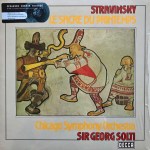
Stravinsky / Le Sacre du Printemps – Speakers Corner Reviewed

More of the music of Igor Stravinsky

We used to think this was one of the better Speakers Corner Deccas.

Having recently played the London pressing of the same performance (CS 6885), cut by Decca of course, we think we are almost certainly wrong about the quality of the sound, but who knows? Maybe Speakers Corner remastered the record properly and fixed its shortcomings.

Hah, just joking. In our experience that has never happened and we think it is very unlikely that it ever will.

Years ago we wrote the following:

Wow! What a performance! What dynamic full bodied sound! To be fair, I pulled out my original London, one of those awful mid-’70s English pressings that are never quiet, and yes, some of the ambience on the original is missing here on the new version, but everything else seems right: dynamics, tonality, the frequency extremes (including some pretty awesome deep bass).

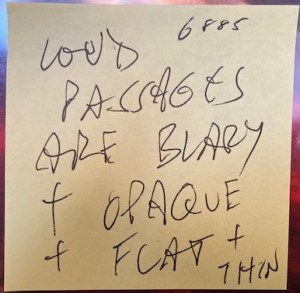
Some of the above could be right, the parts about the tonality and such. Speakers Corner could have added some bass and lower midrange to make the sound less thin, and taken out some of the upper midrange to make the loud passages less blary, but it certainly doesn’t solve the most serious issues we had with the recording, which is the fact that it is opaque and flat, two qualities that are the death of orchestral music on vinyl.

Here are the notes we made for the London.

The two paragraphs you see reproduced below are also full of bad advice we had given out in the past:

1. Can’t be sure we would still feel that way but I’m guessing this is a good record if you can pick one up at a cheap price. 

2. If you have a quiet original, great, consider yourself lucky. As few of you have any copy at all, I recommend this one. The alternative is to miss Solti’s energetic performance and the precision of the Chicago Symphony, one of the few orchestras capable of making sense out of this complex and infuriating work. (At least it used to infuriate audiences. Now our modern ears can take a difficult work like this and appreciate the complex rhythms and atonality as the expression of a truly original mind.

This paragraph we would still agree with wholeheartedly:

This is not music to play while you are having dinner. This is music to engage the mind fully. It belongs in any collection. Yours in fact. Unless you have small speakers, in which case you would be wasting your money, as small speakers cannot begin to reproduce the power of this work in the hands of Solti and the CSO [or anybody else for that matter].

We Heap Scorn Upon Chesky Records, With Good Reason

More of the music of Rimsky-Korsakov (1844-1908)

Sonic Grade: F

Chesky is one of the WORST AUDIOPHILE LABELS in the history of the world. Their recordings are so artificial and “wrong” that they defy understanding. That some audiophiles actually buy into this junk sound is equal parts astonishing and depressing.

Their own records are a joke, and their remasterings of the RCA Living Stereo catalog are an abomination.

The best RCA Living Stereo pressings are full of Tubey Magic. The Chesky pressings I have played have none.

What else would you need to know about their awful records than that?

If there is a more CLUELESS audiophile label on the planet, I don’t know what it could be, and I don’t want to find out. 

(Turns out there is someone producing the worst kind of remastered junk vinyl who may be even more clueless than Chesky, imagine that!)

Bizet-Shchedrin – Just Awful on Alto Heavy Vinyl

More of the music of Georges Bizet (1838-1875)

Sonic Grade: F

Alto records did this title on 180 gram more than a decade ago, and it was a COMPLETE DISASTER. Those of you getting our catalogs in the ’90s when that record came around were warned not to buy it. I was lucky enough to own a very good original pressing of it at the time, which of course made it easy to recognize just how poorly the new pressing had been mastered.

No criticisms of the quality of the mastering were offered in the audiophile press however, none that I saw anyway.

And every major audiophile record dealer carried it. Funny how some things never change. (more…)

Classic Records and Audio Progress

Hot Stamper Pressings Featuring the Violin Available Now

An audiophile hall of shame pressing and another Classic Records Classical LP reviewed and found wanting.

Classic Records ruined this album, as anyone who has played some of their classical reissues should have expected. Their version is dramatically more aggressive, shrill and harsh than the Shaded Dogs we’ve played, with almost none of the sweetness, richness and ambience that the best RCA pressings have in such abundance.

In fact their pressing is just plain awful, like most of the classical recordings they remastered, and should be avoided at any price.

Apparently, most audiophiles (including audiophile record reviewers) have never heard a top quality classical recording reproduced properly. If they had, Classic Records would have gone out of business immediately after producing their first three Living Stereo titles, all of which were dreadful and labeled as such by us way back in 1994. I’m not sure why the rest of the audiophile community was so easily fooled, but I can say that we weren’t, at least when it came to their classical releases.

(We admit to having made plenty of mistaken judgments about their jazz and rock, and we have the We Was Wrong entries to prove it.)

(more…)