 Hot Stamper Pressings of Living Stereo Titles Available Now
For a Living Stereo record from the Golden Age of All Tube recording, especially one from the late-50s, you might expect that the better Shaded Dog pressings would have exceptionally rich, natural sound.
After all, 1958 is clearly one of the great years for analog recordings, as evidenced by this amazing group of albums, all recorded or released in that year.
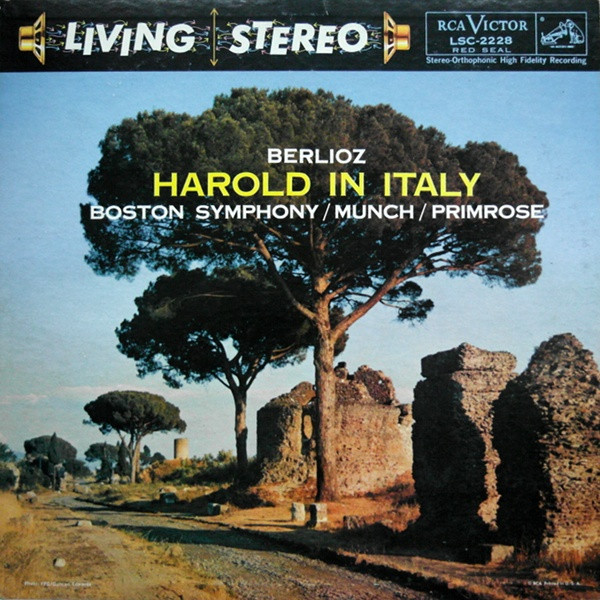
Unfortunately, the pressings we played of the Berlioz album you see pictured were quite a letdown. We dropped the needle on three different early copies of LSC 2228 with three different sets of stampers and found that none of them were all that impressive, as can be seen from our notes:
- First: tubey but pretty hot, just okay. (6s/3s)
- Second: smeary and congested, not great. (4s/4s)
- Third: tubey but smeary (3s/1s)
We guessed that their final grades after a shootout would probably fall into the range of 1+ or so, just below the cutoff for a minimal Hot Stamper grade (1.5+).
If we’d half a dozen or more to play, some copies would probably be a bit better, some would be a bit worse, but the bulk of them would end up having sound that was merely passable, even after a good cleaning. (Without a good cleaning some might not even earn that single plus.)
For now we’re throwing in the towel and moving on to Golden Age records with better prospects.
Bottom Line
More money down the drain. Oh well — that’s the cost of doing business. Of course, our admittedly high prices for some of the other records on our site will more than compensate us for whatever losses we end up incurring with LSC 2228.
To be clear, we do not sell records with 1+ or lower grades — you can find those on your own. The world is full of them. It has been my experience that they make up the bulk of vintage record collections.
The average Shaded Dog may be better than the average randomly-chosen classical pressing, but that certainly doesn’t mean it has any automatic claim to audiophile quality sound. Maybe one out of three or four are good enough to offer our customers. The same would hold true for the Mercury and Decca/London pressings we sell.
Now, with the help of this blog, we can sort the wheat from the chaff for music lovers who are looking for top quality records to play, and who are much less interested in simply owning records with a white dog in a darkened area of the label, the ones so highly prized by a certain breed of audiophile record collector, unconcerned with whether they sound good or not.
We’ve auditioned countless pressings in the 39 years we’ve been in business — buying, cleaning and playing them by the thousands.
This is how we find the best sounding vinyl pressings ever made, through trial and error. It may be expensive and time consuming, but there is simply no other method for finding better records that works. If you know of one, please write me!
We are not the least bit interested in pressings that are “known” to sound the best.
Known by whom? Which audiophiles — hobbyists or professionals, take your pick — can be trusted to know what they are talking about when it comes to the sound of records.
I have never met one, outside of those of us who work for Better Records. I remain skeptical of the existence of such a creature.
UPDATE: 2026
Woops, I take that back. I have met one, a certain Robert Brook. He has been conducting his own shootouts for a few years now and has made his findings available on his blog, The Broken Record. This is information you can trust.
We’re looking for the pressings of albums that do sound the best.
You know, when you actually play them.
If you’re an audiophile with an ear for top quality sound on vintage vinyl, we’d be happy to send you the Hot Stamper pressing guaranteed to beat anything you’ve ever heard, especially if you have any pressing marketed specifically to audiophiles. Those, with few exceptions, are rarely better than mediocre, and a great many are just awful, especially these.
And if we can’t beat whatever LP you own or have heard, you get your money back. It’s as simple as that.
Further Reading
- Sometimes the earliest stampers just cannot be beat
- The science of Hot Stampers – incomplete, imperfect, and provisional
- Large orchestral recordings are the only way to get to the highest levels in audio