fix-me

Spirit in ’68 – One of the Most Phenomenal Debuts of All Time

More of the Music of Spirit

Hot Stamper Pressings of Psych Rock Albums Available Now

Want a glimpse into the kind of energy the band was generating in the studio? Drop the needle on the opening track, Fresh Garbage, and you will hear this band come alive in a way you probably never imagined you’d experience.

It’s positively startling how immediate and lively the sound is here.

This is the band at their best, fired up and ready to show the world that The Doors are not the only SoCal rock band who have innovative ideas about rock music and the performing chops to pull them off, not to mention the studio wizards who managed to get it all down on tape with State-of-the-Art ’60s Rock sound quality.

The venerable jazz arranger Marty Paich was brought in to lend his talents to the project, something I never knew until I glanced at the liner notes during a shootout many years ago. No wonder the arrangements, especially the string arrangements, are so innovative and interesting. I can think of no Psych record outside of The Beatles’ with better strings.

Spirit’s first album checks off a few of our favorite boxes:

The Doors Vs. Spirit

If I had to choose between The Doors’ first album and Spirit’s, say for a nice drive up the coast with the top down, no contest, Spirit would get the nod (not to take anything away from The Doors mind you). I had the album on 8 Track back in high school and played it to death. Doing this shootout, hearing the album sound so good after so many years, was nothing less than a THRILL. (I went right up to Amazon and bought a CD for the car. Might just take a drive up the coast.)

If you like Surrealistic Pillow and Revolver/Sgt. Pepper-era Beatles and early Doors albums, and you don’t know the album well, you are really in for a treat. It’s a classic of its day that still holds up forty-plus years later.

I simply cannot recommend any current album on the site more highly.

This Demo Disc Quality recording should be part of any serious Rock Collection. Others that belong in that category can be found here.

(more…)

Two Tracks on Teaser and the Firecat Are Key

Hot Stamper Pressings of the Music of Cat Stevens Available Now

Just ran across the following in an old listing. We’re nothing if not consistent here at Better Records!

“And if you are ever tempted to pick up one of those recently remastered versions on heavy vinyl, don’t do it. There is simply no one alive today making records that sound like these good originals. Not to these ears anyway. We may choose to indulge ourselves in the audacity of hope, but reality has to set in sooner or later. After thirty years of trying, the modern mastering engineers of the world have nothing to show for their efforts but a ever-growing pile of failures. The time to call it quits has come and gone. Let’s face facts: when it comes to Teaser and the Firecat, it’s the Real Thing or nothing.”

If you’re looking for an amazing Demo Quality rock recording, you’ve come to the right place.

If you want a timeless classic rock record, it’s here too.

They just don’t know how to make them like this anymore. Those of you waiting for audiophile vinyl reissues with the kind of magic found on these originals will be in your graves long before it ever comes to pass.

Analogue Productions tried and failed — more than once — to produce a good sounding Heavy Vinyl pressing of Tea for the Tillerman.

You can be sure of one thing: there is little chance they would have better luck with Teaser and the Firecat.

Changes IV 

On this song there is a tremendous amount of energy in the grooves. On a copy I had a while back it sounded good to start with, but an intense cleaning regimen made it sound so alive I could hardly believe my ears. Listen to it VERY LOUD (as it was meant to be played) and then notice how quiet the next solo guitar intro is, with lots of space between the notes. Never heard it like that before. That’s when audio is FUN.

It’s always a roller coaster ride around here, as one day the system is cooking, and the next it ain’t, and nobody knows why. But the night that Teaser sounded great is one I will remember for a long time. Those big bass drum thwacks and that high hat being slapped to the point of abuse way out in front of the mix just blew my mind.

Tuesday’s Dead

There is a good-sized group of singers behind Cat Stevens that back him up when he says “whoa” right before the line “Where do you go?”. What often separates the best copies from the also-rans is how clearly those singers can be heard, assuming the tonal balance is correct and there’s plenty of energy in the performances.

The most transparent copies make it easy to appreciate the enthusiasm of the individual singers; they’re practically shouting.

For twenty years Tuesday’s Dead has been one of my favorite tracks for demonstrating what The Big Speaker Sound is all about. Now I think I better understand why. Big speakers are the only way to reproduce the physical size and tremendous energy of the congas (and other drums of course) that play such a big part in driving the rhythmic energy of the song.

In my experience no six inch woofer — or seven, or eight, or ten even — gets the sound of the conga right, from bottom to top, drum to skin. No screen can do it either. It’s simply a sound that large dynamic drivers reproduce well and other speaker designs do not reproduce so well.

Since this is one of my favorite records of all time, a true Desert Island Disc, I would never want to be without a pair of big speakers to play it, because those are the kinds of speakers that play it well.

 

(more…)

The Science of Hot Stampers – Incomplete, Imperfect, and (Gulp!) Provisional

Important Lessons We Learned from Record Experiments 

We have a section on the blog you may have seen called live and learn.

It’s devoted to discussing the records we think we we were wrong about.

Oh yes, it’s true. But it’s not really a problem for us here at Better Records. We see no need to cover up our mistakes. The process of learning involves recognizing and correcting previous errors.

Approached scientifically, all knowledge — in any field, not just record collecting or music reproduction — is incomplete, imperfect, and must be considered provisional.

What seems true today might easily be proven false tomorrow. If you haven’t discovered that for yourself yet, one thing’s for certain, you haven’t been in this hobby for very long.

We’re so used to the conventional wisdom being wrong, and having our own previous findings overturned by new ones, that we gladly go out of our way in listing after listing to point out just how wrong we were. (And of course why we think we are correct now.)

A common misperception among those visiting the site is that we think we know it all. Nothing could be further from the truth.

We learn something new about records with practically every shootout.

Each time we go back and play a 180 gram or Half-Speed mastered LP we used to like (or dislike), we gain a better understanding of its true nature. (The bulk of those “audiophile” pressings seem to get worse and worse over time, a subject that has been thoroughly discussed on the blog.)

Record cleaning gets better, front ends get better, electronics get better, tweaks get better, rooms get better — every aspect of your playback system should be improving on a regular basis, allowing you to more correctly identify the strengths and weaknesses of every record you play.

I almost forgot: your ears get better too, whether you like it or not. If that’s not happening, you’re probably not doing some very important things right. (Maybe some of your records are holding you back.)

What follows is a typical excerpt from a recent listing.

(more…)

Getz Au Go Go – Live and Learn

Hot Stamper Pressings of Bossa Nova Albums Available Now

A classic case of We Was Wrong.

Many years ago we had written these silly lines in a review:

Of course, you would never know this is a good recording by playing the average domestic copy. This Japanese LP is one of the few pressings that can show you that this wonderful smoky night club jazz LP really can have Demo Disc sound.

Ridiculous, right? Well, at the time we believed it. Now our understanding is quite a bit more sophisticated, in the sense that the Japanese pressing is clearly better than many originals, but certainly not all of them.

More importantly, there are amazing sounding domestic reissues of the album that we’ve auditioned over the last ten years or so that really blew our minds and helped to set an even higher standard for the sound of Getz Au Go Go.

Our old story:

Way back in 2005 I discussed this very subject when listing a sealed copy:

There are pressing variations for this title on Japanese vinyl, and there’s no way to know what this one sounds like but all of them are better than any other pressing I know of. As I played the open copy we have listed on the site (1/12/05) I couldn’t help but marvel at the quality of the sound.

These days we would crack open a sealed one, clean it up and shoot it out with any others we could lay our hands on, because finding a copy with sound like this is a positive THRILL.

I’m no fan of Japanese pressings as readers of this Web site know very well, but the Japanese sure got this one right!

The domestic copies of this album are mediocre at best — there’s simply no real top end to be found on any Verve pressing I have ever heard.

The top end is precisely where the magic is! Astrud Gilberto’s breathy voice needs high frequencies to sound breathy.

Gary Burton’s vibes need high frequencies to emerge from the mix, otherwise you can hardly hear them.

And Stan Getz’s sax shouldn’t sound like it’s being played under a blanket.

The only version of this album that allows you to hear all the players right is a Japanese pressing, and then only when you get a good one.

That was our understanding in 2005, after being seriously into audio and records for 30 years, as a professional audiophile record dealer for 18 of them. Clearly we had a lot to learn, and we were on the road to learning it, having embarked on our first real Hot Stamper shootout just the year before. (We had been doing them less formally since the ’90s of course. It was only in 2004 that we were able to do them with the requisite scientific protocols in place.)

In 2005, we simply did not have the cleaning system or the playback system capable of showing us what was wrong with the sound of the Japanese pressing we were so impressed by at the time.

(more…)

In 2016 We Finally Broke Through with Every Picture Tells a Story

Hot Stamper Pressinsg of the Music of Rod Stewart Available Now

As is sometimes the case, there is one and only one set of stamper numbers that consistently wins our Every Picture Tells A Story shootouts.

We stumbled upon an out-of-this-world copy of the right pressing back in 2016, a copy that took the recording to a level we had no idea was even possible.

Side one was so jaw-droppingly amazing that we awarded it the rare Four Plus (A++++) grade. 

We no longer give Four Pluses out as a matter of policy, but that doesn’t mean we don’t come across records that deserve them from time to time.

In our breakthrough shootout from 2016 the magic stampers were discovered, and they have won every shootout since then.  We would be very surprised to find any stampers that could compete with them, but you never know.

More on the subject of stampers and breakthrough pressings:

This is a superb recording, and on the best pressings it is true Demo Disc material. Not too many of our Hot Stamper titles are going to ROCK you the way this one does. We put it in a class with Led Zep II, Nevermind, and Back In Black — elite company to say the least.

A Quick Check for Tonal Balance

One quick note on how to tell if you have a tonally balanced copy, at least on side two: Maggie May has multi-overdubbed, close-miked mandolins that should have plenty of midrange presence and an extended top end.

As soon as that song ends, a very sweet, smooth guitar opens the next track, Mandolin Wind.

The two songs lean towards opposite ends of the tonal balance spectrum, but on a good copy, both of them sound right.

One’s a little darker, one’s a little brighter, but they’re both right.

And of course the next track, … Losing You, is a great test for energy, whomp and excitement.

(more…)

Robert Brook Undoubtedly Has an Impressive System

Robert Brook runs a blog called The Broken Record, with a subtitle explaining that the aim of his blog is to serve as:

A GUIDE FOR THE DEDICATED ANALOG AUDIOPHILE

We know of none better, outside of our own humble attempt to enlighten that portion of the audiophile community who love records and are looking to understand them better.

Below is a link to a review he has posted from a guest contributor, ab_ba, a person who has written us a number of letters as well.

Please read his posting on Robert’s blog and then check out my notes below.

I FINALLY Heard A TRULY GREAT STEREO, and Oh!

Wires dangling from the ceiling?

Check!

ab_ba writes:

So, if we can’t hear distortion until it’s been removed, reason leads us to conclude that we can never declare a stereo free of distortion, even one that sure sounds like it is. And indeed, Robert could readily demonstrate for me that his system still has some distortion. While I sat there marveling at the sound of John Bonham’s drumming on his pristine Ludwig pressing of Led Zeppelin II, Robert hopped up to shut off the breaker to the fridge.

We have been writing about this subject ourselves for a very long time. Here are a couple of links.

And here is a good overview of our approach: How To Get The Most Out Of Your Records – A Step By Step Guide

As for getting one’s stereo act together, we are all for it. The better the stereo, the more obvious the superiority of a top quality pressing will be. ab_ba notes in his posting:

Listening to good records on a good system is a delight, but hearing a great system is an absolute revelation. If you want to find really great copies of your favorite records, they’re out there, but you need a stereo that will enable you to identify them.

We wrote a commentary addressing that subject, entitled: First Get Good Sound – Then You Can Recognize and Acquire Good Records

One of the (many) reasons Robert Brook’s stereo has such low distortion is that he uses the same Townshend Seismic Platforms that we do. If you are interested in getting distortion out of your system, we can supply you with one to try. We have never had one returned. They are by far the cheapest, fastest, easiest way to improve the sound of any stereo. (Of course unplugging your fridge is even cheaper, but it may not be as easy.)

Robert uses the same Hallographs that we employ to help improve the acoustics of his room. We have three pair. Three of the units can be seen in the photograph above.

Tweaking and tuning are the foundation of good sound. The 80/20 rule is very real, and, if I may offer up my own experience to serve as a guide, the numbers are probably closer to 90/10.

(more…)

Liszt / Les Preludes / Mehta

Decca and London Hot Stamper Pressings Available Now

More Recordings conducted by Zubin Mehta

This London UK pressing from 1967 has excellent sound on both sides. Some of what we’ve always liked about Decca/London from the period (mid- to late-’60s, in this case 1967) can be heard on this pressing: transparency; the texture on the strings; the natural timbre of the instruments.  

These London pressings are quite hard to find in our experience. The music is wonderful throughout, perhaps the reason that so few of these have found their way to the record bins here in L.A. 

Here Mehta is conducting the Vienna Philharmonic, not to be confused with the recordings he made in Los Angeles with the L.A. Philharmonic in Royce Hall.

A Word about Mehta and the L.A. Phil

Unlike many audiophiles and the reviewers who write for them, we have never been impressed by the recordings Zubin Mehta made with the L.A. Philharmonic.

In a review of another Mehta recording, we noted:

They almost always suffer from exactly the same problems that we heard on this album. We had about five copies on hand in preparation for a shootout, some of which I had noted seemed to sound fine, but once we listened more critically we started to hear the problems that eventually caused us to abandon the shootout and give away the stock to our good customers for free.

The exceptionally rare copy of Mehta’s Planets can sound good, but 90% of them do not — just don’t make the mistake of telling that to the average audiophile who owns one. Harry told him it was the best, he paid good money for it, and until someone tells him different it had better be “the one Planets to own.” (In Harry’s defense, Previn’s recording of the work for EMI is also on the TAS list, just not at the top with the Best of the Bunch.)

We see one of our roles here at Better Records as being the guys who actually will “tell you different,” and, more importantly, can back up our opinions with the records that support our case.


This is an Older Classical/Orchestral Review

Most of the older reviews you see are for records that did not go through the shootout process, the revolutionary approach to finding better sounding pressings we started developing in the early 2000s and have since turned into a veritable science.

We found the records you see in these older listings by cleaning and playing a pressing or two of the album, which we then described and priced based on how good the sound and surfaces were. (For out Hot Stamper listings, the Sonic Grades and Vinyl Playgrades are listed separately.)

We were often wrong back in those days, something we have no reason to hide. Audio equipment and record cleaning technologies have come a long way since those darker days, a subject we discuss here.

(more…)

Dynamic Vocals Like Thelma Houston’s Require Really Big Speakers

houstivego

Hot Stamper Pressings of Direct-to-Disc Recordings Available Now

Unlike most Direct to Disc recordings, this album actually contains real music worth listening to — but only when the pressing lets the energy of the musicians through, accompanied, of course, by fidelity to the sound of their instruments.

Brass without bite is boring.

Drummers who drum too delicately will put you to sleep.

But the focus of this commentary is on dynamic vocals.

To Know You Is to Love You has the potential to come right at you in a shockingly powerful way. This lady can sing as loud as the best of all the greats.

It sounds like there is virtually no compression on Ms Houston’s vocals whatsoever. There has to be a limiter of some kind, but when she starts to really belt it out, you will not believe how powerfully she can sing. Might just give you goosebumps.

Don’t Misunderstand on side two has an equally dynamic vocal. It’s probably my favorite track on the album.

The loudest choruses of Got to Get You into My Life / I’ve Got the Music in Me are a tough test for any system as well.

This could easily be the most dynamic vocal album you have ever heard. It’s right up there at the top for us too.

(more…)

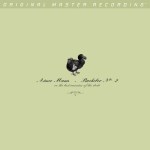
Bachelor No. 2 – MoFi Reviewed

More Rock and Pop Personal Favorites

An Audiophile Hall of Shame pressing and another Mobile Fidelity LP incompetently mastered for the benefit of those given to falling for easy answers and quick fixes.

I had not actually played the LP when I reviewed the MoFi CD, noting that the CD sounded great and that I expected the vinyl to be even better. In 2006 I should have known better but apparently I did not.

Mea culpa.

Boy, was I ever wrong. The vinyl has a bad case of sucked-out half-speed midsIt’s far too polite and lifeless to be taken seriously.

Is it the worst version of the album ever made? Since every CD I own sounds better, that would seem to be the case.

The comments about the music of course still apply — it’s brilliant — but I recommend the Gold or regular CD over this audiophile Heavy Vinyl pressing.

I used to consider this Mann’s One True Masterpiece. It’s actually her co-masterpiece, taking its place alongside the amazing I’m With Stupid, which is more of the rocker side of Mann. This is her Burt Bacharach side, prettier, sweeter and more melodic. Both are brilliant.

Aimee Mann is one of a handful of artists from the ’90s who actually makes music that can hold its own against the best popular recordings of the last forty years. There are few albums that I prize more highly or that have provided me with more musical satisfaction than those by Aimee Mann.

If you don’t know her music try one or both of the above-mentioned titles. Modern pop music just doesn’t get any better.   (more…)

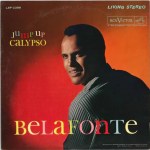
Jump Up Calypso – Another Title Where the Hit Sounds Bad

Hot Stamper Pressings of Pop and Jazz Vocals Available Now

TWO EXCELLENT SIDES on this Living Stereo pressing that should easily beat your DCC version — or your money back! We played a big stack of these recently and are happy to report that the best copies deliver that old-school RCA tubey magic that brings out the best in Belafonte’s music. The sound here is big, lively, rich and full. Only the better copies like this one really brought out the FUN in the music, an essential quality for this material.

Unfortunately, the big hit “Jump In The Line” is not one of the better sounding tracks on this album.

It has a bit of radio EQ, meaning it’s a little brighter and leaner in a way that’s designed to jump out of your AM radio, but it’s not the ideal effect when playing on a high resolution audiophile system. Still, on a copy like this, the track is still fairly musical and enjoyable. On many copies we played it was absolutely painful.

Side one, at A++, with big time presence and tons of energy. Silky, smooth and sweet, this side really blows away the typical pressing.

At A+ to A++, side two is nearly as good! Much easier on the ears than the typical bright, edgy copy. If this side had just a bit more weight down low it would be right there with side one.

Play it against your DCC version and you’ll see what we’re talking about, or just drop the needle on it and enjoy very good sound for what the All Music Guide calls “one of his most energetic albums.” (more…)