Stamper Info

Some audiophiles complain that our reluctance to give out stamper information is selfish. We think that’s not fair.

We admit that we rarely give out the stamper numbers for the pressings that win shootouts — we paid a high price in time and effort to discover them — but we do give out a great deal of information for records that did not sound especially good to us, a free – and valuable! — service from your friends at Better Records.

Avoid the Tan Labels and Non-TML Pressings for Nilsson Schmilsson

Hot Stamper Pressings of the Music of Harry Nilsson Available Now

Not that we would ever claim that TML in the dead wax guarantees good sound.

Side two of our tan label copy below was passable, but sonically that’s a very long way from the top copies we played, which of course were all TML, with lots of different stampers — none of which we are likely to reveal, now or in the future, for reasons we are sure you understand.

Anyone who buys one of our White Hot Stamper copies will definitely know, but we only find a couple of those every few years, as this is not a shootout that’s been easy to do for a very long time.

(Recently we started revealing some of the best stamper numbers we’d discovered in our shootouts to date, and we hope to spill the beans on many more in the coming years. In addition, we’ve always been comfortable talking about the stampers for titles we keep a mystery. That information won’t help you find your own Hot Stamper pressings, but the stamper sheets we publish might just help you appreciate how unhelpful knowing the “right” stampers actually turns out to be much of the time.


Make sure your equipment is tuned up and the electricity is good before you get anywhere near a pressing of this album.

Big production pop like this is hard to pull off. Harry did an amazing job, but the recording is not perfect judging by the dozen or so copies I played this week and the scores I’ve suffered through before.


Nilsson Schmilsson is an album we think we know well, one that checks off a number of important boxes for us here at Better Records:

(more…)

Scooped and Weird – Can That Really Be the Right Sound for Neil’s Debut?

Hot Stamper Pressings of the Music of Neil Young Available Now

Many years ago we thought the early pressings of Neil Young’s first album, the ones using the original mix, had the best sound.

We realized — eventually — that we were way off the mark about that and took the time to write a couple of commentaries about that awful mix, explaining just how wrong we were.

However, the right mix only gets you so far. There are dozens of different pressings of this album, and most of them are not very good sounding. In our Hot Stamper listings we note as much:

The sound of the typical pressing leaves a lot to be desired. You get copies where Neil’s voice is so forward that it quickly becomes fatiguing and unpleasant. Many later pressings are just the opposite — Neil’s voice is so muffled he’s practically underwater, probably because those pressings are made from copy tapes of compromised fidelity.

It’s the rare copy that puts him in the right place, and even then there are still plenty of ways in which a copy can fall well short of the best.

We played a copy from the shootout pressed on the later tan label that turned out to be a real mess. Nothing else in our shootout sounded quite like it, and that’s a good thing.

It was just bizarre:

  • Scooped and weird
  • No upper mids but scratchy highs

Can you imagine playing a copy this wrong and thinking you were hearing the sound that Neil had recorded? That was Reprise in the mid-seventies — they could not have cared less what the old titles they were stamping out sounded like. Why should they? There wasn’t any money in it and customers didn’t seem to mind.

If it’s all about the music, as some mistaken audiophiles will tell you to this day, what on earth does sound quality have to do with it anyway? (Keep in mind this was long before the advent of the CD. If you wanted to buy a new copy of the album, it was a crappy reissue LP or a cassette. Your poison awaits.)

And it gets worse. Practically every reissue produced after 1975 was every bit as bad. Here’s a typical Winchester pressing that somehow made it into the shootout, probably as a matter of curiosity:

It would be hard to judge which of these two awful pressings had the worst sound. I suppose with the right tone controls, assuming your premap has such things, you could try to fix the WW pressing. The earlier pressing strikes me as a lost cause. (To get a better feel for what we mean by scooped-out mids, here’s a good example, a record that some audiophiles actually have in their collections, hard as that may be to believe.)

It took us a long time to figure out which pressings had the right sound for this music. If you want to go down that lonesome road, the one thing I can tell you is that you definitely have your work cut out for you. Good luck though. If you stick with it, you will surely learn a lot, even if you end up with a pressing that doesn’t sound remotely as good as the ones we sell.

(more…)

Out of Polarity Stampers for Bang-Baaroom Revealed

Reviews and Commentaries for the Music of Dick Schory

Presenting another one of the many pressings we’ve discovered with reversed polarity on some copies.

An amazing discovery from Better Records. Many copies of this album are have their polarity reversed on side two (the side with Buck Dance, one of the better tracks on that side and a great track for testing).

We had two 4s copies of the album and both of them had side two out of polarity.  


UPDATE

7s on side two is out of polarity too.

Just played one today. There’s practically no real top end extension until you reverse the polarity.

(more…)

Before and After Science – Rules Are Made to Be Broken

Hot Stamper Pressings of Art Rock Recordings Available Now

The domestic pressings of Before And After Science are typically grainy, low-rez and hard sounding. But that doesn’t mean our best Hot Stamper pressings are imports.

No. The best pressings are made right here in the good old U.S. of A.

Say what? Yes, it’s true. We were SHOCKED to find such Hot Stamper sound lurking in the grooves of a domestic Eno LP. It’s the only one of its kind. In thirty plus years of record playing I can’t think of any domestic Eno LP that ever sounded this good.

Now hold on just a minute. The British pressings of Eno’s albums are always the best, aren’t they?

For the first three albums, absolutely. But rules were made to be broken. This pressing has the knockout sound we associate with the best British originals of Eno’s albums, not the flat, cardboardy qualities of the typical domestic reissue.

The UK pressings we have played have always been awful. We put one in a shootout in 2025 and it was as awful as we remember it. Our notes read:

  • Very lean and dry.
  • Zero bass!
  • Lousy!

(more…)

And Here I Thought The Mastering Lab Made Nothing But Good Sounding Records

Hot Stamper Pressings of the Music of Ambrosia Available Now

We just did a shootout for Ambrosia’s One Eighty album, describing our Shootout Winning copy this way:

Analog at its Tubey Magical finest. You’ll never play a CD (or other digitally sourced material) that sounds as good as this record no matter how long you live.  This is smooth, rich analog at its best, easy on the ears as we like to say.

But none of what we said about our best Hot Stamper pressings would apply to the copies with the stampers you see below.

One of the copies we played with JW1 stampers was good, not great, earning a barely-hot 1.5+ grade. 1.5+ is four grades down from the best. That’s a steep dropoff as far as we’re concerned. 1.5+ only hints at how good a recording One Eighty can be on the best pressings.

The other pressing with those stampers did not qualify as a Hot Stamper at all. We would say it had passable sound, better than average but not really good enough for the serious audiophiles we cater to.

Had it not been cleaned to make it quieter and improve its sound quality, it most likely would not have earned that single plus at all. In that respect it would have much in common with the kinds of LPs filling up the shelves of record collectors everywhere. Who needs another mediocre sounding record sitting on the shelf? And yet there they are.*

Our two best sounding copies were cut at The Mastering Lab and had exactly the same stampers. Like a lot of Warner Bros. records, JW (Jacksonville) pressings rarely sound as good as those pressed elsewhere. (You record experts out there will know what the other plants are.)

(more…)

Shootout Winning Stampers for the Scythian Suite Revealed

Hot Stamper Pressings of Orchestral Spectaculars Available Now

When it comes to the Scythian Suite, we’ve decided that there is no good reason to put the Ansermet recordings in our shootouts anymore.

Don’t get me wrong. They are perfectly good records, but the Abbado is a step up both in performance and sound. Our main listening guy summed up the differences of the two recordings this way.

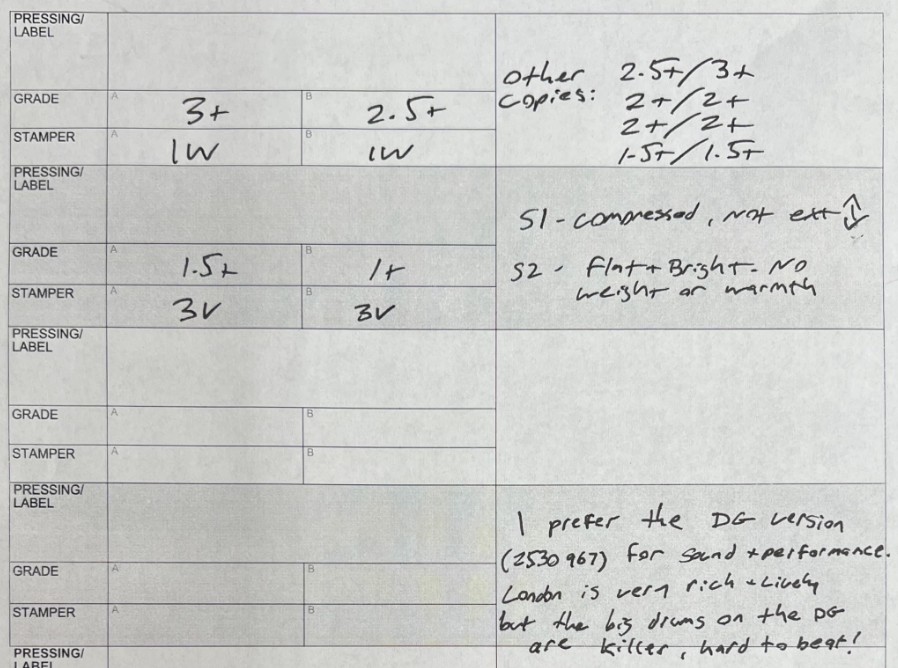
  • I prefer the DG version (2530 967) for sound and performance.
  • The London is very rich and lively but the big drums on the DG are killer, hard to beat!

So, out of the goodness of our hearts, we can now reveal the Shootout Winning stampers: 1W/1W.

However, in the case of CS-6538, knowing the right stampers is not going to get you very far.

You will actually need a pile of copies with those stampers in order to find one worthy of a 3+ White Hot stamper grade.

Obviously, knowing the “right” stamper information in this case gets you in the ballpark, but it won’t help you hit the grand slam home run you were hoping for. To do that you have to clean and play at least six copies the way we did.

(more…)

Strawberry Studios Dropped the Ball When They Mastered This One

Hot Stamper Pressings of Elvis Costello’s Albums Available Now

We described a Shootout Winning Hot Stamper pressing of Armed Forces we listed not long ago this way:

This vintage UK pressing will show you just how good sounding Elvis’s best recording can be, with a KILLER Shootout Winning Triple Plus (A+++) side two mated to a solid Double Plus (A++) side one.

It’s some of the biggest, boldest rock sound ever recorded. A Top 100 Demo Disc – every track is Elvis at his best.

Armed Forces is one of the best-sounding rock records ever made, and a copy like this is proof enough to back up that claim. The better copies are extremely transparent and silky sounding, but with unbelievably punchy, rock-solid bass and drums.

I would say the sound of the rhythm section of this album ranks up there with the very best ever recorded. Beyond that, the musical chops of this band at this time rank with the very best in the history of rock. Steve, Bruce and Pete rarely get the credit they deserve for being one of the tightest, liveliest backing bands ever to walk into a studio or on to a stage.

All true, if you happen to be playing the right UK pressing. The ones with Strawberry in the dead wax on side one, however, are not remotely competitive with the best pressings we played in our last shootout, as you can easily see from the stamper sheet below.

1.5+ is four grades down from the top copy. That’s a steep dropoff as far as we’re concerned. 1.5+ only hints at how good a recording Armed Forces can be on the best vintage pressings.

(more…)

Isn’t This Supposed to Be a Good Sounding Sonny Rollins Record?

Hot Stamper Pressings of the Music of Sonny Rollins Available Now
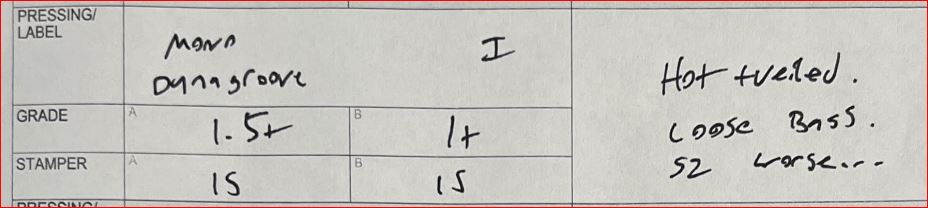
It is — or can be — but that’s only possible — as far as we know — on the early stereo pressings. On the mono pressings, the ones originally pressed in 1965 on the black dynagroove label, and never pressed again, not so much. They’re not awful, but they’re not very good either.

Which means that as a general rule, audiophiles should stick to the stereo pressings of this album, in the same way that they should almost always stick to stereo pressings of stereo recordings.

This is a Core Insight we only arrived at after playing hundreds of mono pressings made from tapes originally recorded in stereo. [1] Rarely do the mono pressings of such titles sound remotely as good as the stereo pressings.

Here is how we described a killer stereo copy of The Standard Sonny Rollins we encountered during the course of a shootout in 2025:

The Standard Sonny Rollins is back on the site for only the second time in over four years, here with outstanding sound throughout this original stereo pressing.

Once again the brilliant engineering of Ray Hall for RCA conveys the vitality of live music for these sessions (which were undoubtedly recorded live). Includes superstars like Herbie Hancock, Jim Hall, and Bob Cranshaw, who’ve lent their talents to some of the greatest jazz recordings of all time.

Here is the stamper sheet showing how the mono pressing fared. In the past we’ve had similar luck with the mono pressings of Living Stereo recordings, but this one was cheap and we figured why not?

Collectors often say that the mono pressings of jazz albums are often the best sounding. Well, why not put that proposition to the test? That is after all the business we are in, testing whether something is true or not to the best of our ability.

(more…)

Shootout Winning Stampers for The Planets with Mehta Revealed

Hot Stamper Pressings of the Music of Holst Available Now

You may have noticed that on the few occasions when we actually do give out the stampers for the top copies of an album, we are loathe to identify the title of the record that has those Shootout Winning stampers.

As you can imagine, our huge investments in research and development make up a substantial share of the costs we bear, costs that sometimes accrue over the course of many years, decades even. Eventually these costs are passed on to our customers, accounting for some of the admittedly high prices you see on our site.

But this title is going to be an exception, with many more to follow. We are officially giving out stamper information for this London, information that took us more than a decade to acquire. Maybe even two decades.

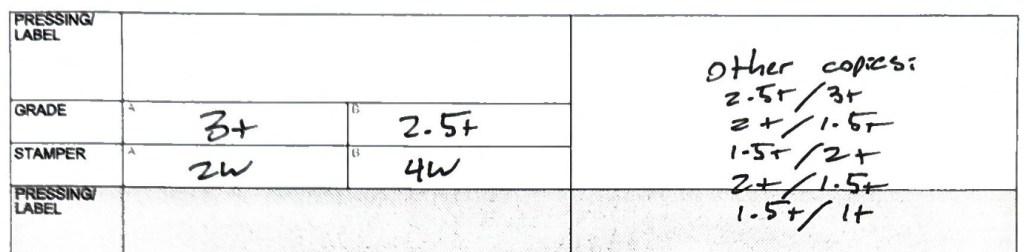
The right 2W/4W pressings of CS 6734, the Decca recording of Holst’s The Planets conducted by Zubin Mehta, are the best we have ever played. Based on our experience over the years, these are the only stampers that have any chance of winning a shootout.

Below you will find the grades for all the top copies from our most recent efforts, as well as the also-rans with those same stampers that we played.

Only two pressings earned a top grade, and each of them managed to do so on only one side. This is by far the most common result of a shootout. 3+/3+ copies are the exception, not the rule.

Whatever caused the amazing sides of the best pressings to come out differently from the not-nearly-as-good sides of the other pressings must have happened in the plating and pressing stages of manufacturing, an area that was of course not under the control of the mastering engineer who cut the record in the UK for Decca, Harry Fisher.

(more…)

Anatomy of a Failed Shootout

Hot Stamper Pressings of the Music of Beethoven Available Now

By the early 2000s we had finally come to the conclusion that the RCA pressings of the Beethoven 7th offered the best combination of sound and performance we could find.

By 2024 we had enough copies — seven in total — to do a shootout. The best copy we were able to salvage from this debacle is described, perhaps too generously, below.

This Decca-recorded, Shaded Dog pressing of Beethoven’s Symphony No. 7 debuts on the site with big, spacious, and lively Double Plus (A++) Living Stereo sound or close to it.

Side one is doing just about everything right – it’s rich, clear, undistorted, open, and has depth and transparency to rival the best recordings you may have heard, and side two is not far behind in all those areas.

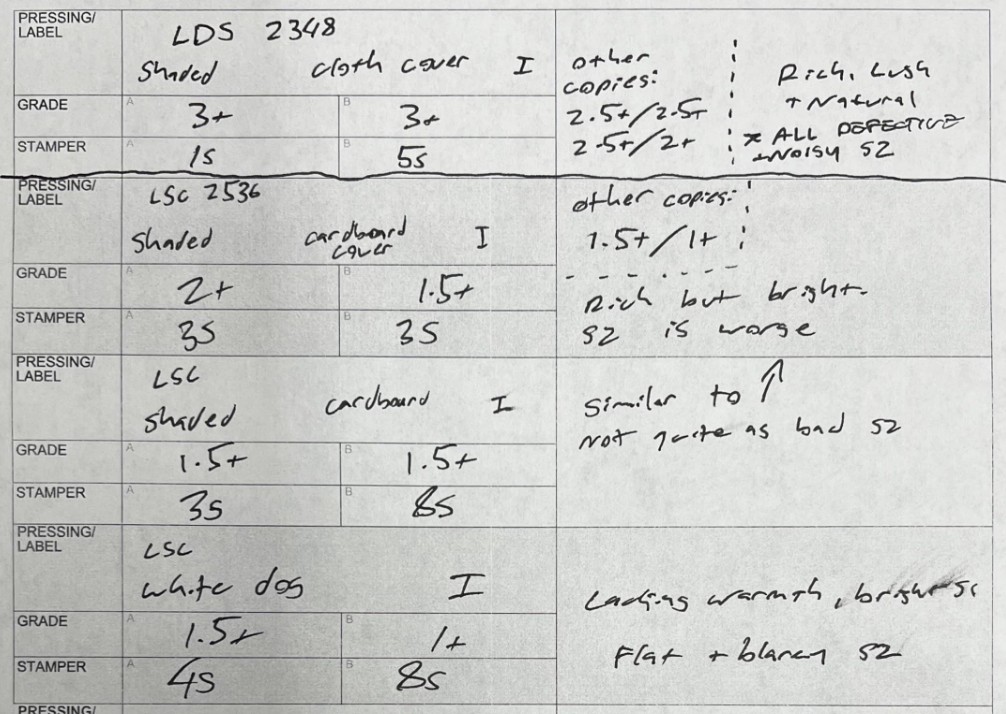
The full stamper sheet shown below makes clear what happens when your luck just plain runs out. The Soria pressings were by far the best — they were the only ones to earn 3+ on either side — but side two of all three copies we played was defective, rendering them all but worthless.

When RCA recut the record for their regularly priced Living Stereo release, LSC-2536, the dropoff in sound quality was profound, a fact readily seen from our notes. (“Rich but bright, side two is worse.”)

(more…)