Fred Plaut, Engineer – Reviews and Commentaries

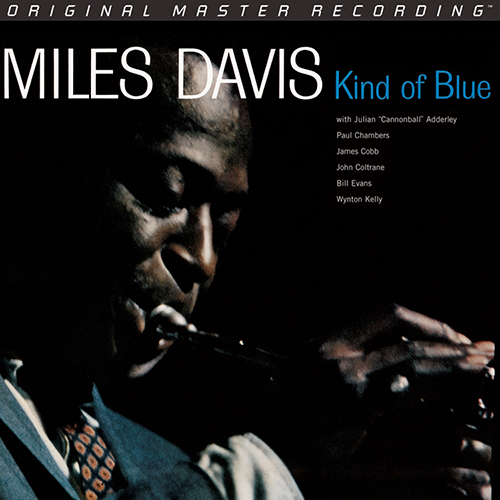
MoFi Misses The Mark by a M I L E with Kind Of Blue

Hot Stamper Pressings of Miles’s Albums Available Now

One of our good customers, Robert Brook, writes a blog which he calls

A GUIDE FOR THE DEDICATED ANALOG AUDIOPHILE

Below is a link to the review he wrote recently for one of our favorite records, Kind of Blue. (To be clear, we love the album, just not the MoFi pressing of it.)

MoFi Misses The Mark by a M I L E w/ Kind Of Blue

One of our other good customers had this to say about the Mobile Fidelity pressing:

Last night I listened to my 2015 Mobile Fidelity 45 RPM pressing.

I couldn’t get through the first cut.

Closed, muffled and flat as a pancake. No life or energy whatsoever.

I agreed and added my two cents:

My notes for their pressing read:

  • Thick, dark, flat.
  • Lacks air, space, presence.
  • Not a bad sound but it’s not right.

Later I added:

Having listened to the record more extensively, I see now I was being much too kind.

A longer review will be coming soon I hope. I think I may know why some audiophiles like the sound of this record, and will be exploring that notion in a future commentary.

The last line about the MoFi not having “a bad sound but it’s not right” reminded me of of the mistakes I made in my original review of Santana’s first album on MoFi: we owe you an apology

Kind of Blue is an album we admit to being obsessed with — just look at the number of commentaries we’ve written about it.

(more…)

Should We Tell This Guy the MoFi of Kind of Blue Is a Joke?

Hot Stamper Pressing of Miles’s Albums Available Now

The MoFi of KOB may be a joke, but don’t bother telling this guy, who appears to be rather new to this whole “reviewing” thing.

He has a record store in Phoenix and a youtube channel called The “In” Groove, wherein he proffers advice to audiophiles about records. Unsurprisingly, he tends to favor audiophile pressings. No doubt he sells lots of them in his store.

To quote the man himself, “I do a review of the best sounding copy’s [sic] of Miles Davis – Kind Of Blue. What are the copy’s [sic] you should own?”

Obviously, literacy is not his strong suit, so writing about records is out, replaced by endless talking about records on another one of these insufferable content-light videos.

Everything of interest this gentleman has to say could be written on the back of a napkin and read in the span of the average TV commercial, but that would require stringing together lots of words and arranging them so that they make some kind of sense. It’s so much easier to chat about vinyl while seated in front of some very expensive and no doubt awful sounding (judging by the results of this “shootout”) McIntosh electronics. (I am on record as being opposed to this approach to audio, and have been proselytizing for the benefits of low power amps for more than twenty years.)

Regardless of what he thinks he is doing, in no way does this fellow actually review the best sounding copies, because he’s too inexperienced and ill-informed to even bother with the ’70s Red Label reissue pressings, some versions of which happen to be among the best pressings we’ve heard, a subject we discuss here.

Our Kind of Blue Obsession

KOB is an album we have been obsessed with for a very long time, along with a great many others.

(more…)

Lady in Satin on Classic Records

Hot Stamper Pressings of the Music of Billie Holiday Available Now

It’s been quite a while since I played the Classic Records pressing that came out in 1998, but I remember it as nothing special, tonally correct but with somewhat low-rez (not breathy) vocals and lacking in both space and warmth.

Records made for audiophiles are rarely any good, so rarely in fact that we are positively shocked when such records are even halfway decent. After playing so many bad audiophile records for so many years it’s practically a truism here at Better Records.

A recording like this is the perfect example of why we pay no attention whatsoever to the bona fides of the disc, but instead make our judgments strictly on the merits of the record spinning on the table. The listener normally does not even know the label of the pressing he is reviewing. It could be a Six Eye original, the 360 reissue, or even a (gasp!) ’70s-era LP.

We don’t care what the label is.

What does that have to do with anything? We’re looking for the best sound. We don’t play labels, we play unique pressings of the album.  We assume that every pressing sounds different from every other pressing. Our job is to figure out what each of them is doing, right or wrong. 

We mix up all our copies and play them one after another until we come across the best sounding one.

This approach has opened up a world of sound that most audiophiles — at least the ones who buy into the hype associated with the typical audiophile pressing — will never be able to experience.

(more…)

In June of 2005 Our First Hot Stamper of Kind of Blue Went Up

Hot Stampers of Miles’s Albums Available Now

Reviews and Commentaries for Kind of Blue

This Columbia Red Label LP has DEMO DISC QUALITY SOUND!

Call me crazy, but I DON’T THINK YOU CAN CUT A BETTER SOUNDING KIND OF BLUE THAN THIS ONE!

I’m fully aware of how outrageous a statement that is, considering the fact that this is a ’70s Red Label reissue. But I’ve long known of amazing sounding Kind Of Blue reissues.

Having played dozens of different pressings of this record over the years, I think I know this recording about as well as anyone. The tube mastered original Six Eye Stereo copies have wonderful, lush, sweet sound. I’ve heard many of them. The 360s from the ’60s often split the difference — less tubey magical, but cleaner and more correct.

But my point here is simply this: you can cut this record DIFFERENTLY, but you can’t cut it any BETTER.

If you cut it with tubes it will bring out some qualities not as evident on this pressing. But there will be loses as well. It’s a matter of trade-offs. There is no copy that will satisfy everyone, just as there is no speaker or amplifier that will satisfy everyone.

So what do you get on this copy? Zero distortion. Zero compression. 100% transparency. Amazing transients. The deepest, cleanest, most note-like bass with no smearing, veiling or added warmth. The sense that you are hearing every instrument sound exactly the way it really does sound.

You could almost say this pressing sounds like a master tape, not a record at all. Now don’t get me wrong. I love tubey colorations. I say so all over this site. And if I had to choose one pressing of this record to take to a desert island, I don’t know which one it would be. But there is no way that the qualities of this record exist on those early, tubey cuttings. They simply didn’t have the technology. The technology they did have is wonderful in its own way. And this record is wonderful in its own, very different, way.

$150 is a lot of money for a record that any jazz record dealer would be embarrassed to charge more than $20 for. But jazz record dealers don’t know anything about sound. They know about collectability. They know about price guides. They know their market — jazz collectors — and I know mine: audiophiles. This record has unimpeachable audiophile credentials. It has the sound in the grooves like you have never heard before.

And of course it beats the pants off of the Classic reissue, as good as that one is. If you don’t want to spend a lot of money for this album — widely considered the greatest jazz album of all time — then the Classic should do the job just fine.

(more…)

Kind of Blue – An Album We Are Clearly Obsessed With

Hot Stamper Pressings of Miles’s Albums Available Now

Kind of Blue is an album we admit to being obsessed with — just look at the number of commentaries we’ve written about it.

Some highlights include:

Kind of Blue checks at least seven of our most important boxes here at Better Records.

  1. It’s a core jazz title, one that belongs in any serious audiophile’s record collection
  2. It’s a jazz masterpiece
  3. It’s a personal favorite
  4. It was recorded by one of the greats, Fred Plaut
  5. It was produced by another one of the greats, Teo Macero
  6. It was recorded at Columbia’s famed 30th street studio
  7. And some of the greatest jazz artists of their day played on it:

Letter of the Week – Uncleaned Ah Um Originals vs. Cleaned Reissues

More of the Music of Charles Mingus

The letter below sheds some light on a vitally important mastering issue: specifically, the answer to the question, Which are better sounding, originals or reissues?

The letter finishes this way.

Incidentally, just a couple of days ago I conducted my own shootout between the Red Label “Mingus Ah Um” I bought from you a few weeks back and my pristine, Six Eye White Label Promo original. To my surprise, you were absolutely right about the greater clarity of the former (starting with the snare drum on the first track).

If I had to choose between them when selecting half a dozen “desert island” LPs (and “Mingus Ah Um” would definitely be one), the Red Label version would be the pick. Much obliged for the edification.

We of course could not agree more. We wrote back:

Once you hear the sound of “old school mastering” and get to know it, you can recognize it for what it does right and what it too often does wrong. Then, and only then, can you appreciate what is really happening when switching from newer to older pressings, what is being gained and what is being lost.

It’s the kind of Home Audio Exercise we constantly talk about on the site. And there’s a good reason for that.

As we never tire of saying, hearing is believing.

Update 2022

We do not want to give the wrong impression about Ah Um. At least one of the original stereo pressings, properly cleaned, assuming we have a few to play, will win the shootout every time.

Which one will win we never know. But one of them will.

No Red Label pressing from the 70s will beat a top quality Six-Eye.

But if you have an original and it is not cleaned right, which is almost always going to be the case, since most cleaning fluids and machines these days do not do a very good job of making your records sound the way they should, then our Red Label reissue can beat your copy. Which is what our letter writer found to be true.

(more…)

We Happily Admit the Originals of Time Out Are (Potentially) the Best Sounding

More of the Music of Dave Brubeck

This time around [2014] no other copy of Time Out could touch our good Six Eye Stereo pressings. They were simply in a league of their own.

If you’ve been with us for a long time you may remember that this was not always the case. We used to really like some 360s as I recall, as well as the original mono pressing. This time around, not so much. 

This time around most everything is different. Allow us to explain.

1. Our stereo is different; we’ve made quite a number of changes to it since our last big shootout for Time Out a few years back. We are strong proponents of making audio progress.

2. We’re different; we have better (I would hope) listening skills. In fact I’m sure we listen for different qualities in a recording than we might have years ago.

3. Even more importantly, we don’t have the same pile of pressings we had years ago. They’re gone, replaced by a new batch. This new batch had some killer original pressings, some good 360s, and not much to speak of on the later labels. 

With a different batch we might have found a great sounding 360 pressing; we have to believe they exist, and we certainly can’t say that our best copy here could not have been bettered in some way. That would be foolish; anything can be bettered.

The next time we run this experiment, the results could be different.

[Update from 2021: we have run the experiment a number of times in the five years since this commentary was written, and the best Six Eye in the shootout has not been beaten yet. Yet.]

For us, in 2014 (and probably through 2015), this is it.

This is the right sound.

(more…)

Letter of the Week – “It sounds f*cking atrocious.”

Hot Stamper Pressings of Miles’s Albums Available Now

One of our good customers recently moved his stereo into a new house.

Hey Tom, 

Interestingly, the electricity and spatial characteristics are so much better in the new place that I’ve had a complete sea change regarding the MoFi Kind of Blue. If you recall, I previously found this oddly EQ’d and unrealistic, but also wasn’t as hell bent against it as you are (though I certainly have been against other crappy heavy vinyl from MoFi, Analog Productions, Blue Note, etc.).

Well, now I can’t stand it. It sounds fucking atrocious. The difference between it and my humble hot stamper copy is night and day. Whole collection sounds better, and is awesome to rediscover again, but this one really stood out. Onwards and upwards!

Conrad,

That is indeed good news. That record is Pass/Fail for me. If anyone cannot tell how bad it is, it’s a sure sign that something is very wrong somewhere. Glad you are hearing it as I am hearing it. It is, as you say, atrocious.

TP

Conrad followed up with these remarks:

The MoFi KoB never sounded right or real, but now it sounds downright puke. Will hang onto it and use as a test record for fun on other systems. As bad as it is, as I’ve said before, you have no idea how much worse their Junior Wells Hoodoo Man Blues is. My god; you’d suspect your system is broken, playing that.

Bloated asphyxiated subaquatic delirium.

Cheers, C

Well said!

(more…)

I Once Fell Into a Common Audiophile Trap – Legrand Jazz Helped Me Find My Way Out

More Vintage Hot Stamper Pressings on Columbia Available Now

This 2005 commentary discusses how easy it is to be fooled by tweaks that seem to offer more transparency and detail at the expense of weight and heft. Detail is everything to some audiophiles, but detail can be a trap that’s easy to fall into if we do not guard against it.

The brass on this wonderful Six Eye Mono pressing of the album set me straight. [Since that time I have not been able to find mono pressings that sounded as good as I remember this one sounding. That sh*t happens.]

I was playing this record today (5/24/05) after having made some changes in my stereo over the weekend, and I noticed some things didn’t sound quite right. Knowing that this is an exceptionally good sounding record, albeit a very challenging one, I started playing around with the stereo, trying to recapture the sound as I remembered it from the last copy that had come in a few months back.

As I tweaked and untweaked the system around this record, I could hear immediately what was better and what was worse, what was more musical and what was more Hi-Fi. The track I was playing was Night In Tunisia, which has practically every brass instrument known to man, in every combination one can imagine.

Since this is a Mono pressing, I didn’t have to worry about issues like soundstaging, which can be misleading, or perhaps distracting is a better way to describe the problem.

I was concerned with tonality and the overall presentation of the various elements in the recording.

To make a long story short, I ended up undoing all the things that I had done to the system over the weekend! In other words, what improvements I thought I had made turned out not to be improvements at all. And this is the album that showed me the error of my ways.

Brass instruments are some of the most difficult to reproduce, especially brass choirs.

(more…)

The 45 RPM Classic Records Repress Is Another in a Long String of Failures

More of the Music of Dave Brubeck

Sonic Grade: F

An Audiophile Hall of Shame pressing and another Classic Records Jazz LP.

Not long ago we found a single disc from the 45 RPM four disc set that Classic Records released in 2002 and decided to give it a listen as part of our shootout for the album.

My notes can be seen below, but for those who have trouble reading my handwriting, here they are:

  • Big but hard
  • Zero (0) warmth
  • A bit thin and definitely boring
  • Unnatural
  • No fun
  • No F***ing Good (NFG)

Does that sound like a record you would enjoy playing? I sure didn’t.

But this is the kind of sound that Bernie Grundman managed to find on Classic Record after Classic Record starting in the mid-90s when he began cutting for them.

We’ve been complaining about the sound of these records for more than twenty years but a great many audiophiles and the reviewers who write for them told us we wrong.  If you have a copy of this album on Classic, at 33 or 45, play it and see if you don’t hear the problems we ascribe to it.

To see what we had to say about the 33 RPM version on Classic many years ago, click here.

Maybe we got a bad 45 and the others are better. That has not been our experience.

In these four words we can describe the sound of the average Classic Records pressing.

Not all of their records are as bad sounding as Time Out. We favorably review some of the better ones here.

(more…)