Fred Plaut, Engineer – Reviews and Commentaries

Letter of the Week – “They may be cheap but they are 100% a waste of money.”

Hot Stamper Pressings of the Music of Duke Ellington Available Now

Our good customer Conrad had written us quite a while ago asking what we thought about the sound of Analogue Productions’ records. Obviously we had nothing nice to say about them, which you can read here if so inclined.

He thought they were not great but good enough at the price:

I guess we can’t really compare experiences without knowing exactly the records we’ve each heard, and the AP pressings never hold a candle to any of the hot stampers I have received from you. It’s not close; my system and ears clearly know the difference. However, I don’t expect them to, and part of my relatively positive feeling about them is biased by knowing they’re dirt cheap at around $30 a pop.

An excerpt from my reply:

I believe you are trying to find reasons to justify the purchase of these modern remastered records, despite the shortcomings of their sound. My stereo is not forgiving enough of their faults to play them for enjoyment, and my ears are not forgiving enough of their sonic irregularities to find even the best of them much more than passable.

I took off my rose-colored glasses a long time ago, and I certainly have no intention of putting them back on.

Our stereo is designed to reveal the strengths and weaknesses of every record we play. Bad records sound awful on it, and mediocre records are a waste of time.

Years ago we started to notice that most of the new Heavy Vinyl pressings were sounding worse and worse, and by 2007, when Blue came out, that was the straw that broke the camel’s back. We decided to take a stand and we have never questioned for a moment that decision.

Conrad followed up with this after I had asked him about some titles he might have been impressed with.

I disagree with most of the benefit of the doubt I was giving them then, and haven’t listened to any really since then aside from here and there and always with utter disappointment. System and standards have improved. They may be cheap but they are 100% a waste of money, whereas your records cost the moon but repay in kind and are easy to amortize.

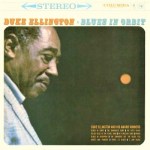
That said, one that did sound decent enough was Blues In Orbit.

Unfortunately, I was never able to get around to discussing that one title Conrad thought sounded decent enough, Blues in Orbit.

When it comes to the records audiophiles think sound good on Heavy Vinyl — especially the ones I’ve never played (or played decades ago and can’t remember their sound all that well) — we have a short question, all of three words, that we like to ask:

Compared to what?

Without playing other pressings, doing a proper shootout for the album with some nice Six-Eye stereo originals and maybe some 360s and even a red label 70s pressing or two, you simply have no way of knowing how good the album can sound.

What you have with the Classic Records remaster (or any other Heavy Vinyl reissue for that matter) is what seems like a good sounding pressing, no more, no less.

And how good is it really?

Is it in danger of getting worn out from being played too often?

Has it become a personal favorite?

Are you falling in love with the music and knocked out by the sound?

(more…)

How Do the Columbia Special Products Reissues Sound on Mingus Dynasty?

Hot Stamper Pressings of the Music of Charles Mingus Available Now

In general it is best to avoid pressings with the round sticker you see to the left, the one attached to the Columbia Special Products bargain reissue series.

They are rarely much better than awful, although there are a few exceptions to that rule. (There are almost always exceptions to the kinds of rules collectors use to find the best sounding records.)

The 6 Eye label domestic stereo pressings of Mingus Dynasty win our shootouts, in this case without exception.

On this title, the 360 label pressings, Black Print or White Print, can sound very good, but they never win shootouts.

We’ve identified a select group of reissues with the potential to do well in shootouts, typically earning a grade of Super Hot (A++) when up against the best originals, which are the only ones that seem to have the potential to earn our top grade, White Hot (A+++).

(more…)

Time Further Out – “It’s amazing how well-recorded the group was back then.”

Hot Stamper Pressings of the Music of Dave Brubeck Available Now

Fred Plaut is one of our favorite recording and mixing engineers.

His work on Time Further Out speaks for itself — we think it’s the best sounding Brubeck recording of them all. 

We could find no information about the venue for this recording. It might be the Columbia Studios known as “The Church” — that would explain the amazing sound quality of the album — but it may just be Plaut’s engineering prowess in another location that makes this some of the best sound to be found on any Brubeck record.

Frederick “Fred” Plaut was a recording engineer and amateur photographer. He was employed by Columbia Records during the 1940s, 1950s, and 1960s, eventually becoming the label’s chief engineer.

Plaut engineered sessions for what would result in many of Columbia’s famous albums, including the original cast recordings of South Pacific, My Fair Lady, and West Side Story, jazz LPs Kind of Blue and Sketches of Spain by Miles Davis, Time Out by Dave Brubeck, Mingus Ah Um and Mingus Dynasty by Charles Mingus.

Wikipedia

Mark Wilder was interviewed about the recording of these Fred Plaut sessions and noted [bold added by me]:

Fred Plaut and Frank Laico were two of Brubeck’s recording engineers. Plaut is a true balance engineer; he’s my idol. I don’t know how he could pull off what he did in three hours.

He continued:

It’s amazing how well-recorded the group was back then. The sound is so three-dimensional, bigger than life.

Yet it’s amazing how little the engineers did to get that sound. They just put one mic a few feet from each instrument, and mixed live to 3-track—for left, center, and right. Then they edited the tape and mixed down to 2-track.

The old stuff sounds better than what we’re doing now. We’ve been going in the wrong direction sound-wise for many years. The layout of the stereo stage was more realistic then, too. Drums were on the left, piano on the right, sax and bass in the middle.

It’s easy to hear what each musician was playing because they were separated spatially. These days, you hear each instrument in stereo, on top of each other. The drums spread all the way between the speakers, and so does the piano.

In one Brubeck recording (Castilian Drums, not on this set), the stereo perspective changes radically within the recording. It starts with drums hard left and piano hard right. But when the drum solo starts, there’s an edit and suddenly you hear the drum set spread out in stereo.

At the end of the solo, you’re back to drums left and piano right. These effects are on Brubeck’s albums Countdown (Columbia CS 8575) and Time Further Out (Columbia CS 8490).

(more…)

Is Kind of Blue a Good Test Record?

Hot Stamper Pressing of Miles’s Albums Available Now

One of our good customers had this to say about some Hot Stampers he purchased recently:

Hey Tom, 

Listening to Kind Of Blue. Who needs an equipment upgrade with records like these?

Our reply at the time:

So true!

But on further reflection, it became clear to me that there is more to this idea than one might think upon first hearing it.

When records sound as good as Kind of Blue on vintage vinyl (not this piece of trash), it’s easy to think that everything in the system must be working properly, and, more to the point, reproducing the sound of the album at a high level.

If only more records were as well recorded as KOB, we could save ourselves a lot of time and money, time and money that we’re currently spending on tweaking, tuning and upgrading the various components of our systems. (Assuming you are in fact doing these things. I certainly hope you are. Achieving higher quality sound is one of the greatest joys to be had in all of audio.)

This is undoubtedly true, as far as it goes. But we must live in the world of records as we find it, not the one we want to exist.

Finding good sound for most of the records you wish to enjoy takes a great deal of effort, assuming you are setting your standards for sound at an exceptionally high level. Yours don’t have to be as high as ours — we’re the guys who put their reputations on the line for extravagantly priced Hot Stampers, not you — but the records you are playing have to sound good enough to allow you to forget they are records and just get lost in the music.

With every improvement you make to your system, you eventually will find yourself banging your head up against the psychological effect of Hedonic Adaptation.* Once you have achieved better sound, it doesn’t take long before you get used to it, and now your much-improved “new normal” isn’t as thrilling as it was when you first experienced it.

(more…)

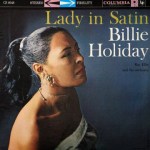
Balancing the Vocal, Strings and Rhythm on Lady in Satin

Hot Stamper Pressings of the Music of Billie Holiday Available Now

The better copies reproduce clearly the three most important elements in the recording — strings, rhythm, and vocal — and, more importantly, they are properly balanced with one another. 

The monos, as you might expect, balance the three elements well enough, but the problem with mono is that the vocals and instruments are jammed together in the center of the soundfield, layered atop one another.

Real clarity, the kind that live music has in abundance, is difficult if not impossible under those circumstances.

Only the stereo pressings provide the space that each of the players needs in order to be heard.

Naturally the vocals have to be the main focus on a Billie Holiday record. They should be rich and tubey, yet clear, breathy and transparent.

To qualify as a Hot Stamper, the pressings we offer must be highly resolving. You will hear everything, all of it surrounded by the natural space of the legendary Columbia 30th Street Studio in which the recording was made.  (more…)

Robert Brook Undoubtedly Has an Impressive System

Robert Brook runs a blog called The Broken Record, with a subtitle explaining that the aim of his blog is to serve as:

A GUIDE FOR THE DEDICATED ANALOG AUDIOPHILE

We know of none better, outside of our own humble attempt to enlighten that portion of the audiophile community who love records and are looking to understand them better.

Below is a link to a review he has posted from a guest contributor, ab_ba, a person who has written us a number of letters as well.

Please read his posting on Robert’s blog and then check out my notes below.

I FINALLY Heard A TRULY GREAT STEREO, and Oh!

Wires dangling from the ceiling?

Check!

ab_ba writes:

So, if we can’t hear distortion until it’s been removed, reason leads us to conclude that we can never declare a stereo free of distortion, even one that sure sounds like it is. And indeed, Robert could readily demonstrate for me that his system still has some distortion. While I sat there marveling at the sound of John Bonham’s drumming on his pristine Ludwig pressing of Led Zeppelin II, Robert hopped up to shut off the breaker to the fridge.

We have been writing about this subject ourselves for a very long time. Here are a couple of links.

And here is a good overview of our approach: How To Get The Most Out Of Your Records – A Step By Step Guide

As for getting one’s stereo act together, we are all for it. The better the stereo, the more obvious the superiority of a top quality pressing will be. ab_ba notes in his posting:

Listening to good records on a good system is a delight, but hearing a great system is an absolute revelation. If you want to find really great copies of your favorite records, they’re out there, but you need a stereo that will enable you to identify them.

We wrote a commentary addressing that subject, entitled: First Get Good Sound – Then You Can Recognize and Acquire Good Records

One of the (many) reasons Robert Brook’s stereo has such low distortion is that he uses the same Townshend Seismic Platforms that we do. If you are interested in getting distortion out of your system, we can supply you with one to try. We have never had one returned. They are by far the cheapest, fastest, easiest way to improve the sound of any stereo. (Of course unplugging your fridge is even cheaper, but it may not be as easy.)

Robert uses the same Hallographs that we employ to help improve the acoustics of his room. We have three pair. Three of the units can be seen in the photograph above.

Tweaking and tuning are the foundation of good sound. The 80/20 rule is very real, and, if I may offer up my own experience to serve as a guide, the numbers are probably closer to 90/10.

(more…)

Kind of Blue – How Smeary Is Miles’ Trumpet on Your Copy?

Hot Stamper Pressings of Miles’s Albums Available Now

Listen to the trumpet at the start of Freddie Freeloader. Most copies do not fully convey the transient information of Miles’ horn, causing it to have an easily recognizable quality we talk about all the time on the site: smear.

No two pressings will have precisely the same amount of smear on his trumpet, so look for the least smeary copy that does everything else right too.

Meaning simply that smear is important, but not all-important.

If you click on the above link, you will see that we regularly talk about smeary brass instruments, smeary violins and smeary Classic Records classical reissues.

Pianos are good for testing smear simply because it’s easy to hear when the individual notes blur together.

(more…)

Letter of the Week – “No doubt – the best record ever played on my setup.”

Hot Stamper Pressings of the Music of Miles Davis Available Now

One of our good customers had this to say about some Hot Stampers he purchased a long time ago. It’s been so long that we’ve lost track of what record he is talking about in his letter, but we think it was probably Kind of Blue, since so many of our customers are knocked out by that one.

Hey Tom, 

No doubt – the best record ever played on my set up. I had a few experts in for evaluating — they all (like me) were fairly skeptical. But after just a few tracks everybody was convinced… WOW. You describe the album very well on your site. Another thing is how easy and smooth everything sounds and all the acoustic instruments… I could go on for a long time! As you understand I’m very happy with this copy.

Ebbe P.

Ebbe,

Thanks for your letter. We’re happy that you’re happy!

(more…)

Legrand Jazz – Skip the Mono

Hot Stamper Pressings of Large Group Jazz Recordings Available Now

This review is from well over ten years ago.

This album is more common in mono than stereo, but we found the sound of the mono pressing we played seriously wanting. It’s dramatically smaller and more squawky and crude than even the worst of the stereo pressings we played. 

We had a copy we liked years ago, but that was years ago.

We don’t have that copy anymore and we don’t have a stereo that sounds the way our old one did either.

More on the subject of mono versus stereo.

(more…)

Robert Brook Compares Three Very Different Pressings of Lady in Satin

Hot Stamper Pressings of the Music of Billie Holiday

Robert Brook has a blog which he calls

A GUIDE FOR THE DEDICATED ANALOG AUDIOPHILE

Below is a link to the review he has written for one of our favorite records, Lady in Satin.

In this review he compares our White Hot Stamper pressing to his two originals, a Six Eye Mono and a Six Eye Stereo. We knew where this review was headed; we’ve been down that road ourselves. For our most recent Hot Stamper reissue, we noted:

There may be amazingly good sounding original pressings, as amazingly good as this one, but we’ve never run into one and we have our doubts about the existence of such a magical LP – where could they all be hiding?

Add Robert’s two originals to the pile of pressings that sound good, but not as good as we might want them to.

Lady In Satin: CAPTIVATING on the WHITE HOT STAMPER