6-2022

Tchaikovsky and the Musical Heritage Society – Bill Kipper Is The Man

Hot Stamper Pressings of the Music of Tchaikovsky Available Now

This is an older review from at least ten years ago and perhaps more. We no longer sell the MHS pressing of this recording, or any MHS pressing for that matter.

We much prefer the Heifetz recording for RCA from 1958. We’ve identified about 170 orchestral recordings that offer the discriminating audiophile the best performances and top quality soundThe right pressings of the Heifetz (the ones with Hot Stampers) have earned a place on that list.

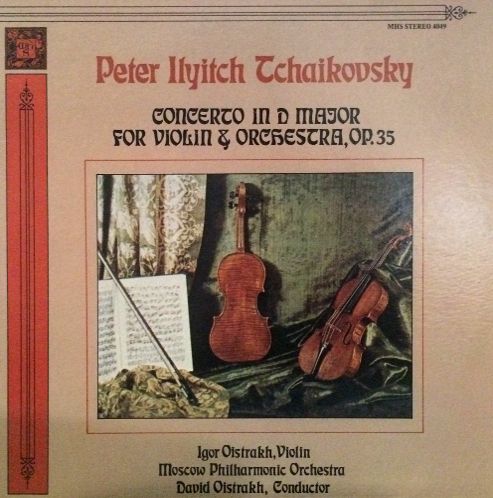
For our review for the MHS pressing of the concerto, we noted:

MHS remastered the original 1967 Melodiya tape in 1979 in order to produce this record, dramatically improving upon the sound of the version that I knew on Angel, which shouldn’t have been too hard as the Angel is not very good.

Wait a minute. Scratch that. MHS didn’t cut the record, an engineer at a mastering house did. Fortunately for us audiophiles, the job fell to none other than Bill Kipper at Masterdisk.

Think what a different audio world it would be if we still had Bill Kipper with us today, along with the amazingly accurate and resolving cutting system he used at Masterdisk.

As far as we can tell, there are no records being produced today that sound remotely as good as this budget subscription disc.

Furthermore, to my knowledge no record this good has been cut for more than thirty years. The world is awash in mediocre remastered records and we want nothing to do with any of them, not when there are so many good vintage pressings still to be discovered and enjoyed.

The likes of Bill Kipper are no longer with us, but we can be thankful that we still have the records he and so many talented others mastered all those years ago, to enjoy now and for countless years to come. Keep in mind that it’s all but impossible to wear out a record these days with modern, properly set up equipment, no matter how often you play it.

(more…)

To Better Understand the Mysteries of Records, Consider These Three Ideas

More Entries from Tom’s Audiophile Notebook

We think that sitting down to play a Hot Stamper pressing — one you find yourself through the shootout process, or one we find for you — is the only way to appreciate its superior sound quality.

A great sounding LP, played on a top quality system, is an immersive experience hard to recreate with anything other than vintage vinyl.

For those who want to dig deeper into the mysteries of vinyl, consider the three commentaries we’ve linked below:

Album 1700 – Gold Versus Green

Hot Stamper Pressings of Folk Rock Records Available Now

In previous shootouts we felt strongly that the best Gold Label copies had the lock on Tubey Magic, while the best Green Label pressings could be counted on to offer superior clarity.

That was quite a few years ago, and as we never tire of saying, things have changed.

Now the Gold Label pressings have the ideal combination of Tubey Magic and clarity.

In fact, based on our recent shootout we would state categorically that the best originals are clearly better in every way, with the most vocal presence, the most harmonic resolution, the most space, the most warmth and intimacy, the most natural string tone on both the guitars and bass — in sum, the most of everything that allows a Hot Stamper vintage LP to be the most sublime musical experience available to any audiophile fortunate enough to own it.

Steve Hoffman’s famous phrase is key here: we want to hear The Breath Of Life. If these three gifted singers don’t sound like living, breathing human beings standing across from you — left, right and center — toss your copy and buy this one, because that’s exactly what they sound like here.

The TUBEY MAGIC of the midrange is practically off the scale. Until you hear it like this you really can’t even imagine it. It’s a bit shocking to hear each and every nuance of their singing reproduced so faithfully, sounding so much like live music.

This is high-rez ’60s style; not phony and forced like so much of what passes for audiophile sound these days, but relaxed and real, as if the recording were doing its best to get out of the way of the music, not call attention to itself. This, to us, is the goal, the prize we must constantly strive to keep our eyes on. Find the music, leave the rest.

(more…)

Star Wars, Close Encounters and Other Multi-Miked Messes

Decca and London Hot Stamper Pressings Available Now

This Mobile Fidelity LP contains the music of Star Wars and Close Encounters, conducted by Zubin Mehta. The MoFi pressing is far more transparent than the London pressings we have auditioned of the album, even the ones half-speed mastered by Stan Ricker himself.

Yes, he cut the original Londons! At Half Speed! (We’ve also played some later pressings not mastered by Stan, of course. Who can predict which version would sound the best?)

It’s still one of the better MoFi remasters, all things considered. The music, to these ears, has always been hi-fi-ish schlock, and the recording itself is too multi-miked to be taken seriously. It sounds far too much like a bad Phase IV recording, and we know whereof we speak when it comes to Phase IV, good or bad. We’ve played them by the score.

This famous record from the Top Seven of the TAS Super Disc List has the same problem, but I never hear anybody mention it. Why that is I cannot imagine, other than our favorite explanation for just about everything that seems to fly under the audiophile radar, or perhaps a better description would be flying over the heads of the self-appointed audiophile cognoscenti, our old standby, reviewer malpractice.

Bottom line, a loser, but the original Londons in our experience are even worse!

For more on the subject of opacity on record, click here and here.

(more…)

The Recordings Won’t Change, So Other Things Have To

More of the Music of Led Zeppelin

Another entry in our series of commentaries we’ve grouped under the heading what’s the big idea?

It’s amazing how many records that used to sound bad — or least problematical — now sound pretty darn good. The blog is full of commentaries about them. Here’s a personal favorite.

Every one of them is proof that comments about recordings are of limited value.

The recordings don’t change.

Our ability to find, clean and play the pressings made from them does, and that’s what the Hot Stamper revolution is all about.

You have a choice. You can choose to take the standard audiophile approach, which is to buy the record that is supposed to be the best pressing and then just consider the case closed.

You did the right thing, you played by the rules. You bought the pressing you were told to buy, the one you read the reviews about, the one on the list, the one they said was made from the master tape, the one supposedly pressed on the best vinyl, and on and on.

Cross that title off and move on to the next, right?

When — sometimes if but usually when — the sound of the record doesn’t live up to the hype surrounding it, you merely accept the fact that the recording itself must be at fault.

Prepare to allot a fair amount of time to complaining about such an unfortunate state of affairs. “If only they had recorded the album better…” you say to yourself as you toddle off to bed, ending your listening session prematurely, fatigued and frustrated with a record that — for some reason — doesn’t sound as good as you remember.

We did it too, more times than I care to admit.

Try It Our Way

Or you can adopt our approach and hear those very same albums sound dramatically better than you ever thought possible. Better than you remember. It happens all the time here at Better Records and it can happen at your house too. Just follow the yellow brick– uh, scratch that, just follow these four steps.

(more…)

What makes you guys think you know it all?

More Straight Answers to Your Hot Stamper Questions

We definitely don’t know it all. In fact, nothing could be further from the truth.

If we knew it all, we wouldn’t need to play the piles and piles of records we listen to every day. We would already know which pressings should have the best sound and all that would be left to do would be to assign them a sonic grade and list them for sale on the website. This approach would have the added benefit of cutting our labor costs in half.

But that is not remotely the reality of the world of records for those of us who play them and listen to them critically.

It’s the reason we formalized the concept into a Better Records Record Collecting Axiom, in this case Axiom Number Two: No two records sound the same.

Learning Is Fun

We learn something new about records with practically every shootout we run. That, more than anything else, is what makes the kind of tedious, time-consuming, mentally-exhausting work we do fun. 

It’s how we’ve managed to find some of the best sounding pressings in the history of the world, like this one. (Maybe we should point out that Harry Pearson found it first, but it’s highly unlikely he heard one sound as good as our copy. For one thing, the best cleaning fluids hadn’t been invented yet.)

The stuff we were wrong about, and there has been plenty, you can find right here on the blog, often under the heading live and learn.

It should be said that most audiophiles, at least the ones I know well, do not have the patience to critically analyze ten different copies of the same record for hours on end. For our listening panel, it’s all in a day’s work.

I learned to critically listen for extended periods of time back in the early 80s. I got heavily into — obsessed with might be more accurate — tweaking my table setup, system components, wires, vibration controlling devices and anything else I could possibly imagine might have an effect on the sound of the system.

Listening for differences in interconnects and listening for differences in pressings calls upon precisely the same set of skills. If you can do it all day, if you actually like tweaking and analyzing the sound of your stereo for hours and hours, you will undoubtedly end up with a much better sounding system, as well as one helluva high quality collection of records (and some very finely honed listening skills).

If your stereo is working right and your ears are able to recognize good sound, then you surely know by now just how poor the sound quality is on the hundreds of records listed here. The fact that they were marketed to audiophiles would be funny if it weren’t such a tragic waste of money.

On the road to better sounding records? Here’s a good way to chart your progress.


Further Reading

(more…)

Letter of the Week – “After returning to the 45 RPM there was no enjoyment, so I dropped the needle on the stamper one more time, and then I heard it…”

More of the Music of Kenny Burrell

Reviews and Commentaries for the Music of Kenny Burrell

A good customer had this to say about a recent shootout:

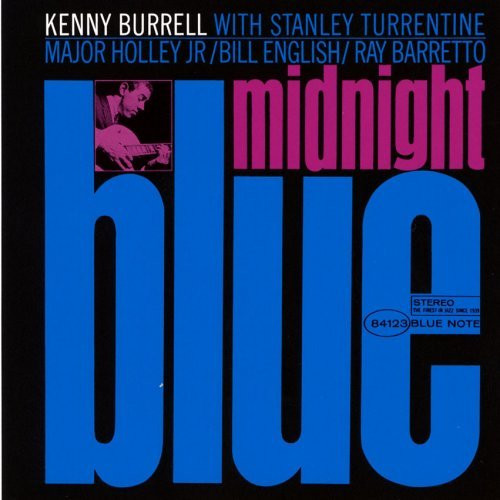
By the way, side 2 of Midnight Blue bested every other copy I played including the 45 RPM Blue Note AP reissue. The 45 RPM is very good. You know that technically it is right, but at the same time it’s missing something.

When I listened to the [Hot] stamper copy you dug up for me I found it a little noisy at first and wasn’t sure if I could live with it. However after returning to the 45 RPM there was no enjoyment, so I dropped the needle on the stamper one more time, and then I heard it…

I know what you mean about these modern reissues “missing something.” No matter how well mastered they may be, they’re almost always missing whatever it is that makes the analog record such a special listening experience. I hear that “analog” sound practically nowhere else outside of the live event (and, of course, the vintage LP). 

Thanks for your letter. 
TP

Our Classic Records Review

Pretty flat and lifeless. You would never understand why audiophiles rave about this recording by listening to the Classic Records pressing.

We played it up against our best, and as expected it was nothing to write home about. Since Rudy has remastered and ruined practically all the Blue Note CDs by now, you will have your work cut out for you if you want to find a good sounding version of Midnight Blue. This sure ain’t one.

Of course we would be more than happy to get you an amazing sounding copy — it’s what we do — but the price will be five to ten times (or more) what the Classic costs. In our opinion it’s money well spent.

Since the Classic conveys very little of what the musicians were up to whilst recording the album, our advice is to cross it off your list of records of interest. It’s thirty bucks down the drain.

(more…)

Kind of Blue – An Album We Are Clearly Obsessed With

Hot Stamper Pressings of Miles’s Albums Available Now

Kind of Blue is an album we admit to being obsessed with — just look at the number of commentaries we’ve written about it.

Some highlights include:

Kind of Blue checks at least seven of our most important boxes here at Better Records.

  1. It’s a core jazz title, one that belongs in any serious audiophile’s record collection
  2. It’s a jazz masterpiece
  3. It’s a personal favorite
  4. It was recorded by one of the greats, Fred Plaut
  5. It was produced by another one of the greats, Teo Macero
  6. It was recorded at Columbia’s famed 30th street studio
  7. And some of the greatest jazz artists of their day played on it:

Bridge Over Troubled Water – Classic Records Reviewed

More of the Music of Simon and Garfunkel

Reviews and Commentaries for Bridge Over Troubled Water

Sonic Grade: C

What’s an easy way to recognize the better pressings?

They’re the ones with textured strings in the orchestral arrangements.

The string tone on the average copy is hard and steely.

The Classic 200 gram pressing suffers from a case of steely strings. When the strings are blasting away at the end of the title song, you want to be able to hear the texture without the strings sounding shrill and edgy.

This is no mean feat, for the record or the stereo.

Here are some of the other records we’ve discovered are good for testing string tone and texture.

(more…)

Audiophile Reviewers Raved About This Doug Sax Tube-Mastered Mess

User comments

More of the music of Sergei Rachmaninoff (1873-1943)

The reviews below will sound depressingly familiar to you if you have been in audio for as long as I have.

Sonic Grade: F

This Athena LP is now long out of print, but it received rave reviews when it was released. (We quote many of them below.) This album is a member of the TAS Super Disc list, but we found the sound awfully opaque, smeary, slow and compressed, the kind of bad “analog” sound that Doug Sax brought to the early AP releases. 

The sticker on the shrink wrap of a previous copy had these quotes:

“…for this is the definitive symphonic recording to date.” – J. Gordon Holt/ Stereophile

“Wins ‘Best Record of the Year’ award against tough competition.” – Joe Hart/High End Audio Press & Music Review

“HP heard the Athena remastering of the Rachmaninoff and found it stunning. He could recommend it without reservation.” – Harry Pearson/The Absolute Sound #57

I guess things never change.

And doubtlessly he continued to refer to himself in the third person until the end.

Reviewer malpractice? We’ve been writing about it for more than 25 years.

(more…)