Testing String Tone – Classical

Records that Are Good for Testing String Tone and Texture

Not as Good a TAS List Title as We Thought, Sorry!

Hot Stamper Pressings of Living Stereo Titles Available Now

We had a handful of copies of this famous TAS List title in the backroom, so we decided it was high time to get a shootout going. We pulled all the pressings of the music (both Billy the Kid and Rodeo) we had on hand on every label and proceeded to needle-drop them in preparation for a big Copland shootout.

Much to our chagrin, most of the copies of LSC 2195 we played were unacceptable. The sound, for the most part, was very much not to our liking. Our notes read:

  • Smeary — (more records with smeary sound can be found here),
  • Dry — (more records with dry sound can be found here),
  • Bright — (more records with bright sound can be found here),
  • Flat — (more records with flat sound can be found here),
  • Hi-Fi-ish — (more records with hi-fi-ish sound can be found here),

Those records weren’t cheap. That was a lot of money down the drain. Not only can’t we sell records that sound as bad as this Living Stereo — our customers simply would not buy them — but we would never even try. Unlike other record dealers, we actually know what our records sound like. We don’t care about the reputations of the records we sell. We only care about their sound.

Some of the records on the TAS List seem better suited to the old school audio systems of the 60s, 70s and 80s than the modern systems of today.

(more…)

Massed Strings and Brass Section Are Difficult to Reproduce

More of the Music of Jacques Offenbach

UPDATE 2020

Our favorite recording of the work now is this one: Fistoulari recorded for Readers Digest.


It’s also an excellent record to test with. As you no doubt know, there is a lot of “action” in this piece of music.

To get the strings and the brass to sound lively yet natural is a bit of a trick. (It doesn’t help that the polarity is reversed.)

When I first played this record many years ago, I was none too happy about the string tone. After making a few tweaky adjustments, the strings became much clearer and more textured. The overall presentation still sounded rich, but was now dramatically more natural and relaxed.

It was this record that made me realize some of the changes I had made to my stereo back then had caused it to have a certain hi-fi-ish quality, which seemed to work fine on the popular and jazz recordings I was using as test discs at the time.

But the reproduction of classical music is the ultimate challenge for any stereo.

(more…)

London Orchestral Records from the 70s and the Problem of Opacity

Decca and London Hot Stamper Pressings Available Now

The average copy of this 1976 recording has that dry, multi-miked modern sound that the 70s ushered in for many of the major labels, notably London and RCA.

How many Solti records are not ridiculously thick and opaque? One out of ten? If that. We’re extremely wary of records produced in the 70s; we’ve been burned too many times.

And to tell you the truth, we are not all that thrilled with most of what passes for good sound on Mehta‘s London output either, especially those recorded in Royce Hall. If you have a high-resolution system, these recordings, like those on Classic Records Heavy Vinyl that we constantly criticize, leave a lot to be desired.

Opacity is a real dealbreaker for us. Most of the classical records we play from later eras simply do not have the transparency essential to transporting us from our listening room into the concert hall.

One thing you can say about live classical music, it is never opaque. (It can be dry though. Some concert halls have that sound.)

No recording in our experience — our experience having been informed by playing thousands upon thousand of them — can ever be remotely as transparent as live music.

If you have any doubts, next time you come home from the concert hall, take a moment to put on a favorite recording of the same music. You may be in for quite a shock.

Other Deccas and Londons that we’d cleaned and played and found to be disappointing can be seen here.

For more on the subject of opacity on record, click here.

Here are some of the other records we’ve discovered that are good for testing string tone and texture.

(more…)

The Said and the Unsaid – The Firebird on Mercury

Hot Stamper Pressings of the Music of Igor Stravinsky Available Now

For our shootout years ago of The Firebird we had three minty, potentially hot copies of the Mercury with Dorati, as well as our noisy ref. (We have a noisy reference copy for just about every major title now. We have been doing these shootouts for a very long time. After thirty years in the record business we have accumulated a World Class collection of great sounding records that are just too noisy to sell.)


UPDATE 2024 

This is no longer true. Our customers seem to be able to put up with surface noise on the records we offer if the price is low enough. Not actually low, just low enough. We have a section for records with condition issues, and there are 175 entries in it as of today, which turns out to be more than a quarter of all the Hot Stamper pressings on the site as a matter of fact.


We had one FR pressing and two of the later pressings with the lighter label, the ones that most often come with Philips M2 stampers. This is how we described the winner:

So clear and ALIVE. Transparent, with huge hall space extending wall to wall and floor to ceiling. Zero compression.

Lifelike, immediate, front row center sound like few records you have ever heard.

Rich, sweet strings, especially for a Mercury. This side really gets quiet in places, a sure sign that all the dynamics of the master tape were protected in the mastering of this copy.

What we didn’t say — and what we never say in the listings — is what the second tier copies didn’t do as well as the shootout winner.

We used to. When you read the older entries, most of the time they mention the shortcomings that caused one side or another to be downgraded by some amount, usually something like a half to a full plus.

Not all the top end, not all the bass, not as present, slightly smeary, slightly congested — the list of potential faults for any given pressing is long indeed. These are all the problems we listen for and it’s the rare copy that doesn’t suffer from one or more of them.

We decided years ago that it was better just to let you hear the two sides of the record for yourself and make your own judgments about the sound, rather than make clear to you what areas we felt needed improvement.

Consider this example. If on our system the bass was lacking compared to the very best, perhaps on your system the bass was fine, not an issue, good enough. Without the top copy to compare yours to, how would you know how much better the bass could possibly be?

A classic case of “compared to what?

Shootouts are the only way to answer that question, which, as we never tire of saying, is THE most important question in all of audio. This is why we do shootouts, and why you must do them too, if owning the highest quality pressings is important to you.

Click on the following link to see more records for which we’ve detailed the strengths and weaknesses of a specific copy.

What We Heard on The Firebird

With all that in mind, only the Triple Plus (A+++) copy, as described above, did everything right.

There were two Double Plus (A++) copies, and each of them fell short in different ways.

(more…)

Pros, Cons and Celebrating a Milestone of Audio Progress

More of the music of Jules Massenet

About ten years ago we reviewed a copy of the album that had a sub-optimal side two, a side two that suffered from screechy string tone.

Since that time we’ve made a number of improvements to our cleaning regimen and playback system, and the result has been that our last couple of shootouts went off without a hitch, showing us string tone that was virtually free of screechiness.

(The Greensleeves reissues never had much of a screechy strings problem as they tended to be mastered on the smooth side. They are more forgiving of second-rate playback in that respect, but they can also never win shootouts with that overly smooth sound.) [1]

Problem solved! The records were fine, we just couldn’t play them back then as well as we can now.

In 2012, twelve years ago, I had been selling records to audiophiles professionally for 25 years. I had owned a State of the Art system for 37 years.

But I knew I still had plenty to learn, and I kept at it.

After a decade’s worth of tweaking and tuning, the strings of this recording started to sound the way Stuart Eltham and his fellow engineers undoubtedly wanted them to.

This is how you chart your audio progress, by challenging yourself with difficult to reproduce recordings and building on the improvements you continue to make as the years and decades go by.

If you’re in the market for records that can show you that there is still plenty of work left to be done in this crazy audio hobby we’ve all chosen, we have scores of them on the Better Records site.

If we can get them to sound better, so can you.

(more…)

The First Classic Record We Ever Played – Thus Spake Zarathustra

Hot Stamper Pressings of Living Stereo Titles Available Now

Way back in 1994, long before we had anything like the system we do now, we were finding fault with the “Classic Records Sound.”

With each passing year — 28 and counting — we like that sound less.  Some Classic Records pressings may be on Harry’s TAS list — disgraceful but true — but that certainly has no bearing on whether or not they are very good records. 

I had a chance to play LSC 1806 (pictured above) not long ago and I was dumbfounded at how bright, shrill and aggressive it was.

I still remember playing my first Classic Records title, their first release, which would probably have been in 1994. The deep bass of the organ at the start of Also Sprach Zarathustra, the horns and the tympani blasting out from a dead silent background, put a lump in my throat. Had they actually managed to remaster these old recordings so well that the vintage pressings I was selling for such high prices would soon be worthless? I really do remember having that thought race through my mind.

But then the strings came in, shrieking and as bright as the worst Angel or DG pressing I’d ever heard. It was as if somebody had turned the treble control up on my preamp two or three clicks, into ear-bleeding territory. All my equipment at the time was vintage and tube, and even though my system erred on the dark side tonally, the first Classic release was clearly off the charts too bright and transistory, with none of the lovely texture and sheen that RCA was famous for in the early days of Living Stereo.

I knew right then that my vintage record business was safe.

Here is our review from the ’90s, written shortly after the release of Classic’s first three titles. (With minor additions and changes for clarity and context.)

Hall of Shame Pressings, Every One

I’m reminded of the nonsense I read in TAS and elsewhere in the mid-’90s regarding the reputed superiority of the Classic Records Living Stereo reissues. After playing their first three titles: 1806, 1817 and 2222 (if memory serves), I could find no resemblance between the reviews I read and the actual sound of the records I played. The sound was, in a word, awful.

To this day I consider them to be the single worst reissue series in history.


UPDATE 2025

Analogue Productions now holds that crown, surely. Still going strong, producing one crap pressing for the mid-fi collector market after another, there is simply no recording they won’t see fit to ruin.


When Harry Pearson (of all people! — this is the guy who started the Living Stereo craze by putting these forgotten old records on the TAS list in the first place) gave a rave review to LSC 1806, I had to stand up (in print anyway) and say that the emperor clearly had removed all his clothes, if he ever had any to begin with.

This got me kicked out of TAS by the way, as Harry does not take criticism well. I make a lot of enemies in this business with my commentary and reviews, but I see no way to avoid the fallout for calling a spade a spade.

Is anybody insane enough to stand up for LSC 1806 today? Considering that there is a die-hard contingent of people who still think Mobile Fidelity is the greatest label of all time, there may well be “audiophiles” with crude audio equipment or poorly developed critical listening skills, or both (probably both, as the two go hand in hand), that still find the sound of the shrill, screechy strings of the Classic pressing somehow pleasing to the ear. Hey, anything is possible.

As I’ve said again and again, the better a stereo gets, the more obvious the differences between good vintage pressings and most current reissues become. Modest front ends and mediocre playback systems can disguise these differences and mislead the amateur audiophile.

And the “professional” too. We’ve all had the experience of going back to play a record from years ago that we remember as being amazing, only to find it amazingly bad.

The Japanese Led Zeppelin series from the 90s comes immediately to mind. How could my system have been so dull that those bright pressings actually fooled me into thinking they sounded good all those years ago? I’ve done a few Mea Culpas over the years, and that’s one of the bigger ones.

Remember when Chesky Records were all the rage? Does anybody in his right mind play that shit anymore?

A short anecdote: A good customer called me up one night many years ago. He had just finished playing the Chesky pressing of Spain, and had pulled out his Shaded Dog original to compare. The sound of his Shaded Dog pressing was so much better that he took his Chesky and, with great satisfaction, ceremoniously dropped it in the trash can, noting, “Of course I could have sold it or traded it away, but nobody should have to listen to sound like that.”

Another anecdote: when Chesky first got started in the remastering business, a friend picked up their pressing of LSC 2150, Prokofiev’s Lt. Kije with Reiner. He played it for me when I came over to hear his system, and he and I were both shocked that his ’70s Red Seal pressing was better in every way.

We wanted to know: What kind of audiophile label can’t even go head to head with a cheap reissue put out twenty years after the initial release just to keep the bins stocked and satisfy the needs of the low-budget classical record buyer?

The answer: Plenty of them, and definitely Chesky. Playing most Classic Records classical titles is a painful experience these days. I do not recommend it to anyone with good equipment. If you love the Living Stereo sound and cannot afford vintage pressings, consider playing the CDs RCA remastered. The one I know well is clearly better than Classic’s and AP’s LPs.

(more…)

Mozart – VTA and Balance

What to Listen for ask? Dryness.

Some of the copies lacked the richness to balance out the clarity and became dry sounding. There is a balance to be found. The right VTA will be critical in this regard. When you have all the space; the clearest, most extended harmonics; AND good weight and richness in the lower registers of the cello, you are where you need to be (keeping in mind that it can always get better if you have the patience and motivation to tweak further).

On the other side of that coin is smear, usually from too much tubey richness. Again, finding the balance is key.

Here are some other records that are good for testing string tone and texture.


OUR HOT STAMPER COMMENTARY FROM 2013

Easily one of the finest string quartet recordings we have ever had the pleasure to play, this Philips pressing earned strong grades on both sides for its lovely recreation of space, Tubey Magical richness, and rosiny string textures.  

It sounds very much like live music, or at least what you imagine this music would sound like live. Of course, live classical music is shocking in its clarity and freedom from artificiality, and no recording I have ever heard duplicates that sound with perfect fidelity, but when the pressing is as clear and transparent and natural as this one, your ability to suspend disbelief seems to require no effort at all.

Close your eyes and your brain, search as it may, can find nothing in the recording to interfere with the appreciation of even the most subtle nuances of the score. This is the mark of a very fine record indeed.

You may notice that we do very few chamber music records on the site. Thousands of these works have been recorded, and to be honest a large portion of them actually have quite decent sound. Obviously a handful of instruments is much more easily captured on tape than the fifty or more pieces in a modern large orchestra.

But when we hear one with this kind of transparency and fidelity, we make every effort to track down more copies, working through them to discover the truly Hot Stamper pressings lurking within their identical looking covers.

This copy had the sound we were looking for. Those of you with exceptionally clean, clear systems, capable of reproducing both the clarity and the Tubey Magic captured on the tape, are in for a real treat.

(more…)

Haydn / Symphonies 59 & 81 – The Best on Record

More of the music of Joseph Haydn (1732-1809)

Hot Stamper Mercury Pressings Available Now

These notes are taken from the first shootout we did many years ago.

These are THE BEST HAYDN SYMPHONIES I have ever heard on disc. Folks, until I heard Dorati and the Festival Chamber Orchestra perform these pieces I never knew there could be this much FIRE in Haydn’s music. (Please excuse the pun; the 59th Symphony is entitled “Fire”.)

The producers and engineers for Mercury bring the kind of recording energy and presence to this music that I have frankly never heard before. Credit must go to both Dorati and his players.

His tempi are fast and sprightly throughout, and the smaller orchestra allows the players to zig and zag with the musical changes much more quickly than would be the case with a larger and more inertia-bound group.

The FCO are so technically proficient and so light on their feet that Dorati was able to push them to dizzying heights of performance. For the first time I can honestly say that Haydn’s music really works — it’s wonderful!

(If you’ve ever heard Previn conducting Prokofiev’s Classical Symphony with the L.A. Phil from 1990 you will know what I mean. In his (their) hands the work is so lively it’s hard to hear it performed by anyone else. Bad digital sound but it’s worth it to hear the piece played with such gusto.)

Dorati and Haydn

As you may know, Dorati recorded all the symphonies of Haydn for London/Decca. Having played some of them I can tell you they certainly do not sound like this! (Perhaps my copies were not the best, but how many copies of these records can be found nowadays? Not enough to do shootouts with, that’s for sure.)

This recording is not your typical dry, bright, nasaly, upper-midrangy Merc, on side one especially. Here the sound is rich and smooth like a good London, with a big stage and lovely transparency. We graded it A++ to A+++ — side two had more texture to the massed strings than this side one, so we downgraded it half a plus. In virtually every other way it was SUPERB!

Side Two

A touch of that Mercury brightness can be heard on this side, but it is well under control at normal listening levels. The strings are textured and lively, the orchestra just bursting with enthusiasm for this music and the recording captures it all! A++ to A+++, again, superb, and priced accordingly.

(more…)

Seventies EMI Classical LPs and Vintage Tube Playback

More of the Music of Sergei Prokofiev

What to listen for on this album?

That’s easy: The all-too-common 70s EMI harshness and shrillness.

We could never understand why audiophiles revered EMI the way they did back in the 70s. Harry Pearson loved many of their recordings, but I sure didn’t. 

The longer I stay in his hobby, the more clear it is to me that many of the records on the TAS list are better suited to the old school audio systems of the 60s and 70s rather than the modern systems we have today.

These kinds of records used to sound good on those older systems, and I should know, I had an old school stereo even into the 90s. Some of the records that sounded good to me back in the day don’t sound too good to me anymore.

For a more complete list of those kinds of records, not just the ones on the TAS List, click here. Note that some I liked, and some I did not back in the day.

I chalk it up — as I do most of the mistaken judgments audiophiles make about the sound of the records they play, my own judgments included — to five basic problem areas that create havoc when attempting to reproduce recorded music in the home:

  1. Equipment shortcomings,
  2. Untweaked setups,
  3. Bad electricity,
  4. Badly treated or untreated rooms, and
  5. Improper record cleaning

(more…)

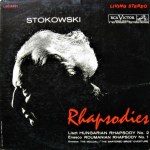
Rhapsodies – Classic Records Reviewed

More of the music of Franz Liszt (1811-1880)

The lower strings are wonderful on the original — wall to wall, with that rosiny texture we love. I wrote at the time — this is twenty or so years ago — that the Classic pressing took that rich, dark sound and brightened it up, ruining it in the process.

Cellos and double basses just don’t sound like that. On the best pressings of LSC 2471, their timbre is Right On The Money. Of course, that’s the real thing, not some audiophile rebutchering. 

Now if you’re a Classic Records fan, and you like that brighter, more detailed, more aggressive sound, the original is probably not the record for you.

We don’t like that sound and we don’t like most Classic Records. They may be clean and clear but where is the RCA Living Stereo Magic that made people swoon over these recordings in the first place?

Bernie manages to clean that sound right off the record, and that’s just not our idea of hi-fidelity.

(more…)