Japanese LPs – Reviews, Commentaries, etc.

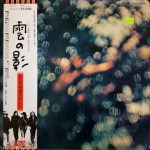
Obscured By Cloudy Japanese Vinyl

Hot Stamper Pressings of the Music of Pink Floyd Available Now

When I was just getting up to speed in audio and exploring the world of music available on vinyl in the 70s, many of the stereo stores I frequented carried Japanese pressings. They were widely believed to have superior sound relative to their domestic counterparts — in this case, the mass-produced pressings I would see at the Tower Records right across from the Sports Arena in my hometown of San Diego. I went there at least once a week, probably more like two or three times.

Tower was far and away the best place to go record shopping in those days. The store was huge and they had dramatically more stock than Licorice Pizza or The Wherehouse.

They also had a separate section for Half-Speed mastered pressings from a number of labels, which of course was the first place in the store I would visit, digging through the bins to see what new remastered titles may have been produced for audiophiles searching for the ultimate in sound quality.

Of course, I identified as just such a person. In terms of sound quality, and with the extremely limited knowledge I had acquired at the time, I believed I set a high standard for the sound of the records I bought. I was willing — eager even, you could even say excited — to pay whatever premium price I had to for a record that was sure to deliver superior sound quality. To me, in the late 70s, that meant two things: direct to disc recordings, and Half-Speed mastered pressings.

(There was a another category of records that did not fall into the above two, best exemplified by American Grammaphone and the Fresh Aire series, but the less said about those schlocky releases the better, other than to point out that some of their titles are TAS list carryovers from HP’s time running the Super Disc list, specifically Fresh Aire 2 and 3, both best avoided.)

And, like any other open-minded individual, when it came to Japanese vinyl I was willing to give a few a spin.

However, the more of them I bought, the more clear it became to me that even the best of them sounded mediocre (veiled, smeary and dubby from second generation tapes) and more often than not they were just plain awful. (Second generation tape issues being the main problem, of course, with the additional insult of poor tonality, the result of being mastered using wacky equalization, typically with added brightness where none was needed.)

Pink Floyd

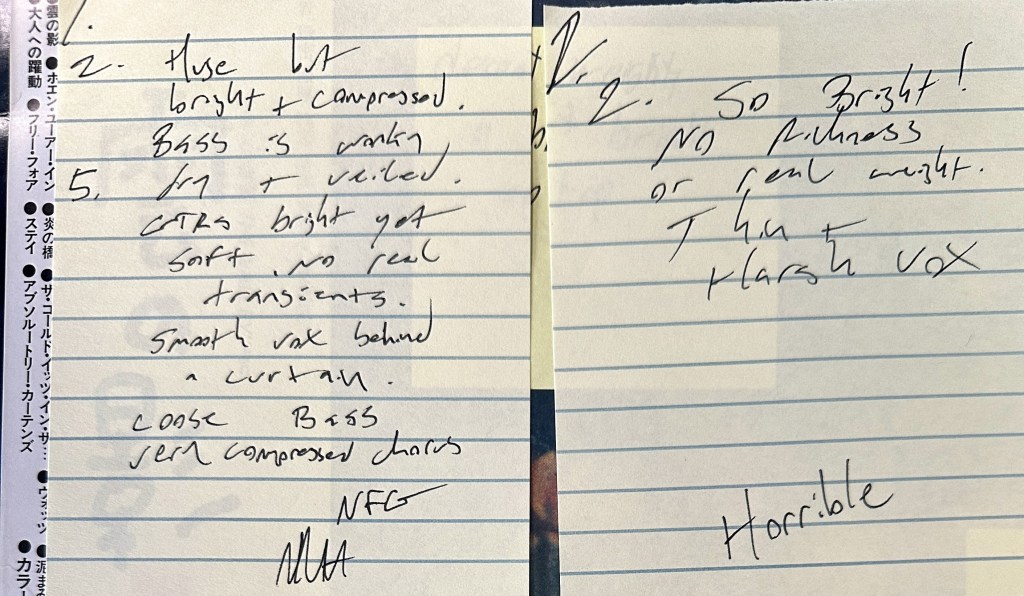
The notes for the Pink Floyd album you see below, Obscured by Clouds, were written sometime in March of 2025 as part of the shootout we conducted for the album.

If we assume it would be an audiophile who would be attracted to this pressing, perhaps for its quieter playing surfaces, perhaps operating under the assumption that the Japanese engineers mastering the record would be more likely to do a better job as well, then what we have here is a textbook case of an audiophile bullshit pressing.

One that sounds nothing like the album is supposed to, based on having played a number of exceptionally good sounding copies, all British and all on the Green Harvest label, mastered from good tapes, sometimes by the legendary Harry T. Moss. We feel we are more than qualified to make these judgments. If we can’t make them, nobody can.

Discogs allows us to glean some information regarding the desirability of this Japanese reissue with the record buying public currently in the market for Pink Floyd vinyl who register on their site.

(more…)

An RCA Direct Disc with Bad Music & Bad Sound, Like Most Audiophile Albums from the ’70s

Hot Stamper Pressings of the Music of The Beatles Available Now

The records being marketed to audiophiles these days may have second- and third-rate sound, but at least they now have good music. That’s progress, right?

It is progress, because this RCA direct to disc recording is the kind of crap that used to qualify as an “audiophile record” when I was starting out in the mid-70s. These records were displayed on the walls of all the hi-fi stores I used to frequent back in the day.

They cost a lot more than regular records did too. Many were pressed in Japan, and I vaguely recall that the retail prices were in the range of $15 to $18. That’s $77 to $92 in today’s money. Can you imagine paying that for a record with such poor sound and music?

The Beatles Medley is particularly misguided. These guys have no idea what to do with the music of The Beatles.

A record such as this clearly belongs in our audiophile hall of shame, which is a general catchall section for the many bad sounding records that have been marketed to audiophiles over the last fifty years. We’ve played and reviewed more than 300 to date, which of course is but a mere fraction of the many thousands of questionable pressings that have been produced since the 70s. There has always been a mid-fi collector market, and no shortage of enterprising types to take advantage of it.

It turns out that many of the most shameful offenders for sound are more recent releases that have only come our way in the last few years. Here are some of their stories.

(more…)

Universal Japan and the Economics of Buying a Pig in a Poke

Skeptical Thinking Is Critical to Finding Better Records

One of my good customers sent me this email shortly after this series came out, circa 2000:

I noticed that Universal Japan has come out with several new titles, stuff I’m interested in, like Stevie Wonder / Innervisions… Stan Getz, James Brown… and many others — that are on acousticsounds.com.

Generally, for these somewhat expensive heavy vinyl releases (relative to used prices), I’m trying to stick with stuff where your site has favorable comments regarding the sound quality, but you don’t seem to carry these new items.

Do you think they are bad, or you just have not had a chance to check them out yet?”

I replied as follows:

We have a longstanding antipathy toward records pressed in Japan that were not recorded in Japan. (Here is one of the exceptions because the mastering was done by the real mastering engineer, using the real tape, here in America. There are also some excellent direct to disc albums that were recorded here in the states and subsequently pressed in Japan.)

Japanese pressings almost NEVER sound good to these ears. The only report I’ve heard concerned Aja, which was that it was awful, bright as bright can be.

A Japanese pressing that’s too bright? Shocking. Say it isn’t so.

We are going to be carrying almost no new releases of Heavy Vinyl pressings from now on.

They just don’t sound good to us and we don’t want to waste our time playing bad records when there are so many good ones sitting around that need a loving home.

If you pay $30 for Heavy Vinyl reissues and only one out of five sounds good — an optimistic estimate if you ask me — you’re really paying $150 for the one good one, right?

This makes no sense to me. And since the real odds are one out of ten, it’s really $300 for the good one.

(more…)

Led Zeppelin on Prestigious Japanese Limited Edition Vinyl

Hot Stamper Pressings of the Music of Led Zeppelin Available Now

A classic case of live and learn. In 2006 I finally woke up to how ridiculously bad these Japanese pressings I was selling back in the 90s actually were.

It’s what real progress in audio is all about, in this case about ten years’ worth. Those are ten years that really shook my world, and by 2007 we had discovered much better cleaning technologies and given up on Heavy Vinyl and audiophile bullshit pressings such as these, whew!

Our story from 2006:

I used to sell the German Import reissues of the Zep catalog in the 90s. At the time I thought they we’re pretty good, but then the Japanese AMJY Series came out and I thought they were clearly better.

I couldn’t have been more wrong. I now realize those Japanese pressings are bright as bright can be. Now, not-too-surprisingly, the German pressings sound more or less right (on some of their titles).

They tend to be tonally correct, which is more than you can say for most Zep pressings, especially some of the Classics [linked here], which have the same brightness issue (as well as many other problems).


UPDATE 2024

Only one of the German-pressed Zeppelin records is good enough to win shootouts, the only title of theirs on German vinyl that we buy these days. Of course we tried them all, at no small expense I might add, because there were a great many pressings cut by many different engineers over the course of decades that were pressed in Germany, and the only way we could judge them was to buy them and have them shipped over. In the end only one had the big, bold, dynamic sound we were after.

(more…)

Grossman & Renbourn Direct to Disc – Updated

Hot Stamper Pressings of Direct-to-Disc Recordings Available Now

Many years ago we described the East World Direct-To-Disc Japanese import LP you see pictured this way:

Lovely acoustic music; the best cuts are the first two tracks on side two. They sound like a classic Vanguard recording from the 60s. One of the best East World titles.


UPDATE 2025

In preparation for a possible shootout, we got another copy of the record in and were much less impressed in 2025 than we were in 2010, which was probably the last time we had played the record.

It was somewhat veiled and dry. The sound wasn’t bad, it was actually fairly good, but that’s a long way from amazing. If we’re going to offer you an acoustic guitar recording, it’s going to have to be amazing sounding because there are a lot of amazing sounding vintage acoustic guitar albums from the 50s to the 70s to compete with.

And to compare it to a classic Vanguard recording is just ridiculous.

Vanguard produced some the most natural recordings in the history of the recorded music. East World produced some decent, modern and somewhat artificial-sounding recordings of mostly forgettable music in the 70s. We had no business comparing the two of them.

We obviously had a long way to go in audio before we got straightened out on that point. We’re always banging on about making audio progress so that you can recognize and collect better sounding records, and this East World pressing is the perfect example of us taking our own advice.

Our stereo had improved so much over that span of fifteen years that it was now obvious to us how second-rate this Japanese Direct-to-Disc actually was.

If you have any Direct-to-Disc recordings still sitting on your record shelf, pull some of them down and see how well the sound — and the music — hold up. Chances are good that a number of them might soon be finding a new home in the trade-in pile, in order to clear more space for better records.

(more…)

Find the Dubs = Less Records = Progress!

Robert Brook runs a blog called The Broken Record, explaining that the aim of his blog is to serve as:

A GUIDE FOR THE DEDICATED ANALOG AUDIOPHILE

Here is Robert’s posting from 8/26/2025 containing a great deal of good advice for record collectors and audiophiles of all ages, especially us old ones.

He admits to being wrong about the sound of a record he wrote about on his blog. When have you ever seen an audiophile admit to being wrong about a record? The very idea!

Why was he wrong? Because his stereo got dramatically better, so much better that he could see how mistaken he was about a Japanese pressing he thought for sure was made from the master tape. Now it sounds dubby. It was always dubby; he just hadn’t gotten his system, room, electricity, setup and who knows what else to the point where the true nature of that copy could be revealed.

Robert revisited a record he was sure he knew well, well enough to rave about on his blog, and found out things had changed — apparently quite a lot! — while he wasn’t looking.

A great deal of audio progress had been made, and that audio progress is what allowed Robert to also make some progress on the record collecting front, a win-win if every there was one. Congratulations are in order.

We here at Better Records live with this reality every day. Our mea culpas are occassioned by the shootouts we do for the same records over and over again, which is what allows us to discover even better pressings of albums than the ones we thought were the best. It’s surely the most rewarding part of the job.

FIND the DUBS = LESS RECORDS = PROGRESS!

Please to enjoy the lessons Robert learned.

I wrote about a similar experience I had myself back in the early-2000s.

If presently you are the happy owner of many Japanese pressings, perhaps now would be a good time to pull them out and play them. Very few master tapes went to Japan, and, as a result, most Japanese pressings in our experience sound like they are made from copy tapes, which of course they are.

Some of them have the potential for top quality sound, but most do not.

If your stereo is not revealing enough to show you their shortcomings, the way Robert’s was not revealing enough just five years ago, please take his advice and make the kinds of changes he has made.

The steps you take next will be the most satisfactory of all. Now you can clear the shelves of all your second- and third-tier records, which, of course, will not be limited to Japanese pressings, but should in fact include most of your Heavy Vinyl LPs, if not all of them. Let the culling begin!

(more…)

Letter of the Week – “I find myself just wanting to go back to a hot stamper regardless of the artist or genre.”

Hot Stamper Pressings of Jazz Piano Recordings Available Now

One of our good customers had this to say about some Hot Stampers he purchased recently:

Gotta tip my cap to you folks. You have been blowing my mind with some amazing sound. Disc after disc. To the point where I am now having a love-hate relationship with my hot stampers due to the fact they’ve practically rendered the bulk of my 200+ record collection considerably less enjoyable to listen to.

Every time I listen to a ‘modern’ reissue now, even the good ones, I don’t necessarily dislike it—many of them are great—but they’re not the same and I find myself just wanting to go back to a hot stamper regardless of the artist or genre.

All I want is that sound. I can’t get enough of it.

I’ve got some incredible reissues too. From music matters jazz to Impex 1-steps. Lucky enough to even have a couple MMJ on their SRX vinyl as well. And boy is that quiet. Almost digital, it’s creepy. And it is great sound by today’s ‘normal’ standards.

But now that I’ve heard what kind of mind-blowing sound is actually possible, well, these are not that.

Close—and better than MANY of the alternatives—but no cigar.
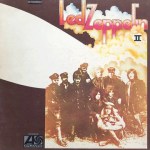
The Zep II is incredible. Easily the best sounding album I now own and the crown jewel of my collection. And so quiet too. Especially compared to my other 2 RL hot mix copies I got while I was in hot pursuit of the holy grail. I love that you guys conservatively grade everything. More often than not I’ve been impressed by how much more quiet the records are than I expect them to be. As I mentioned previously this was a huge splurge for me and not something I’ll be able to do often, but now having heard it many times over it’s unequivocally worth every penny.

It occurred to me while listening to it the other night that you guys aren’t selling records. You’re selling time machines. I now possess a near infinitely-reusable ticket to go to a Led Zeppelin concert literally any time I feel like it. And I wasn’t even born yet when that was actually possible. Still trying to wrap my head around that. Could easily say the same for my Dark Side hot stamper as well.

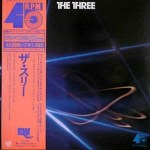
Almost equally as exiting was to take a flier on the 45 rpm copy of The Three you all put on offer a couple weeks ago. I had never heard of the album or Joe Sample at all for that matter. I’ve since listened to the track Funky Blues easily 20+ times since I got it, to the point where I’m forcing myself to curtail my listening frequency before I cause groove damage.

This might just be my new favorite song. And it’s easily catapulted to one of my top 10 favorite albums.

The first time I heard Shelly Manne whack that snare a few seconds into the song I nearly dropped my drink. Then he did it again a few measures later and I knew I was in for a real treat. The piano is just haunting. Even the bass is unreal. I’ll stop here because I’m sure you don’t need me to tell you, but thank you for this one, this is something special as well.

I love it so much I have an ask. Any chance you guys have a low grade hot stamper copy of the 33 rpm version kicking around after your last shootout? After spending 400 on the 45 I can’t justify a second copy for hundreds of dollars but I’m dying to hear the rest of the album now. I’d pull the trigger on even your lowest grade most affordable copy if you have one, just to hear the last 2 tracks. And possibly take a little wear and tear off the poor grooves of my 45 at the same time!

Anyway I’ve rambled on enough for one evening (no Zep pun intended) but did want to be sure to express my sincere gratitude for your services. You all have well-earned another loyal customer at this point. Appreciate you indulging me and look forward to many more hot stampers to come!

Best,
Carter

Carter,

Thank you very much for taking the time to write about your experiences with three of the very special records we’ve sent you. Those are amazingly good records, no question about it.

And it seems you have discovered through those three pressings what our Hot Stampers have in such abundance, and what modern records are mostly missing to their all-but-fatal detriment.

We don’t go out of our way to use many technical terms here on the blog, but since there is one that perfectly fits the quality you describe, we will look the other way and just break our longstanding rule and put it out there, simply because it has a special something that we feel perfectly describes the aspect of the sound you are hearing but not quite able to put your finger on.

The phrase you are most likely looking for is je ne sais quoi.

As the dictionary has it, there is without a doubt an appealing quality to our records that cannot be adequately described or expressed.

The appealing quality of our Hot Stamper pressings is born of many factors, most of which we do not understand.

But here’s one: our records are cleaned in such a way that the mysterious quality you speak of is brought out to an exceptional — I might go so far as to say unparalleled — degree. No other cleaning regimen of which we are aware can do what The Prelude System can do for maximum JNSQ Factor (if I may take the liberty of abbreviating the term. Easier to type that way, to be honest).

We talk about all the things we are listening for when comparing records — various aspects of the bass reproduction, the amount of midrange presence, spaciousness, etc., etc., and we write down what we are hearing in all those areas on our notes, some of which we share with our readers right here on the blog.

If you’ve ever done one of these multi-record shootouts, you know it helps to focus on the details of the recording as you listen and scribble away at your notes. It gives you something to do while the music is impressing the hell out of your eardrums and sending endorphins surging deep into your brain matter.

But what is the final grade going to be? Do you simply add up all the factors and weigh them appropriately to come up with the overall grade you then award the record? What about the JNSQ factor? How much of that goes into the final grade?

It’s really not that complicated. The best sides do everything right. The next best sides do almost everything right, falling short in one area or another, which means they typically earn grades of 2.5+, and on down the line to the Supers and those with lesser grades.

The JNSQ Factor doesn’t really seem to make that much of a difference because all the particulars are there in the sound and they all add up to a fabulous listening experience, the kind you described in your letter.

But all of the above talk about grading misses the point entirely.

The JNSQ factor is the thing that vintage pressings have in spades and modern pressings are mostly missing. They are the mysterious, unnameable heart and soul of vintage vinyl. They are the main reason your new records don’t feel right even when they mostly sound right.

How it came to be that mass-produced records from 50 to 75 years ago often have all the magic of the music encoded in their grooves and new records rarely do is a mystery no one seems to be able to answer. We certainly can’t.

But we know it when we hear it.

And if we hear it, there must be something to it, and if there is something to it, that thing is going to need a name.

Je ne sais quoi works as well as any other, so we’ll go with that one if it’s all the same to you.

(more…)
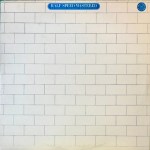
The Wall Sounds Terrible on these “Audiophile” Rip-offs

Hot Stamper Pressings of the Music of Pink Floyd Available Now
This Japanese import is one of the dullest, muddiest, worst sounding copies of The Wall we have ever played. It is clearly made from a second generation tape (or worse!).

Is it the worst version of the album ever made? Hard to imagine it would have much competition.

And somehow this pressing, or one very much like it, ended up as on the TAS Super Disc List. I would hope that the copy Harry played sounded a whole lot better than this one.

The version on the TAS Super Disc list is EMI 4814, which I believe is the British original. Conventional wisdom? Is The Absolute Sound capable of any other?

And the CBS Half-Speed is every bit the mudfest that the Half-Speed is.
How is it that the worst sounding pressings are so often marketed to audiophiles as superior to their mass-produced counterparts? In our experience, more often than not they are just plain awful, inferior in every way but one: surface quality.

And the knock on these CBS Half-Speeds is that they are made from the same vinyl CBS used to press all their other records.

I remember buying them back in the late-70s at Tower Records. They were only $12.99 when Mobile Fidelity pressings were $17.99, garnering a premium price because they were pressed in Japan. Fool that I was, I bought plenty of both, not to mention those made by Nautilus, Direct Disk Labs and plenty of others too painful to think about.

Dear audiophiles, stop collecting crappy audiophile pressings with quiet vinyl and just switch to CD already. You’ll be getting better sound and saving yourself a lot of money to boot. You simply cannot defend analog with this kind of junk.

(more…)

The Three at 45 RPM Has Energy Like No Recording We’ve Ever Heard

Hot Stamper Pressings Featuring Shelly Manne Available Now

When it comes to blockbuster sound that jumps out of the speakers, the wind is at your back with The Three because this is one seriously well-recorded album. If this record doesn’t wake up your stereo, nothing will.

We call it a “blockbuster” because it does not sound very much like a jazz trio performing in a club or some such venue.

But where is the harm in that? It’s not trying to.

What it’s trying to be is huge and powerful in your home. Everything has been carefully and artificially placed in the soundfield. Shelly Manne’s cymbals are placed as far left and as far right as possible on the “stage,” making him the longest-armed drummer to have ever sat behind a kit.

The drum solo on side two is full of energy and so dynamic. Why aren’t more drum kits recorded this well?

Check out the pictures inside the fold-open cover to see all the mics that were used on the drums. That’s where that wall-to-wall, floor-to-ceiling sound comes from.

It’s a phenomenal big speaker jazz Demo Disc.

Play this one as loud as you can. The louder you play it, the better it sounds.

Speaking of Energy

The transients found on this recording are uncannily lifelike. Listen for the huge amounts of kinetic energy produced when Shelly whacks the hell out of his cymbals.

This is a quality no one seems to be writing about, other than us of course, but what could possibly be more important? On this record, the more energetic copies took the players’ performances to a level beyond all expectations. It is positively shocking how lively and dynamic the best copies of this record are.

I know of no other jazz recording with this combination of sonic and musical energy.

(more…)

Letter of the Week – “I can’t listen to 99 percent of my audiophile or Japanese pressings…”

Hot Stamper Pressings of Jazz Rock Fusion Albums Available Now

One of our good customers had this to say about some Hot Stampers he purchased recently:

Hey Tom, 

Now, meaning in the past year…

I can’t listen to 99 percent of my audiophile or Japanese pressings… 

I hear how wrong they sound…

I, of course, have since replaced just about all and 999 out of 1000 sound better than the average copy.

Why did I think a Japanese pressing was better? My god, all my Crusader Japan pressings next to plain old original releases nooooo comparison.

Btw, can’t believe your customers don’t want Southern Comfort, Crusaders 1 and Crusaders 2… all are unreal powerful double LPs.. and many in their catalogue almost equal to those… Crusaders: the best of the best.

Regards
Andy

Andy, we tried to do shootouts for some of their records a few years back and were underwhelmed by the sound, the music, or both.  I’m afraid you will have to do your own shootouts for now.

And of course we’ve long been of the opinion that Japanese pressings mostly suck. Maybe one out of fifty is great, and those odds do not make them an attractive proposition for audiophiles.

You know what we know: vintage pressings — when you find good ones — will beat anything and everything you can throw at them.

(more…)