Japanese LPs – Reviews, Commentaries, etc.

The Wall Sounds Terrible on these “Audiophile” Rip-offs

Hot Stamper Pressings of the Music of Pink Floyd Available Now

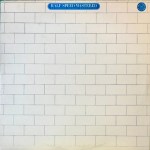
This Japanese import is one of the dullest, muddiest, worst sounding copies of The Wall we have ever played. It is clearly made from a second generation tape (or worse!).

Is it the worst version of the album ever made? Hard to imagine it would have much competition.

And somehow this pressing, or one very much like it, ended up as on the TAS Super Disc List. I would hope that the copy Harry played sounded a whole lot better than this one.

The version on the TAS Super Disc list is EMI 4814, which I believe is the British original. Conventional wisdom? Is The Absolute Sound capable of any other?

And the CBS Half-Speed is every bit the mudfest that the Half-Speed is.
How is it that the worst sounding pressings are so often marketed to audiophiles as superior to their mass-produced counterparts? In our experience, more often than not they are just plain awful, inferior in every way but one: surface quality.

And the knock on these CBS Half-Speeds is that they are made from the same vinyl CBS used to press all their other records.

I remember buying them back in the late-70s at Tower Records. They were only $12.99 when Mobile Fidelity pressings were $17.99, garnering a premium price because they were pressed in Japan. Fool that I was, I bought plenty of both, not to mention those made by Nautilus, Direct Disk Labs and plenty of others too painful to think about.

Dear audiophiles, stop collecting crappy audiophile pressings with quiet vinyl and just switch to CD already. You’ll be getting better sound and saving yourself a lot of money to boot. You simply cannot defend analog with this kind of junk.

(more…)

The Three at 45 RPM Has Energy Like No Recording We’ve Ever Heard

Hot Stamper Pressings Featuring Shelly Manne Available Now

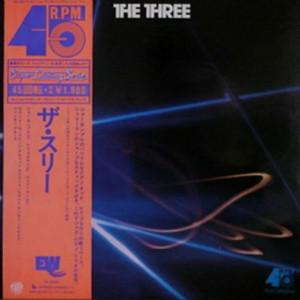
When it comes to blockbuster sound that jumps out of the speakers, the wind is at your back with The Three because this is one seriously well-recorded album. If this record doesn’t wake up your stereo, nothing will.

We call it a “blockbuster” because it does not sound very much like a jazz trio performing in a club or some such venue.

But where is the harm in that? It’s not trying to.

What it’s trying to be is huge and powerful in your home. Everything has been carefully and artificially placed in the soundfield. Shelly Manne’s cymbals are placed as far left and as far right as possible on the “stage,” making him the longest-armed drummer to have ever sat behind a kit.

The drum solo on side two is full of energy and so dynamic. Why aren’t more drum kits recorded this well?

Check out the pictures inside the fold-open cover to see all the mics that were used on the drums. That’s where that wall-to-wall, floor-to-ceiling sound comes from.

It’s a phenomenal big speaker jazz Demo Disc.

Play this one as loud as you can. The louder you play it, the better it sounds.

Speaking of Energy

The transients found on this recording are uncannily lifelike. Listen for the huge amounts of kinetic energy produced when Shelly whacks the hell out of his cymbals.

This is a quality no one seems to be writing about, other than us of course, but what could possibly be more important? On this record, the more energetic copies took the players’ performances to a level beyond all expectations. It is positively shocking how lively and dynamic the best copies of this record are.

I know of no other jazz recording with this combination of sonic and musical energy.

(more…)

Letter of the Week – “I can’t listen to 99 percent of my audiophile or Japanese pressings…”

Hot Stamper Pressings of Jazz Rock Fusion Albums Available Now

One of our good customers had this to say about some Hot Stampers he purchased recently:

Hey Tom, 

Now, meaning in the past year…

I can’t listen to 99 percent of my audiophile or Japanese pressings… 

I hear how wrong they sound…

I, of course, have since replaced just about all and 999 out of 1000 sound better than the average copy.

Why did I think a Japanese pressing was better? My god, all my Crusader Japan pressings next to plain old original releases nooooo comparison.

Btw, can’t believe your customers don’t want Southern Comfort, Crusaders 1 and Crusaders 2… all are unreal powerful double LPs.. and many in their catalogue almost equal to those… Crusaders: the best of the best.

Regards
Andy

Andy, we tried to do shootouts for some of their records a few years back and were underwhelmed by the sound, the music, or both.  I’m afraid you will have to do your own shootouts for now.

And of course we’ve long been of the opinion that Japanese pressings mostly suck. Maybe one out of fifty is great, and those odds do not make them an attractive proposition for audiophiles.

You know what we know: vintage pressings — when you find good ones — will beat anything and everything you can throw at them.

(more…)

Letter of the Week – “I haven’t felt better listening to an album in decades.”

More of the Music of The Rolling Stones

One of our good customers had this to say about some Hot Stampers he purchased recently:

Hey Tom,  

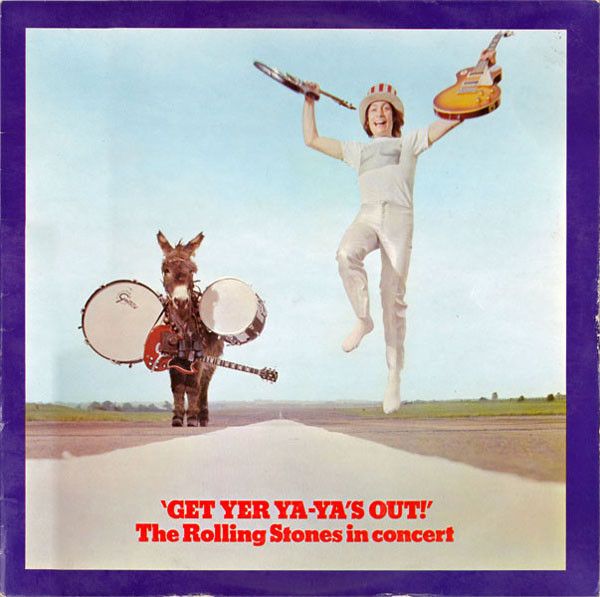
Just a quick note to thank you for the extraordinary copy of “Get Yer Ya-Ya’s Out.” I won’t enumerate all the remarkable qualities of the pressing since you know them well. I’ll just say that I haven’t felt better listening to an album in decades. What a remarkable experience.

By the way, since I bought this as a birthday present for my brother please let me know if another copy of equal or better quality becomes available. You know how this copy made my Londons and Japanese pressing sound. (more…)

The Four Seasons Direct to Disc at 45 RPM

Hot Stamper Pressings of the Music of Antonio Vivaldi Available Now

This RCA Direct-to-Disc 45 RPM Double LP has awful sound, with exceptionally hard and shrill string tone.

This is precisely why we dislike Japanese pressings as a rule — they sound like this audiophile trash.

If you own this album, it should make a good one for testing string tone and texture. The strings on this record are awful, and they should sound awful on your stereo too.

The Big Picture from a Lifelong Audiophile

You may have seen this text in another listing, but it bears repeating.

There is nothing new under the sun, and that is especially true when it comes to bad sounding audiophile records. The world is full of them.

There has been one big change from the days when I self-identified as a freshly minted audiophile in the ’70s.

Yes, the records being marketed to audiophiles these days may have second- and third-rate sound, but at least now they have good music. That’s progress, right?

The title reviewed above is a good example of the kind of crap we newbie audiophiles used to put up with back in the old days, long before we had anything resembling a clue.

This one clearly belongs on our list of bad audiophile records.

You might be asking: What kind of audio fool was I? to buy a dumbass record like this.

It’s a fair question. Yes, I admit I was foolish enough to buy records like this and expect it to have good music, or at least good sound. Of course it had neither. Practically none of these kinds of records ever did. Sheffield and a few others made some good ones, but most Direct to Disc recordings were crap.

As clueless as I was, even back in the day I could tell that I had just thrown my money away on this lipsticked-pig in a poke.

But I was an audiophile, and like a certain Mr. Mulder, I wanted to believe. These special super-hi-fidelity records were being made for me, for special people like me, because I had expensive equipment and regular records are never going to be good enough to play on my special equipment, right?

To say I was wrong to think about audio that way is obviously an understatement. Over the course of the last forty years, I (and to be fair, my friends and my staff) have been wrong about a lots of things in the worlds of records and audio.

You can read more about many of the things we got wrong under the heading: live and learn.

The good news? Audio progress is real and anyone who goes about doing audio the right way can achieve a great deal.

(more…)

Tusk on Japanese Vinyl Without the Sub-Generation Japanese Mastering

Hot Stamper Pressings of the Music of Fleetwood Mac Available Now

This Capitol-mastered, Japanese-pressed LP has excellent sound on the first two sides and SUPERB sound on sides three and four. I doubt you’ve ever heard the title track rock like this.

We dug up a few Japanese copies of Tusk that were mastered at Capitol by Ken Perry. Because they were made from the real tapes, these don’t have the typical smeary, sub-generation sound associated with Japanese pressings. We found that the best Japanese copies could hold their own with the best domestics on sides one and two, and could win outright on sides three and four.

We almost never like records that, although pressed in Japan, were not recorded in Japan. This is one of the exceptions because the mastering was done by the real mastering engineer, Ken Perry, using the real tape, here in America.

There are also some excellent direct to disc albums that were recorded here in the states and subsequently pressed in Japan.

(more…)

Is It Possible to Find Out Who Mastered the Japanese Thrillers?

Hot Stamper Pressings of the Music of Michael Jackson Available Now

A letter we received not long ago made the point that the Japanese pressing of Thriller the owner had been listening to for years, even decades, fell well short of the mark set by the sound of the White Hot Stamper pressing he now owned.

To think, I spent all those years playing and re-playing a record that was bright and edgy, none the wiser to matrix numbers and pressing variations.

I agreed, saying that I myself learned the hard way, having wasted some of my own money on them. that Japanese pressings were almost always a crock, writing:

Most Japanese pressings cater to what a mid-fi system would need to sound good and a hi-fi system would find ruinous. They are almost always made from dubbed tapes, which are then brightened up in the mastering phase since that is the sound that appeals to the Japanese market for some reason unknown to me. Old school audio equipment — horn speakers and vintage tube electronics — would be my guess.

A fellow who saw an opening to set me straight and take me down a peg, all without having to learn how to use that pesky shift key on his computer, left the following comment in that post:

the japanese pressings were mastered by BG. the only difference being the quality of the material. nice try though, snakeoil salesman.

I immediately went to battle stations. I doubted whether Bernie Grundman has mastered any pressings for the Japanese market, but I couldn’t say for sure. It’s a question that had never come up. We ourselves had discovered a very good sounding pressing of Tusk that was mastered by Ken Perry and pressed in Japan, so I knew it was possible that the original mastering engineer could have sent metalwork to Japan for the Japanese to produce properly-mastered records for their market.

Fortunately, Discogs makes checking such things fairly easy. I went right up to the listing for Thriller and clicked on all the Japanese original pressings to see if there was any evidence to show that he had mastered them.

Bernie Grundman’s name was credited on the back cover as the mastering engineer, but I didn’t put much stock in that. I assumed that he did not master the album for their market, since that is hugely impractical. I surmised that removing his credit would have badly defaced the jacket, something I doubted the Japanese would have found acceptable. They seem to be very particular about these things.

Sure enough, here is what the stampers look like for the typical Japanese pressing that supposedly would have been mastered by BG:

There are about half a dozen original Japanese pressings for the album on Discogs and all the stamper listings look like the one above.

If you know anything about records, you know that these markings could not have been created by Bernie Grundman’s mastering operation here in the states.

(more…)

Swing Sessions – Recorded in a Real Concert Hall (Thank Goodness)

If you’re a fan of clarinet-led swing jazz, you’ll have a hard time finding a better record than this. The music is absolutely wonderful. Not only that, but it has DEMO DISC sound as well.

The Liner Notes

Direct-to-Disc Recording recorded live at Iruma City Auditorium, Saitama, Japan on April 21, 1978. Eiji Kitamura and His Allstars include Eiji on clarinet, Ichiro Masuda on vibraphone, Yoshitaka Akimitsu on piano, Yukio Ikezawa on bass, Hiroshi Sunaga on drums and Judy Anton provides vocals on “What a Little Moonlight Can Do.”

This album was recorded by the Direct-to-Disc recording method, to capture the natural reverberation of the 1,200 seat concert hall. Various kinds of recording equipment were brought in parts to the backstage of the hall for the recording then reassembled and adjusted. Two whole days were spent adjusting all the equipment. (more…)

The Planets on Pro-Use Japanese Vinyl at 45 RPM Is Just Awful

More of the music of Gustav Holst (1874-1934)

This EMI 45 RPM Japanese Import 2 LP set is considered one of the great Planets by many audiophiles, but it’s not, based on our playing of a copy we had years ago, which means it belongs in our audiophile hall of shame.

The best copies on British or Dutch EMI vinyl are clearly better than this “audiophile” pressing.

What could be less surprising?

This is precisely why we dislike Japanese pressings as a rule — they sound like this audiophile trash.

Our favorite performance of The Planets can be found here.

The Big Picture from a Lifelong Audiophile

You may have seen the following text in another listing, but it bears repeating.

There is nothing new under the sun, and that is especially true when it comes to bad sounding audiophile records. The world is full of them.

There has been one big change from the days when I self-identified as a freshly minted audiophile in the 70s.

Yes, the records being marketed to audiophiles these days may have second- and third-rate sound, but at least now they have good music. That’s progress, right?

The title reviewed above is a good example of the kind of crap we newbie audiophiles used to put up with back in the old days, long before we had anything resembling a clue.

This one clearly belongs on our list of bad audiophile records.

You might be asking: What kind of audio fool was I? to buy a dumbass record like this.

It’s a fair question. Yes, I admit I was foolish enough to buy records like this and expect it to have good music, or at least good sound. Of course it had neither. Practically none of these kinds of records ever did. Sheffield and a few others made some good ones, but most Direct to Disc recordings were crap.

As clueless as I was, even back in the day I could tell that I had just thrown my money away on this lipsticked-pig in a poke.

But I was an audiophile, and like a certain Mr. Mulder, I wanted to believe. These special super-hi-fidelity records were being made for me, for special people like me, because I had expensive equipment and regular records are never going to be good enough to play on my special equipment, right?

To say I was wrong to think about audio that way is obviously an understatement. Over the course of the last forty years, I (and to be fair, my friends and my staff) have been wrong about a lots of things in the worlds of records and audio.

You can read more about many of the things we got wrong under the heading: live and learn.

The good news? Audio progress is real and anyone who goes about doing audio the right way can achieve the equivalent of miracles.

(more…)

Getz-Gilberto on Japanese Vinyl

Hot Stamper Pressings of Bossa Nova Albums Available Now

Sonic Grade: C

This is a Minty looking Verve Japanese Import LP.

It’s not competitive with the best domestic pressings, but you could definitely do worse.

Trying to find domestic copies that aren’t trashed is getting harder every day, so if you’re a click and pop counter, this copy may be the ticket.

Stan Getz is a truly great tenor saxophonist, the cool school’s most popular player. This LP is all the evidence you need. Side 1 has those wonderfully relaxed Brazilian tempos and the smooth sax stylings of Stan Getz.

Side two for me is even more magical. Getz fires up and lets loose some of his most emotionally intense playing. These sad, poetic songs are about feeling more than anything else and Getz communicates that so completely you don’t have to speak Portugese to know what Jobim is saying. Call it cool jazz with feeling.

(more…)