_Conductors – Reiner

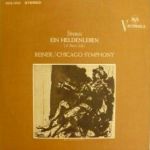
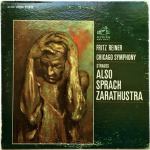
RCA Released This Awful Living Stereo with Reiner in 1958

Hot Stamper Pressings of Living Stereo Recordings Available Now

Some audiophiles buy albums with their favorite labels. For example, this pressing from the Golden Age of RCA Living Stereo might appeal to a certain kind of audiophile who treasures LSC’s on the Shaded Dog label.

More than that, he might even limit himself to 1S Indianapolis pressings.

However, many records from this era simply do not sound good, and this is one of them.

We have never heard a good sounding copy of LSC 2112, and we’ve played plenty of them over the decades we’ve been in the business of selling Golden Age classical records.

A copy came in just last week [which was many, many years ago] and I figured it was time to give it a spin and see if there was any reason to change my opinion. Hey, maybe this one had Hot Stampers! Can’t say it wouldn’t be possible. Unlikely, yes, impossible, no.

So here’s what I heard: A wide stage. A bit dry.

But then the trouble started: Shrill strings?!

That’s all she wrote.

A Johann Strauss record with shrill strings is a non-starter. All is not lost however. Decca knew how to record Strauss, and they had halls with wonderful acoustics to do it in.

(more…)

For Also Sprach Zarathustra, These Stampers Are Passable at Best

Hot Stamper Pressings of Living Stereo Titles Available Now

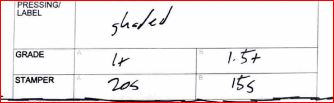
Even though they had the Shaded Dog label, some of the later stampers for this record were not very good sounding compared to the ones that won our shootouts.

20s backed by 15s earned grades that would prevent it from being sold as a Hot Stamper pressing.

One side was passable, earning our 1.5+ grade. It’s a decent sounding side I suppose, but a long, long, long way from the best.

1.5+ is four grades down from the top copy, the kind that would end up in this section. (To read about some phenomenally good sounding Shootout Winning pressing we’ve played recently, click here.)

That’s a steep dropoff as far as we’re concerned. 1.5+ only hints at how good a recording LSC 2609 can be on the best vintage pressings.

To see more records that earned the 1.5+ grade, please click here. (Incidentally, some of them are pressed on Heavy Vinyl. The best modern pressings have sometimes, though rarely, been known to earn Hot Stamper grades, and one shocked the hell out of us by actually winning a shootout. Wouldn’t you like to know which one!)

The 1+ grade found on this side one means it’s simply not very good, Shaded Dog label or no Shaded Dog label.

The average Shaded Dog may be better than the average classical record, but that certainly doesn’t mean it has any claim to audiophile sound. We’ve played bad early RCA pressings by the hundreds. Now, with this blog we can point some of them out to those record lovers who are more interested in top quality sound than an original label.

For those who might be interested, there’s more on our grading scale here.

There are quite a number of other records that we’ve run into over the years with obvious shortcomings.

(more…)

Analogue Productions and Sterling Produce a Disastrous Scheherazade

Hot Stamper Pressings of the Music of Rimsky-Korsakov Available Now

Wikipedia has a nice entry for some of Rimsky-Korsakov’s ideas behind the final movement of the piece:

These [later] works resemble brightly colored mosaics, striking in their own right and often scored with a juxtaposition of pure orchestral groups. The final tutti of Scheherazade is a prime example of this scoring. The theme is assigned to trombones playing in unison, and is accompanied by a combination of string patterns. Meanwhile, another pattern alternates with chromatic scales in the woodwinds and a third pattern of rhythms is played by percussion.

Wikipedia

Could not have said it better myself!

We’ve written at length about the thrills to be had when playing the last movement of Scheherazade — not brilliantly, to be sure, as the writer for Wikipedia has done, but serviceably I hope. Unfortunately, not every pressing of Reiner’s performance is able to communicate the musical values of the work the way the best pressings can.

As you can see from our notes for the this Heavy Vinyl Analogue Productions pressing, the thrill was barely there on the first side, and by the second side it was completely gone.

The notes from our 2024 shootout read:

  • Not dry or squawky
  • Really lacking depth and dynamics.
  • Big, thick bass gets annoying.
  • Big brass not too bright but it is over-textured and flat.

Plenty of modern records suffer from these as well as lots of other shortcomings. For some reason, the writers for The Absolute Sound who put this crappy LP on their Super Disc list didn’t seem bothered by them the way we were.

If you own this pressing, here are the kinds of things you might want to listen for in order to recognize its many, and quite serious, failings.

When played head to head against any properly-mastered vintage vinyl LP, this pressing will fall short in a number of important areas. Linked below are titles we’ve found to be good for testing these same qualities in a recording.

(more…)

Schumann – Concerto in A Minor / Van Cliburn / Reiner

More Classical and Orchestral Recordings

More Living Stereo Recordings

  • Solid Double Plus (A++) Living Stereo sound brings Van Cliburn and the Chicago Symphony’s performance of Schumann’s Concerto in A Minor to life on this original Shaded Dog pressing (the first copy to hit the site in years)
  • Both of these sides are remarkably transparent, high-rez, and open – all signs that the cutting was done on very high quality equipment, properly EQ’d and not bandwidth limited or overly compressed
  • Lewis Layton engineered this recording and he nailed it, perfectly capturing the rich, textured sheen on the strings, the hallmark of Living Stereo sound in the 50s and 60s
  • Problems in the vinyl are sometimes the nature of the beast with these early pressings, but this particular title had so many condition problems that, as good as the music and sound might have been, we may not be able to do a shootout for it again

(more…)

This MoFi Makes My Head Hurt

Hot Stamper Pressings of the Music of Richard Strauss Available Now

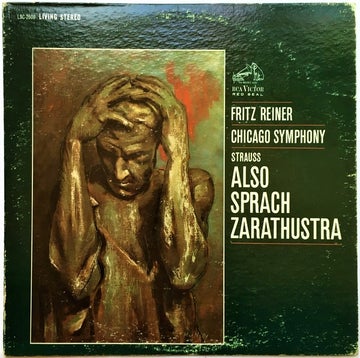
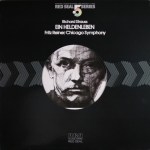
Is the painting on the cover that of a man whose head is suffering from the ridiculously shrill string tone of this MoFi?

Doubtful. Impossible actually. But that’s exactly how my head feels when I play one of these awful MoFi classical LPs.

Their rock, pop and jazz remasters were hit and miss in the old days, with some real winners hidden amongst the junk, but their classical releases that I’ve played, without exception, was a dog.

Want a good way to know you’re dealing with bad records and collector mentality?

When you find one of these records in your local used record store, it is almost guaranteed to be pristine.

Good records get played. MoFi’s classical releases, like plenty of other classical records audiophiles found attractive, got collected and spent most of their days sitting on a shelf, out to pasture so to speak.

(more…)

Our Pines of Rome Shootout Was Twenty Years in the Making

Hot Stamper Pressings of Classical and Orchestral Music Available Now

We did a monster shootout for this music in 2021, one we had been planning for more than twenty years. On hand were quite a few copies of the Reiner on RCA; the Ansermet on London; the Maazel on Decca and London (the Decca being on the TAS List), the Kempe on Readers Digest, and quite a few others we felt had at least the potential to sound good.

Allow me to back up a bit.

When I first started paying attention to the TAS Super Disc list in the late-70s,  I read about the famous Pines of Rome RCA pressing with 1S stampers that was so dynamic that it had to be recut so that it would play on all turntables. I could never find one, and the Shaded Dogs and Red Seals that I did find never sounded all that good to me.

I know now that I did not have the stereo system back then (equipment, room, etc.) that could reproduce a recording of such difficulty.

In the 80s, the Mobile Fidelity pressing of the Pines of Rome came out, and it never sounded right to me either. This was true of all their classical releases, without exception. To me they epitomized the kind of bright, phony, “audiophile” sound commonly found in audio showrooms but rarely if ever heard in concert halls.

The Classic Records release from 1995 of the Reiner Pines was no better. That record was just too harsh sounding, with the shrill strings that Bernie Grundman was cutting on practically every title put out by that awful label.

I fell for some of them — I actually raved about Witches’ Brew on Classic back then, an endorsement that mortifies me to this day — but most of their classical records were junk that I was selling for cheap to the audiophiles who bought into the reviews written about them in the audio mags.

(more…)

Audiophiles Should Give Reiner’s Rossini Overtures a Miss

More of the music of Gioachino Rossini (1792-1868)

None of the pressings we played of this RCA were remotely competitive with Maag and the PCO on London.

The sound of this RCA was consistently boxy and congested, a case of the “old record” sound we find on countless vintage pressings. The world is full of bad records. We’ve suffered through them by the thousands.

Only an old school audio system can hide the faults of a pressing such as this. The world is full of those too, even though they might comprise all the latest and most expensive components.

There are quite a number of Golden Age pressings that we’ve run into over the years with obvious shortcomings.

Here are some of them, a very small fraction of what we’ve auditioned, broken down into the three major labels that account for most of the best classical and orchestral titles we’ve had the pleasure to play.

  • London/Decca records with weak sound or performances
  • Mercury records with weak sound or performances
  • RCA records with weak sound or performances

We’ve auditioned countless pressings in the 37 years we’ve been in business — buying, cleaning and playing them by the thousands.

This is how we find the best sounding vinyl pressings ever made, through trial and error. It may be expensive and time consuming, but there is simply no other method for finding better records that works. If you know of one, please write me!

We are not the least bit interested in records that are “known” to sound the best.

Known by whom? Which audiophiles — hobbyists or professionals, take your pick — can be trusted to know what they are talking about when it comes to the sound of records?

I have never met one, outside of those of us who work for Better Records. I remain skeptical of the existence of such a creature. The audiophile experts and reviewers I’ve encountered on the web seem hopelessly lost to me.


UPDATE: 2024

Woops, I take that back. I have met one, a certain Mr. Robert Brook. He has been conducting his own shootouts for a few years now and has made his findings available on his blog, The Broken Record. This is information you can trust.


(more…)

Also Sprach Zarathustra – Comparing 1954 to 1962

Hot Stamper Pressings of the Music of Richard Strauss Available Now

In 2023, we did a very large shootout for LSC 1806 and LSC 2609. LSC 1806 was recorded in 1954 but not released until 1960. It has been on the TAS Super Disc list for a very long time, if not actually from the very beginning. It’s long been considered the definitive recording by TAS Heads for sound and possibly for performance.

LSC 2609 came out in 1962. We prefer it over 1806, as the notes for our shootout make clear:

Initially, I thought I preferred LSC 1806. The amount of space and silky texture in the top end is hard to match. After a few comparisons, though, I began to miss the richer and more realistic midrange of LSC 2609. If anyone strongly prefers 1806 to 2609, they probably have a darker system or a smeary 2609.

The best copy of 1806 in our shootout earned the same Triple Plus grade on side one as our best 2609, slightly less on side two as it had somewhat steely strings.

Still, both are superb recordings. Head to head on big speakers in a custom room and all the rest, we know which recording we prefer.

Most audiophiles, including most of our customers, do not have a big-speaker system playing in a dedicated room, custom built and carefully treated in order to produce sound reproduction of the highest quality. They may prefer the original recording depending on how it sounds on the equipment they are using.

(more…)

Tchaikovsky / Excerpts from The Nutcracker

More of the Music of Tchaikovsky

  • With STUNNING Shootout Winning Triple Plus (A+++) Living Stereo sound or close to it throughout, this vintage RCA Red Seal reissue pressing is the BEST pressing of this recording we have ever heard
  • Both of these sides are exceptionally detailed, with an abundance of space around all the players, the unmistakable sonic hallmark of the properly-mastered, properly-pressed vintage analog LP
  • This copy is rich, 3D, full-bodied, and dynamic, with the clarinet especially musical
  • We noted that the sound on this later label pressing could not be beat — it was so much more roomy, spacious and detailed, without the crudity of the Shaded Dogs that we mistakenly expected to win the shootout
  • The performance is faster than our other favorite, the Ansermet, and fans of the work will have to determine for themselves which they prefer

This RCA reissue pressing of LSC 2328 has some of the BEST sound we have ever heard for The Nutcracker, and we’ve played them by the dozens, on the greatest Golden Age labels of all time, including, but not limited to, the likes of Mercury, RCA and London.

In a somewhat (but not too) surprising turn of events, the reissue pressing we are offering here beat all the originals and early reissues we could throw at it. Finally, this legendary Mohr/Layton production can be heard in its full glory!

If you like your Nutcracker exciting and dynamic, this is the copy for you.

Don’t buy into that record collecting / audiophile canard that the originals are better.

A Wealth of Recordings

For our most recent shootout we played Ansermet’s performance of the Suites on London, as well as pressings by Reiner and Fiedler, both of whom opted against using the Suites as Tchaikovsky wrote them, preferring instead to create a shorter version of the complete ballet with excerpts of their own choosing.

The CSO, as one might expect, plays this work with more precision and control than any other. They also bring more excitement and dynamic contrasts to their performance, adding greatly to our enjoyment of the music.

We like our recordings to have as many live music qualities as possible, and those qualities really come through on a record such as this when reproduced on the full-range speaker system we use.

(more…)

RCA Released this Awful Living Stereo Recording in 1958

Hot Stamper Pressings of the Music of Tchaikovsky Available Now

Some audiophiles buy albums based on their labels. For example, this pressing from the Golden Age of Living Stereo might appeal to a certain kind of audiophile who treasures LSC’s with the original Shaded Dog label.

More than that, he might limit himself to 1S Indianapolis pressings. Hoorah! What could be better?

However, many records from this era simply do not sound good, and this is one of them. We have never heard a good sounding copy of LSC 2216, and we’ve played quite a number of them over the decades we’ve been in the business of selling Golden Age classical records.

A copy came in just last week so I figured it was time to give it a spin and see if there was any reason to change my opinion. Hey, maybe this one had Hot Stampers! Can’t say it wouldn’t be possible. Unlikely, yes, impossible, no.

So here’s what I heard. No real top above 6k, hardly any bottom, dry and thin, but with a very wide stage – the textbook definition of “boxy sound.”

If you are a fan of Living Stereo pressings, have you noticed that many of them – this one for example – don’t sound good?

If you’re an audiophile with good equipment, you should have. But did you? Or did you buy into the hype surrounding these rare LSC pressings and just ignore the problems with the sound?

(more…)