 Hot Stamper Pressings of the Music of Richard Strauss Available Now
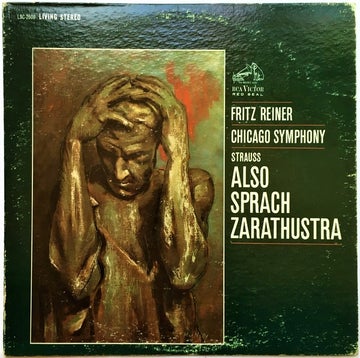
In 2023, we did a very large shootout for LSC 1806 and LSC 2609. LSC 1806 was recorded in 1954 but not released until 1960. It has been on the TAS Super Disc list for a very long time, if not actually from the very beginning. It’s long been considered the definitive recording by TAS Heads for sound and possibly for performance.
LSC 2609 came out in 1962. We prefer it over 1806, as the notes for our shootout make clear:
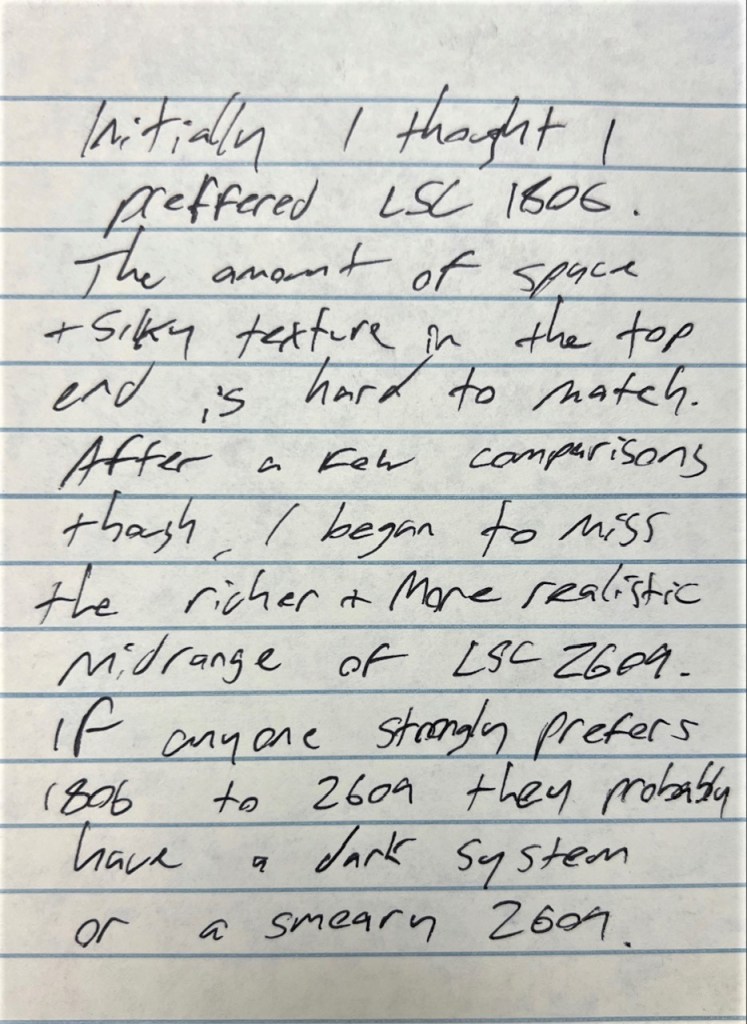
Initially, I thought I preferred LSC 1806. The amount of space and silky texture in the top end is hard to match. After a few comparisons, though, I began to miss the richer and more realistic midrange of LSC 2609. If anyone strongly prefers 1806 to 2609, they probably have a darker system or a smeary 2609.
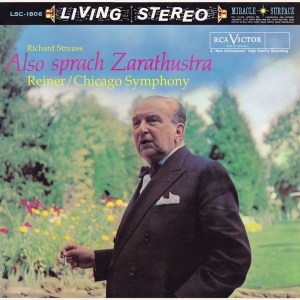
The best copy of 1806 in our shootout earned the same Triple Plus grade on side one as our best 2609, slightly less on side two as it had somewhat steely strings.
Still, both are superb recordings. Head to head on big speakers in a custom room and all the rest, we know which recording we prefer.
Most audiophiles, including most of our customers, do not have a big-speaker system playing in a dedicated room, custom built and carefully treated in order to produce sound reproduction of the highest quality. They may prefer the original recording depending on how it sounds on the equipment they are using.
 Although 1806 is very difficult to find in audiophile playing condition, our preference for 2609 is based on the sound of the two records, not the ease with which the later recording can be found.
The performance differences seem small, and if there are any, we do not feel that they would be important enough to overcome our preference for the sound of LSC 2609.
Our Review
The vibrant colors of the orchestra are captured brilliantly in All Tube Analog by the RCA engineers, creating an immersive and engrossing listening experience for the work without equal in our experience
There is plenty on offer for the discriminating audiophile, with the spaciousness, clarity, tonality and freedom from artificiality that are hallmarks of the best Living Stereo recordings.
A Must Own Classical Masterpiece
This Demo Disc Quality recording is a Masterpiece that should be part of any serious Classical Music Collection. Others that belong in that category can be found here.
Background
A special place in the long interpretative history of Also Sprach Zarathustra no doubt belongs to the performance of the piece by the Chicago Symphony Orchestra and Fritz Reiner, a particularly acclaimed interpreter of Strauss who had worked closely with the composer before moving to the United States in the early 1920s.
Reiner’s close familiarity with the score and personal relationship with Strauss himself add extra weight to the authority and importance of his interpretation of Also Sprach Zarathustra. His great attention to detail, dynamics, and motivic interrelationships, while never losing focus of the greater whole is evident is his 1954 recording of the piece with the Chicago SO for Living Stereo. Reiner does an exceptionally good job in bringing out the nuances and tonal relationships of the score that, in return, aspires to convert Nietzsche’s elaborate philosophy into musical elements through challenging conventional notions of harmony and tonality.
Its great musical value aside, Reiner’s landmark recording is also of significant historical importance. His interpretation of Strauss’s magnificent tone poem has had a considerable impact upon subsequent renditions, such as the 1970 performance of the piece by the New York Philharmonic and Leonard Bernstein, who had been a pupil of Reiner at the Curtis Institute of Music in Philadelphia.
By Mimis Chrysomallis