_Conductors – Reiner

Is the 1s Pressing Always the Best on the Brahms Violin Concerto with Heifetz?

Hot Stamper Pressings that Sound Their Best on the Right Reissue

This early Shaded Dog pressing of the 1958 recording has surprisingly good sound on side two. On the second side the sound opens up and is very sweet, with the violin becoming much more present and clear.

The whole of side two is transparent with an extended top. Usually the earliest Living Stereo titles suffer from a lack of top end extension, but not this one.

Maybe the 1s pressing is also that way. For some reason audiophiles tend to think that the earliest cuttings are the best, but that’s just more mistaken audiophile thinking if our experience can serve as any guide, easily refuted if you’ve played hundreds of these Living Stereo pressings and noted which stampers sound the best and which do not.

The 1s pressings do not consistently win our shootouts.

About half the time, maybe less would be my guess.

Of course, to avoid being biased, the person listening to the record doesn’t know the stamper numbers, and that may help explain why the 1s loses so often.

If you are interested in finding the best sounding pressings, you have to approach the problem scientifically, and that means running record experiments.

Practically everything you read on this blog we learned through experimentation.

When we experimented with the Classic Records pressing of LSC 1903, we were none too pleased with what we heard. Our review is reproduced below.

(more…)

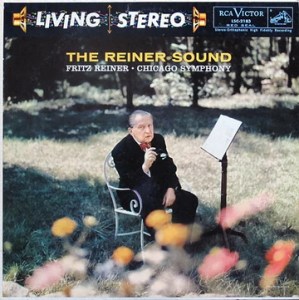
Ravel / Rachmaninoff – The Reiner Sound

More of the Music of Maurice Ravel

More of the Music of Sergei Rachmaninoff

  • With big, bold, dynamic Double Plus (A++) Living Stereo sound or close to it throughout, you’ll have a hard time finding a copy that sounds remotely as good as this original Shaded Dog pressing
  • It’s also remarkably quiet at high end of Mint Minus Minus, a grade that even our most well-cared-for vintage classical titles have trouble playing at
  • Side one is doing just about everything right – it’s rich, clear, undistorted, open, spacious, and has depth and transparency to rival the best recordings you may have heard, and side two is not far behind in all those areas
  • True, side two earned a minimal Hot Stamper grade of 1.5+, but we still guarantee that it will beat the pants off any Heavy Vinyl reissue, because every one of those that we played was ridiculously opaque, muddy and thick enough to have us crying “uncle” after five minutes
  • This record will have you asking why so few Living Stereo pressings actually do what this one does (particularly on side one). The more critical listeners among you will recognize that this is a very special copy indeed (also particularly on side one). Everyone else will just enjoy the hell out of it.
  • Contains two works by Ravel: Rapsodie Espagnole and Pavan for a Dead Princess, as well as Rachmaninoff’s Isle of the Dead

This former TAS list record really surprised us on two counts.

First, you will not believe how dynamic the recording is. Of all the classical recordings we’ve played lately, I would have to say this is the most dynamic of them all.

The explosively loud sections of these wonderful works, with their huge orchestral effects, are dynamic contrasts that are clearly part of the composer’s intentions but ones that rarely make it from the concert hall to vinyl disc the way they do here.

Second, there is simply an amazing amount of top end on this record. Rarely do we hear Golden Age recordings with this kind of energy and extension up top. Again, it has to be some of the best we have heard recently.

(This is, of course, one of the reasons the Classic reissue is such a disaster. With all that top end energy, Bernie’s gritty cutting system and penchant for boosted upper midrange frequencies positively guarantees that the Classic Reiner Sound will be all but unplayable on a tonally correct system. Boosting the bass and highs and adding transistory harshness is the last thing in the world that The Reiner Sound needs.)

Unlike many bien-pensant audiophiles who buy into HP’s classical choices, I am not the biggest Reiner fan. On these works, though, I would have to say the performances are top drawer, some of the best I have ever heard. The amount of energy he manages to coax from the Chicago Symphony Orchestra is nothing less than breathtaking.

(more…)

Better Front Ends Actually Reduce Surface Noise

Hot Stamper Pressings of the Music of Tchaikovsky Available Now

This record has no marks that play appreciably, but that RCA vinyl is up to its old tricks again.

Mint Minus Minus with constant light surface noise underneath the music in the quieter sections is the rule. The first half inch of side two is where you will notice it the most.

We are of the opinion that good sound and good music allow you to pretty much ignore surfaces such as these (scratches being another thing entirely of course). 

Better Front Ends

I would make the further point that the better your front end is, the less likely you are to have a problem with vinyl like this, which is the opposite of what many audiophiles perceive to be the case. In other words, some of the cheaper tables and carts seem to make the surface noise more objectionable, not less. (They also tend to collapse completely under the weight of a mighty recordings.)

On the other hand, some pricey cartridges — the Benz line comes to mind — are consistently noisier than those by Dynavector, Lyra and others, in our experience anyway.
Vintage Vinyl

As long as vintage vinyl is the only vinyl with sound worth pursuing, as is surely the case these days and will be the case for the forseeable future — we have ample evidence to support this statement for this who are interested in that lamentable reality — a quiet cartridge and a very high quality arm are essential to your being able to recognize good records and reproduce them properly.

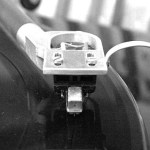
Our Dynavector 17Dx gets down deep into the groove, where vintage used records have the least number of problems created by their previous owners.

And we run it nude for even better sound. I discovered this possibility more than a decade ago — so long ago that I cannot remember where I came by the information — but the sound was immediately so much better that all questions were answered moments after dropping the needle.

Not a lot of things are obvious, but that sure was.

(more…)

None of the Living Stereos with Reiner Conducting Was Better than Passable

Hot Stamper Pressings of Living Stereo Titles Available Now
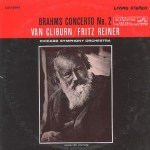
For a cover this beautifully rendered, you would think the sound of the Shaded Dog pressings of LSC 2219 would be something special.

Unfortunately, as we were preparing our shootout for the work we did not find that to be the case.

We dropped the needle on some copies and judged that the grades would be roughly in the range of 1+. Some copies might be a bit better, some might be a bit worse, but most of them would have sound that was merely passable, even after a good cleaning. (Without a good cleaning, most would probably not even earn that single plus.)

We do not sell records with 1+ grades. You should have no trouble finding those on your own. The world is full of them. They’re what most audiophiles call “good sounding records.”

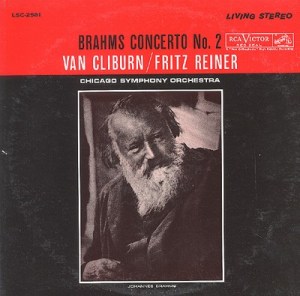
Our favorite Brahms Second Piano Concerto for sound and performance is LSC 2581. It was recorded for RCA only a few years later in 1962.

The average Shaded Dog may be better than the average classical record, but that certainly doesn’t mean it has any claim to audiophile sound. We’ve played bad early RCA pressings by the hundreds. Now, with the help of this blog, we can point some of them out to the record lovers who are looking for top quality sound and don’t care that much about the label.

(more…)

Tchaikovsky / Mendelssohn, et al. / 1812 Overture / Fingal’s Cave Overture & more / Reiner

More of the Music of Tchaikovsky

  • A rare and wonderful early Shaded Dog pressing that boasts excellent Double Plus (A++) sound from start to finish
  • Remarkably rich, Tubey Magical and oh-so-rosiny Living Stereo strings and powerful, dynamic brass make this a real Demo Disc quality orchestral heavyweight
  • The real stars here are NOT the 1812, but the three coupling works, which demonstrate, on this copy at least, The Real Power of the Orchestra

Lizst’s Mephisto Waltz, Mendelssohn’s The Hebrides Overture, and the Tragic Overture by Brahms are the Must Own 36 minutes worth of music on this record.

It’s an outstanding performance from Reiner and the CSO on everything but the 1812.

Say what?

Yes, it’s true. After hearing the amazing Decca pressing with Alwyn conducting, we knew early on that Reiner and the CSO were simply not competitive in terms of performance, and the RCA engineers also failed to capture the deep bass of the organ on their pressing.

What we were impressed with were the three other works, all played with verve and technical skill and as enjoyable as any music you can find on this site. Go to YouTube to listen to them if you are not familiar with the works. All of them belong in any serious music collection, and these recordings (and our Hot Stamper pressings) do them proud.

(more…)

White Dogs or Shaded Dogs on the Brahms Piano Concerto No. 2?

Hot Stamper Pressings of Living Stereo Titles Available Now

UPDATE 2024

The review you see below is quite old. We no longer agree with the statement we made back then that the White Dog pressings are better sounding than the Shaded Dogs.

In our recent shootout, the first one I can remember since 2005 — that was 20 years ago! — the White Dogs did not do nearly as well as the Shaded Dogs we played.


This White Dog pressing is the best sounding copy I’ve ever heard, much better than the earlier pressings. The piano doesn’t break up like it does on those, especially in the second movement.

Finally the piano sounds right – solid and with the correct overtones. It goes without saying that this is an exceptionally good performance as well.

One of the best of the Cliburn recordings which, as you may know, are rarely any good, the worst of them being LSC 2252 and the best of them being, probably, LSC 2507.

Seems we got some of this one wrong. Live and learn is our motto, with mea culpa running a close second.

It’s possible that our mistaken judgment about the superiority of the White Dog pressings in 2005 was mostly the result of sample sizes that were much too small. However, I was operating as a one man band back when I was doing all the classical shootouts, so my chances of getting the wrong answer were fairly high, a reality I have documented on this blog in some detail.

I also was not able to clean the records under comparison very well, a problem that has been solved — and then some — by a great many improvements in techniques, machinery and fluids over the last twenty years.

What we could do back then and what we can do now, after twenty years of constant improvement, are as different as night and day, a subject we write about quite a bit under the heading of audio progress.

I’ve also made a habit of admitting my mistakes in the hopes that other audiophile reviewers would consider following suit. To my knowledge this has yet to happen, but hope springs eternal!

(more…)

Strauss / Also Sprach Zarathustra / Reiner

More of the Music of Richard Strauss

  • An early Shaded Dog pressing of this wonderful classical Masterpiece with superb Double Plus (A++) sound from first note to last
  • It’s also fairly quiet at Mint Minus Minus, a grade that even our most well-cared-for vintage classical titles have trouble playing at
  • The vibrant colors of the orchestra are captured brilliantly in All Tube Analog by the RCA engineers, creating an immersive and engrossing listening experience for the work without equal in our experience
  • There is plenty on offer for the discriminating audiophile, with the spaciousness, clarity, tonality and freedom from artificiality that are hallmarks of the best Living Stereo recordings
  • “Reiner’s close familiarity with the score and personal relationship with Strauss himself add extra weight to the authority and importance of his interpretation of Also sprach Zarathustra.”

(more…)

Ein Heldenleben – A Half Speed I Used to Like for Some Reason

Hot Stamper Pressings of the Music of Richard Strauss Available Now

As you may know, this is one of the earliest RCA stereo recordings, dating from 1954 and the same sessions as the famous Reiner recording LSC 1806. This two microphone, two-channel recording, however, was never released in stereo on vinyl until the Victrola era ten years later.  

We used to like the RCA Half-Speed pressing of the work, but playing it recently made me realize just how dark, smeary and thick it is.

Don’t know what I ever saw in it to tell you the truth.

We Make Mistakes

The first is that anyone who has been on an audio journey for very long has made a lot of mistakes along the way.

Uniquely among reviewers and record dealers, we go out of way to admit when we were wrong. You might say we are even proud of the fact that we used to get so many things wrong about records and audio.

Our experimental, evidence-based approach, requiring that we not only make mistakes but that we embrace them, is surely key to the progress we have made in understanding recordings and home audio. One of our favorite quotes on the subject is attributed to Alexander Pope.

“A man should never be ashamed to own he has been in the wrong, which is but saying… that he is wiser today than he was yesterday.”

To say that few audiophiles have followed our approach is not to admit defeat. Rather it is simply to say that the approach we use to find better sounding pressings involves a great deal of tedious, expensive, time-consuming work, work that few audiophiles seem interested in doing.

There are quite a number of other records that we’ve run into over the years with obvious shortcomings.

Here are some of them, a very small fraction of what we’ve played, broken down into the three major labels that account for most of the best classical and orchestral titles we’ve had the pleasure to play.

(more…)

Why Do So Few Living Stereo Pressings Sound as Good as This One?

Hot Stamper Pressings of Orchestral Spectaculars Available Now

We introduced our most recent shootout winning copy of The Reiner Sound from 1958 this way:

The Reiner Sound returns to the site for the first time in years, here with big, bold, dynamic Triple Plus (A+++) Living Stereo sound throughout this original Shaded Dog pressing.

These are just a few of the things we had to say about this amazing copy in our notes: “fully extended up top”…”sweet and rich”…”supremely dynamic and spacious!!!” (side one)…”massive and tubey and 3D”…”like no other” (side two)…”explosive finish.”

These sides are doing everything right – they’re rich, clear, undistorted, open, spacious, and have depth and transparency to rival the best recordings you may have heard.

This record will have you asking why so few Living Stereo pressings actually do what this one does.

The more critical listeners among you will recognize that this is a very special copy indeed.

Everyone else will just enjoy the hell out of it.

And here are the notes to prove it!

Side one was at least 3+.

  • Lots of tape hiss
  • The top end really extends
  • Sweet and spacious dynamic peaks, and rich
  • Supremely dynamic and spacious

Side two was right up there with it:

  • Massive and tubey and three-dimensional
  • Very full and dynamic
  • The explosive finish is like no other

(more…)

Skip the Living Stereo of Rachmaninoff’s Piano Concerto No. 2 with Cliburn

Hot Stamper Pressings of Living Stereo Recordings Available Now

We recently dropped the needle on a copy of LSC 2601 — the first one we’ve played in years — and found a great deal to fault in the sound. Our copy with 3s/3s stampers was awful sounding.

Rachmaninoff’s Piano Concerto No. 2 is a wonderful piano concerto, one that belongs in any serious record collection, but the sound on the pressing we played was definitely not up to our standards.

The piano was cranky, the overall sound a dry mess overall. It just sounded much too much like an old record.

A Shaded Dog pressing such as this might be passable on an old school audio system, but it was too unpleasant to be played on the high quality (mostly) modern equipment we use.

There are quite a number of other vintage classical releases that we’ve run into over the years with similar shortcomings. For fans of vintage Living Stereo pressings, here are some to avoid.

(more…)