smeary-sound

Smear, a blurring or loss of sharpness of individual notes, refers to missing transient information, the kind most often associated with tube gear.

However, smear occurs with every kind of gear, especially high-powered amps, the kind typically required to power the inefficient speakers audiophiles seem to favor these days.

When we got rid of our tube equipment and high-powered amps, some of the smear in our records disappeared with them.

Once that happened, the smear that is commonly heard on modern Heavy Vinyl repressings became much more noticeable and, as might be expected, even more annoying.

Dvorak’s Symphony No. 9 – An Overview of Decca’s Recordings

More of the music of Antonin Dvorak (1841-1904)

This commentary was written close to a decade ago, when we were first trying to figure out which pressings and performances of the work were worth pursuing.

Please to enjoy.

We got off to a rough start with this piece of music. The early pressings we played were often sonically uninspiring, and that’s being charitable.

The London pressings with Kubelik (CS 6020) that we had thought were competitive with some of the better recordings we had on hand turned out to be disappointing.

The strings were often hard and shrill, the overall sound crude and full of smear.

These Londons cost us a pretty penny owing to the high quality condition we require them to be in for our shootouts. In the end, all that time, effort and money was for naught. A big chunk of dough was headed down the drain.

The Stereo Treasury pressing of this same performance sounded better to us than any of the Bluebacks we played but far from competitive with the recordings we ended up preferring.

The Londons and Deccas from 1967 with Kertesz conducting the LSO also left much to be desired sonically. After hearing the 9th on both London and Decca, we did a quick needle drop on the other symphonies from the complete cycle that Kertesz conducted and concluded that none of them were worth our time.
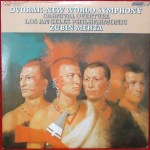
The trade-in pile was growing ever taller.

Then some good news came our way when we dropped the needle on the Decca/London recording with Mehta and the LA Phil. Our best London sounded shockingly good, much better than the one Decca pressing we had on hand.

His 8th Symphony (CS 6979) is also quite good by the way.

This is surprising because we rarely like anything by Mehta and the LA Phil. from this period — the recording in question is from 1975 — but of course we are happy to be surprised when the recordings sound as good as the ones we played.

The one that seemed to us to be the best balance of sound and performance was conducted by Istvan Kertesz, but not with the LSO.

His recording with the Vienna Philharmonic in 1961, his debut for Decca as a matter of fact, is the one that ended up winning our shootout of a dozen pressings or so.

We prefer a later mastering of the recording though, not the original.

Here are more reviews of music conducted by Kertesz, a man whose work we very much admire.

(more…)

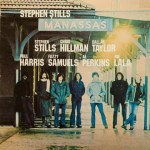
Manassas – A Classic Records Disaster

Hot Stamper Pressings of the Music of Stephen Stills Available Now

The Classic pressing was a disaster. Can you imagine adding the kind of grungy, gritty sound that Bernie’s mastering chain is known for (around these parts, anyway) to a recording with those problems already?

It was a match made in hell.

Back in the day when I was selling lots of Classic Heavy Vinyl, this was one of the titles I refused to have anything to do with. This and Stephen Stills’ first album — both were personal favorites of mine and both were awful on Classic Records.

Is it the worst version of the album ever made? Hard to imagine it would have much competition.

Lots of rave reviews for the two of them in the audiophile press at the time though. I guess nothing ever really changes, does it? Played a Sundazed record lately? Well, there you go. How are these people impressed with such bad sound?

Of course I know exactly how it is possible to be impressed by bad sound. I spent my first twenty years in audio being clueless. Why should I expect the audiophile of today to have figured things out in less time than it took me?

(more…)

Not as Good a TAS List Title as We Thought, Sorry!

Hot Stamper Pressings of Living Stereo Titles Available Now

We had a handful of copies of this famous TAS List title in the backroom, so we decided it was high time to get a shootout going. We pulled all the pressings of the music (both Billy the Kid and Rodeo) we had on hand on every label and proceeded to needle-drop them in preparation for a big Copland shootout.

Much to our chagrin, most of the copies of LSC 2195 we played were unacceptable. The sound, for the most part, was very much not to our liking. Our notes read:

  • Smeary — (more records with smeary sound can be found here),
  • Dry — (more records with dry sound can be found here),
  • Bright — (more records with bright sound can be found here),
  • Flat — (more records with flat sound can be found here),
  • Hi-Fi-ish — (more records with hi-fi-ish sound can be found here),

Those records weren’t cheap. That was a lot of money down the drain. Not only can’t we sell records that sound as bad as this Living Stereo — our customers simply would not buy them — but we would never even try. Unlike other record dealers, we actually know what our records sound like. We don’t care about the reputations of the records we sell. We only care about their sound.

Some of the records on the TAS List seem better suited to the old school audio systems of the 60s, 70s and 80s than the modern systems of today.

(more…)

The Classic Records Pressing of Finlandia Is Dreadful

More of the music of Jean Sibelius (1865-1957)

More of the music of Edvard Grieg (1843-1907)

Sonic Grade: F

Classic Records ruined this album. Their version is dramatically more smeared and low-rez than our good vintage pressings, with almost none of the sweetness, richness and ambience that the best RCA pressings have in such abundance.

[This turns out not to be true, as we discovered to our chagrin in 2014.]

In fact their pressing is just plain awful, like most of the classical recordings they remastered, and should be avoided at anything other than a nominal price.

Our current favorite pressing is this one on a budget Decca reissue. Go figure.

(more…)

L.A. Woman – Rhino Heavy Vinyl Reviewed

Hot Stamper Pressings of the Music of The Doors Available Now

The Rhino pressing we auditioned from the Doors Box Set was surprisingly good. It’s rich and smooth with an extended top end — tonally correct, in other words — and there’s lots of bass.

This is all to the good. For the thirty bucks you might pay for it you’re getting a very good record, assuming yours sounds like ours, something we should really not be assuming, but we do it because there is simply no other way to write about records other than to describe the sound of the ones we actually have played.

What it clearly lacks compared to the best originals is, first and foremost, vocal immediacy.

Jim Morrison seems to be singing through a veil, an effect which becomes more and more bothersome over time, as these kinds of frustrating shortcomings have a habit of doing.

A bit blurry, a bit smeary, somewhat lacking in air and space, on the plus side it has good energy and better bass than most of the copies we played. All in all we would probably give it a “B.” You could do a helluva lot worse.

(more…)

The Free Story – Another Dubby Compilation

Hot Stamper Pressings of British Blues Rock Albums Available Now

This is a Limited Edition Black Label Island Numbered Import 2 LP set.

The sound is passable at best. Unfortunately, like many of the compilations done over the years, this is a very dubby sounding album. It’s smearyveiled, and lacks space.

The good vintage pressings of the original albums just kill it. 

Not all compilation albums are bad. Here are some with the potential for very good sound.

(more…)

Chicago – What We Heard Circa 2008

More of the Music of Chicago

In 2008, we had a lot of trouble finding good sound on the copies of the first album that we had on hand, more than a dozen I’m sure.

Over the next five to ten years we managed to do a much better job of cleaning and playing the band’s debut, to the delight of our listening panel as well as our Hot Stamper fans.

This is the kind of album that most audiophiles would be sorely tempted to give up on. Who can blame them?

So Many Faults, So Little Time

The average copy of this album is an unmitigated DISASTER. The smeary brass alone is enough to drive anyone from the room.

To a list of its faults you can confidently add some or all of the following:

1) blobby, blurry, out of control bass;
2) opaque, veiled mids;
3) rolled off highs, or no highs, whichever the case may be, common to virtually every pressing you find;
4) plain old distortion; and, last but not least,
5) the kind of compressed, lifeless sound that manages to make this groundbreaking album boring — and that’s not easy to do.

The music ROCKS! It’s the crappy records Columbia pressed that suck.

(more…)

The First Classic Record We Ever Played – Thus Spake Zarathustra

Hot Stamper Pressings of Living Stereo Titles Available Now

Way back in 1994, long before we had anything like the system we do now, we were finding fault with the “Classic Records Sound.”

With each passing year — 28 and counting — we like that sound less.  Some Classic Records pressings may be on Harry’s TAS list — disgraceful but true — but that certainly has no bearing on whether or not they are very good records. 

I had a chance to play LSC 1806 (pictured above) not long ago and I was dumbfounded at how bright, shrill and aggressive it was.

I still remember playing my first Classic Records title, their first release, which would probably have been in 1994. The deep bass of the organ at the start of Also Sprach Zarathustra, the horns and the tympani blasting out from a dead silent background, put a lump in my throat. Had they actually managed to remaster these old recordings so well that the vintage pressings I was selling for such high prices would soon be worthless? I really do remember having that thought race through my mind.

But then the strings came in, shrieking and as bright as the worst Angel or DG pressing I’d ever heard. It was as if somebody had turned the treble control up on my preamp two or three clicks, into ear-bleeding territory. All my equipment at the time was vintage and tube, and even though my system erred on the dark side tonally, the first Classic release was clearly off the charts too bright and transistory, with none of the lovely texture and sheen that RCA was famous for in the early days of Living Stereo.

I knew right then that my vintage record business was safe.

Here is our review from the ’90s, written shortly after the release of Classic’s first three titles. (With minor additions and changes for clarity and context.)

Hall of Shame Pressings, Every One

I’m reminded of the nonsense I read in TAS and elsewhere in the mid-’90s regarding the reputed superiority of the Classic Records Living Stereo reissues. After playing their first three titles: 1806, 1817 and 2222 (if memory serves), I could find no resemblance between the reviews I read and the actual sound of the records I played. The sound was, in a word, awful.

To this day I consider them to be the single worst reissue series in history.


UPDATE 2025

Analogue Productions now holds that crown, surely. Still going strong, producing one crap pressing for the mid-fi collector market after another, there is simply no recording they won’t see fit to ruin.


When Harry Pearson (of all people! — this is the guy who started the Living Stereo craze by putting these forgotten old records on the TAS list in the first place) gave a rave review to LSC 1806, I had to stand up (in print anyway) and say that the emperor clearly had removed all his clothes, if he ever had any to begin with.

This got me kicked out of TAS by the way, as Harry does not take criticism well. I make a lot of enemies in this business with my commentary and reviews, but I see no way to avoid the fallout for calling a spade a spade.

Is anybody insane enough to stand up for LSC 1806 today? Considering that there is a die-hard contingent of people who still think Mobile Fidelity is the greatest label of all time, there may well be “audiophiles” with crude audio equipment or poorly developed critical listening skills, or both (probably both, as the two go hand in hand), that still find the sound of the shrill, screechy strings of the Classic pressing somehow pleasing to the ear. Hey, anything is possible.

As I’ve said again and again, the better a stereo gets, the more obvious the differences between good vintage pressings and most current reissues become. Modest front ends and mediocre playback systems can disguise these differences and mislead the amateur audiophile.

And the “professional” too. We’ve all had the experience of going back to play a record from years ago that we remember as being amazing, only to find it amazingly bad.

The Japanese Led Zeppelin series from the 90s comes immediately to mind. How could my system have been so dull that those bright pressings actually fooled me into thinking they sounded good all those years ago? I’ve done a few Mea Culpas over the years, and that’s one of the bigger ones.

Remember when Chesky Records were all the rage? Does anybody in his right mind play that shit anymore?

A short anecdote: A good customer called me up one night many years ago. He had just finished playing the Chesky pressing of Spain, and had pulled out his Shaded Dog original to compare. The sound of his Shaded Dog pressing was so much better that he took his Chesky and, with great satisfaction, ceremoniously dropped it in the trash can, noting, “Of course I could have sold it or traded it away, but nobody should have to listen to sound like that.”

Another anecdote: when Chesky first got started in the remastering business, a friend picked up their pressing of LSC 2150, Prokofiev’s Lt. Kije with Reiner. He played it for me when I came over to hear his system, and he and I were both shocked that his ’70s Red Seal pressing was better in every way.

We wanted to know: What kind of audiophile label can’t even go head to head with a cheap reissue put out twenty years after the initial release just to keep the bins stocked and satisfy the needs of the low-budget classical record buyer?

The answer: Plenty of them, and definitely Chesky. Playing most Classic Records classical titles is a painful experience these days. I do not recommend it to anyone with good equipment. If you love the Living Stereo sound and cannot afford vintage pressings, consider playing the CDs RCA remastered. The one I know well is clearly better than Classic’s and AP’s LPs.

(more…)

Saint-Saens / Symphony No. 3 – The Mehta Would Not Make the Grade Today

More of the music of Camille Saint-Saens (1835-1921)

Our favorite performance of this magnificent work is the Fremaux on EMI from 1973

This is an old review from 2011. I doubt we would have anything nice to say about this recording these days. Our system has come a long way since then, and these Mehta Londons have revealed themselves to be much more artificial sounding than we thought they were, or, more accurately, could tell they were back in 2011.

Unlike many audiophiles and the reviewers who write for them, we have never been enamored with the recordings Zubin Mehta made with the LA Philharmonic.

They almost always suffer from exactly the same problems that we heard on this album.

We had about five copies on hand in preparation for a shootout, some of which I had noted seemed to sound fine, but once we started listening more critically we heard the problems that eventually caused us to abandon the shootout and give away the stock to our good customers for free.

(more…)

Charlie Byrd on Crystal Clear – Dark, Unnatural and Definitely Not My Idea of Good Sound

More Jazz Recordings Featuring the Guitar

This Crystal Clear 45 RPM Direct-to-Disc LP is pressed on white vinyl. Of the couple of copies we played, this one had the best sound.

It had more clarity than the other copy, which sounded even more veiled and smeary than this one.

I sure never liked the sound of this record though.

It’s dark and unnatural to my ears.  It would be best to avoid it if you are looking for audiophile sound.

There are so many other, better Charlie Byrd recordings, why waste your time and money on this one? It’s yet another example of an “audiophile” record with practically nothing in the way of audiophile merit.

Which should not be too surprising. The bulk of the Crystal Clear records we’ve played had third-rate sound and pointless music.

Most of their direct to disc recordings were nothing but audiophile bullshit.

This Charlie Byrd title is the kind of crap we newbie audiophiles used to buy back in the ’70s — typically at stereo stores, or “audio salons” as they are often called now, the ones that are still in business anyway — before we had anything resembling a clue.

(more…)