distorted

Straight Up – Porky Not So Prime Cut

Hot Stamper Pressings of the Music of Badfinger Available Now

UPDATE 2026

This commentary has been updated multiple times, most recently in 2025.


British band, British pressing… right?

Nope. It’s just another mistaken idea.

We evaluated an original British pressing in our shootout, unbeknownst to me as it was playing of course. And guess where it finished: dead last.

The most thick, congested, crude, distorted, compressed sound of ALL the copies we played.

We love the work of Porky, Pecko, et al. in general, but once again this is a case where a British Band recorded in England sounds best on domestic vinyl. (McCartney’s first album on Apple is the same way.)

Just saw this today (11/29/2021)

On November 18, 2019, a fellow on Discogs who goes by the name of Dodgerman had this to say referencing the original UK pressing of Straight Up, SAPCOR 19:

So Happy, to have a first UK press, of this lost gem. Porky/Pecko

Not sure what those two commas are doing there. Pausing for emphasis? Sure, why not? This is a big deal.

Like many record collectors, he is happy to have a mediocre-at-best, dubby-sounding original pressing, poorly mastered by a famous mastering engineer, George Peckham, a man we know from extensive experience to be responsible for cutting some of the best sounding records we’ve ever played. He is truly one of the greats.

Is Dodgerman an audiophile? He might be, or at least he might choose to describe himself as one.

Many audiophiles employ this kind of mistaken audiophile thinking, believing that a British band’s albums must sound their best on British vinyl for some reason, possibly a cosmic one.

(more…)

L.A. Woman Is a Disaster on German Heavy Vinyl, Part One

Hot Stamper Pressings of the Music of The Doors Available Now

There was a German 180 gram pressing of L.A. Woman that was so bad, I called this commentary from 2005 The Audiophile Apocalypse. [Minor edits have been made since then.]

The fact that some audiophiles and audiophile reviewers appeared to like this pressing was a sign that, to me at least, The End Is Near, or May Be. There is no hope for audiophiles if they can’t tell a good record from a bad one, and this is clearly a bad one.

If this isn’t a good example of a pass/not-yet record, I don’t know what would be.

As noted at the top, this commentary was written a long time ago. Much of our thinking about the recordings of The Doors has evolved since then, having played scores of their records in shootouts and learned something new from practically each one. Click here to read more.

Dateline: January, 2005

When I first played it I thought there must be something wrong with my stereo. There was no deep bass. (This recording has amazing deep bass.) The sound was upper midrangey and distorted. There was no extreme top at all.

This surprised me, as I had heard that this was supposed to be a good record.

What I heard coming off the copy that I was playing was pure garbage. I was confused.

So I grabbed a couple of DCC Doors pressings. The first one I played was Waiting For The Sun, my favorite on DCC. Ahh, that’s more like it. Sweet, open, plenty of bass, extended highs, Steve Hoffman’s beautifully liquid midrange — everything I expected to hear on his version was there just exactly the way it should be.

So I knew it wasn’t my stereo. Then I pulled out the DCC LA Woman. What’s the difference you ask? Well, the DCC has a top end. Listen to the cymbals. They ring sweetly and correctly. You can hear that the tape hiss sounds correct, a sure sign that the top end is accurate.

The midrange is a bit recessed compared to the German pressing. Steve says he took out a half DB in the upper mids. There’s distortion on the vocals and he was trying to soften the effect. It might have been better to leave it flat, but either way is preferable to the boosted, aggressive, edgy upper midrange to be found on the German pressing.

The German LP sounds like something playing over the radio. AM, not FM. Part of the problem is that there’s no lower midrange on the German pressing to properly balance out the vocals. Perhaps it’s not on the tape they used. I’m guessing it probably isn’t.

But any mastering engineer worthy of the name should know how to fix a problem like that. Steve did. Apparently this German fellow did not.

And worst of all, there is no deep bass on this record AT ALL. The whole lower octave is missing. Now to be fair, the DCC LP has the same problem. There’s no lower bass on it either. That’s why I don’t recommend that you listen to LA Woman on vinyl. I don’t know of any copy that sounds right.


UPDATE 2025

This was true in 2005 because we had yet to do the work it takes to find the right copies, the ones with plenty of bass and everything else too. I think it took us another ten years to find the pressings with the right stampers. Scroll to the bottom of this listing to see our notes for the copy that won our last shootout in 2024.

(more…)

The Early London Pressings Of Schubert’s 9th Are Awful

Hot Stamper Classical and Orchestral Imports on Decca & London

There are plenty of Deccas and Londons that we’ve cleaned and played over the years that were disappointing, and some of them can be found here.

What was most striking about this shootout was how poorly the original London Bluebacks (CS 6061) fared when going head to head with the best vintage reissues. In fact, they were so obviously inferior I doubt we would have even needed another pressing to know that they could not possibly be considered Hot Stampers.

The two we had were crude, flat, full of harmonic distortion, and both had clearly restricted frequency extremes.

In other words, it just sounded like an old record, and not a very good one at that. The world is full of them.

But I remember liking the Blueback pressings I played ten or twenty years ago.

Did I have better copies, or was my system not capable of showing me the shortcomings I so clearly heard this time around? Since this is a question that cannot be answered with any certainty, we’ll have to leave it there.

Our favorite performance of the work is this one with Krips and the LSO, but on a much later reissue pressing produced by Decca in the 70s. Imagine that!

(more…)

How Good Are the Domestic Originals of City to City Cut by Artisan?

Hot Stamper Pressings of the Music of Gerry Rafferty Available Now

The original domestic pressings may be cut by Artisan, but they are brighter and dramatically more congested and distorted than the better UK imports, and should be avoided at any price.

They are clearly made from dubbed tapes, and there is no getting around what that does to the sound.

However, as good a cutting house as Artisan may be, it’s shocking how bad the sound is on most of the domestic copies of the album they mastered.

Atrocious, to be honest.

When it comes to stampers, labels, mastering credits, country of origin and the like, we make a point of rarely revealing any of this information on the site, for a number of good reasons we discuss in some depth here.

We will happily make an exception in this case. Stick with UK imports. Or buy a Hot Stamper pressing from us.

If you’re a Gerry Rafferty fan, or perhaps a fan of mid-70s British folk pop, this title, a personal favorite of mine since 1978, is surely a Must Own.

In our opinion, City to City is the man’s best sounding album, and probably the only Gerry Rafferty record you’ll ever need. Click on this link to see more titles we like to call one and done.

The sound, at least on some tracks, Baker Street amoung them, may be too heavily processed for some, making the album fairly difficult to reproduce, but the best sounding pressings — played at good, loud levels on big dynamic speakers in a large, heavily-treated room, as god intended — are a truly powerful listening experience.

1978 was a good year for music on vinyl — we have some excellent pressings of well-recorded albums available now for those who want the best and are willing to pay a premium price to get it.

(more…)

Why Is It So Hard for Mobile Fidelity to Get the Midrange Right?

Hot Stamper Pressings of the Music of Joni Mitchell Available Now

We recently auditioned the Mobile Fidelity One-Step pressing of Blue and made the notes regarding the sound you see below.

We focussed on the quality of their pressing’s vocal reproduction, for the simple reason that a Joni Mitchell album that gets the vocals wrong is a Joni Mitchell album that no music lover and certainly no audiophile  would ever want to play.

The fact that some audiophiles do want to play this record speaks poorly of their ability to reproduce it properly. Accurate playback will reveal the problems with Joni’s voice described in detail below. The post-it for side one is on the left, for side two on the right.

We try to be very specific about the shortcomings of these records, which is why we reproduce our notes whenever they are available.

Side One

  • Tonally not far off, a bit too stringy and flat. Not awful. Congested vocals at peaks, harsh. 1+

Side Two

  • Vocal peaks like “traveling, traveling, traveling…” or “California” get squashed and harsh, lacking the real dynamics, presence and space of the vocals. No grade. (Awful in other words.)

(more…)

Ravel, Falla – Bolero, Three Cornered Hat, etc. – Our Shootout Winner from 2011

Side two here has a SUPERB sounding Bolero, and an EVEN BETTER Alborado del Gracioso, possibly the best we have ever heard. Truly A Triple Plus sound.

As you probably know, Bolero is very hard to find on vinyl properly performed with audiophile quality sound. The sound of Bolero here is excellent: very natural, not harsh at the end where the trombones comes in, and not too compressed.

This is probably the biggest problem with most recordings of the work. Compression makes the quieter parts ravishingly open and clear, and positively ruins the climax with distortion caused by compressor overload.

A classic case of compression having sonic tradeoffs.

Alborado… has some of the best sound we have heard on London. It’s spacious, dynamic and clear. With an extended top end, the strings and horns sound harmonically correct. The orchestra from top to bottom is tonally correct as well.

Side One

The material on side one is not quite in the same league as that of side two, earning a grade of A+ for both works. The sound is a bit dry and lean, which means it is very detailed and clear but may not wear well unless your system is very rich and full in the lower mids and below.

My guess is that Old School Vintage Tube Equipment (or the modern equivalent thereof) may be just right for this side.

Either way, no matter what equipment you have, side two should be quite a thrill.

Side One

Weber / Berlioz – Invitation To The Waltz
Falla – The Three Cornered Hat

Side Two

Ravel – Bolero
Ravel – Alborado Del Gracioso

(more…)

Records Like This Give Decca’s Reissues a Bad Reputation

Hot Stamper Pressings of of the Music of Johannes Brahms Available Now

Apparently mastered with no regard to sound quality, this Decca SPA reissue is muddy, dull, congested and full of harmonic distortion in the louder passages.

How do we know that? We go out of our way to play every pressing we can get our hands on, even cheap reissues such as this. That’s our job.  We play everything to find the best sounding records so you don’t have to.

And some of these cheap reissues win shootouts!

But you can’t guess which ones will. You have to play them to find out.

And that’s how we know that some of them are good, some of them are mediocre, and some, like this one, are just awful.

Want to be assured of getting good sounding pressings of the greatest classical recordings of all time?

Step right up and order anything classical or orchestral you see here, Every one of them is guaranteed to please.

Our Pledge of Service to You, the Discriminating Audiophile 

We play mediocre-to-bad sounding pressings so that you don’t have to, a free service from your record-loving friends at Better Records.

(more…)

The Original Pressings of The Beatles Albums Are the Best Sounding, Right?

beatles help labelHot Stamper Pressings of the Music of The Beatles Available Now

No they are not. At least the ones on the label you see pictured are not (with the exceptions noted below).

We think it’s just another example of mistaken audiophile thinking.

Back in 2005 we compared the MFSL pressing of Help to a British Parlophone LP and were — mistakenly, as you may have already surmised — impressed by the MoFi. We wrote:

Mobile Fidelity did a GREAT JOB with Help!. Help! is a famously dull sounding record. I don’t know of a single original pressing that has the top end mastered properly. Mobile Fidelity restored the highs that are missing from most copies.

The source of the error in our commentary above is in this sentence, see if you can spot it:

I don’t know of a single original pressing that has the top end mastered properly.

Did you figure it out? If you’ve spent much time on our site of course you did.

Original pressing?

Is that the standard?

Why? Who said so? Where is it written?

(more…)

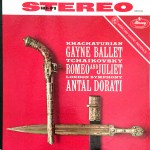
Tchaikovsky / Romeo & Juliet – On the Orange Label?

Hot Stamper Pressings of Classical Masterpieces Available Now

UPDATE 2025

This is a very old review from from way back in 2011 which we think is wildly off the mark.

I can’t remember when was the last time we played an Mercury Orange Label pressing that had sound competitive with the best earlier pressings.

Back in 2011 we liked reissue pressings of Golden Age recordings a lot more than we do now, so take the review below with a huge grain of salt. Only the advent of top quality cleaning equipment and much improved playback made it possible for us to hear the earlier pressings in all their glory.

A lot of records that I used to like because they were cleaner and brighter — later Red Seal Living Stereos, some OJC jazz, some reissues of rock — sounded much better when my system was darker and less revealing.

There are plenty of live and learn entries about these records. This one from 14+ years ago could (probably, the record is long gone and not around to be played) not be more wrong.

Our advice in 2025 would be to avoid any pressing on the Orange Mercury label.


We played an Orange label late reissue of this title a while back and had this to say about it:

DEMO QUALITY thanks to superb low distortion mastering. Another very exciting Mercury recording. Some of these Orange Label pressings, which are cut with much better cutting equipment than was available when the original album was released, can show you just how good the master tape really is.

This kind of sound is not easy to cut, and it appears that the amplifiers of the day just weren’t up to it. This copy gets rid of all the cutter-head distortion and coloration and allows you to hear what the Mercury engineers accomplished.

Dorati breathes fire into the famous Tchaikovsky Romeo and Juliet on side 2. Unfortunately, the mastering on this copy is not very good. The sound is bright and dry.

This work frequently is recorded with harsh sound; the orchestration must be difficult to capture on tape. But Mercury here seems to have managed a feat few others can claim. I’m guessing the earlier pressings have too much cutter distortion to get this one right; I don’t recall the other copies I’ve heard sounding this good.

(more…)

The Hit Can Be Rough on The Family That Plays Together

Hot Stamper Pressings of Psychedelic Rock Recordings Available Now

This is a review from our first shootout, 2013. I had been playing the album since 1968, but by 2013, a mere 45 years later, we had the cleaning technologies and the stereo system to finally get the album to sound right, to us anyway.

This is, for the millionith time, what progress in audio in all about. As your stereo improves, some records should get better, some should get worse. It’s the nature of the beast for those of us who constantly make improvements to our playback and critically listen to records all day.

We get asked about this classic album a lot, but until recently we were not convinced that we’d ever be able to find a great sounding copy. We built up a huge stack of copies and finally took the plunge; I am pleased to report that even though you’ll never hear a copy of this album that screams “Demo Disc”, you can certainly find ones that communicate the music well if you clean and play enough of ’em.

This is a record I grew up with and like to think I know well. I’m a big fan of the band. I have almost never heard this record sound good at all, which is why you’ve never seen a Hot copy on the site. We’ve finally managed to find a few good copies — it wasn’t easy.

The sound isn’t too dissimilar from what you get on a good Jefferson Airplane record. It’s crazy psychedelic ’60s music with a LOT going on, and I’m guessing it was pretty hard to get the raw power of this band onto tape.

(more…)