2-2024

Watch Out for 5c on Side One of The White Album

Hot Stamper Pressings of The White Album Available Now

Starting as early as 1984, some pressings of The White Album came with a decidely inferior side one, 5c.

Often it was mated to an equally problematic-sounding side two, -6. Although the -6 stamper can be good, when it has 5c on side one, it’s never as good as it should be.

Even though this copy had less-than-impressive sound on sides three and four — these sides qualify as minimally Hot Stamper pressings — there is nothing inherently wrong with the -2/-3 stamper numbers for those sides.

These later pressings just don’t sound as good as the earlier ones we like.

Not that we like the originals.

The few we’ve played were terrible. They tend to have -1 or -2 stampers for the first two sides, and their mastering tends to add a lot of problems to a recording that already has more than its share.

Want to find your own top quality copy?

Consider taking our moderately helpful advice regarding the pressings that tend to win our shootouts. The White Album sounds its best:

(more…)

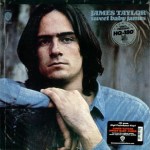
Can Anybody Tell Me What’s Wrong with Sweet Baby James on Warners-Rhino?

Hot Stamper Pressings of the Music of James Taylor Available Now

There is one obvious and somewhat bothersome fault with this new pressing of Sweet Baby James, an EQ issue. Anybody care to guess what it is? Send us an email if you think you know.

Hint: it’s the kind of thing that sticks out like a sore thumb, the kind of obvious EQ error I can’t ever recall hearing on an original pressing, as bad as many of those tend to be.

Our review for the Steve Hoffman remastered pressing follows.

This Warner Brothers 180g LP is the BEST SOUNDING Heavy Vinyl reissue to come our way in a long long time. Those of you who’ve been with us for a while know that that’s really not saying much, but it doesn’t make it any less true either, now does it? Let’s look at what it doesn’t do wrong first.

It doesn’t sound opaque, compressed, dry and just plain dead as a doornail like so many new reissues do. It doesn’t have the phony modern mastering sound we hate about the sound of the new Blue. (We seem to be pretty much alone in not liking that one, and we’re proud to say we still don’t like it.)

The new Sweet Baby James actually sounds like a — gulp — fairly decent original.

The amazing transparency and dynamic energy of the best originals will probably never be equalled by an audiophile pressing like this. (It hasn’t happened yet and we remain skeptical of the possibility.) Considering that this pressing is sure to beat most reissues, imports and such like, we have no problem heartily recommending it to our customers, especially at the price.

Hoffman and Gray can take pride in this Sweet Baby James.

It’s some of the best work I’ve heard from them to date. If more DCC and Heavy Vinyl reissues sounded like this, we wouldn’t be so critical of them. Unfortunately they don’t, and there are scores of pages of commentary on the site to back up that statement for those of you interested in the subject.

The real thing can’t be beat, but this gets you a lot closer to the sound of the real thing than most of the Heavy Vinyl we’ve heard. I would say it easily qualifies for a Heavy Vinyl Top Ten ranking. We don’t actually have a Heavy Vinyl Top Ten List, but if we ever make one up, expect to see this record on it.

What to Listen For

As a general rule, Sweet Baby James, like most Heavy Vinyl pressings, will fall short in some or all of the following areas when played head to head against the vintage pressings we offer:

Below you will find our reviews and commentaries for the hundreds of Heavy Vinyl pressings we’ve played over the years.

(more…)

Fire and Water – Hats Off to Roy Baker

Hot Stamper Pressings of British Blues Rock Albums Available Now

More Demo Discs for Big Speakers that Play at Loud Levels

Roy Baker engineered the album (later to be known as Roy Thomas Baker), the man responsible for the amazing recordings of The Cars, Devo, Queen, T-Rex and too many others to name. His work here is hard to fault.

This is a true Demo Disc. On our system it is anyway. Our stereo is all about playing records like this, and playing them at good loud levels as nature — and the artists — intended.

This is the sound of a real rock ‘n’ roll band — no gimmicks, no tricks — just guitar, bass, drums, and vocals. This album has stunning live-in-the-studio rock sound that must be heard to be believed. 

The recording sounds more alive than 99 out of 100 rock records we’ve played, and we’ve played the best sounding rock records ever made

It’s got exactly what you want from this brand of straight-ahead rock and roll: presence in the vocals; solid, note-like bass; big punchy drums, and the kind of live-in-the-studio energetic, clean and clear sound that Free practically invented.

(AC/DC is another band with that kind of live studio sound. With big speakers and the power to drive them YOU ARE THERE.)

Side one leads off with Fire and Water, and boy does it ever sound good. This track will show you exactly what we mean by live in the studio sound. You can just tell they are all playing this one live; it’s so relaxed and natural and REAL sounding.

One thing that really took us by surprise on the first track is how BIG and FAT the toms are on the best copies and how thin and small they are on the average copy. Play a few copies for yourself and just listen for the size and power of the toms. Most copies will leave you wanting more.

Want to find your own top quality copy?

Consider taking our moderately helpful advice concerning the pressings that tend to win our shootouts.

Fire and Water should sound best this way:

(more…)

Unfortunately, Some Truly Great Records Are Almost Always Noisy

More of the Music of Paul McCartney

Some records are consistently too noisy to keep in stock no matter how good they sound. This is one of them. Copies of McCartney’s first album can rarely be found on the site, but if there are any copies available, they are most likely in our section for records with condition issues, which contains about 30% of all the Hot Stamper pressings active on the site at any one time.

Hot Stampers are almost exclusively vintage vinyl pressings — “old records” you might say — and old records, even after a good cleaning, are rarely quiet. (We lay out the particulars of our grading system here.)

One of our customers noted that the Hot Stamper we sent him of McCartney’s first album was a bit noisier than he would have liked. We replied:

As for surface issues, we wish we could find them quiet, but that is simply not an option, especially considering how dynamic the recording is. In the listing we noted:

We’ve used every trick in the book to try to get copies of this album to play Mint Minus, but it’s not usually in the cards. Maybe I’m Amazed, in particular, seems to be noisy on nine copies out of ten. If you’re looking for a copy without any surface noise, you’re probably better off tracking down the DCC Gold CD, which is actually quite good.

But no CD is ever going to sound like the record we sent you, not now, not ever. And we feel like throwing many of the copies we play of this album out the window too!

This is where I simply can’t understand how the typical audiophile can make the tradeoff for flat, average sound with quiet vinyl — the sound of these Heavy Vinyl reissues that have sprouted up all over the place, each one worse than the last — and the wonderful, but slightly noisy, sound to be found on the best originals.

You can find more about the subject here.

Counterintuitive Thinking About Front Ends

The better your front end is, the less likely you are to have a problem with noisy vinyl, which is the opposite of what many audiophiles believe to be the case. Some of the cheaper tables, arms and carts seem to make the surface noise more objectionable, not less.

On the other hand, some pricey cartridges — the Benz line comes to mind — are consistently noisier than those by Dynavector, Lyra and others, in our experience anyway.

As long as vintage vinyl is the only vinyl with sound worth pursuing, as is surely the case these days and will be for the forseeable future, a quiet cartridge and a very high quality arm are essential to high quality playback.

Our Dynavector 17Dx gets down deep into the groove, where vintage used records have the least number of problems created by their previous owners.

Mated to the wonderful Triplanar arm you see above, all your records should play more quietly and correctly than you ever thought possible.

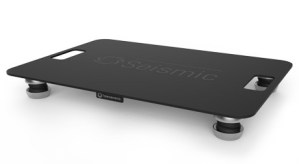
We are dealers for both, as well as the Seismic Platform. It too reduces distortion and noise in your system.

The 150 or more records listed here will often be noisy, but based on our experience, the noise will be less objectionable if you make better choices with your table, arm, cartridge and vibration control.

(more…)

Wish You Were Here – An Overview

Hot Stamper Pressings of the Music of Pink Floyd Available Now

We have added some moderately helpful title specific advice at the bottom of the listing for those of you want to find your own Hot Stamper pressing.

This is the perfect example of everything we look for in a recording here at Better Records: it’s dynamic, present, transparent, rich, full-bodied, super low-distortion, sweet — good copies of this record have exactly what we need to make us audiophiles forget what our stereos are doing and focus instead on what the musicians are doing.

For those of you who aren’t familiar with the album, Pink Floyd managed to record one of the most amazing sounding records in the history of rock music. The song Wish You Were Here starts out with radio noise and other sound effects, then suddenly an acoustic guitar appears, floating in the middle of your living room between the speakers, clear as a bell and as real as you have ever heard. It’s obviously an “effect,” but for us audiophiles it’s pure ear candy.   

Shine on You Crazy Diamond, Pts. 1-5

Right from the dynamic intro you can tell this is going to be a wild ride. David Gilmour’s haunting guitar line that comes cutting from out of the abyss should be warm with tons of room for his phasers to do their phasing.

After the band comes in and the vocals begin (listen for the man chuckling in the left channel) you should pay attention to the balance of the mix. Most copies tend to be very midrangy which can make the guitars aggressive and harsh, often times taking emphasis away from the vocals. The good copies have lots of transparency and allow everything to sit in their respectively places. This is probably most noticeable during the saxophone solo.

The tenor that starts off this section needs to be breathy, full-bodied, and sitting delicately in the center of your speakers. It does NOT need be be honky and hard sounding without any top extension. As the solo slowly crescendos, notice the guitar line spread across the soundstage that actually bookends the saxophone. The more dynamic copies really let you hear the intricacy and delicacy of his picking that foreshadows the time signature shift about to come.

When the time does change to 6/4, the saxophone player changes to alto, totally changing the sound of the solo! You can clearly hear on the better copies that he is further away from the mic than during the previous section, but if you listen closely, it sounds as though he is moving on and off axis. Whether this is part of his mic technique or him just dancin’ and groovin’ to the music, we may never know. I certainly hope for the latter.

Other Pressings

Most copies of the CBS Half-Speed lack deep bass, and for that matter bass in general.

They’re also consistently brighter. The upper mids and highs call attention to themselves at every turn. When you switch back to a good domestic copy or import, you might not notice as much detail, but everything will sound correct and balanced: less like a recording and more like music.

Phony highs cause listener fatigue for the same reason that bright CDs get tiresome.

Just listen to the sax break on side one. If your pressing is too bright that sax will tear your head off.

The Seventies – What a Decade!

Tubey Magical acoustic guitar reproduction is superb on the better copies of this recording. Simply phenomenal amounts of Tubey Magic can be heard on every strum, along with richness, body and harmonic coherency that have all but disappeared from modern recordings (and especially from modern remasterings).

Big Production Tubey Magical British Prog Rock just doesn’t get much better than Wish You Were Here.

A Big Speaker Record

Let’s face it, this is a big speaker recording. It requires a pair of speakers that can move air with authority below 250 cycles and play at loud levels. If you don’t own speakers that can do that, this record will never really sound the way it should.

It demands to be played loud. It simply cannot come to life the way the producers, engineers and artists involved intended if you play it at moderate levels.

Obsessed? You Better Believe It

Wish You Were Here is yet another record we admit to being obsessed with.

Currently we have identified about 150 that fit that description, so if you have some spare time, check them out.

(more…)

How We Test Equipment Like the Townshend Seismic Platform

Basic Audio Advice — These Are the Fundamentals of Good Sound

A few years back I discovered something wonderful about the Seismic Sink I was using under my turntable to control vibration.

In our experience, vibration control is one of the most important revolutionary advancements in audio of the last twenty years or so.

We sell the Seismic Sink and this is what I wrote to a customer who recently bought one:

Play your most complex test discs, the ones that are the hardest to get to sound right. Classical is the toughest test if you have some, but Pet Sounds is tough too. [I knew he was a fan and had a good copy of the album.]

Listen to one or two for a good while, at least 20-30 minutes, to know exactly what you are hearing on the tracks you know are the most difficult to get to sound right, the ones with the most problems.

Put the sink under the table. (You can also put it under your receiver, that works great too.)

Then play those tracks again.

Go back and forth a few times.

It should be pretty obvious what is going on.

Then read Robert Brook’s post.

Here is a very special tip.

The sound changes depending on how the seismic sink is “loaded.”

This means two things:

Where the weights are sitting on the sink.

    • For my integrated amp I have it all the way to the front of the sink. Sounds clearly better that way.
    • For the turntable, I have it weighted down with thin but heavy steel plates, about one quarter inch thick, about 4 inches by 8 inches. You can get them at Home Depot and similar places.

(more…)

Mel Torme / Swings Shubert Alley – Another Reissue that Kills the Original

More Mel Torme

Mel Torme Albums We’ve Reviewed

  • Outstanding Double Plus (A++) sound brings Torme’s 1961 release to life on this vintage Verve Stereo pressing
  • One of our favorite male vocal albums – exceptionally well recorded and really involving on a copy that sounds as good as this one does
  • Lovely richness and warmth, you may just find yourself using it as a Analog Demonstration Disc – Mel is in his prime and magnificent throughout
  • 5 stars: “Though the nominal concept for Swings Shubert Alley is Broadway standards, this last moment of pure Mel Tormé brilliance swings much too fast and hard for the concept to be anything but pure swing. The overall mood is unrestrained enthusiasm, and it makes for an excellent record.”
  • These are the top titles from 1961 we’ve reviewed to date. From an audiophile perspective, depending on your taste in music, most should be worthy of a place in your collection
  • We’ve recently compiled a list of records we think every audiophile should get to know better, along the lines of “the 1001 records you need to hear before you die,” but with the accent on the joy these amazing audiophile-quality recordings can bring to your life. Swings Shubert Alley is a good example of a record many audiophiles may not know well but would benefit from getting to know better

Mel Torme Swings Shubert Alley is one of our very favorite male vocal albums, and a great copy like this will show you why — the audiophile quality sound and swinging jazz vocal music are simply hard to beat.

This album from 1961 finds Mel in his prime. By the ’70s he was a shadow of himself, and more modern (read: less natural) recording technology wasn’t doing him any favors. None of those later albums means much to us here at Better Records.

His Bethlehem recordings can have outstanding sonics and music to match, but try to find a clean one. It’s been years since one came our way that wasn’t noisy or groove damaged. (more…)

Rubber Soul – Twin Track for Me But Not for Thee

Hot Stamper Pressings of the Music of The Beatles Available Now

How is it that none of the critics of “twin track stereo” — the two-track recording approach used on the first two albums, with the elements hard-panned left and right — has ever come clean about the obvious twin track stereo sound of Rubber Soul?

We used tracks four, five and six to test side two with, and in all three the vocals are hard-panned right with most of the instruments hard-panned left. Why is it wrong for Please Please Me to sound that way — the mono mix being the critic’s choice — but fine for Rubber Soul to be heard that way? 

Tons of energy on the drums in the left channel are a key test.

In the right channel the shakers and tambourines are way up in the mix.

The bass is a bit lean compared to the other tracks and tends to get a bit lost. If you can follow the bass throughout the song, that’s a good sign.

Balancing the bass and drums in the left channel with the vocals and percussion in the right channel is not easy to do, which of course is what makes it a great test.

(more…)

What makes you guys think you know it all?

More Straight Answers to Your Hot Stamper Questions

We definitely don’t know it all. In fact, nothing could be further from the truth.

If we knew it all, we wouldn’t need to play the piles and piles of records we listen to every day. We would already know which pressings should have the best sound and all that would be left to do would be to assign them a sonic grade and list them for sale on the website. This approach would have the added benefit of cutting our labor costs in half.

But that is not remotely the reality of the world of records for those of us who play them and listen to them critically.

It’s the reason we formalized the concept into a Better Records Record Collecting Axiom, in this case Axiom Number Two: No two records sound the same.

Learning Is Fun

We learn something new about records with practically every shootout we run. That, more than anything else, is what makes the kind of tedious, time-consuming, mentally-exhausting work we do fun. 

It’s how we’ve managed to find some of the best sounding pressings in the history of the world, like this one. (Maybe we should point out that Harry Pearson found it first, but it’s highly unlikely he heard one sound as good as our copy. For one thing, the best cleaning fluids hadn’t been invented yet.)

The stuff we were wrong about, and there has been plenty, you can find right here on the blog, often under the heading live and learn.

It should be said that most audiophiles, at least the ones I know well, do not have the patience to critically analyze ten different copies of the same record for hours on end. For our listening panel, it’s all in a day’s work.

I learned to critically listen for extended periods of time back in the early 80s. I got heavily into — obsessed with might be more accurate — tweaking my table setup, system components, wires, vibration controlling devices and anything else I could possibly imagine might have an effect on the sound of the system.

Listening for differences in interconnects and listening for differences in pressings calls upon precisely the same set of skills. If you can do it all day, if you actually like tweaking and analyzing the sound of your stereo for hours and hours, you will undoubtedly end up with a much better sounding system, as well as one helluva high quality collection of records (and some very finely honed listening skills).

If your stereo is working right and your ears are able to recognize good sound, then you surely know by now just how poor the sound quality is on the hundreds of records listed here. The fact that they were marketed to audiophiles would be funny if it weren’t such a tragic waste of money.

On the road to better sounding records? Here’s a good way to chart your progress.


Further Reading

(more…)

The Hunter Is Awful on Import Vinyl (and Any Other Way)

More of the Music of Jennifer Warnes

More Records I Could Happily Live Without

Sonic Grade: F

A hall of shame pressing on import vinyl from 1992. Many years ago we wrote:

This is a SUPER RARE Private Music German Import LP. The last two copies of this record listed on eBay went for over $600! 

All of which was true. We left out, however, what an awful record The Hunter is in every way.

If you like your heavily processed big production pop to sound as unnatural as possible, this is the album for you.

Not one instrument sounds remotely like it should, and that is surely an insult to audiophiles of every stripe.

The problem was that so many self-identified audiophiles did not seem bothered by the execrable sound, certainly not to the extent that we were.

Oh, but it’s on vinyl! That should solve all the problems with the recording.

Yes, the CD was bad, but the vinyl was no better. I had them both and couldn’t stand either.

But FBR Is Killer on the Right Pressings

The only album we like of Ms Warnes is Famous Blue Raincoat.

It is her masterpiece, a core collection record, and a clear case of one and done.

When you have a good copy of Famous Blue Raincoat, you have all the Jennifer Warnes we think you will ever need.


Further Reading