Some Stereo Systems Make It Difficult to Find Better Sounding Pressings

Hot Stamper Pressings on Decca & London Available Now

Many London and Decca pressings lack weight down low, resulting in an overall thinning of the sound and lower strings that get washed out.

On some sides of some copies of some titles the strings are dry, lacking Tubey Magic. This is decidedly not our sound, although it can easily be heard on many London pressings, the kind we’ve played by the hundreds over the years.

If you have a rich sounding cartridge, perhaps with that little dip in the upper midrange that so many moving coils have these days, you will not notice this tonality issue nearly as much as we do.

Our 17Dx is ruler flat and quite unforgiving in this regard. It makes our shootouts much easier, but brings out the flaws in all but the best pressings, exactly the job we require it to do.

Here are some other records that are good for testing string tone and texture.

If you have vintage tube equipment, or modern equipment that is trying to mimic the sound of vintage tubes, you never have to worry that the strings on your London orchestral recordings will sound too dry.

You haven’t solved the problem, obviously.  You’ve just made it much more difficult — impossible even — to hear what is really on your records.

Some audiophiles have gone down this road and may not even realize what road they are on, or where it leads. Assuming you want to make progress in this hobby, it is, from our point of view, a dead end.

If you want to find Better Records, you need equipment that can distinguish good records from bad ones.

Vintage tube equipment is good for many things, but helping you find the best sounding records is not one of them.

A rack full of equipment such as the one shown here — I suspect it is full of transistors but it really doesn’t matter whether it is or not — is very good at eliminating the subtleties and nuances that distinguish the best records from the much more common second- and third-rate pressings that often look identical to them.

If you have this kind of audio firepower, Heavy Vinyl pressings and Half-Speed mastered LPs don’t sound nearly as irritating as they do to those of us without the kind of filtering you get from the electronic overkill you see.

In my experience, this much hardware can’t help but create a barrier between you and the music you love.

It may be new and expensive, but the result is the kind of old school stereo sound I have been hearing all my life (and was perfectly happy with myself before the early 2000s.)
(more…)

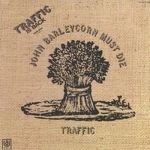
Listening in Depth to John Barleycorn Must Die

The toughest test on side two is the first track, Stranger to Himself.

Getting the voices right is practically impossible. If the voices are full, smooth, yet breathy and clear, you have that rare copy that actually gets the midrange right. Not many do.

Side One

Glad

The last portion of this track has some really interesting percussion and organ effects. Traffic were trying to break out of the standard pop song format by letting this song wander into psychedelic territory for a few minutes at the end. It’s now become my favorite part of the song.

The reason you want to pay close attention to this part is because it helps you to judge the transparency, immediacy, and top end extension for the whole side. It should be amazingly clear and open-sounding. On too many pressings, the percussion instruments are blurred and lost in the mix. On a Hot Stamper copy they’ll be right in front of you, allowing you to appreciate the interplay among the musicians as they contributed their various parts.

Freedom Rider

You’ll need lots of top end extension for this song to sound right. On many copies the double tracked flute solo in the middle of the song will be aggressive and irritating, but on a Hot Stamper pressing, the flutes will sound airy and breathy with a reasonably good sustain.

Empty Pages

The quality of the voice is what really sets the best copies apart. Winwood is much more present on the better copies. He’s recessed on most and that’s just not where he needs to be for the song to work musically. He needs to be right up front, surrounded by the air and ambience of the studio. The transparency found on the better copies will give you precisely that.

Side Two

Stranger to Himself

John Barleycorn

The acoustic guitars that open up this song are absolute perfection on the best copies — this is the sound of Tubey Magical analog at its best.

This is the real test for side two.

The acoustic guitars should sound rich and sweet. You’ll notice at the beginning of the song that they are a little dull. The last thing in the world you want to do, however, is to brighten them up, because when you do that, as some mastering engineers have in the past, the harmony vocals and the percussion and the tambourine become much too bright later on in the song.

You have to strike a balance between all the elements. That means Steve’s voice at the beginning needs to be a little reserved so that the harmony vocals later on will come in right.

(more…)

Lowell George – Thanks I’ll Eat It Here

More Little Feat

More Lowell George

  • A stunning copy and only the second to hit the site in years, here with Shootout Winning Triple Plus (A+++) sound or close to it from start to finish
  • We’re huge fans of this album and a pressing like this lets the natural quality of the recording shine through
  • We don’t imagine we’ll be tracking down too many copies of this so if you’re a fan, scoop this one up!
  • 4 1/2 stars: “Lowell’s style is so distinctive and his performances so soulful, it’s hard not to like this record if you’ve ever had a fondness for Little Feat.”

This kind of recording quality was abandoned decades ago, but there was a time — I’m old, I remember it — when engineers actually tried to produce recordings with this kind of rich, sweet, thoroughly analog sound. 1979, the year of this album’s release, is right at the tail end of it. Why do you think so much of our Hot Stamper output covers the decade that stretched from the late ’60s to the late ’70s? Only one reason: that’s where some of the best sound can be found. (It’s a bit like Willie Sutton’s famous answer to why he robbed banks, “because that’s where the money is.”)

Which is taking the long way round in saying that this recording has a healthy dose of analog Tubey Magic, in places maybe even a bit too much, as the sound can sometimes get too thick and overly rich, like a cake with too much frosting.

The better copies keep that wonderful analog smoothness and freedom from artificiality, adding to it the life and energy of classic rock and roll. Yes, you can have it all — rich analog sound that jumps out of the speakers! Just listen to those horns on “Honest Man” — that is the sound we are looking for on an album like this.

(more…)

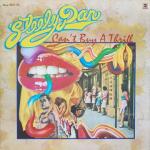
A Killer Can’t Buy a Thrill (and Some Lessons We Learned)

Hot Stamper Pressings of the Music of Steely Dan Available Now

During our shootouts, when we drop the needle on a copy and don’t hear that “Hot Stamper” sound, we toss that one and move on to the next. The difference between a truly Hot Stamper and most copies is so obvious that we rarely waste time on the pressings that clearly don’t have any real magic in their grooves.

Like we’ve said after some of our other Steely Dan Hot Stamper shootouts, you would never imagine how good this album can sound after playing the average copy, which is grainy, compressed and dead as the proverbial doornail. It’s positively criminal the way this well-recorded music sounds on the typical LP.

And how can you possibly be expected to appreciate the music when you can’t hear it right? The reason we audiophiles go through the trouble of owning and tweaking our temperamental equipment is we know how hard it is to appreciate good music through bad sound. Bad sound is a barrier to understanding and enjoyment, to us audiophiles anyway.

We Was Wrong About the Sound

Years ago – starting with our first shootout in 2007 for the album as a matter of fact – we had put this warning in our listings:

One thing to note: this isn’t Aja, Pretzel Logic or Gaucho (their three best sounding recordings). We doubt you’ll be using a copy of Can’t Buy A Thrill to demo your stereo.

We happily admit now that we got Can’t Buy a Thrill wrong. It’s actually a very good sounding record – rich, smooth, natural, with an especially unprocessed quality.

In that sense it is superior to most of their catalog; better than Countdown to Ecstasy, Katy Lied, Royal Scam and maybe even Gaucho (which is a bit too artificial and glossy for our tastes, although it might make owners of less revealing equipment or those who find that kind of sound more appealing positively swoon).

You could easily use Can’t Buy a Thrill to demo your stereo, depending on what you were trying to demonstrate. A realistic, solidly-weighted piano comes to mind — there are many songs with an exceptionally well recorded piano on the album.

Mistakes Were No Longer Made

We used to think it sounded flat, cardboardy, veiled and compressed. It’s actually none of those things on the best copies. The reason we didn’t find those problems during our most recent shootouts is that we must have improved our playback. Precisely how I don’t really know.

Maybe the main improvements happened just last week with the cartridge being dialed in better. Or maybe it was that in combination with the few new room tweaks. Or maybe those changes built upon other changes that had happened earlier; there’s really no way to know. 

(more…)

Strauss – Death and Transfiguration / Till Eulenspiegel / Karajan

More of the music of Richard Strauss (1864-1949)

  • This original Stereo London pressing of Karajan and the Vienna Phil’s performance of these classical pieces boasts stunning Nearly Triple Plus (A++ to A+++) sound from first note to last – just shy of our Shootout Winner
  • Our notes for the two top copies mention how special some stampers are: “these are so tubey with tons of room and space — the massive tympani really shine”
  • These are superb readings of the works, and we know of no others that can compete with the sound of this Decca recording
  • Clear, transparent, rich, big, spacious, tonally correct, with Tubey Magical textured strings, this record is doing practically everything right, and that makes it a very special pressing indeed
  • Some old record collectors (like me) say classical recording quality ain’t what it used to be – here’s all the proof anyone with two working ears and top quality audiophile equipment needs to make the case

(more…)

Donny Hathaway – Donny Hathaway Live

More Donny Hathaway

More Soul, Blues, and R&B

  • Amazing sound for this classic live album, with both sides earning KILLER Shootout Winning Triple Plus (A+++) grades or close to them – fairly quiet vinyl too
  • Hathaway and his band are on fire here playing for an enthusiastic small club audience – this is the best album the man ever made and a true Must Own
  • It takes us years to run across enough clean copies of this album to do a shootout, so don’t expect to see another one in audiophile playing condition on the site for a while
  • The relatively high price reflects the amount of work it takes us to find clean copies with the right stampers, as well as the frustration we feel when the records that come our way are just too noisy and groove damaged to be enjoyable
  • For those on a budget, buy the plain old Atlantic CD – it’s excellent
  • 4 1/2 stars: “Donny Hathaway’s 1972 Live album is one of the most glorious of his career… Live solidified Hathaway’s importance at the forefront of soul music.”
  • If you’re a Donny Hathaway fan, this is a Must Own Classic from 1972 that belongs in your collection.

This is an absolutely outstanding recording. The better copies capture the feeling of a live club like few recordings you’ve ever heard. The enthusiasm of the crowd, the honest, emotive performances, the superb musicianship — it’s all there on a Shootout Winning Hot Stamper copy like this.

I’ve been playing this record regularly since I first heard it back in the mid-90s. It never gets old. If I could take only one soul album to my desert island, it would be this one, no doubt about it.

(more…)

This Living Stereo from 1958 Didn’t Make the Grade

Hot Stamper Pressings of Living Stereo Records Available Now

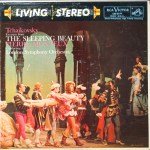
Our notes for this copy of LSC 2177 read “blary, bright, not nearly as good as Anserment’s recordings,” which are the ones we compared it to, both the complete ballet and the highlights.

In other words, it just sounded like an old record.

If you are looking for a top quality pressing with a performance to match, we recommend two:

  1. The complete ballet on three discs with Anserment conducting, and/or
  2. The highlights, on a single disc, again with Ansermet conducting.

This Shaded Dog might be passable on an old school audio system, but it was unpleasant when played on the high quality modern equipment we use.

There are quite a number of other vintage classical releases that we’ve run into over the years with similar shortcomings. For fans of vintage Living Stereo pressings, here are some to avoid.

(more…)

These Two Weather Report Albums Didn’t Make the Grade

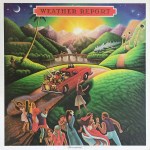
These are a couple of the Weather Report albums we’ve auditioned over the years and found to be less than impressive.

Without going into specifics, we’ll just say these albums suffer from weak music, weak sound, or both. They may have some appeal to fans of the band, but audiophiles looking for top quality sound and music — our stock in trade — are best advised to look elsewhere.

We play mediocre-to-bad sounding pressings so that you don’t have to, a free service from your record-loving friends at Better Records.

You can find these two in our hall of shame, along with others that — in our opinion — are best avoided by audiophiles looking for hi-fidelity sound.

(more…)

Chuck Mangione – Children of Sanchez

  • With roughly Nearly Triple Plus (A++ to A+++) grades on all FOUR sides, this copy is close to the BEST we have ever heard, right up there with our Shootout Winner (side three actually won the shootout)
  • These sides are doing practically everything right – they’re rich, clear, undistorted, open, spacious, and have depth and transparency to rival the best recordings you may have heard
  • We’ve called this album a Demo Disc for Bass and any Hot Stamper copy will show you why
  • “Chuck Mangione composed this music for a film soundtrack in 1978, but it quickly took on a life of its own when it was released as a two LP set, garnering a loyalty the film never enjoyed.”
  • “Mangione’s own performance on flügelhorn – sometimes hinting at Miles Davis’s Sketches of Spain transported to harsher terrain – is frequently riveting, a darkly expressive, soulful element that conveys undiluted passion, sorrow, and joy.”

(more…)

Sweetnighter Is a Must Own Album of Modern Jazz Fusion

Hot Stamper Pressings of the Music of Weather Report Available Now

We recently compiled a list of records we think every audiophile should get to know better, along the lines of “the 1001 records you need to hear before you die,” with the accent on the joy these amazing audiophile-quality recordings can bring to your life.

The list is purposely wide-ranging. Yes, it includes some well-known albums (Tumbleweed Connection, The Yes Album), but we’ve also gone out of our way to choose excellent titles from famous artists that are less well known (Atlantic Crossing, Kiln House, Dad Loves His Work).

Which simply means that you won’t find Every Picture Tells a Story or Rumours or Sweet Baby James on this list because masterpieces of that caliber should already be in your collection.

Many of these may not be to your taste, but they sure are to ours.

Out of the thousands of records we have auditioned and reviewed, here are a hundred or so that maybe are less well known but have stood the test of time for us. As such, we think they are more than deserving of a serious listen.


Sweetnighter checks off a number of boxes for us here at Better Records

More letters, reviews and commentaries for Sweetnighter.