El Amor Brujo – Brilliant Decca Remastering from 1967

Hot Stamper Pressings of Orchestral Spectaculars Available Now

UPDATE 2022

In 2012 we were knocked out by this Stereo Treasury Budget Reissue pressing.

We had the temerity to charge $175 for our Hot Stamper copy, a record we’d probably picked up locally for five or ten bucks. Nowadays of course it would go for even more than that, and still be worth every penny, assuming the buyer was looking for wonderful music with top quality sound regardless of the vinyl’s trade-in value, which in this case would probably be a dollar.

It is our strongly held belief that records are for playing and enjoying, not trading-in. Some records (like this one) are perfect for collectors, but their appeal is lost on us and has been since I soured on Mobile Fidelity records back in the 80s. It would take us another twenty years before we were done with other pressings that promised so much and delivered so little.

Decca released this title on their London label as a budget reissue, but that didn’t keep them from mastering it properly and pressing it on high quality vinyl.  The same cannot be said for RCA, which kept many of their golden age recordings in print on the RCA red label as well as others, but with sound that was most of the time clearly inferior to those earlier releases.


Our 2012 Review

Our current favorite El Amor Brujo for sound and performance is this Decca recording from 1967 with De Burgos conducting the New Philharmonia.

The best sound on this album is on side two, where El Retablo de Maese Pedro can be found.

(more…)

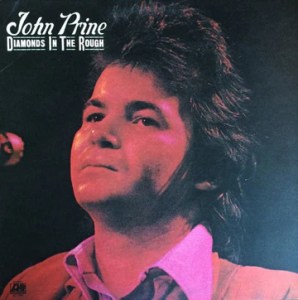
John Prine – Diamonds in the Rough

More Folk Rock 

More Singer-Songwriter Albums

  • An early Atlantic pressing of Prine’s sophomore release (one of only a handful to ever hit the site) with INCREDIBLE Shootout Winning Triple Plus (A+++) grades or close to them on both sides
  • The overall sound here is rich and full-bodied, with solid and present vocals, as well as exceptional clarity all around
  • Forget that critical listening stuff and just notice that these Hot Stamper copies are simply more relaxed, musical and involving than anything you’ve heard – guaranteed or your money back
  • 4 1/2 stars: “…Diamonds in the Rough demonstrated that Prine had an enduring talent that wasn’t exhausted by one great album.”

(more…)

The Best of Earth Wind & Fire – Hard and Honky Brass Is a Dealbreaker

More of the Music of Earth, Wind and Fire

As you can imagine, most copies of this album leave a lot to be desired. Most were, to one degree or another, dull, smeary, opaque, gritty or shrill.

Our Hot Stampers, on the other hand, depending on hot hot they are, will give you the sound you’re looking for. If you’re a fan of BIG HORNS, with jump-out-of-the-speakers presence, this is the album for you. Some of the best R&B-POP brass ever recorded can be found here — full-bodied, powerful, fast, dynamic and tonally correct.

Advice

Here is some specific advice on What to Listen For as you critically evaluate your copy of The Best of Earth Wind & Fire.

When the brass sounded the least bit squawky on a given copy, that was almost always a dealbreaker and out it went.

When the BIG, MULTI-TRACKED vocals get going they need to have plenty of space to expand into. They also need to be breathy and warm, with airy extension for the harmonies (and those crazy high notes that only Philip Bailey can sing). Proper tape hiss is a dead giveaway in this respect.

This advice will of course work for any Earth Wind & Fire record you happen to have multiple copies of.

Here are a couple of hundred other albums with specific advice on what to listen for.

Choruses Are Key

Three distinctive qualities of vintage analog recordings — richness, sweetness and freedom from artificiality — are most clearly heard on a Big Production Recording like this one in the loudest, densest, most climactic choruses of the songs.

We set the playback volume so that the loudest parts of the record are as huge and powerful as they can possibly become without crossing the line into distortion or congestion. On some records, Dark Side of the Moon comes instantly to mind, the guitar solos on Money are the loudest thing on the record.

(more…)

Joe Cocker – Joe Cocker!

More Joe Cocker

  • Consistently stronger material than his debut – did Cocker ever release an album with more good songs than this one?
  • Take a gander at this track listing: “Dear Landlord,” “Bird on the Wire,” “She Came in Through the Bathroom Window,” “Something,” “Delta Lady,” “Darling Be Home Soon” – and there’s plenty more where those came from
  • Records like these are getting awfully hard to find these days in audiophile playing condition, which explains why you so rarely see them on the site
  • 4 stars: “Cocker mixed elements of late-’60s English blues revival recordings (John Mayall, et al.) with the more contemporary sounds of soul and pop; a sound fused in no small part by producer and arranger Leon Russell, whose gumbo mix figures prominently on this eponymous release and the infamous Mad Dogs & Englishmen live set.”
  • This is a Must Own album from 1969, one that should have a place in any audiophile collection’s pop and rock section

This is a surprisingly good recording. Cocker and his band — with more than a little help from Leon Russell — run through a collection of songs from the likes of Bob Dylan, Leonard Cohen and the Beatles, and when you hear it on a White Hot Stamper copy it’s hard to deny the appeal of this timeless music.

This album is a ton of fun, with Cocker and his band putting their spin on some of the best songs of the era. You need energy, space and full, rich, Tubey Magical sound if this music is going to sound right, and on those counts these copies deliver. (more…)

Beck – Mutations

More Beck

More Psych Rock

  • Both sides of this superb pressing of Beck’s 1998 Grammy Award Winning release boast solid Double Plus (A++) grades
  • A shockingly well-recorded album that sounds surprisingly analog for 1998 – there’s real Tubey Magical Richness here
  • This is one of our favorite albums from the 90s – if you don’t already have a favorite Beck album, this one should fit the bill
  • 4 stars: “Beck is not only a startling songwriter — his best songs are simultaneously modern and timeless — he is a sharp record-maker, crafting albums that sound distinct and original…”

(more…)

Letter of the Week – “These records are all making clear that I need bigger speakers. Much bigger. Twice the size.”

Hot Stamper Pressings of the Music of Cat Stevens Available Now

One of our good customers had this to say about some Hot Stampers he purchased recently:

Goddamit Tom, these records are all making clear that I need bigger speakers. Much bigger. Twice the size. In a bigger room, with treatments. Your stuff makes the path forward very clear. They need the dynamics I’m sure you’re getting. I can hear what is missing.

I don’t know if that’s a good thing, since I was generally unaware of this previously, and can’t afford that level of upgrade for a while.

We’re talking a few years out to buy a house (we’re in an apartment on the corner of the building over a garage, so no neighbor noise problems but the room is only 15×14.5 with average height ceilings) and some big upgrades.

Dear Sir,

You and I seem to be on the same page. The vast majority of audiophiles never get to the higher levels because of all the compromises they make in their rooms, speakers, wires and everything else. They end up with a collection of crap heavy vinyl because their systems don’t let them hear what is really going on with the best vintage pressings.

Call it a breakthrough of a sort. The long road ahead is an expensive one, but I’ve always been of the belief that the money you spend on audio — if you do it right — rewards you a hundred times over in listening pleasure, and it does so for as long as you live, which I hope is many more decades, at least.

These are records that need to be played loud. Until you have a bigger room and bigger speakers, they are not going to be easy to get to sound right.

I ended up building a playback studio that is 17 by 22 with a 12 foot high ceiling, a concrete slab floor and six inch thick double drywall for walls, and dedicated electrical circuits, but it took a lot of work to get it to sound right.

Oddly enough, what made the biggest difference was getting the electricity right: computers and cleaning machines on isolation transformers, stuff unplugged, stuff left plugged in that made the sound better, lights hooked up to batteries rather than plugged in to the main circuits, etc.  Night and day better that way. (More on unplugging here.)

This work is not hard for me, I’ve been doing it for decades, but you have one advantage over everyone else: you have good sounding records to test with.

You have Hot Stampers! The records are correct. If they sound wrong, it’s not their fault. They are not the problem. (more…)

Our Playback System – And Why You Shouldn’t Care

Advice to Help You Make More Audio Progress

Below you will find a list of most of the equipment we have been using over the last twenty years or so to carry out our Hot Stamper pressing evaluations, or “shootouts” as we like to call them.

Naturally the reality of the 80/20 Rule comes into play here — 80% (probably more like 90 or 95%, truth be told) of the sound is what you do with your audio system, 20% (or 10 or 5%) of the sound is the result of the components you own.

We like to say it’s not about the audio you have, it’s about the audio you do: how you set up your system, what you’ve done to treat your room, how good your electricity is and all the rest of it.

  • Our VPI Aries (original, not the latest model) with 
  • Super Platter (no longer made) and
  • TTWeights Carbon Fiber Platter (a big upgrade, no longer made).
  • VPI Synchronous Drive System (as of 2016 now sitting on a Townshend Seismic Sink).
  • Triplanar tonearm.
  • Dynavector 17dx.
  • Aurios (no longer made), which sit on a
  • Townshend Seismic Sink (another big upgrade).
  • EAR 324p phono stage
  • We love our modified Legacy Focus speakers. Even more now that they have much improved high frequency extension courtesy of Townshend Super Tweeters.
  • Mix in extensive room treatments, aided inestimably by three pairs of Hallographs (as we like to say, there is practically no Hi-Fi without them), more than thirty years of experience and endless hours of experimentation and you have a system that can separate the winners from the losers like nobody’s business.
  • Exactly like nobody’s business, because nobody does it in this business but us. Having heard hundreds of systems over the years, it’s an open question as to whether anyone else could do what we do even if they tried.

(more…)

Avoid M Stampers and Imports If You Want the Best Sound on Tapestry

Hot Stamper Pressings of the Music of Carole King Available Now

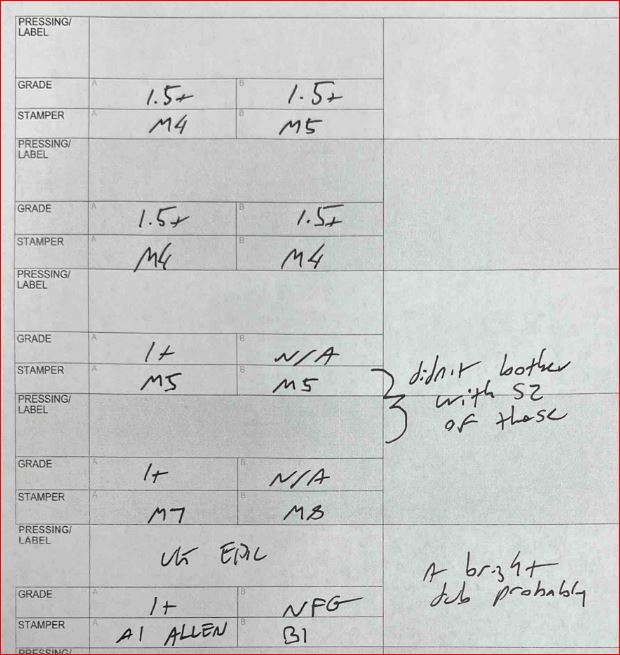
The domestic pressings with the stampers shown below, and others similar to them, have not done well in our shootouts for years now. If you own a copy with these stampers, or ones like them, the good news is that we can get you a much better sounding copy of Tapestry than you have ever heard. It won’t be cheap, but we can guarantee that it will be very, very good.

Stamper numbers are not the be-all and end-all in the world of records, a subject we discuss below, but after hearing too many copies with these stampers and decidedly mediocre sound, from now on we are going to focus our attention on the stampers that do well and leave copies with these markings sitting in the bins.

Note that the last listing is for an early UK import. I have no idea how that record got into the shootout. The chances of an import doing well up against Bernie Grundman’s brilliant mastering — from back in the good old days of the 60s, 70s and 80s when he was actually doing brilliant mastering work — is so close to zero it can’t be calculated.

Sometimes we take long shots, hoping to learn something new. In this case, we learned what we already know. Yes, there are still some audiophiles who buy imports of a record like this hoping to find better sound. I can’t imagine what kind of system it would take to hide the bright, dubby sound of the UK pressing we played, but judging from some of the foolishness I read on the Hoffman forum and others of its ilk, I know there must be plenty of them out there.

Monarch is responsible for the mediocre-at-best sound of the pressings with the stampers you see above. We tend to like Monarch pressings as a rule, but sometimes they mess up, and they messed up Tapestry compared to others who pressed the record.

We liked all the other copies with other stampers better than than these, which just goes to show you can never know how good it can get until it gets that good. That is what shootouts allow us to do.

Playing close to twenty copies of Tapestry in a shootout allows us to grade Tapestry on a scale, with the M stampers filling out most of the bottom and the other stampers — wouldn’t you like to know which ones! — occupying the middle and the top of the distribution. 

This is what the forum posters fail to understand. They think they have a Hot Stamper when what they actually have (maybe!) is a good sounding record. They don’t know how amazing the record can sound — so much more amazing than the one they own, probably — so they assume they have something good, maybe even the best.

They probably do not, but who really knows? The shootout would supply the data they need to support their conclusions, and since they could not be bothered to conduct one, they have no data to back up their opinions.

The “probably” you see in the above two sentences is there for a good reason. We make a point of being clear about what we can know and we cannot know, and we cannot know what a record sounds like until we play it.

This is obviously true for those of us who try to listen as critically as possible, but we also know that it is just as important to think about records the right way.

(more…)

Letter of the Week – “The WHS made the music sound more natural and more involving.”

More of the Music of Steely Dan

One of our good customers recently bought a Super Hot pressing of Aja, and wasn’t quite sure if he loved the music enough to keep it, so he wanted to try a White Hot Stamper pressing to see if that would win him over, the idea being that the better sound of the White Hot copy would communicate the music better. This is his story.

Dear Tom,

Probably my favorite thing to do in audio these days is putting on a record of yours for the first time. When the Aja White Hot Stamper came, I had to wait a few hours until after the kids were all tucked in. I listened with headphones for a change, and right away I could tell how clear and intricate this copy was. Knowing how my other copies sounded, I knew no shootout was going to be necessary.

I also really love doing mini-shootouts of my own. It’s a great way to really sink in to listening for a while. I don’t have 16 other copies of Aja, the way your other customer described, but I could still stack your WHS up against three other ABC pressings with identical-looking labels and nearly-identical deadwax, along with a MoFi and a Japanese pressing.

It proved to be the most beguiling shootout I’ve ever done. Each copy had merits, and among the ABC pressings, I was hearing clear similarities to the WHS. This is such delicate and full music, so obviously well-recorded, that I guess it’s hard for any pressing to completely muck it up.[1]

I’ve heard you say that a white hot stamper is a copy that just does everything right, and that was completely true in this case. The differences were subtler, but also more important, than they usually are in my mini-shootouts. The WHS made the music sound more natural and more involving. All those crazy details, present in the others if you really pay attention, came right up to the surface when the WHS played.

I really can’t claim it trounced the others, but I can certainly say that it had the best aspects of each of them, while in turn not being improved on in any aspect by any of the others. Sure, it would be fun to get to hear one of the sought-after pressings, like a Cisco, but with prices verging on hot stamper territory, it’s not like I’m going to go track that down. I’ll just content myself with your word that this one would beat one of those.[2] Since I’m not feeling anything lacking here, I have no reason to keep going.
After almost every purchase from you, I ask myself, “is it worth what I paid?” This was a funny one. I don’t love Steely Dan, even though all indications are that I should. I’ve always dug Aja, but not to the obsessive levels I know others to be (and that I am with other records). I was curious to own a WHS because I know it’s such a well-recorded album, I knew I’d love the sound, and as you suggested when I asked you about it, I wanted to see if a great-sounding copy could help me get into the music.

So far so good. I appreciate the virtuosity of the musicians, the touch they’ve got on their instruments, the clever wordplay (now that the vocals are so easy to make out), and the communication among them, like a great jazz session. Is it worth what I paid? Well, I’m not sending it back, even though I know you wouldn’t mind if I did. So, thanks for another gem in my collection.

Thank you,

Aaron

Aaron,

Thanks for your letter. A few thoughts:

[1] Yes, an early ABC pressing is unlikely to sound wrong or terrible in our experience. Of the hundred or more that we’ve played, a don’t remember one that did not at least sound good enough to sell, earning perhaps our lowest Hot Stamper grade.

You’ve recently upgraded your system quite a bit. If you keep going that way, in five or ten (or two!) years you may want to revisit the WHS copy relative to your other three ABC pressings (forget the others) and see what changes you have wrought, although I do not recommend you use Aja as a test disc, for the simple reason that extremely artificial recordings can often sound amazingly good, but when your system goes off the rails to some degree from a new tweak or change, they will sound different, but not necessarily better or worse, not more right or more wrong, and then you don’t know whether the change was a good one or a bad one.

Different means nothing. Things sound different all the time.

More right or more wrong should always be your test.

Test discs like the ones we recommend should make it easy to distinguish better from worse, right from wrong. Test discs that don’t are simply not good test discs and should not be used for that purpose.

[2] Don’t take my word for how bad the Cisco pressing is. We have letters from customers who say the same thing.

The Cisco is so bad we call it a pass/fail record.  We describe pass/fail records this way:

Some records are so wrong, or so lacking in qualities that are crucial to the sound — qualities typically found in abundance on the right vintage pressings — that the advocates for these records, reviewers and audiophiles alike, have clearly failed to judge them accurately.

Tea for the Tillerman on the new 45 may be substandard in almost every way, but it is not a Pass/Fail pressing. It lacks one thing above all others, Tubey Magic, so if your system has an abundance of that quality, the way many vintage tube systems do, the new pressing may be quite listenable and enjoyable. Those whose systems can play the record and not notice this important shortcoming are not exactly failing. Audiophiles of this persuasion most likely have a system that is heavily colored and not very revealing, but it is not a system that is hopeless.

(more…)

Robert Brook Reviews the ERC Pressing of My Favorite Things

One of our good customers has a blog which he calls

A GUIDE FOR THE DEDICATED ANALOG AUDIOPHILE

Here is Robert’s review of ERC’s mono release of My Favorite Things. MFT happens to be one of our favorite Coltrane records, but we understandably prefer the stereo pressings, which is almost always the case when an album has been recorded in stereo, as My Favorite Things was in 1960.

ELECTRIC RECORDING COMPANY’s Reissue of MY FAVORITE THINGS

We even tell you what to listen for to help you separate the best pressings from the merely good ones: the piano.

A solid, full-bodied, clear and powerful piano. As we focused on the sound of the instrument, we couldn’t help but notice how brilliant McCoy Tyner is. This may be John Coltrane’s album, but Tyner’s contribution is critically important to the success of My Favorite Things.

The engineering duties were handled by Tom Dowd (whose work you surely know well) and Phil Iehle, who happens to be the man who recorded some of Coltrane’s most iconic albums for Atlantic: Giant Steps (1960) and Coltrane Jazz (also in 1961).

Electric Recording Company

We’ve played a number of ERC releases.

In the video embedded in the Washington Post article “In Search of the Perfect Sound,” at some point you can hear me exclaim “This guy makes mud pies!” while listening to the ERC pressing of Quiet Kenny.  I am happy to stand behind that judgment, and I think Robert Brook would agree with me about that.

Here is our review of ERC’s Forever Changes.

Our commentary making the case that these albums are aimed primarily at collectors and speculators, not audiophiles, can be found here.

We have now played the ERC pressing of My Favorite Things for ourselves and will be reviewing it soon.

Other Opinions

As much as we dislike these records, there are some music lovers who are quite pleased with them. A certain JLysaker wrote the following on discogs in 2021 about the ERC records a friend of his gave him (!) (edited for brevity).

I own 4 lps from this label. All sound amazing… The [Way] Out West pressing, stereo, is probably the best sounding LP I own… I also had an AP edition of one of the albums and the ERC pressing was hands down more natural sounding and imaged with greater clarity, and not just to my ears but to that of another buddy there for a listen.

Was it $500 better? I really doubt sonic differences translate into clear dollar amounts, but I would understand someone saying: ‘I’ll stick with damn good.’ Then again, some albums are dear to people and they want to hear it in the best possible fashion, and that probably won’t be through an original pressing — too rare, condition issues, and so forth as pointed out below. So they pop for one of these, as I did with My Favorite Things, which isn’t even a well recorded album.

And I am glad I did as Coltrane’s soprano never sounded better to me, and I have been listening to that recording for decades. So, from experience, these pressings are special. But acquiring them involves serious opportunity costs for anyone not rolling in the dough. And I doubt I ever would have sprung for one if an evil friend hadn’t given me some.

But here I am, feeling neither scammed nor screwed, and quite certain that those releasing these records are qualified to do so.

Others in the comments section were not so positive. Then again, nobody gave them the records and the price struck them as a bit high (median pricing for the album is currently $723.10).

We get similar complaints about our prices, but then again, we’re in the business of selling the best sounding pressings ever made, which is clearly not the case with ERC. They’re in the business of selling mud pies.

(more…)