Top Artists – Superrtramp

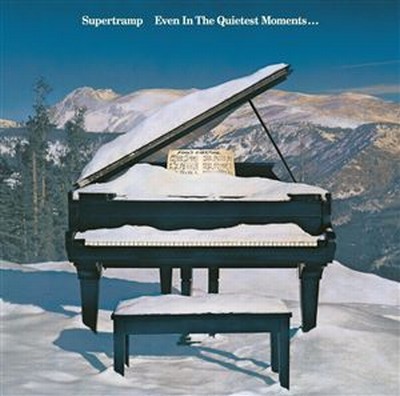
Supertramp – Even In The Quietest Moments (Domestic)

More of the Music of Supertramp

  • Boasting two seriously good Double Plus (A++) sides, we guarantee you’ve never heard Supertramp’s 1977 release sound this good – fairly quiet vinyl too
  • On side two, the recording quality of the solo piano at the start of the second track is nothing short of breathtaking
  • No piano on any Supertramp album sounds more powerful, more real or more present than the one on “From Now On”
  • The bottom end is big and punchy, the top is smooth and sweet, and the vocals are present and breathy
  • On a transparent copy such as this, the drums really punch through the dense mixes clearly, giving the music more life and energy
  • “…it’s a transitional album, bridging the gap between Crime of the Century and the forthcoming Breakfast in America… [it] has plenty of fine moments aside from ‘Give A Little Bit,’ including the music hall shuffle of ‘Loverboy,’ the Euro-artiness of ‘From Now On,’ and the ‘Fool on a Hill’ allusions on ‘Fool’s Overture.'”
  • If you’re a Supertramp fan like me, this art rock classic from 1977 belongs in your collection.

What To Listen For

The piano on “Give A Little Bit” can get buried in the dense mix. Side ones that are rich and tubey and smooth with a clear piano did very well in our shootout.

“Lover Boy” is a Demo Quality Track on the better copies. It can be huge, spacious and lively. Getting the strings to sound harmonically rich without sliding into shrillness may not be easy but some copies manage it. On the biggest, richest copies the breakdown at about 2:20 is a lot of fun.

On side two, the recording quality of the solo piano at the start of the second track is nothing short of breathtaking. No piano on any Supertramp album sounds as good.

(more…)

Even In The Quietest Moments and Your 1977 Ears – There’s No Going Back

supereveni_1506_1x

Hot Stamper Pressings of the Music of Supertramp Available Now

By 1977 I was a huge fan of the band, having first discovered their music on Crisis (1975) and Crime (1974), in which order I honestly can’t remember.

I played their albums all the time, especially Crisis.

The first Supertramp album I bought on audiophile vinyl would have been Crime of the Century by Mobile Fidelity, which came out in 1978.

Every right-thinking audiophile had that one — MoFi sold over a hundred thousand of them (along with a hundred thousand of Aja, Touch and one or two others).

And why not? The sound was killer on the systems of the day. Lots of slam down low (but not really that low, although it seemed plenty low at the time), lots of extra top up high, lots of phony detail, just what the old school stereos of the day, like mine, needed.

Crisis? What Crisis? followed in 1975. It was the Supertramp album that sent me over the top. I played that album relentlessly. Before long Art Rock was at the top of my list anytime I wanted to have an immersive musical experience, and that, for an obsessive audiophile like myself, meant almost every day.

Supertramp, Yes, Roxy Music, 10cc, Eno, Crack the Sky, ELO, Bowie – it’s all I wanted to listen to back then, and it encouraged me to keep upgrading my equipment whenever I had the money, although I admit to being completely clueless about all of that at the time. More on that subject here.

A year and a half later EITQM followed. It too became a staple of my musical diet. Man, I played that record till the grooves were worn smooth.

I thought the sound of my domestic pressing was killer at the time, too. Crisis was a demo disc at my house and this was right up there with it. Now the obvious question is, did I have a good sounding copy, or did my stereo not reveal to me the shortcomings of my LP? Or maybe my ears were not well enough trained to hear what was wrong.

Those of you who have been doing this for a long time know the answer: any or all of the above, probably all, and nobody can know just how much of each.

And there is no way to find out because you are not that person anymore.

Your 1977 Ears… and Mine

Even if you could recreate your old stereo and room, and find your original copy, there’s one thing you can’t do, and that’s listen to it with your 1977 ears.

Every time you play a record and listen to it critically, your ears get better at their job.

(more…)

Three Tracks Are Key on Supertramp’s Fifth Album

Hot Stamper Pressings of the Music of Supertramp Available Now

On the best copies of Even in the Quietest Moments the bottom end is big and punchy, the top end smooth and sweet, and the vocals are present and breathy.

If your copy sounds like that, you have the basic ingredients for a Hot Stamper pressing. Now all you need is half a dozen more cleaned copies and you are ready to do a shootout to find out just how good your copy may be.

On an exceptionally transparent copy the drums really punch through the dense mixes that Supertramp and Geoff Emerick favored for the album, giving the music more life and energy. (More of Geoff’s work can be found here.)

Also make sure that the piano sounds solid and clear with little to no smear, and that the sax is full and breathy. These are all critically important to getting the record to sound right, which of course is simply another way of saying getting the music to sound right.

In 2005 we wrote:

This is actually one of Supertramp’s best albums but it’s almost impossible to find a domestic copy that won’t tear your head off. The vast majority of them are unbelievably bright and grainy. I’ve been buying them lately because I found a copy or two that seemed to sound pretty good, but most of my money was wasted on aggressive, noisy vinyl.

Side one of this copy is no great shakes — it’s too bright — but side two is actually quite good. The highs are sweet and silky, there’s plenty of bass and the vocals are actually quite natural sounding. I can’t call this a Hot Stamper. The best way to look at it is to say it’s a Relatively Hot Stamper. The average copy is so bad that when a copy like this one sounds pretty good it really sticks out. We’re still in the hunt but haven’t got much to show for our efforts to date, I can tell you that.

The good news is that ten years later and more copies than we care to remember we think we’ve got EITQM’s ticket. We now know which stampers have the potential to sound good as well as the ones to avoid. Finding the right stampers (which are not the original ones for those of you who know what the original stampers for A&M records are) has been a positive boon.

Once we figured them out we were in a much better position to hear just how well recorded the album is. Now we know beyond all doubt that this recording — the first without Ken Scott producing and engineering for this iteration of the band — is of the highest quality, in league with the best. Until recently we would never have made such a bold statement. Now it’s nothing less than obvious.

Key Tracks for Critical Listening

Give a Little Bit

The piano can get buried in the dense mix. Side ones that are rich and tubey and smooth with a clear piano did very well in our shootout.

Lover Boy

A Demo Quality track on the best copies. It can be huge, spacious and lively.

Getting the strings to sound harmonically rich without sliding into shrillness is not easy but some copies manage it. The breakdown at about 2:20 is a lot of fun on the biggest, richest copies.

From Now On

On side two the recording quality of the solo piano at the start of this track is nothing short of breathtaking.

No piano on any Supertramp album sounds as good, and only the White Hot Stamper pressing will get it to sound its best.

It’s such a well-recorded piano that it will always sound at least good.

Shootouts are the only way to know when it actually sounds its best.

(more…)

Even in the Quietest Moments – P & M Stampers Let Us Down This Time

Hot Stamper Pressings of the Music of Supertramp Available Now

After discovering killer Hot Stampers for this forgotten classic, we feel the album can hold its own with any of Supertramp’s 70s releases, from Crime of the Century all the way through to Breakfast in America.

The UK-pressed White Hot Stamper pressings from our recent shootouts showed us some of the best Supertramp sound we have ever heard on any of their albums, which is saying a lot. Supertramp is one of the most well-recorded bands in the history of pop music. Geoff Emerick took over most of the recording duties after the band decided to work with a different engineer for this, their 1977 album.

KEN SCOTT recorded the two albums that came before this one, Crime and Crisis, and as has been well documented on this very site, he knocked both of them out of the park.

(more…)

Dreamer Tells You What You Need to Know About this MoFi

Hot Stamper Pressings of the Music of Supertramp Available Now

This commentary was written about 2000, when the Speakers Corner pressing had just come out. We liked it back then, but I doubt we would care much for it now.

Listen to the vocals at the end of Dreamer.

If they are too bright, the bells at the end of the song sound super-extended and harmonically clear and clean.

But at what price? Now the vocals are too bright. Which is more important, good vocals or good bells?

There has to be balance. This is something audiophiles — and audiophile labels, who should obviously know better — seem to have difficulty appreciating.

We used to get these MoFis in on a regular basis, and they usually sound as phony and wrong as can be. They’re the perfect example of a hyped-up audiophile record that appeals to people with lifeless stereos, the kind that need amped-up records to get them to come to life.

I’ve been telling people for years that the MoFi was junk, and that they should get rid of their copy and replace it with a tonally correct version, easily done since there is a very good sounding Speakers Corner 180g reissue currently in print which does not suffer from the ridiculously boosted top end and bloated bass that characterizes the typical MoFi COTC pressing.

Brighter and more detailed is rarely better. Most of the time it’s just brighter. Not many Half-Speed mastered audiophile records are dull. They’re bright because the audiophiles who bought them preferred that sound. I did too, a couple of decades ago [make that four decades ago].

Hopefully we’ve all learned our lesson by now, expensive and embarrassing as such lessons so often turn out to be.

If your system is dull, dull, deadly dull, the way many of our older systems tended to be, this record has the hyped-up sound to bring it to life in a hurry.

There are scores of commentaries on the site about the huge improvements in audio available to the discerning (and well-healed) audiophile. It’s the reason Hot Stampers can and do sound dramatically better than their Heavy Vinyl or audiophile counterparts: because your stereo is good enough to show you the difference.

(more…)

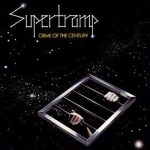
Supertramp – Crime of the Century

More of the Music of Supertramp

  • Crime of the Century is back after a five month hiatus, here INSANELY GOOD Shootout Winning Triple Plus (A+++) sound on both sides of this vintage British pressing – fairly quiet vinyl too
  • This copy sold directly to one of our best customers for the highest price we’ve ever charged – $1000
  • Having played it and heard the album sound better than any other copy ever has, we think he got his money’s worth and then some
  • Ken Scott engineered this one to have Cinerama-sized height, width and depth to rival the best rock albums you’ve ever heard
  • Clearly their magnum opus, a great leap forward and a permanent member of our Rock & Pop Top 100 Album List
  • “The tuneful, tightly played songs, pristine clarity of sound, and myriad imaginative sound effects, helped create an album that Sounds magazine likened to ‘Genesis, The Beach Boys…a smattering of [Pink] Floyd.'”

This is engineer Ken Scott‘s (and the band’s) masterpiece, but the average copy sure can’t get your blood pumping the way this one will. We’ve long recognized that Crime of the Century is a true Demo Disc in the world of rock recordings; a member of our Rock & Pop Top 100 list right from the get go.

When you hear the guitars come jumping out of your speakers on “School” or “Bloody Well Right,” you can be sure that you’re playing a very special pressing of a very special recording indeed. (Yes, you need both. That’s why we’re here.)

(more…)

Crime of the Century Is Ken Scott’s Producing / Engineering Masterpiece

Hot Stamper Pressings of the Music of Supertramp Available Now

The review for the WHS copy here is well over ten years old, so take it with a very large grain of salt.

Back in those days we still had not found the right British stampers for Crime of the Century, which turned out to have numbers that we thought would not be competitive with the earlier stampers.

It turns out that our foolish bias against the later stampers was nothing more than an embarrassing case of mistaken audiophile thinking.

Up until 2020, the right domestic pressings could still win shootouts.

Now we believe the Brits have the potential for the best sound. A recent example that went for big bucks. All it takes is for the right domestic pressing to win a shootout and we will be back to saying what is probably the best way to think about the album — both domestics and imports can sound amazingly good. It all comes down to the copies you have on hand, how you clean them and how well you can play them.

Our review from about ten years ago follows:


Amazing White Hot Stampers for the greatest Ken Scott production in history. This is his (and the band’s) Masterpiece, and now we have a pressing that allows us to revel in the glory that is Crime of the Century! 

Case in point: The vocals here sound amazing — natural and correct with lots of texture. Even the best MoFi copies are going to sound a bit phony when played against a killer copy such as this. Of course it’s a high-definition, high-resolution sound cut with super low distortion; it has to be to sound this good. Folks, this is the copy that lets you appreciate every last detail of the recording without hitting you over the head with “sonic effects”. It’s musical in a way that no audiophile pressing ever seems to be.

And of course the bass is awesome. Loud levels and big woofers will have your house quaking. Add to that the kind of ENERGY that the best pressings have in their grooves and you have an album that is guaranteed to bring the average audiophile system to its knees, begging for mercy. This is The Audio Challenge before you. If you don’t have a system designed to play records with this kind of SONIC POWER, steer clear of Crime of the Century. It wants to rock your world, and that’s exactly what Hot Stamper pressings like this one are here to do.

It’s ALIVE! It has BIG, PUNCHY sound that will fill up your living room and then some. It’s exceptionally transparent with superb clarity and lots of extension on the top end.

The typical Brit copy is dull, and that quality just takes all the magic out of the recording. The three dimensional space and clarity of the recording rely heavily on the quality of the top end.

The MoFi, on the best copies, shows you what is missing from the typical Brit, domestic or other import LP. This is what impressed me back in the 70s when I bought my MoFi. It was only years later that I realized what was missing and what was wrong.

Last time around the best copies were British. That was not the case this time except on side two, where one British copy was competitive, but not better than, our best domestic pressing.

Side One

White Hot A Triple Plus Sound! BIG and BOLD like crazy. When track one finishes you will ask yourself, as we did, “how can it get any better?”

The answer will come quickly enough. Track two has a bit of edge to the vocals in some places, but with MONSTROUS size and energy, and prodigious bass power, we still had to call it A+++. It’s not perfect but it is so amazing that picking nits simply misses the point. This side is ALIVE.

Side Two

Side two gets rid of any edge problems in the vocals — the sound is exceptionally full and rich, with HUGE and solid drums like practically none you have ever heard. (Ken Scott can record toms like nobody else in the studio. If you have the system to play it, this album is all the proof you will ever need.)

Huge amounts of space, the MOST top end extension and the LEAST phony sound of any copy we played make this a side two that simply cannot be beat. One Brit copy was as good, albeit in different ways of course, but no copy was better.

Supertramp – Even In The Quietest Moments (UK)

More Supertramp

  • This original A&M import pressing was doing practically everything right, earning INCREDIBLE Shootout Winning Triple Plus (A+++) grades or close to them from start to finish
  • The bottom end is big and punchy, the top is smooth and sweet, and the vocals are present and breathy
  • On a transparent copy such as this, the drums really punch through the dense mixes clearly, giving the music more life and energy
  • “…it’s a transitional album, bridging the gap between Crime of the Century and the forthcoming Breakfast in America… [it] has plenty of fine moments aside from ‘Give A Little Bit,’ including the music hall shuffle of ‘Loverboy,’ the Euro-artiness of ‘From Now On,’ and the ‘Fool on a Hill’ allusions on ‘Fool’s Overture.'”
  • If you’re a Supertramp fan like me, this art rock classic from 1977 belongs in your collection

What To Listen For

The piano on “Give A Little Bit” can get buried in the dense mix. Side ones that are rich and tubey and smooth with a clear piano did very well in our shootout.

“Lover Boy” is a Demo Quality Track on the better copies. It can be huge, spacious and lively. Getting the strings to sound harmonically rich without sliding into shrillness may not be easy but some copies manage it. On the biggest, richest copies the breakdown at about 2:20 is a lot of fun.

On side two, the recording quality of the solo piano at the start of the second track is nothing short of breathtaking. No piano on any Supertramp album sounds as good.

(more…)

Letter of the Week – “The White Hot Stampers opened up a completely different listening experience.”

Hot Stamper Pressings of the Music of Supertramp Available Now

One of our good customers had this to say about some Hot Stampers he purchased recently:

Hey Tom,  

You don’t need any more adulation; you know I am a fan. I just had to send you a note to share an audio phenomena I am experiencing. I recently got Supertramp Breakfast In America 3+ / 3+ and now Zeppelin IV 2.5+ / 3+.

These were albums that were always average for me and I previously got copies just to have in the collection.

The White Hot Stampers, however, opened up a completely different listening experience. Holy smokes, these albums are really, really good; until I got the WHS’s I just could not hear them.

Probably, more accurately, lesser albums were harsh and not engaging. Once you hear copies like these anything less becomes unlistenable. These albums really rock, long live White Hot Stampers!

Mike H.

Loud Levels and Big Woofers Will Rock Your World on Crime of the Century

Hot Stamper Pressings of the Music of Supertramp Available Now

Yet another in the long list of recordings that really comes alive when you turn up your volume.

The bass on the best copies is AWESOME. Playing a Hot Stamper copy at loud levels with big woofers will have your house quaking. Add to that the kind of ENERGY that the better pressings have in their grooves and the result is an album guaranteed to bring most audiophile systems to their knees, begging for mercy. 

This is The Audio Challenge that awaits you. If you don’t have a system designed to play records with this kind of SONIC POWER, don’t expect to hear Crime of the Century the way the brilliant engineer Ken Scott and the boys in the band wanted you to. The album wants to rock your world, and that’s exactly what our Hot Stamper pressings are capable of doing.

With sound that stretches from wall to wall and floor to ceiling, this is a Big Speaker Rock Demo Disc with very few rivals in my experience, offering the dedicated audiophile the kind of sound I have been lusting after since I first got heavily into audio in the early- to mid-’70s.

The Mobile Fidelity Pressing Used to Be Impressive

The typical Brit copy is dull, and that quality just takes all the magic out of the recording.

The three dimensional space and clarity of the recording rely heavily on the quality of the top end.

The MoFi, on the best copies, shows you what is missing from the typical Brit, domestic or other import LP. This is what impressed me back in the ’70s when I bought my MoFi. It was only years later that I realized what was missing and what was wrong.

(more…)