Top Artists – Steely Dan & Donald Fagen Solos

A Killer Can’t Buy a Thrill (and Some Lessons We Learned)

Hot Stamper Pressings of the Music of Steely Dan Available Now

During our shootouts, when we drop the needle on a copy and don’t hear that “Hot Stamper” sound, we toss that one and move on to the next. The difference between a truly Hot Stamper and most copies is so obvious that we rarely waste time on the pressings that clearly don’t have any real magic in their grooves.

Like we’ve said after some of our other Steely Dan Hot Stamper shootouts, you would never imagine how good this album can sound after playing the average copy, which is grainy, compressed and dead as the proverbial doornail. It’s positively criminal the way this well-recorded music sounds on the typical LP.

And how can you possibly be expected to appreciate the music when you can’t hear it right? The reason we audiophiles go through the trouble of owning and tweaking our temperamental equipment is we know how hard it is to appreciate good music through bad sound. Bad sound is a barrier to understanding and enjoyment, to us audiophiles anyway.

We Was Wrong About the Sound

Years ago – starting with our first shootout in 2007 for the album as a matter of fact – we had put this warning in our listings:

One thing to note: this isn’t Aja, Pretzel Logic or Gaucho (their three best sounding recordings). We doubt you’ll be using a copy of Can’t Buy A Thrill to demo your stereo.

We happily admit now that we got Can’t Buy a Thrill wrong. It’s actually a very good sounding record – rich, smooth, natural, with an especially unprocessed quality.

In that sense it is superior to most of their catalog; better than Countdown to Ecstasy, Katy Lied, Royal Scam and maybe even Gaucho (which is a bit too artificial and glossy for our tastes, although it might make owners of less revealing equipment or those who find that kind of sound more appealing positively swoon).

You could easily use Can’t Buy a Thrill to demo your stereo, depending on what you were trying to demonstrate. A realistic, solidly-weighted piano comes to mind — there are many songs with an exceptionally well recorded piano on the album.

Mistakes Were No Longer Made

We used to think it sounded flat, cardboardy, veiled and compressed. It’s actually none of those things on the best copies. The reason we didn’t find those problems during our most recent shootouts is that we must have improved our playback. Precisely how I don’t really know.

Maybe the main improvements happened just last week with the cartridge being dialed in better. Or maybe it was that in combination with the few new room tweaks. Or maybe those changes built upon other changes that had happened earlier; there’s really no way to know. 

(more…)

Revisiting the Analog Vs. Digital Debate with Donald Fagen

Hot Stamper Pressings of the Music of Steely Dan Available Now

Many years ago we did a big shootout for this album. Afterwards we asked this question:

Do all the pressings of The Nightfly sound like CDs?

The average copy of this digitally recorded, mixed and mastered LP sounds just the way you would expect it to: like a CD.

It’s anemic, two-dimensional, opaque, thin, bright, harsh, with little extreme top and the kind of bass that’s all “note” with no real weight, solidity or harmonic structure. Sounds like a CD, right? (That’s the way many of my CDs sound, which is why I rarely listen to them these days.)

But what if I told you that the best copies of The Nightfly can actually sound like a real honest-to-goodness ANALOG recording, with practically none of the nasty shortcomings listed above? You may not believe it, but it’s true.

How do I know it’s true?

The same way I came to learn practically everything I believe about the sound of equipment and records. I heard it for myself. (Keeping in mind that I am sure to be wrong about some things. Not to worry. When I find out which things those are, I will post them in this section of the blog where they can join the other 175+ entries.)

I heard a copy sound so natural and correct that I would never have guessed it was digital. On my honor, that’s the truth. The best copies of The Nightfly can actually be shockingly analog.

Simply put, the question before the house is: Can this record sound analog? We’ll be taking the affirmative.

The problem with the typical copy of this record is gritty, grainy, grungy sound — not the kind that’s on the master tape, the kind that’s added during the mastering and pressing of the record. When that crap goes away, as it so clearly does on a copy we played recently, it lets you see just how good sounding this record can be. And that means really good sounding.

On most copies, the CD-like opacity and grunge would naturally be attributed to the digital recording process. That’s the conventional wisdom, so those with a small data sample (in most cases the size of that sample will be one) could be forgiven for reaching such a conclusion. Based on our findings it turns out to be false.

The bad pressings do indeed sound more like CDs. The best pressings do not.

If you like having your biases confirmed, then by all means, keep your digital-sounding copy and pretend you know why The Nightfly sounds bad on vinyl.

(more…)

These Two Recordings of Steely Dan Didn’t Make the Grade

More of the Music of Steely Dan

Our advice: Stick with the seven real albums that were released between 1972 and 1980. Each and every one of them is a brilliant work of art in its own way. For audiophiles, it just doesn’t get any better than Steely Dan.

Our Pledge of Service to You, the Discriminating Audiophile 

We play mediocre-to-bad sounding pressings so that you don’t have to, a free service from your record-loving friends at Better Records.

(more…)

Morph The Cat – Mastered by the Cats from DCC

More of the Music of Steely Dan

Yet another disastrous Heavy Vinyl release with godawful sound, and in this case, equally godawful music, a fitting entry for our audiophile hall of shame.

Hopelessly murky, muddy, opaque, ambience-free sound, and so artificial I honestly cannot make any sense of it.

This is someone’s idea of analog? It sure ain’t mine.

Is this music for robots? That would explain a lot. Audiophile robots, perhaps?

Why do audiophiles waste their money on crap like this?

(more…)

An Experiment Apparently Not Worth the Trouble

Hot Stamper Pressings of the Music of Steely Dan Available Now

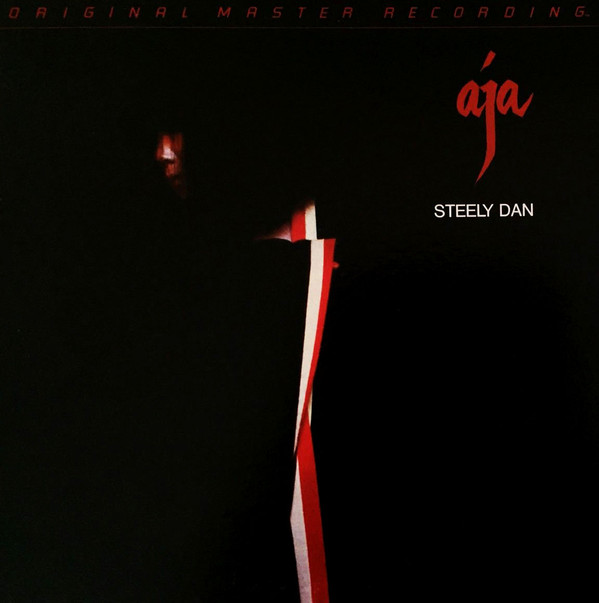
A couple of years ago, an interested party inquired about a Hot Stamper pressing of Aja he had seen on our site, specifically whether we were selling the AB first pressing or the AA reissue. You can find the discussion that ensued here.

As a kind of a postscript, we added:

By the way, [Joe] ended up not buying our Hot Stamper pressing. When you have to have an original, you have to have an original and that’s all there is to it.

If Joe was of a more scientific or skeptical bent — in other words, if he were more like me — he would have acquired an original, and then ordered our Hot Stamper in order to compare the two.

This is the subject I want to talk about today.

Audiophiles tend to subscribe to widely-held, conventional theories about what kinds of records are most likely to have the best sound. Outside of those of us who write for this blog, you will find very few audiophiles who believe that a substantial percentage of vintage reissues — not the modern ones, we’re talking about the ones from the 60s, 70s and even the 80s — are superior to their more original brethren.

Assuming Joe wanted the best sound — nobody who pays our prices could possibly be interested in anything else, right? — then he was simply making the point that since he wanted the best, and an original pressing absolutely had to be the best, nothing else would do, and that was that.

Joe could have done the experiment for himself easily enough. Had he asked us to send him our best AA pressing, we could have done that, and he could have compared that pressing to the original he no doubt owns, or, in the case that he had no original, acquiring one or more could have easily been arranged. They made them by the millions.

And that experiment might have resulted in an interesting learning experience, or not — who can say what the best pressing would have been on Joe’s stereo, with Joe’s ears doing the listening? It could have gone any which way, but something would have been gained in the act of sitting down to find out, for a fact, what pressing sounded better.

With all this in the back of my mind. just recently we did a shootout for Aja, and I checked the stampers for the two top copies.

Sure enough, the stampers found on the AB pressings won.

But those same stampers are found on the AA pressings for one of the titles, and one of the sides for the other title.

I could not even tell you for sure which pressings — AB or AA — actually won, because we rarely keep track of that information.

We only buy early pressings on the original labels because those are the only ones that sound good to us.

We don’t pay attention to the catalog number on the label because that doesn’t tell us anything of value. Playing the records is how we know what they sound like, and unless all the AB pressings beat all the AA pressings, or vice-versa, then that information is none of our concern.

Even if all the AB copies beat all the AA copies, we still have to buy, clean and play the AA copies in our shootouts because some of them are going to do well and can be offered to the customers who don’t want to spend the big bucks the top copies command.

We are generally opposed to having one-size-fits-all theories about the messy world of records, and you can find some of the commentaries we written about that subject here.

(more…)

If You Can’t Make a Good Record, Why Make Any Record At All?

Hot Stamper Pressings of the Music of Steely Dan Available Now

This Speakers Corner Heavy Vinyl pressing has to be one of the worst sounding versions of the album ever pressed.

You think the average ABC or MCA pressing is opaque, flat and lifeless, not to mention compromised at both ends of the frequency spectrum?

You ain’t heard nothin’ yet!

As bad as the typical copy of this album is, the Speakers Corner Heavy Vinyl is even worse, with not a single redeeming quality to its credit.

If this is what passes for an Audiophile Record these days, and it is, it’s just one more nail in the coffin for Heavy Vinyl.

But that’s not the half of it.

Go to Acoustic Sounds’ website and read all the positive customer reviews — they love it! Is there any heavy vinyl pressing on the planet that a sizable contingent of audiophiles won’t say something nice about, no matter how bad it sounds? I can’t think of one.

To sum up, this record is nothing less than an affront to analog itself. I guarantee you the CD is better, if you get a good one. I own four or five and the best of them has far more musical energy than this thick, dull, opaque and boring piece of audiophile analog trash.

It was probably made from a digital copy of the master, or more likely a digital copy of an analog dub of the master — three generations, that’s sure what it sounds like — but that’s no excuse.

If you can’t make a good record, don’t make any record at all. Shelve the project. The audiophile vinyl world is drowning in bad sounding pressings; we don’t need any more, thank you very much.

(more…)

With Steely Dan, Countdown to Ecstasy Is Where It All Started for Me

Hot Stamper Pressings of the Music of Steely Dan Available Now

Countdown to Ecstasy was the first Steely Dan album I ever bought. The Rolling Stone raved about it in a review — this would have been sometime in 1973 — so I figured I had better find out what they were on about and pick up a copy. (Two years later, Rolling Stone would later rave about a new release from a band I had literally never heard of, Roxy Music. I went right down and picked up a copy of the album, Siren, and that record turned out to be a life-changing experience as well.)

I thought it was pretty good at first, not much more than that really, but I kept playing it and playing it and it wasn’t long before it became one of my favorite albums and Steely Dan one of my favorite bands.

A few years later, the bulk of my listening would be made up of music by Steely Dan, Roxy Music, Supertramp, Bowie, Ambrosia and 10cc. (Yes, no Beatles yet, I hadn’t come back around to them by then. I had to wait for the MoFi Beatles Box from 1982 and what I thought was its superior sound in order to fall in love with their music all over again. Little did I know…)

Then Pretzel Logic was released. I was living in San Diego at the time and I used to go into my local Tower Records across from the Sports Arena as often as I could, just to see what might have come out that week.

There they were. They had boxes full of them, laid out on the floor in front of the cash registers. I grabbed a copy, sped home and threw it on the turntable. As you might imagine, it proceeded to blow my mind, as would happen with Katy Lied and The Royal Scam and Aja when they came out in each of the following years. [1]

Records Like These

And it’s records like these that make us want to improve our stereo systems. I used to play the song Pretzel Logic to demo my system, but I can assure you that there is no way in the world I was reproducing the information on that record even a tenth as well I can now.

This is precisely what is supposed to drive this hobby — the plain and simple desire to get the music you love to sound better so that you can enjoy it more.

If you’re an audiophile, then by definition you love good sound. Pretzel Logic is a very well recorded album and it can have WONDERFUL sound.

Finding a copy of the album that was mastered and pressed properly is the hard part.

Learning how to really get the LP clean and putting together the kind of stereo that can play such a complex recording are also difficult.

All three things combined require the expenditure of tens of thousands of dollars and the investment of many thousands of hours of time if the result is to be completely satisfying. Very few audiophiles will ever get there, but some will. We did, and you can too. Just follow our approach and your success is almost guaranteed.

Countdown to Ecstasy checks off a few key boxes for us:

(more…)

Can’t Buy Much of a Thrill – Now with Notes!

Hot Stamper Pressings of the Music of Steely Dan Available Now

At least some of the thrills are here, and for any record on Chad’s label, that is really saying something.

Sonic Grade: B+ to A-

A few comments for the UHQR have been added since this went up on 4-4-23, now that I’ve had a chance to see the notes in full. I’ve noted the additions in brackets and sectioned some off as well.

Word from the listening panel is in, and they say the new Bernie Grundman mastered UHQR is actually not bad! [Not good, but not bad.]

The tonality is much closer to correct than a lot of the Heavy Vinyl LPs we’ve played recently. Oddly enough, instead of the EQ being overly smooth, in the way that appears to be all the rage these days, the tonality instead errs on the side of somewhat thinner and brighter than ideal. (One could also use the term “correct.”)

This should not be especially surprising. Bernie Grundman has been remastering Heavy Vinyl records since the mid-’90s. Overly smooth titles that he cut are hard to find, on the hundreds of titles he did for Classic Records or anywhere else. The more of his recent work I play, the more I have come to see his disastrously dull Giant Steps as an outlier.

The instruments where these tonality issues are most easily recognized are two that we have written a great deal about on this blog: pianos and snare drums.

The snare sound on the Brothers in Arms that Chris Bellman cut at Bernie Grundman Mastering has the same problem as this new Can’t Buy a Thrill. (Review with specifics coming, sorry for the delay, it has only been two years and I’ve been busy with other things.)

The thin sounding piano on the Cisco pressing of Aja is likewise a common shortcoming we notice on many of the modern recuts we play.

With links to 29 titles to test for a correct piano sound, and 13 for the snare test, the critical listener should be able to find some records in his own collection that will shed light on the problems we heard on Chad’s UHQR.

If your system errs on the side of fat and dark, Chad’s repress has what you need to “fix” the sound of the album. Instead of a murky piano, now you have a clear one. Instead of a too-fat snare getting lost in the mix, now you have a clear snare that you can more easily separate out from the other instruments.


Added 4/5

Note that we did not play all four sides. We felt sides one and three were enough to get an idea of how thrilling this pressing was going to be. We don’t get paid to play Heavy Vinyl pressings. We play them to help audiophiles understand their strengths and weaknesses. We hope that some audiophiles will hear what we have described and perhaps consider that there is a better way. That other way can be found in the bins of their local record store or, for those with deeper pockets, on our site. Either way, settling for the kind of sound found on these modern reissues is the one choice no one should be making.

We played the following four songs, and heard the sonic qualities described below:

(more…)

Rose Darling’s Piano Favors Fast Electronics and Tight Bass

Hot Stamper Pressings of the Music of Steely Dan Available Now

As a huge Steely Dan fan starting with the second album, Countdown to Ecstasy, I rushed down to the local Tower Records to buy Katy Lied as soon I heard it had come out.

Of course I fell in love it with immediately. It has long been a personal favorite, the ultimate expression of the art of Steely Dan on record. I’ve played it many hundreds of times over the last 40+ 50+ years and still listen to it regularly. I cannot imagine ever tiring of it.

Testing with Rose Darling

The piano is tough to get right on this track. If the piano doesn’t sound the way it should, this track will be a mess.

It’s big and bold in the mix and should sound really solid and weighty. Thin or washed out and you are in trouble.

This track punishes equipment that is slow, or has blubbery bass response. Vintage tube equipment is not what the doctor ordered.

If your woofers are too small, or you do not have enough low end definition and weight to reproduce such a large and powerful piano, the part the piano plays in the arrangement will suffer and so will the song. (More on the kind of speakers you need to play this album and hundreds of others here.)

Just wrote this today, please to enjoy:

Throw Back the Little Ones

I’ve been listening to Waka/Jawaka quite a bit lately. On this song, Steely Dan incorporates an homage to Zappa’s unique woodwind and horn arrangements starting at about 1:48. Go to youtube and check it out when you have a minute.

Jimmie Haskell gets the credit for the arrangement but I’m pretty sure I know who inspired him.


Further Reading

Letter of the Week – “…if you want to pay $700 for Aja, go right ahead.” I took his advice, and I’m glad I did!

Hot Stamper Pressings of the Music of Steely Dan Available Now

One of our good customers recently watched a video on Steve Westman’s youtube channel of an interview Steve conducted with Michael Fremer. (I appeared with Steve back in October of 2022. You can find the interview here.)

This video upset my customer so much that he felt he needed to get a few things off his chest, which he did in the letter you can find right after my commentary below. He does not pull many punches.

I would like to comment on some of the points he makes, points which I hope will be of interest to our readers. That is what you see here at the top.

At the end of my comments I have reproduced the letter, so if you don’t care to see Fremer raked over the coals, please feel free to stop reading at the end of my comments. Mike Esposito, the guy who exposed MoFi’s duplicity, comes in for some criticism as well. (Justified in my opinion, because Mr. Esposito sure likes some bad sounding records. But why pick on him? Modern audiophile reviewers seem to like nothing but bad sounding records, the same way I did in 1982. Except it’s not 1982 anymore, and there is simply no excuse for having equipment that cannot help you tell a good sounding record from a bad one.)

Our customer, let’s call him Mr. A, had this to say in Point No. 2:

[Fremer] says old records in good shape still sound the best. [Which is true.] He says the playback gear back in the day could not even reveal how great those albums actually are. [Also true.] He says that there are significant variations from one stamper to another and you need to get the right stamper. [True again.] (In his view of the world, there’s no variations in pressings within the same stamper. Apart from this detail, he supports every point you make. He even says, “if you want to pay $700 for Aja, go right ahead.” I took his advice, and I’m glad I did!)

I don’t think he says any of these things nearly as often as they need to be said, or with any real conviction. They are footnotes, a kind of anodyne lip service. They’re the fine print that nobody reads. They’re boxes that get checked off so that we don’t have to talk about them anymore.

I don’t think his readers think any of the statements above are relevant to their ongoing pursuit of high-quality vinyl. They want to know how amazing the new pressings are so that they can be assured that buying the record they were going to buy anyway is clearly the right choice. There’s a name for this kind of biased thinking. [1]

Making generalizations about records is rarely of much use. The devil is in the details. Let’s take a look at what Fremer has written recently about originals.

In his review for the new Stand Up on Heavy Vinyl from Chad, he notes that it has great “transient clarity on top and bottom,” and the original has hyped-up mids and upper mids. This is because he is making the most obvious mistake any record collector could possibly make.

He thinks the original pressing is the standard against which the new pressing should be judged.

But this is out and out poppycock, the kind of conventional wisdom that new collectors might fall for, but only the most benighted veterans would still believe nowadays. We discuss this myth here and in hundreds of reviews on the blog.

There are currently about 150 listings for reissues that beat the originals, compared to 700 or so listings for records in which the early pressings — not necessarily first pressings, but the right early pressings — can be expected to win shootouts.

Stand Up is one of the titles we have found to be clearly superior on the right reissue. After playing dozens of copies over the course of about twenty years, something that no individual audiophile could be expected to have the wherewithal to pull off, we’ve heard our share of great Stand Ups and awful ones.

Fremer makes the common mistake of stopping with his one original. Thinking inside the box, he naturally gets it wrong. It’s a mistake that few record collectors don’t make. I should know, I was one of them.

A big part of the fun of record collecting is learning about them, a subject I have devoted all of my adult life to. There is precious little learning going on when you buy an original and simply assume you now know what the album really sounds like. This blog is practically dedicated to the proposition that nothing could be further from the truth.

(more…)