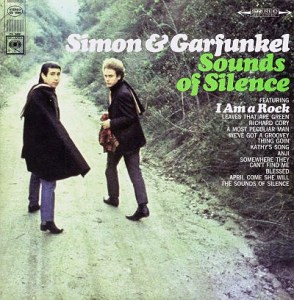
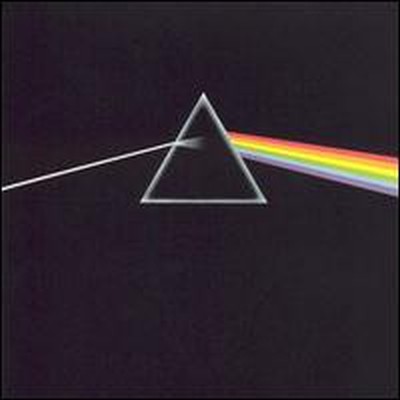
Top Artists – Paul Simon (with or without) Garfunkel

Listening in Depth to Still Crazy After All These Years

More of the Music of Paul Simon

Presenting another entry in our extensive listening in depth series with advice on what to listen for as you critically evaluate your copy of Still Crazy. Here are some albums currently on our site with similar Track by Track breakdowns.

As exceptionally well-produced, well-engineered Pop Albums from the ’70s, the very best copies can proudly hold their heads high. Wait a minute. Our last commentary noted what a mess most of the pressings of this album sound like, with so much spit and grain. Have we changed our minds? Well, yes and no, and as usual we make no excuses for having changed our minds. We call it progress.

Yes, most copies are still a mess, but No, some copies now sound far better than we ever thought possible.

As we noted in our previous commentary for the Hot Stamper Still Crazy (back in 2005!), when we first dropped the needle on side one of another copy of this record, we were shocked to hear how spitty, grainy and transistory sounding the album was. We could hardly believe that a mainstream pop album by Paul Simon could sound this bad. It was pure spitty DISTORTION with ZERO midrange magic. A CD would sound better. Even Graceland, a famously compressed, phony, digital sounding album wouldn’t sound this bad!

A bad copy you say? Maybe they don’t all sound bad on side one, but there sure are a lot of them that do. Two tracks in particular — in fact, the two biggest tracks on side one — have fairly bad sound on almost any copy you play: Still Crazy and 50 Ways…

The True Tests for Side One

What separates the mediocre-to-bad-sounding average copy from a Hot Stamper is how well mastered those two songs are. In other words, if you get those two tracks right — breathy vocals, sounding smooth and sweet, with the sibilance under control, supported by good solid bass — the whole side is going to be good, maybe even as good as it gets.

(more…)

Letter of the Week – “…makes my years of developing and investing in my stereo worthwhile.”

More of the Music of Simon and Garfunkel

More of the Music of Pink Floyd

One of our good customers had this to say about some Hot Stampers he purchased recently:

Hey Tom, 

I absolutely love my Hot Stamper of Parsley, Sage, Rosemary and Thyme, and of Dark Side of the Moon, and so many others that you have sold to me.

I find myself just playing the same side over and over, never tiring of the music. Which is something I never do with a CD….. no matter with a Reimyo CD player, or CEC TL-1X with Audiologic DAC, or even Acoustic Arts DAC, which actually sounds pretty good, but still fatiguing, and missing the immediacy and soul of a good LP — and in addition to sounding better, there is just something about having an original copy made back when the music was fresh and newly released, putting me back in my college years, and somehow linking up the past to the present.

The music is living there in those grooves, even better now because I can actually hear the music with a decent system. I don’t think many record players back in 1972- 1978 could begin to do these records justice.

Thanks so much for all the great music – makes my years of developing and investing in my stereo worthwhile.

Kurt B.

Kurt, you are welcome!

We love both these albums and we’re in agreement with you that the music is more alive in these grooves than it could ever be in the digits of a CD.

(more…)

Letter of the Week – “I did not know this was a well known example of a below-standard re-issue…”

More of the Music of Paul Simon

Reviews and Commentaries for the Music of Paul Simon (and Art Garfunkel)

A new customer writes:

Tom,

I read about your experience with the re-issue of Paul Simon’s Graceland.

I did not know this was a well known example of  a below-standard re-issue, but your experience reflects my own  a few years ago,  over here in the Netherlands. Being very disappointed about the sound quality, I have returned my copy to the shop and asked my money back.  As I told you, I have done this more often, but always because of excessive surface noise – that does not belong on a new record at a price of €30+ .  This was the first and only time I have done this because of sound quality – apparently it was that obvious.

Peter

Peter,

This is NOT a well known example of a below standard reissue. We are the only critics of this record that I know of. The audiophile reviewers loved it!

A famously clueless audiophile reviewer even visited the hack who remastered it, that hack being a Mr. Ryan Smith, so he could learn more about the man’s approach to mastering.

Perhaps he wants to stop writing reviews for bad audiophile records and learn how to make them. If so, he is studying at the feet of a master.


A Short History of the Remastered Audiophile LP

Older audiophile records, typically those made by Mobile Fidelity in the ’70s and ’80s, suffered from a common group of problems on practically every record they released:

boosted top, a bloated bottom, and a sucked-out midrange.

Nowadays that phony sound is no longer in vogue. A new, but equally phony sound has taken its place.

What seems to be in vogue these days, judging by the Heavy Vinyl Reissue pressings we’ve played over the last few years, is a very different sound, with a very different suite of shortcomings.

These newer records, with few exceptions, tend to be compressedthickdullopaque, veiled, recessed and lacking in ambience.

These are currently the hallmarks of the Heavy Vinyl LP. Whether made by Speakers Corner, DCC, AP or any other label, starting at some point in the mid-’90s, the sound these labels apparently preferred had an infuriating tonal balance problem we noted in practically every record we played — sound that was just too damn smooth.

(more…)

Bridge Over Troubled Water – A Price Must Be Paid

More of the Music of Simon and Garfunkel

Reviews and Commentaries for Bridge Over Troubled Water

One of the most interesting findings in this shootout was that no Red Label copy scored as high as the best 360 Label copies. The later labels can be very clean and clear, but ultimately they lack the midrange magic, warmth and sweetness of the best early pressings.

Since this recording has a problem in all those areas to start with, most red label copies suffer from a pronounced deficit of  Simon & Garfunkel magic, the kind of magic that is so wonderfully evident on their two previous outings: Parsley, Sage… and Bookends.

The Last of the Four Track Recordings

Why do the two previous albums have more magic?

They’re simpler productions, the kind that can be handled by the four track machine they were recorded on.

Bridge, on the other hand, is the boys’ Grand Musical Statement for All Time, with production and scope far exceeding their previous work. Like the Beatles with Abbey Road, they gave it their all and went out on a high note. (The Beatles planned it that way, while S and G fell victim to their ambition, which you can read about in the AMG review below.)

What a Masterpiece they achieved. Ten weeks at Number One on the charts. Depth and breadth of material only hinted at on their earlier efforts.

Who can argue with this as one of the most important achievements in popular music of the last fifty years? [Make that sixty.]

It’s on this short list for a reason.

Back Away From The Console

The sonic problems and promise of the multi-track approach can both be heard in one track: The Only Living Boy In New York. The song starts out simply, focusing on the duo’s lovely voices, with only minimal instrumentation. It sounds PHENOMENAL on the best pressings, and very good on even the typical copies. Halfway through the song, heavy-handed production kicks in, and the sound suffers significantly. You can’t fault the band for going big, but nor can you blame audiophiles for wishing they had kept it simple.

(more…)

The Graceland Remastering Disaster, Part 2

Hot Stamper Pressings of the Music of Paul Simon Available Now

Click on the link below to read the story behind an interview conducted by a well-known reviewer of an engineer who was tasked (by whom I wonder?) with remastering Graceland on Heavy Vinyl.

He apparently had never played an original Sterling-mastered copy of Graceland. Either that, or this  engineer thought the original “needed improvement,” the kind supplied by taking a hatchet to the sound of the original tape.

Analogplanet Visits Sterling Sound and Interviews Mastering Engineer Ryan K. Smith

The interviewer apparently does not know how bad the new version sounds, but we had no trouble recognizing its awfulness here at Better Records. As a public service, we soon set about describing what we heard when we put this remastered piece of junk to the test.

Up against a properly-mastered, properly-pressed early pressing, it earned a failing grade.

Is it the worst version of the album ever pressed on vinyl? Hard to imagine it would have much competition. 

The title of our review gives away the game:

The reviewer who interviewed the remastering engineer responsible for this and no doubt many other awful sounding records has never been able to tell a good record from a bad one, and he carries on that tradition with Graceland.

Ryan Smith, the hack who cut this album, has done quite a lot of work for Analogue Productions. We can’t say we’ve played many of his recuts, but the ones we have played are hopelessly bad, with the overly smooth sound so much in vogue today.

We played his recut of Scheherazade, and rather than just give it the failing grade it deserved, we explained how any audiophile could go about using its mistaken EQ in order to recognize what is wrong with it, and of course, others like it.

(Contrary to popular opinion, it is no better than Bernie Grundman’s bad sounding version from the 90s, the one he cut for Classic Records.)

One of my good customers read this rave review from this same reviewer for the Texas Hurricane Box Set and made the worst mistake any audiophile can make: he believed it.

“His overdriven Stratocaster sound is one that guitar aficionados never tire of hearing live or on record, especially when it’s well recorded. … Yet again, Chad Kassem sets high the box set reissue bar delivering a “must have” package for SRV fans, every bit the equal of the one Doors fans have come to cherish. …every one of these records betters the originals and by a considerable margin. It is not even close…You’ve never heard these albums sound like this. That is a 100 % guaranty. …this is an impeccably produced box set physically and especially sonically. It’s the best these albums have ever and probably will ever sound.” — Music = 9/11; Sound = 10/11 — Michael Fremer

Sure, he’s out $400, but on the bright side he’s now learned a lesson he is very unlikely to forget.

(more…)

Paul Simon – Self-Titled

More Paul Simon

  • Boasting seriously good Double Plus (A++) sound from start to finish, this copy of Simon’s sophomore album will be very hard to beat – fairly quiet vinyl too
  • Balanced, musical, present and full-bodied throughout – this pressing was a big step up from every other copy we played
  • Roy Halee handled the engineering and as usual he did a great job for the time – thankfully it was recorded in 1972, not 1982
  • A member of our Top 100 and rated 5 stars on AMG: “It was miles removed from the big, stately ballad style of Bridge Over Troubled Water and signaled that Simon was a versatile songwriter as well as an expressive singer with a much broader range of musical interests than he had previously demonstrated.”
  • Simon’s first solo is our pick for his best sounding album. Roughly 150 other listings for the Best Recording by an Artist or Group can be found here.

I don’t think any Paul Simon solo album was recorded better. Once you get to Graceland there is a world of difference between this album’s sound quality and that one’s. This record has the wonderful sound of analog in its grooves. Graceland sounds more like a CD (and the CD of Graceland really sounds like a CD.)

(more…)

Listening in Depth to Sounds of Silence

More of the Music of Simon and Garfunkel
Presenting another entry in our extensive Listening in Depth series with advice on what to listen for as you critically evaluate your copy of Sounds of Silence. Here are some albums currently on our site with similar Track by Track breakdowns.

Sounds of Silence is made from a second generation tape, as we explain below. Since we listen to all the records we sell, we like to point out such things so our customers know what they are getting.

This album is the proverbial tough nut to crack, a mix of folkie tracks and ambitious big production numbers, all recorded on a four track machine and bounced down maybe just a few too many times along the way. Some got handed a troublesome case of Top 40 EQ — hey, this is 1965, it’s the way they thought pop records should sound.

But many of the best tracks survived just fine. They can sound wonderful, it’s just that they rarely do. This is precisely where we come into the picture.

The key to good sounding pressings of this record is to look for the ones with a top end. Now of course you can’t see the top end when you buy the record. But most of the copies of this album you pick up are going to sound like cassettes. There won’t be much over 8K, and that means hard, harsh, transistor radio sound. You need extended highs to balance out the upper midrange.

(more…)

Bridge Over Troubled Water – Classic Records Reviewed

More of the Music of Simon and Garfunkel

Reviews and Commentaries for Bridge Over Troubled Water

Sonic Grade: C

What’s an easy way to recognize the better pressings?

They’re the ones with textured strings in the orchestral arrangements.

The string tone on the average copy is hard and steely.

The Classic 200 gram pressing suffers from a case of steely strings. When the strings are blasting away at the end of the title song, you want to be able to hear the texture without the strings sounding shrill and edgy.

This is no mean feat, for the record or the stereo.

Here are some of the other records we’ve discovered are good for testing string tone and texture.

(more…)

Paul Simon – One-Trick Pony

More Paul Simon

Singer Songwriter Albums

  • One-Trick Pony is back with STUNNING Shootout Winning Triple Plus (A+++) sound throughout – exceptionally quiet vinyl too
  • Notably richer and livelier than every other pressing we played, with plenty of Tubey Magic and good weight down low
  • We guarantee there is dramatically more richness, presence and energy on this copy than anything else around, and that’s especially true for whatever godawful Heavy Vinyl pressing is currently being foisted on an unsuspecting record buying public
  • “Tasty licks abound from the fretwork of Eric Gale, Hiram Bullock, and Hugh McCracken, and the rhythm section of Steve Gadd, Tony Levin, and Richard Tee is equally in the groove. This is the closest thing to a band album Simon ever made, and it contains some of his most rhythmic and energetic singing. . .”
  • If you’re a Paul Simon fan, a killer copy like this of his album from 1980 belongs in your collection

(more…)

The Right 360 Stereo Pressing of Wednesday Morning, 3 AM Is King

More of the Music of Simon and Garfunkel

We played a big stack of copies a while back and ran into all kinds of problems.

Some were dull, some were spitty, many were smeared, and far too many were gritty.

The later pressings didn’t solve any of these problems.

In fact, none of the Red Label copies we’ve ever played sounded good enough on either side to merit a Hot Stamper grade. If you want good sound for this album, 360 stereo pressings seem to be the only way to go. The mono pressings we played were painfully bad.

Stick with stereo on this album.

The Mono pressings — at least the ones we’ve played — aren’t worth anybody’s time (scratch that: any audiophile’s time).

(more…)