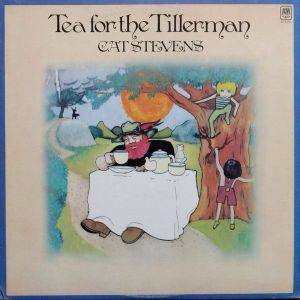
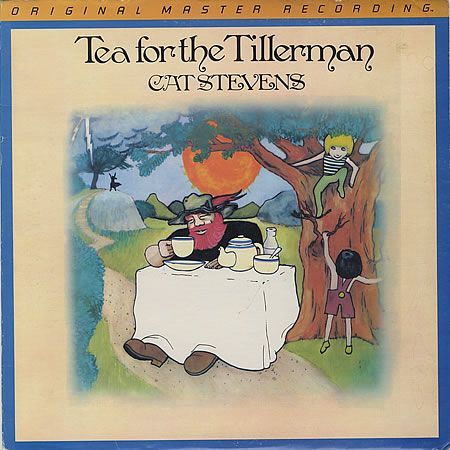
Hot Stamper Pressings of the Music of Cat Stevens Available Now
We here at Better Records would like to give a shout out to The Man, Harry Pearson, for putting one of the worst MoFis of all time on his so-called Super Disc list.
Many many years ago we wrote:
In case you don’t already know, one of the worst sounding, if not THE WORST SOUNDING VERSION OF ALL TIME, is the Mobile Fidelity Anadisq pressing that came out in the ’90s. If you own that record, you really owe it to yourself to pull it out and play it. It’s just a mess and it should sound like a mess, whether you have anything else to compare it to or not.
Further Reading
The most serious fault of the typical Half-Speed mastered LP is not incorrect tonality or poor bass definition, although you will have a hard time finding one that doesn’t suffer from both.
It’s dead as a doornail sound, plain and simple.
And most Heavy Vinyl pressings coming down the pike these days are as guilty of this sin as their audiophile forerunners from the 70s and 80s. The average Heavy Vinyl LP I throw on my turntable sounds like it’s playing in another room. What audiophile in his right mind could possibly find that quality appealing? But there are scores of companies turning out this crap; somebody must be buying it.
If you are still buying these modern pressings, take the advice of some of our customers and stop throwing your money away on Heavy Vinyl pressings and Half-Speed mastered records.
People have been known to ask us: How come you guys don’t like Half-Speed Mastered records?
That’s an easy one. We’ve played them by the hundreds over the years, and we’ve found that as our ability to reproduce the sound of these records improved (better equipment, table setup, tweaks, room treatments, electricity and the like), the gap between the better non-Half-Speed mastered pressings and the Half-Speeds got bigger and bigger, leaving the Half-Speeds further and further behind, in the dust you might say, again and again, with so few exceptions that they could easily be counted on the fingers of one hand.
We’ve been playing Half-Speed mastered records since I bought my first Mobile Fidelity in 1978 or 1979. That’s forty years of experience with the sonic characteristics of this mastering approach, an approach we have found to have consistent shortcomings.
These shortcomings have somehow eluded the devotees of these records, how, we cannot imagine.
(That’s really not true, of course. Fans of Half-Speed mastered records are as clueless as I was starting out. Many of the records I used to swear by were Half-Speeds.
(more…)