steveteafo-mofi

Can the Brightness Problem on the UHQR of Tea for the Tillerman Be Fixed?

Hot Stamper Pressings of the Music of Cat Stevens Available Now

Can adjusting the VTA for the heavier weight vinyl of the UHQR fix its tonality problems?

[This subject also came up in a discussion of the remastered pressings of Scheherzade.]

Probably not. VTA is all about balance.

Adjusting for all the elements in a recording involve tradeoffs. When all the elements sound close to their best, and none of them are “wrong,” the VTA is mostly right.

Try as you might, you cannot fix bad mastering by changing your VTA.

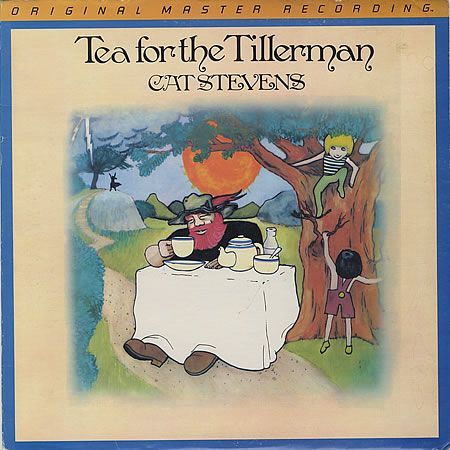
Tea for the Tillerman on UHQR

When I first got into the audiophile record business back in the 80s, I had a customer tell me how much he liked the UHQR of Tea for the Tillerman.

This was a record I was selling sealed for $25. And you could buy as many as you liked at that price!

I was paying $9 for them and could order them by the hundreds if I’d wanted to. Yes, I admit I had no shame.

I replied to this fellow that “the MoFi is awfully bright, don’t you think?” (My old Fulton system may have been darker than ideal, but no serious audio system can play a UHQR as bright as this one without someone noticing the paint has started to peel.)

His reply: “Oh no, you just adjust your VTA until the sound is tonally correct.”

(more…)

Traveling Back in Time with Cat Stevens on Mobile Fidelity

Hot Stamper Pressings of the Music of Cat Stevens Available Now

Our good customer Roger wrote us a letter years ago about his Tea for the Tillerman on Mobile Fidelity, in which he remarked, “Sometimes I wish I kept my old crappy stereo to see if I could now tell what it was that made these audiophile pressings so attractive then.”

It got me to thinking. Yes, that would be fun, and better yet, it could be done. There are actually plenty of those old school audio systems of the 60s and 70s still around. Just look at what many of the forum posters — god bless ’em — are running. They’ve got some awesome ’70s Japanese turntables, some Monster Cable and some vintage tube gear and speakers designed in the ’50s.

With this stuff you could virtually travel back in time, in effect erasing all the audio progress made possible by the new technologies adopted by some of us over the last 30 years or so.

Then you could hear your Mobile Fidelity Tea for the Tillerman sound the way it used to when you could actually stand to be in the same room with it.

My question to Roger was “What on earth were we hearing that made us want to play these awful half-speed mastered records? What was our stereo doing that made these awful records sound good to us at the time?”

In Search of a Bad Stereo

I know how you can find out. You go to someone’s house who has a large collection of audiophile pressings and have him play you some of them. Chances are that his stereo will do pretty much what your old stereo and my old stereo used to do — be so wrong that really wrong records actually start to sound right! It seems crazy but it just might be true.

Think about it. If your stereo has no real top end extension, then a boosted top end like the kind found on practically every record MoFi ever made is a positive boon.

Down low, if you don’t have good bass reproduction, the bad bass that pretty much all half-speeds evince won’t bother you, it’ll sound bad the way the bass on all your records sounds: bad. And the boosted bass you get on so many MoFi pressings works to your benefit too.

How about those sparkling guitars? For systems that are incredibly opaque and low-resolution, the kind we all used to have, the kind that sound like we added three or four grilles to the front of the speaker, the MoFi guitars actually might start to cut through the veils and may sound — gulp! — right.

(more…)

Cat Stevens and His Sparkling Acoustic Guitars?

More of the Music of Cat Stevens

In the commentary for America’s first album we noted that:

The guitars on this record are a true test of stereo fidelity. … most of the pressings of this record do not get the guitars to sound right. … on a copy with a bit too much top end they will have an unnatural hi-fi-ish sparkle. 

This kind of sparkle can be heard on many records Mobile Fidelity made in the ’70s and ’80s. Tea for the Tillerman, Sundown, Year of the Cat, Finger Paintings, Byrd at the Gate, Quarter Moon in a 10 Cent Town — the list of MoFis with sparkling acoustic guitars would be very long indeed, and these are just the records with prominent acoustic guitars!

(On a side note, if you want a very different sounding Mobile Fidelity record, try anything mastered by Jack Hunt. They are every bit as wrong, but in the tonally opposite direction: murky, fat and way too smooth. This is the sound favored by another audiophile label, this one, and the fact that audiophiles actually buy into this kind of third-rate sound is confounding to say the least.)

Next time you drop the needle on a Mobile Fidelity record — one of the ones pressed in Japan and mastered by Stan Ricker; the Anadisq series tends to have the opposite problem, no top end at all — listen carefully to the acoustic guitars and tell me if you don’t think they sound a tad sparkly.

We’ve all heard acoustic guitars up close, at parties and coffee shops and what-have-you. They don’t really sound like that, do they? I should hope not.

(more…)

Tea For The Tillerman – MoFi Reviewed (UHQR too)

Hot Stamper Pressings of the Music of Cat Stevens Available Now

Sonic Grade: MoFi LP: D / Sonic Grade: MoFi UHQR:

Tea for the Tillerman is, I hope it goes without saying, one of the greatest folk rock records of all time, music that belongs in any collection.

I’ve been playing this album for more than 30 years [now more than 50] and I can honestly say I’ve never once tired of hearing it.

I do get tired of hearing bad copies. I become absolutely incensed when I play the Mobile Fidelity version of this album, because what they did to this record is a travesty. If you want to know what the guitars on this album are NOT supposed to sound like, play the MOFI.

And if you want to hear an even worse version, play the UHQR.

(more…)