Singer / Songwriter – Reviews and Commentaries

Listening in Depth to No Secrets

Hot Stamper Pressings of the Music of Carly Simon Available Now

Presenting another entry in our extensive listening in depth series with advice on what to listen for as you critically evaluate your copy of No Secrets.

Here are some albums currently on our site with similar Track by Track breakdowns.

Balance is key to getting all the tracks to sound their best. Many copies we played were too dull or too bright.

One more note: having your VTA set just right is critical to getting the best out of this album.

The loudest vocal parts can easily strain otherwise.

Once you get your settings dialed in correctly, a copy like this will give you the kind of rich, sweet sound that brings out the best in this music.

Two Tracks Are Key

Listen to Embrace Me, You Child on side two — on the best copies you can really hear the rosiny texture of the strings as they are bowed.

The cymbals too can sound amazing — listen to how extended the crashes are on You’re So Vain.

Side One

The Right Thing to Do
The Carter Family
You’re So Vain

A wonderful song and a good test track to boot. On the best copies the bass will be deep and well-defined, and one can expect the vocals to have a lovely breathy quality.

His Friends Are More Than Fond of Robin
We Have No Secrets

The top end is key to finding great sound on this album. If it’s boosted you’ll have a bright copy that will be glaringly unpleasant. If it’s missing or attenuated, you’ll have a dull copy that’s boring and uninvolving.

Ah, but when it’s extended and correct, everything else seems to fall into place. That’s why this song is such a good test track. If the voices sound smooth but you still have extension up top, you know your copy has been mastered and pressed properly.

(more…)

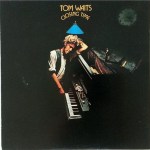
Listen for Smeary Piano Notes on Closing Time

Hot Stamper Pressings of Singer-Songwriter Albums Available Now

Some of the more common problems we ran into during our shootouts for this album were slightly veiled, slightly smeary sound, with not all the top end extension that the best copies have.

You can easily hear that smear on the attack of the piano. More often than not the piano notes are a tad blunted, a quality you notice when you finally hear a pressing with the piano notes rendered clearly.

The Piano

If you have full-range speakers some of the qualities you may recognize in the sound of the piano are WEIGHT and WARMTH. The piano is not hard, brittle or tinkly. Instead the best copies show you a wonderfully full-bodied, warm, rich, smooth piano, one which sounds remarkably like the ones we’ve all heard countless times in piano bars and restaurants.

In other words like a real piano, not a recorded one. This is what we look for in a good piano recording. Bad mastering can ruin the sound, and often does, along with worn out stampers and bad vinyl and five gram needles that scrape off the high frequencies.

But a few — a very few — copies survive all such hazards. They manage to reproduce the full spectrum sound of the piano (and of course the wonderful performances of the musicians) on vintage vinyl, showing us the kind of sound we never expected from a old Tom Waits albums like this.

Lately we have been writing quite a bit about how pianos are good for testing your system, room, tweaks, electricity and all the rest, not to mention turntable setup and adjustment.

Other records that we have found to be good for testing and improving your playback can be found here.

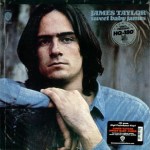
Bass Blockage Is Often a Problem on One Man Dog

More of the Music of James Taylor

Play Chili Dog here, one of our favorite tracks, and note not only the clarity and spaciousness, but the PUNCH and LIFE of the music. This song is supposed to be fun. The average somewhat compressed and dull copy only hints at that fact.

Then skip on down to the hit at the end of the side, Don’t Let Me Be Lonely Tonight, another favorite track for testing.

There’s a lot of bass in the mix on this track, but the best copies keep it under control.

When it gets loose and starts blurring the midrange, the vocals and guitars seem “blocked.” The best copies let you hear all that meaty bass, as well as letting you hear into the midrange too.

One Man Dog, like many early WB pressings, has a tendency to be dull and opaque. (Most side twos have a real problem in that respect.)

When you get a good one, with more of an extended top end, it tends to come with much more space, size, texture, transparency, ambience and openness.

Of course it does; that’s where much of that stuff is, up high.

Most copies don’t have nearly enough of it, but thankfully the best copies do.

(more…)

Smooth or Detailed, Which Is the Right Sound for Jackson Browne’s Debut?

The real trick with this album is in striking the right balance between richness and presence. A White Hot Stamper from years back made me change my mind about this recording. I used to think it was dull, but I was wrong. I used to think that even the best copies of this recording sounded rolled off on the top end. I no longer believe that to be true. On the best pressings the top end is correct for this music.

It took the right pressing to show me the error of my ways.

Side one of that copy was rich and full and sweet as can be. Playing side two I noticed more transparency and clarity, especially in the guitars and voices. It seemed to have correct highs, highs that were a little soft on the first side.

But the more I listened, the less I liked it. It started to sound more like a record and less like music. Going back and forth between sides one and two, it was obvious that side one had less clarity because it had the kind of richness and fullness that made all the musicians and their instruments sound real in a way that wasn’t happening on side two.

Side two had clarity, it had transparency, but it kept reminding me that it was a recording.

Side one allowed me to forget that I was playing a record.

When the music started, my attention was completely focused on the songwriting and the performing. Aspects of the recording were lost in my enjoyment of the music. I kept thinking what a great album this is, not what a great recording it is. That tells me that both the recording engineer and the mastering engineer did their jobs right. They created a sound that best served this music.

I think if an audiophile label had produced a version of this album that sounded like side two, most audiophiles would love it. They would hear detail that they’d never heard before. (It’s my belief that the original Asylum master tape has been lost, so the details of which we speak can be heard on these good originals and nowhere else.)

But, fooled into listening for details in the music rather than the music as a whole, they would never know how RIGHT the album can really sound.

The best of our Hot Stampers are the ones that have the right sound for this music.

Listening in Depth to Still Crazy After All These Years

More of the Music of Paul Simon

Presenting another entry in our extensive listening in depth series with advice on what to listen for as you critically evaluate your copy of Still Crazy. Here are some albums currently on our site with similar Track by Track breakdowns.

As exceptionally well-produced, well-engineered Pop Albums from the ’70s, the very best copies can proudly hold their heads high. Wait a minute. Our last commentary noted what a mess most of the pressings of this album sound like, with so much spit and grain. Have we changed our minds? Well, yes and no, and as usual we make no excuses for having changed our minds. We call it progress.

Yes, most copies are still a mess, but No, some copies now sound far better than we ever thought possible.

As we noted in our previous commentary for the Hot Stamper Still Crazy (back in 2005!), when we first dropped the needle on side one of another copy of this record, we were shocked to hear how spitty, grainy and transistory sounding the album was. We could hardly believe that a mainstream pop album by Paul Simon could sound this bad. It was pure spitty DISTORTION with ZERO midrange magic. A CD would sound better. Even Graceland, a famously compressed, phony, digital sounding album wouldn’t sound this bad!

A bad copy you say? Maybe they don’t all sound bad on side one, but there sure are a lot of them that do. Two tracks in particular — in fact, the two biggest tracks on side one — have fairly bad sound on almost any copy you play: Still Crazy and 50 Ways…

The True Tests for Side One

What separates the mediocre-to-bad-sounding average copy from a Hot Stamper is how well mastered those two songs are. In other words, if you get those two tracks right — breathy vocals, sounding smooth and sweet, with the sibilance under control, supported by good solid bass — the whole side is going to be good, maybe even as good as it gets.

(more…)

What Kind of (Audio) Fool Was I?

Thinking Critically About Records Is Key to Understanding Them

This commentary was written in 2007 or thereabouts.


Today’s audiophile seems to be making the same mistakes I was making as a budding audiophile more than thirty forty five years ago.

Heavy Vinyl, the 45 RPM 2 LP pressing, the Half-Speed Limited Edition — aren’t these all just the latest audiophile fads, each with a track record more dismal than the last?

And isn’t it every bit as true today as it was in the past that the audiophiles who buy these “special” pressings rarely seem to notice that many of them don’t actually sound very good?

Was Devo right? Is everything in audio getting worse?

Our Story Begins

One Man Dog has long been a favorite James Taylor album of mine. It didn’t catch on too well with the general public when it came out but it caught on just fine with me. I used to play it all the time. As a budding but misguided audiophile back in the early ’70s, I foolishly bought the import pressing at my local record store, The Wherehouse, assuming it would sound better and be pressed on quieter vinyl. The latter may have been true, probably was true, but the former sure wasn’t. Turns out even the average domestic original is far better sounding, but how was I to know?

Compare and Contrast? What For?

Back in those days it would never have occurred to me to buy more than one copy of a record and do a head to head comparison to see which one sounded better. I approached the subject Platonically, not scientifically: the record that should sound better would of course sound better, so what is the point of testing?

Later on in the decade a label by the name of Mobile Fidelity would come along claiming to actually make better sounding pressings than the ones the major labels put out, and — cluelessly — I bought into that nonsense too.

(To be fair, sometimes they did — Touch, Waiting for Columbus and American Beauty come to mind, but my god, Katy Lied, Year of the Cat and Sundown have to be three of the worst sounding records I’ve ever played in my life.)


UPDATE 2015

Obviously, we no longer agree with much of that except for the one MoFi record that has stood the test of time, Touch.


The Learning Curve Is Looking Awfully Flat

Pardon my pessimism, but it seems to me the learning curve these days is looking awfully flat. There doesn’t seem to be a whole lot of learning going on. If such learning were actually going on, how would most of these audiophile labels still be in business?

Don’t get me wrong: some progress has been made. Reference, Chesky and Audioquest thankfully no longer burden us with their awful LPs. But is the new Blue or Fragile really any better than the average MoFi from 1979? Different yes, but better? I know one thing: I couldn’t sit through an entire side of either of them on the remastered pressings. And I love both of those albums.

Compared to the real thing, can any of these records pretend to compete sonically? A few, I guess, but too few, and they seem to be pretty darn far between.

(more…)

Tapestry- CBS Half-Speed Reviewed

More of the Music of Carole King

Reviews and Commentaries for Tapestry

The CBS Half Speed is brighter and thinner than the good sounding pressings we sell — can you imagine a worse way to present this often intimate music?  

I had a much darker and less revealing system in 1980 than I do now. Pretty much everybody had a system that suffered from those afflictions. I thought my system was a near-perfect State of the Art dreadnaught that did everything right. Obviously I didn’t know how much there was to learn.

And the reality is that no matter how hard I worked or how much money I spent, I would never be able to get very far for one simple reason: most of the revolutions in audio had not yet come to pass. It would take decades of constant improvements until I would have anything like the system I do now.

Those Stone Age Stereos of the Seventies were better suited to the audiophile pressings being made to play on them, the ones put out by the likes of CBS and Mobile Fidelity. However, as bad as our stereos were back then, even in 1980 when this album came out I could hear it was too bright.

If my Mobile Fidelity records sounded fine to me in 1980, and they did, I was a huge fan and true believer, and this CBS record sounded too bright, I’m figuring it would ridiculously bright played back on my much more revealing stereo today.

What Are the Chances?

The chances of there being Hot Stamper Half-Speed Mastered pressings of Tapestry may be vanishingly small, but we can’t say the number is zero. There could be some, but considering how bad an idea Half-Speed Mastering is, would they have much chance of beating our Hot Stampers?

As a practical matter I would have to say the chances are zero.

If you are still buying modern pressings, take the advice of some of our customers and stop throwing your money away on Heavy Vinyl and Half-Speed Mastered Records.

(more…)

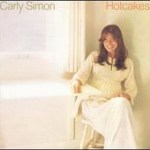
Hotcakes – What to Listen For

More of the Music of Carly Simon

Reviews and Commentaries for the Music of Carly Simon

Hot Stamper Pressings of Richard Perry Productions

Many copies of this album suffer from (at least) one of two problems:

  1. unnatural hi-fi sound, or
  2. considerable grit and grain.

Both are in large part due to the processing-intensive production of Richard Perry. On the best copies it’s easy to understand his choices as the sound is quite lovely. Unfortunately that rich, sweet sound he obviously got on to the master tape didn’t quite make it to the average vinyl pressing of the album.

The effects used on Carly’s vocals turn her voice into a gritty, grainy mess on most copies — certainly not the kind of sound that audiophiles want to hear. It took a few exceptional copies to make us understand what Simon and Perry were going for. Compare this Hot Stamper to the typical copy and you’ll hear it for yourself right away. (You DEFINITELY want your electricity really cookin’ for this shootout, because bad electricity will certainly exacerbate problems with grit and grain.)

You Haven’t Got Time For The Pain, But We Do

It’s one of Carly’s best songs and the title perfectly sums up our selling point for these Hot Stampers. Anyone can do this shootout on his own; these records are in every used record bin out there. Of course, I don’t know if anyone but us would WANT to do this shootout, because so many copies sound just plain awful! If, like Carly, you haven’t got time for the pain, save yourself the trouble and take home a Hot copy. Your free time is valuable — spend it listening to good records and leave the bad ones to us.

(more…)

Stones – His Best Sounding Studio Album?

More of the Music of Neil Diamond

More Singer Songwriter Albums

I can’t say for sure that this is the best sounding Neil Diamond album, we haven’t been through all of them yet, but it’s certainly the best sounding album of his that we’ve critically auditioned in large numbers. Good luck finding another copy of Stones out in the bins that deliver top quality sonics the likes of these — we went through a TON of copies and not many held our interest.

Problems to Watch For

Some of the more common problems we ran into during our shootouts were slightly veiled, slightly smeary sound, with not all the top end extension that the best copies showed us.

You can easily hear that smear on the guitar transients. Usually they’re a tad blunted and the guitar harmonics don’t ring the way they should.

Smeary, veiled, top end-challenged pressings were regularly produced over the years. They are the rule, not the exception.

Good cleaning techniques can help, but bad vinyl and worn stampers limit the encoding of the highs, and bad mastering or the use of sub-generation tapes both can work plenty of mischief on their own.

Engineering

On the Hot Stamper copies that do have sweet and rich ANALOG sound, credit naturally belongs with Neil’s go-to engineer, ARMIN STEINER. He was one of the engineers on Spirit’s first album (a truly phenomenal recording from 1968), assisted on Ram, recorded some of the best sounding, most Tubey Magical Chart-Topping Pop Rock for Bread in the early ’70s, and, if that’s not enough, has more than a hundred other engineering credits. He’s also the reason that Hot August Night is one of the best sounding live albums ever recorded.

When you find his name in the credits there’s at least a chance, and probably a pretty good one, that the sound will be excellent. You need the right pressing of course, but the potential for good sound should be your working hypothesis at that point. Now, all it takes is some serious digging in the bins, cleaning, and listening to determine if you’ve lucked into a “diamond in the rough.”

MoFi Thought the Guitars on Sundown Could Use More “Sparkle”

Another Record Better Suited to the Stereos of the Seventies

Sonic Grade: F

An audiophile hall of shame pressing and another MoFi LP reviewed and found wanting.

I comment below about the ridiculous sound of the MoFi pressing of this album.

When you have a recording that is already plenty bright, adding more top end and taking out more lower midrange is the last thing in the world you should be doing.

Since that is standard operating procedure for MoFi (as well as most other Half-Speed mastering outfits), that’s exactly the approach they ended up taking.

Those of you who have had the opportunity to play the Mobile Fidelity pressing of this record should know what a disaster it is.

His voice sounds so phony on the MoFi that you’d swear it’s a bad CD.

But it’s not a bad CD. It’s an expensive audiophile record!

If you’ve spent any time on this blog, you should know by now that many audiophile records sound WORSE than the typical CD.

The typical CD does not have an equalization curve resembling a smile. The classic smile curve starts up high on the left, gets low in the middle, and rises again at the end, resulting in boosted bass, boosted top end, and a sucked out midrange — the Mobile Fidelity formula in a nutshell. (more…)