Bad Digital Remastering

Digital remastering is almost never a good idea. Here are the reviews for some of the digitally remastered pressings we’ve played.

Steely Dan ‎on MCA Audiophile Vinyl – Sounds Like a Good CD to Me

Hot Stamper Pressings of the Music of Steely Dan Available Now

Clean and clear and tonally correct, just like a good CD should sound.

If this is what you are after, why not just buy the CD? It’s bound to be a lot cheaper.

Some songs sound better than others, but I can’t for the life of me remember which ones. I auditioned copies of this record more than twenty thirty years ago. Once I got rid of them I never bought another. Why would I?

No doubt there are still audiophiles extolling the virtues of this record on various internet threads.

One thing you can be sure of: these are people who are not serious about making progress in audio.

Some of the pressings these audiophiles like can be found in our stone age audio record section.

If you have top quality, highly-tweaked modern equipment, a good room, and the myriad other things that make exceptionally good vinyl playback possible these days — in a way that was not possible even ten or fifteen years ago — you would have no reason to keep a record of such mediocrity in your collection.

(more…)

How Does the Heavy Vinyl Rubber Soul Sound?

Hot Stamper Pressings of Rubber Soul Available Now

This review was originally written in 2015.


We are so excited to tell you about the first of the Heavy Vinyl Beatles remasters we’ve played! As we cycle through our regular Hot Stamper shootouts for The Beatles’ albums we will be of course be reviewing more of them*. I specifically chose this one to start with, having spent a great deal of time over the last year testing the best vinyl pressings against three different CD versions of Rubber Soul.

The short version of our review of the new Rubber Soul vinyl would simply point out that it’s awful, and, unsurprisingly, it’s awful in most of the ways that practically all modern Heavy Vinyl records are: it’s opaque, airless, energy-less and just a drag.

I was looking forward to the opportunity to take Michael Fremer, the foremost champion of thicky vinyl, to task in expectation of his usual rave review, when to my surprise I found the rug had been pulled out from under me — he didn’t like it either. Damn!

MF could hear how bad it was. True to form, he thinks he knows why it doesn’t sound good:

As expected, Rubber Soul, sourced from George Martin’s 1987 16 bit, 44.1k remix sounds like a CD. Why should it sound like anything else? That’s from what it was essentially mastered. The sound is flattened against the speakers, hard, two-dimensional and generally hash on top, yet it does have a few good qualities as CDs often do: there’s good clarity and detail on some instruments. The strings are dreadful and the voices not far behind. The overall sound is dry and decay is unnaturally fast and falls into dead zone.

It strikes me as odd that the new vinyl should sound like a CD. I have listened to the newly remastered 2009 CD of Rubber Soul in stereo extensively and think it sounds quite good, clearly better than the Heavy Vinyl pressing that’s made from the very same 16 bit, 44.1k remixed digital source.

If the source makes the new vinyl sound bad, why doesn’t it make the new CD sound bad? I can tell you that the new CD sounds dramatically better than the 1987 CD I’ve owned for twenty years. They’re not even close. How could that be if, as MF seems to believe, the compromised digital source is the problem?

Lucky for me I didn’t know what the source for the new CD was when I was listening to it. I assumed it came from the carefully remastered hi-rez tapes that were being used to make the new series in its entirety, digital sources that are supposed to result in sound with more analog qualities.

Well, based on what I’ve heard, they do, and those more analog qualities obviously extend to the new Rubber Soul compact disc. At least to these ears they do.

It’s possible my ignorance of the source tape allowed me to avoid the kind of confirmation bias — hearing what you expect to hear — that is surely one of the biggest pitfalls in all of audio and a pit that Fremer falls into regularly.

Doors Progress

He raved about the digitally remastered Doors Box Set when it came out, but now that Acoustic Sounds is doing Doors albums on 45, he is singing a different tune:

Whatever I wrote about that box then [5/1/2010 if you care to look it up], now, by comparison, the best I can say for The Doors on that set is that it sounds like you’re hearing the album played back on the best CD player ever. It’s smoooooth, laid back and pleasant but totally lacks balls, grit, detail, spaciousness and raw emotional power. The entire presentation is flat against a wall set up between the speakers. The double 45 has greater dynamics, detail, spaciousness and appropriate grit—everything the smooooth 192k/24 bit sourced version lacks.

We, on the other hand, had no trouble at all hearing how bad it was right from the start. For our last Hot Stamper shootout winner of The Soft Parade we noted:

Need I even mention how much better this copy sounds than the recent 180g version from the Rhino Box Set, digitally remastered by Bernie Grundman? That thing is just awful, possibly the worst sounding pressing I have ever heard. The Gold CD Hoffman did for Audio Fidelity would be night and day better. So much for the concept of vinyl superiority. Not with Bernie at the helm.

To his credit MF finally recognizes his mistake, but let’s stop and think about how he came by this insight.

He did it by playing a pressing that, to his mind, has every reason to sound better, being sourced from analog tapes and mastered at 45.

Now he hears that Bernie’s cutting sounds like a CD. To us it sounded worse than a CD when we played it the first time, vinyl or no vinyl. We even recommended the Hoffman-mastered DCC Gold CDs for those who didn’t want to spring for one of our Hot Stamper pressings.

As we like to say, good digital beats bad analog any day.

Real Progress

Then again, who are we to talk? Bear in mind that as recently as the early 2000s we were still recommending the DCC vinyl pressings, records that I can’t bear to listen to these days.

My system couldn’t show me how colored and lifeless they were then, but it sure can now.

(more…)

The Abbey Road Remix on Vinyl

Hot Stamper Pressings of the Music of The Beatles Available Now

We got a copy of the Abbey Road remix in, cleaned it and played it. Now we can officially report the results of our investigation into this modern marvel. Imagine, The Beatles with a new mix! Just what it needed, right?

So what did we hear?

The Half-Speed mastered remixed Abbey Road has to be one of the worst sounding Beatles records we have ever had the misfortune to play.

Hard to imagine you could make Abbey Road sound any worse. It’s absolutely disgraceful.

Is it the worst version of the album ever made? Hard to imagine it would have much competition.

I will be writing more about its specific shortcomings down the road, but for now let this serve as a warning that you are throwing your money away if you buy this newly remixed LP.


UPDATE 2022

As you may have guessed by now, I have completely lost interest in detailing the abundant shortcomings of this awful record. Do yourself a favor and don’t buy one.

If you did buy one, do yourself a different favor: order any UK pressing from 1970-1986 off the web and play that one head to head with it so you can hear how badly they screwed with and screwed up the new mix.

When the remastering is this incompetent, you do not need a Hot Stamper pressing to beat it. Almost any record will do.

Remastering a well-known title and creating a new sound for it is a huge bête noire for us here at Better Records.

Half-Speed mastered disasters that sound as bad as this record does go directly into our audiophile record hall of shame.

If this isn’t the perfect example of a pass/not-yet record, I don’t know what would be.

Some records are so wrong, or are so lacking in qualities that are critically important to their sound — qualities typically found in abundance on the right vintage pressings — that the defenders of these records are fundamentally failing to judge them properly. We call these records Pass/Not-Yet, implying that the supporters of these kinds of records are not where they need to be in audio yet, but that there is still hope. If they target their resources (time and money) well, there is no reason they can’t get to where they need to be, the same way we did. Our audio advice section may be of help in that regard.

(more…)

Sticky Fingers – Worst Version Ever!

Hot Stamper Pressing of the Music of The Rolling Stones Available Now

Mastered by Robert Ludwig. (Scroll down to find links to more of Robert Ludwig’s work.)

Digitally remastered using UV22 Super CD encoding by Apogee Electronics, Santa Monica, California.

This RTI 180g copy (with the zipper cover) is one of a series of five titles Bob Ludwig cut in the 90s. According to the man, after cutting the record he chanced upon a consumer copy and was shocked to hear how bad it sounded.   

It sounded, according to him, nothing like the record he had cut. Somehow they had botched the pressings and ruined the sound. How this could happen I can’t imagine.

Bob says that’s what they did and we’ll take him at his word, out of respect for one of the all-time great mastering engineers, RL himself. He promptly sold off all his analog mastering equipment and got out of the game.

Can you blame him? According to him they put his name all over a record the sound of which they had ruined. Guess I would stop making records too if that were the case.

By the way, the sound was dismal on every title from that series we played except for Heart’s, which was okay, certainly better than the average pressing out there, but no Hot Stamper by any stretch of the imagination. 

(more…)

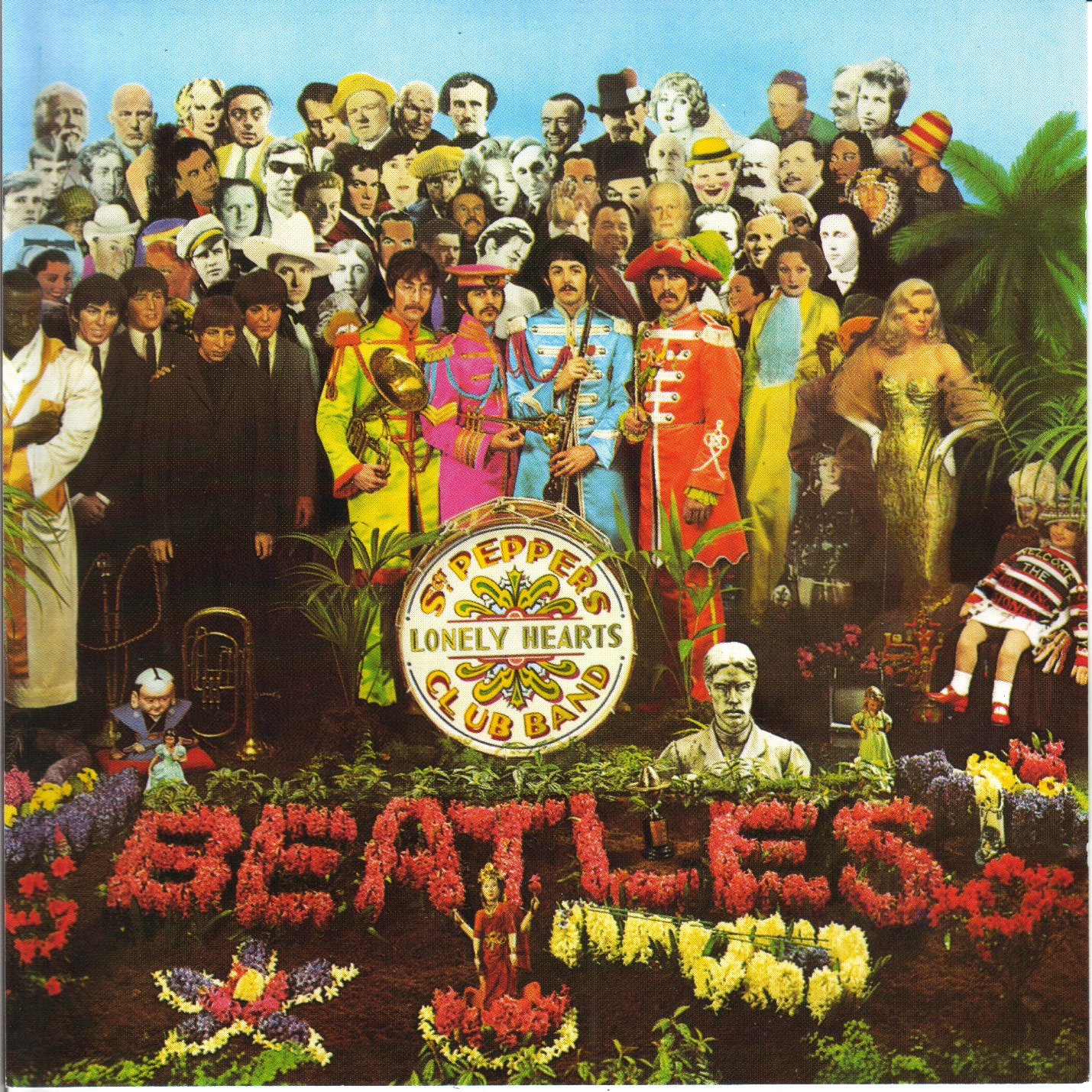
Sgt. Peppers on Heavy Vinyl – The Reviewers from 1982 Blow It Again

beatlessgtHot Stamper Pressings of Sgt. Peppers Available Now

You might agree with some reviewers that EMI’s engineers did a pretty good job with the new Pepper.

In the March 2013 issue of Stereophile, Art Dudley weighed in, finding little to fault on this title but being less impressed with most of the others in the new box set.

His reference disc? The MoFi UHQR. Gadzooks!

Oh, and he also has some old mono pressings and a domestic Let It Be. Now there’s a man who knows his Beatles. Fanatical? Who can blame him? We’re talkin’ The Beatles for Chrissake!

When I read the reviews by writers such as these I often get the sense that I must’ve fallen through some sort of Audio Time Warp and landed back in 1982.

How is it that our so-called experts evince so little understanding of how records are made, how variable the pressings can be, and, more importantly, how absolutely crucial it is to understand and implement rigorous protocols when attempting to carry out comparisons among pressings.

Critically comparing LPs is difficult and time-consuming.

It requires highly developed listening skills that I could not possibly have had because I had no clue as to what they were or how to go about acquiring them.

I see no evidence that the audiophile reviewers of today are better at it than I was in 1982, and I was terrible.

What does one well-known reviewer have to say, keeping in mind that he’s using his original British pressing for comparison? I quote at length — without prejudice so to speak — so there can be no misunderstanding. (Emphasis added.)

(more…)

The Yellow Submarine Songtrack Did Not Float My Boat

Last year a customer wrote to tell me how much he liked the sound of his 2004 Japanese DMM pressing of the Yellow Submarine Songtrack.

After looking into the background of this album, we saw right from the start that it had three strikes against it.

First off, we rarely like Japanese pressings outside of those that were recorded in Japan, such as the direct to disc jazz and classical records we’ve done shootouts for. Other Japanese pressings we like were recorded in the states for the Japanese market: the jazz direct to discs on East Wind come to mind.

Secondly, whenever possible we avoid DMM pressings. They often add what seems to us like digital artifacts to the sound.

And lastly, we rarely like modern remixes, especially modern remixes that obviously use digital processes of various kinds. The remixed Abbey Road is a complete disaster. Nothing that comes out of Abbey Road these days should be expected to sound good. Their work is a disgrace.

So rather than buy the Japanese-pressed version of the album, we cheaped out and just bought a UK one for half the price.

We half-expected the worst and that’s pretty much what we found.

I used to sell this very version of the album back in 1999 when it came out. I thought it sounded just fine. That was about twenty years ago. My all tube system was darker and dramatically less resolving than the one I have now.

Scores of improvements have been made since then to every aspect of analog reproduction, something we discuss endlessly on this blog.

We Have No Idea

To be fair, we admit that we have no idea what the Japanese pressing of the album sounds like. We’ve never played one.

So what’s wrong with the UK pressing of the Yellow Submarine Songtrack?

From the notes reproduced on the left — incidentally some of the last I wrote before I retired — you can see that the overall sound struck me as drythin and CD-like.

The vocals sound much more artificial on these remixed tracks than they do on the vintage Beatles’ pressings we offer. When a Beatles album has an unnatural, overly-processed midrange, it’s pretty much game over.

The new mixes also lacked Tubey Magic, which, for any album by The Beatles, is every bit the kiss of death that a phony midrange is. The Beatles albums remastered on Heavy Vinyl that we’ve played left a lot to be desired in that area, in addition to their many other faults.

It’s possible that the Japanese pressing of The Yellow Submarine Songtrack has none of the problems we found on the UK pressing we played. If such a thing turned out to be true, it would be a first in our experience. We can’t say it’s impossible. What we can say is that it is very unlikely.

(more…)

Is the Heavy Vinyl from 2012 the Best Sounding Sgt. Pepper?

beatlessgtHot Stamper Pressings of Sgt. Peppers Available Now

You might agree with some reviewers that EMI’s engineers did a pretty good job with the new stereo pressing of Sgt. Pepper mastered by Sean Magee from the 2009 digitally remastered tapes.

In the March 2013 issue of Stereophile Art Dudley weighed in, finding little to fault on this title but being less impressed with most of the others in the new box set. His reference disc? The MoFi UHQR! Oh, and he also has some old mono pressings and a domestic Let It Be.

Now there’s a man who knows his Beatles. Fanatical? Of course he is! We’re talkin’ The Beatles for Chrissakes.

When I read the reviews by writers such as these, I often get the sense that I must’ve fallen through some sort of Audio Time Warp and landed back in 1982. How is it that our so-called experts evince so little understanding of how records are made, how variable the pressings can be, and, more importantly, how absolutely crucial it is to understand and implement rigorous protocols when attempting to carry out comparisons among pressings.

Critically comparing LPs is difficult and time-consuming. It requires highly developed listening skills. I didn’t know how to do it in 1982. I see no evidence that the audiophile reviewers of today are much better at it now than I was in 1982.

Just to take one example: They all seem to be operating under the same evidence-free conceit: that the original is the benchmark against which other pressings must be compared.

To those of us who have played Beatles pressings by the hundreds, this is patent nonsense. To cite just one instance, a recent Hot Stamper listing notes [inaccurately as it turns out, see below]:

We defy any original to step into the ring with it. One thing we can tell you, it would not be a fair fight. The cutting equipment to make a record of this quality did not exist in 1967, not at EMI anyway.

We had the opportunity not long ago to audition a very clean original early pressing of the album and were frankly taken aback by how AWFUL it was in virtually every respect. No top end above 8k or so, flabby bass, murky mids — this was as far from Hot Stamper sound as one could imagine. If it were a Heavy Vinyl or Audiophile pressing we would surely have graded it F and put it in our Hall of Shame.

To be fair we have played exactly one early copy of the record on our current system. (Played a copy or two long ago but on much different equipment, so any judgments we might have made must be considered highly suspect.) Perhaps there are good ones. We have no way of knowing whether there are, and we are certainly not motivated to find out given the price that original Sgt. Pepper’s are fetching these days.

We can tell you this much: no original British pressing of any Beatles album up through Pepper has ever impressed us sonically. We’ve played plenty and have yet to hear one that’s not congested, crude, distorted, bandwidth-limited and full of tube smear. (The monos suffer from all of these problems and more of course, which is only natural; they too are made with the Old School cutting equipment of the day.)

If that’s your sound more power to you. It’s definitely not ours. The hotter the stamper, the less congested, crude, distorted, bandwidth-limited and smeary it will be. (Or your money back.)


UPDATE 2023

There is a copy of a Beatles album on the original label that was competitive with our best 70s pressings, this one. We explained why it’s not a problem to admit we were wrong about the album in question, For Sale, this way:

This finding about For Sale is precisely why live and learn is our motto.

We don’t know it all, and we’ve never claimed that we did. We constantly learn things about pressings in our daily shootouts. That should not be too surprising, as record shootouts are the only way to learn anything about the sound of records that’s actually worth knowing.

Start doing your own experiments and your record knowledge might just take off the way ours has. 99% of what we think we know about the sound of records we’ve learned in shootouts over the course of the last twenty years.

Here is our advice on getting started.

Before this, the only Beatles record we would sell on the Yellow and Black Parlophone label was A Collection of Oldies… But Goldies. That title does have the best sound on the early label. In numerous shootouts, no Black and Silver label pressing from the ’70s was competitive with the best stereo copies made in the ’60s.

Until now, it was clearly the exception to our rule. From With the Beatles up through Yellow Submarine, the best sounding Beatles pressings would always be found on the 70s reissue label.


The Best Pepper Pressings

How did we come to find the best Sgt. Peppers pressings? Our recent commentary about a wonderful Benny Carter record on the original Contemporary Black Label may serve to shed some light on the process.

(more…)

Let It Be on Heavy Vinyl – The Gong Rings Once More

Hot Stamper Pressings of Let It Be Available Now

At the end of a shootout for Let It Be back in June of 2014, we decided to see how the 2012 Digitally Remastered Heavy Vinyl pressing would hold up against the 12 (yes, twelve!) British copies we had just critically auditioned.

Having evaluated the two best copies on side two, we felt we knew exactly what separated the killer copies (White Hot) from the next tier down (Super Hot). Armed with just how good the recording could sound fresh in our minds, we threw on the new pressing. We worked on the VTA adjustment for the thicker record for a couple of minutes to get the sound balanced and as hi-rez as possible, and after a few waves of the Talisman we were soon hearing the grungy guitar intro of I’ve Got a Feeling.

My scribbled first notes: not bad! Sure, there’s only a fraction of the space and three-dimensionality of the real British pressings, but the bass seemed to be there, the energy seemed decent enough, the tonality was good if a bit smooth and dark — all in all not a bad Beatles record.

Then we played One After 909 and the sound just went off a cliff. It was so compressed! The parts of the song that get loud on the regular pressings never get loud on the new one. The live-in-the-studio Beatles’ rock energy just disappeared.

We couldn’t take more than a minute or two of the song, it was that frustrating and irritating. What the hell did they do to make this record sound this way? We had no idea.

Didn’t matter. It was game over. The gong from The Gong Show had rung. The record had to go.

We had played twelve British copies, all with stampers that we knew to be good on side two. Two or three of those copies did not merit a Hot Stamper sonic grade. Nothing new there, happens all the time.

Yet even the worst copy we played of the twelve had more jump-factor, more life and more dynamic energy than the new Heavy Vinyl pressing.

Which means that there’s a very good chance that any copy you pick up on British vinyl will be better sounding — maybe not a 100% chance but easily a 90+% chance. Which makes buying the new Heavy Vinyl LP — not to mention playing it — entirely pointless.

(more…)

Song for Beginners Was Remixed and Ruined on Classic Records

I’ve listened to Nash’s first solo outing countless times over the last thirty years, even more than Crosby, Stills and Nash’s first album. As I was listening to the Classic pressing, I recall thinking “Wow, I don’t remember that sound being there; this version is so much better I can hear things I never heard before!”

Well, owners of this album (all five of you) will certainly hear things you never heard before, because some of the tracks on this album have been remixed and some of the instruments re-recorded. How about them apples.

Both the snare and the kick drum on some songs are clearly too “modern” sounding for anything recorded in 1971. For Pete’s sake, they’d be right at home on Nevermind.

Sometimes the vocal tracks are different—probably alternate takes I would think, as Graham obviously can’t sing like he did thirty years ago to even attempt a re-recording.

As you can imagine, remastering a well-known title and creating a new sound for it is a huge bête noire for us here at Better Records. This Classic Records release is like nails on a blackboard to me now.

No doubt the idea was Graham’s but it was a very bad one indeed. (If you can get hold of the original unadulterated CD, I highly recommend it. The sound is excellent.)

Our old commentary from the early-2000s, the pre-shootout era

I haven’t played this record in a long time — years in fact. During that time there have been dramatic improvements in my analog playback. I’m guessing that if I played this Classic Record now I would hear what I hear on almost all of them — less midrange magic than the best originals, some boost on the top, and maybe a bit too much bottom, and a slightly dry bottom at that.

Those of you with really magical originals are encouraged to hang onto them and pass on this Classic. As those do not grow on trees, if you want a good pressing of this album, the Classic may be just the ticket. If you find a hot original, you will have a benchmark against which to judge it.

One Helluva Well-Recorded Album

Most of the credit must go to the team of recording engineers, led here by the esteemed Bill Halverson, the man behind all of the Crosby Stills Nash and Young albums. Nash was clearly influenced by his work with his gifted bandmates, proving with this album that he can hold his own with the best of the best. Some songs (We Can Change The World, Be Yourself) are grandly scaled productions with the kind of studio polish that would make Supertramp envious. For me, a big speaker guy with a penchant for giving the old volume knob an extra click or two, it just doesn’t get any better than this.

Others (Sleep Song, Wounded Bird) are quiet and intimate. Their subtlely is highlighted by the big productions surrounding them. This is that rare album in which every aspect of the production, from the arrangements to the final mix, serves to bring out the best qualities in the songs, regardless of scale.

The recording is of course superb throughout, in the best tradition of Crosby Stills and Nash’s classic early albums: transparent, smooth and sweet vocals, with loads of midrange magic ; deep punchy bass; lovely extension on the top to capture the shimmer of the cymbals and harmonic trails of the acoustic guitars; with the whole balanced superbly by one of our all-time heroes, Glyn Johns.


The Real Songs for Beginners on Vintage Vinyl Checks Off Three Big Boxes for Us

The blog you are on now as well as our website are both devoted to very special records such as these.

In my opinion, this is also a record that should be more popular with audiophiles. If you have not heard this classic, check it out. It is the very definition of the kind of Big Production Rock I have been listening to since I first fell in love with it back in the Seventies. That was about fifty years ago and I still play the album regularly for enjoyment. I have never tired of the music in all that time and I don’t think I ever will.

I’m sure you have plenty of records you feel the same way about in your collection. This is one of mine.

(more…)

Letter of the Week – “I have to tell you that I was floored at the sound of the hot stamper Aqualung I just bought.”

This week’s testimonial letter comes from our good customer Roger, who was blown away by the Hot Stamper pressing of Aqualung we sent him [many, many years ago].

Roger, as expected, did a thorough shootout of his own, comparing of our Hot Stamper against the audiophile usual suspects. The result? Another knockout for our Hot Stamper pressing.

Note that a well known audiophile reviewer did his own shootout for the album years ago, failing miserably, very unlike our good customer Roger, who succeeded admirably.

Hi Tom,

I have to tell you that I was floored at the sound of the hot stamper Jethro Tull Aqualung I just bought. Darn you again and your hot stampers.

To give you some idea of how many times I have heard this album, backtrack to 1971 when it came out. On a Boy Scout trip a friend of mine had a portable 8-track tape player and this one tape, Aqualung. I remember sleeping on one of the seats in a car with the Aqualung tape on infinite repeat all night. In high school I had the 8-track and listened to this record hundreds of times.

Through the years after becoming an audiophile I bought many different copies looking for the ultimate-sounding LP, finally settling on the MFSL version, which I bought when it came out.

So I had a good time comparing 4 copies:

    1. the MFSL half-speed,
    2. the DCC version,
    3. the 25th anniversary digitally remastered copy,
    4. and the Hot Stamper.

First I tried the 25th anniversary and it was just as I remembered it — it sounds digital, like a CD. Lots of detail, but hard, hyped, edgy, flat soundstage, compressed dynamics. As digital usually sounds, guitars were harsh and jumped unnaturally out of the mix.

The DCC version was surprisingly bland and undynamic as compared to the 25th, but smoother. Neither copy had any bandwidth, no bass at all and no highs whatsoever. Maybe they remastered the LP from an 8-track tape, LOL.

When I heard the MFSL version, it came back to me why I liked this reissue so much; there was lots of bass and highs, but as on most MFSL recordings, they sounded equalized like the MFSL engineers simply took a graphic equalizer and pushed up the 20-40Hz and 5-10kHz controls. I know this sound as I once had a graphic equalizer and used to do this. There was no midbass, just the lowest bass, and it just overwhelmed the rest of the sonic spectrum, which was thin and compressed. And drumsticks on cymbals and the high hat on the title song were pushed way forward in the mix and too prominent. [We call this the smile curve and lots of audiophile records have a bad case of it.]

It has been a real disappointment to have found out in the past 5 years or so that all of the money I spent on audiophile versions has not given me the ultimate-sounding copies.

I am sure I can sell them for big bucks, which I may indeed so someday.

(more…)