_Composers – Chopin

VICS-1030 Can Have Passable Sound for Chopin’s Piano Concerto No. 1

Hot Stamper Pressings of Living Stereo Recordings Available Now

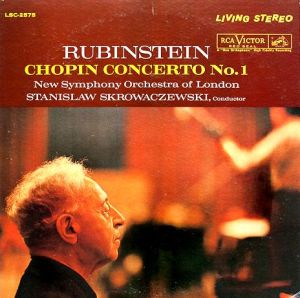
Our favorite recording for performance and sound is the Living Stereo from 1961, LSC 2575, with Rubinstein at the piano and Skrowaczewski conducting the New Symphony Orchestra of London.

This Victrola pressing, VICS-1030, with Graffman performing, had good, not great sound. We’ve played them before and none of them was ever better than middling.

Some specifics we noted in the sound:

  • The piano was loud and clear, close-miked.
  • Boxy sound, could be richer
  • Orchestration not too compressed but veiled and small.
  • Not a standout performance.

A decent-enough record I suppose, but lacking in too many of the qualities our customers are looking for, especially at the prices we charge.


This is what we had to say about the sound of our Shootout Winner for LSC 2575:

We love the huge, solid and powerful sound of the piano on this recording. This piano has weight and heft. As a result, it sounds like a real piano.

For some reason, a great many Rubinstein recordings are not capable of reproducing those seemingly all-important qualities in the sound of the piano.

Those are, as I hope everyone understands by now, the ones we don’t sell. If the piano in a piano concerto recording doesn’t sound solid and powerful, what is the point of playing such a record?

Or, to be more accurate, what is the point of an audiophile playing such a record? (Those of you who would like to avoid bad sounding vintage classical and orchestral records have come to the right place. We’ve compiled a very long list of them for precisely that purpose, and we add to it regularly, a public service from your friends here at Better Records.)

(more…)

The MHS Recording of Chopin’s First Piano Concerto Had the Most Natural Piano of Them All

Hot Stamper Pressings of the Music of Frederic Chopin Available Now

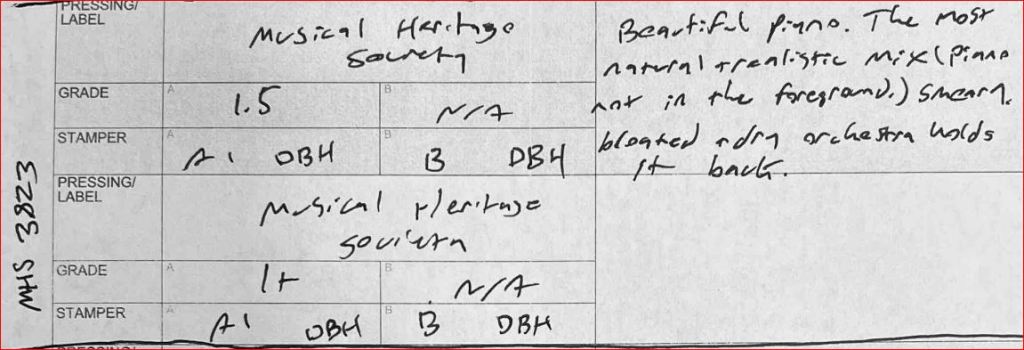
There are some wonderful Musical Heritage Society records sitting in the bins of your local record store or Goodwill, and this one is worth picking up just to hear how well recorded the piano is.

We described it this way:

Beautiful piano. The most natural and realistic mix with the piano not in the foreground.

But there is more to the recording than the sound of the piano.

Smeary, bloated and dry orchestra holds it back.

Well, at least we tried. (Note that side two was deemed not worth grading.)

Our favorite recording for performance and sound is the Living Stereo from 1961, LSC 2575, with Rubinstein at the piano and Skrowaczewski conducting the New Symphony Orchestra of London.

This is what we had to say about the sound of our Shootout Winner:

We love the huge, solid and powerful sound of the piano on this recording. This piano has weight and heft. As a result, it sounds like a real piano.

For some reason, a great many Rubinstein recordings are not capable of reproducing those seemingly all-important qualities in the sound of the piano.

Those are, as I hope everyone understands by now, the ones we don’t sell. If the piano in a piano concerto recording doesn’t sound solid and powerful, what is the point of playing such a record?

Or, to be more accurate, what is the point of an audiophile playing such a record? (Those of you who would like to avoid bad sounding vintage classical and orchestral records have come to the right place. We’ve compiled a very long list of them for precisely that purpose, and we add to it regularly.)

(more…)

Chopin – Piano Concerto No. 2 / Rubinstein

More Classical and Orchestral Recordings

  • Chopin’s 2nd piano concerto returns to the site for only the second time in four years, here with stunning Nearly Triple Plus (A++ to A+++) sound from start to finish – just shy of our Shootout Winner
  • The reproduction of the piano on this exceptional Shaded Dog pressing is clear, solid, and present – in other words, hard to fault
  • The sound was simply bigger, more transparent, less distorted, more three-dimensional and more real than practically all the other copies we played
  • We were also impressed with the vibrant orchestra surrounding the piano, with plenty of the Living Stereo Tubey Magical strings we audiophiles swoon over
  • There are about 150 orchestral recordings we think offer the best performances with the highest quality sound. This record is certainly deserving of a place on that list.
  • 1958 just happens to be one of the truly great years for analog recordings, as evidenced by this amazing group of albums, all recorded or released in that year.

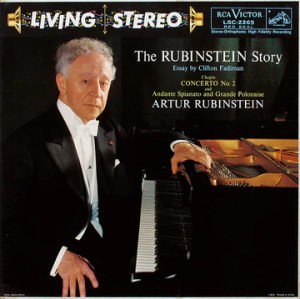
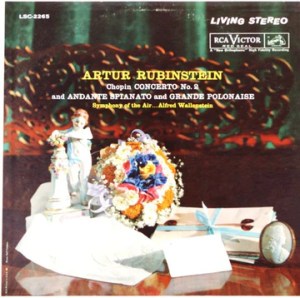
The original version of LSC 2265 as pictured above is known as The Rubinstein Story. It comes with a deluxe gatefold cover and a lovely illustrated booklet tucked into an inner flap with biographical information about Rubinstein and commentary about the music of Chopin. The second picture is of the reissue of the album which came out soon thereafter, still with the Shaded Dog label.

Those of you who know your Shaded Dogs no doubt have had a few problems with your Rubinstein pressings in the past being too midrangy and forward, a sound that Rubinstein supposedly insisted on for his records. Not so on this pressing, I am happy to report. The sound is overflowing with Tubey Magic.

(more…)

For Concerto No. 1, This Is the Way the Piano Should Sound

Hot Stamper Living Stereo Classical and Orchestral Titles Available Now
We love the huge, solid and powerful sound of the piano on this recording. This piano has weight and heft. As a result, it sounds like a real piano.

For some reason, a great many Rubinstein recordings are not capable of reproducing those seemingly all-important qualities in the sound of the piano.

Those are, as I hope everyone understands by now, the ones we don’t sell. If the piano in a piano concerto recording doesn’t sound solid and powerful, what is the point of playing such a record?

Or, to be more accurate, what is the point of an audiophile playing such a record? (Those of you who would like to avoid bad sounding vintage classical and orchestra records have come to the right place. We’ve compiled a very long list of them precisely for that purpose, and we’ve been adding to it regularly.)

No doubt Kenneth Wilkinson made sure the recording captured the weight of the piano he was listening to as it played all those years ago in the wonderful acoustics of Kingsway Hall.

The strings have lovely Living Stereo (Decca-engineered) texture as well.

As befits a Wilkinson recording from 1961, there is no shortage of clarity to balance out the Tubey Magical warmth and richness.

When you add in the tremendous hall space, weight and energy, this becomes a Demo Disc orchestral recording by any standard.

Notes from a 2024 Shootout

Our notes above point out that:

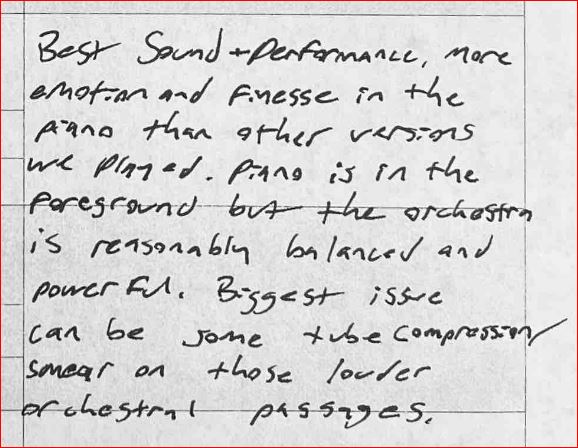
  • This is the best combination of sound and performance for Chopin’s first piano concerto, with more emotion and finesse in the playing than other versions we auditioned.
  • The piano is in the foreground, with the orchestra reasonably balanced and clearly more powerful than some of the other recordings we played.
  • The biggest issue for the lesser pressings — which means the ones that did not win the shootout — is the possibility of some tube compressor smear and congestion on the loudest orchestral passages.

(more…)

Chopin / Concerto No. 1 / Rubinstein / Skrowaczewski

Living Stereo Classical and Orchestral Titles Available Now

  • Rubinstein’s superb performance of Chopin’s concerto for piano is finally back in the site after a three year hiatus, here with INCREDIBLE Shootout Winning Triple Plus (A+++) Living Stereo sound or close to it on both sides of this original Shaded Dog pressing
  • Here are just a few of the things we had to say about this stunning copy in our notes: “3D rich piano”…”big and tubey and dynamic”…”lush brash and strings”…”very full bodied”…”zero smear” (side one)
  • So big and transparent, with weight and heft to the brass, we guarantee you have never heard a better piano concerto recording (unless you already one of our White Hot Stamper LPs)
  • The secret to the superior sound of this particular Rubinstein recording over so many others is the engineering by Kenneth Wilkinson – the glorious hall the London Symphony plays in doesn’t hurt either
  • Chopin, according to Arthur Hedley, “had the rare gift of a very personal melody, expressive of heart-felt emotion, and his music is penetrated by a poetic feeling that has an almost universal appeal…”

“Present-day evaluation places him among the immortals of music by reason of his insight into the secret places of the heart and because of his awareness of the magical new sonorities to be drawn from the piano.”

The latest notes for this RCA recording point out that this is the best combination of sound and performance for Chopin’s first piano concerto, with more emotion and finesse in the playing than other versions we auditioned.

The piano is in the foreground, with the orchestra reasonably balanced and clearly more powerful than some of the other recordings we played.

The biggest issue for the lesser pressings — which means the ones that did not win the shootout — is the possibility of some tube compressor smear on the loudest orchestral passages. (This is a subect we discuss on the blog quite a bit, by the way,)

The strings have lovely Living Stereo (Decca-engineered) texture as well. As befits a Wilkinson recording from 1961, there is no shortage of clarity to balance out the Tubey Magical warmth and richness.

We have lately been surveying some of his recordings from the late-60s and 70s to our great disappointment. The All Tube Recording Chain was gone. Opacity and lack of warmth prevented us from proceeding with any shootouts we might have attempted.

We love the huge, Tubey Magical sound of this recording. The piano is solid and powerful — like a real piano.

With tremendous hall space, weight and energy, this is Demo Disc quality sound by any standard.

(more…)

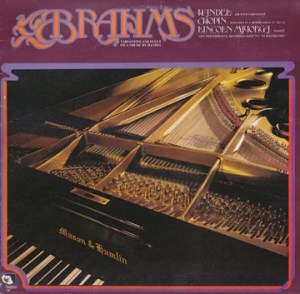
Brahms / Handel – Variations And Fugue On A Theme By Handel / Mayorga

More Direct to Disc Recordings

More Classical and Orchestral Recordings

  • Lincoln Mayorgas wonderful performance of these classical works for solo piano returns to the site for only the second time in years, here with STUNNING Shootout Winning Triple Plus (A+++) sound or close to it throughout this original Sheffield Direct to Disc import pressing
  • As we discovered many years ago, all pressings of this recording are out of polarity – you must reverse the polarity of your system to hear this record properly
  • Out of polarity, it sounds shockingly small, practically mono – with the polarity corrected, it is as big and real as if you were listening to the recital live from the front row
  • Both of these sides are amazingly rich, spacious, and transparent, with an exceptionally clear, solid and present piano and virtually no trace of smear
  • This copy fulfills the promise of the audiophile-oriented recording in a way that few – shockingly few, to be honest – pressings of its kind ever have

This Sheffield Direct-to-Disc LP is one of the best records ever put out by Sheffield.

Lincoln Mayorga is an accomplished classical pianist: this is arguably his best work. (I had a chance to see him perform at a recital of Chopin’s works early in 2010 and he played superbly — for close to two hours without the aid of sheet music I might add.)

(more…)

Rachmaninoff / Favorite Classics for Piano / Pennario

More of the music of Franz Liszt (1811-1880)

More Classical ‘Sleeper” Records We’ve Discovered

We found White Hot Stamper sound on side two of this solo piano recording.

It’s big, rich and above all REAL sounding, with natural studio space. The legendary soloist Leonard Pennario is presented here at the height of his powers.

Superb choice of material, from Clair De Lune to Liebestraum to the Hungarian Rhapsody No . 2.

On the rare Stereo pressing of course — we want to hear all that studio space reproduced, just as your two ears would have heard it (more or less).

Side One

Graded Super Hot for the huge, solid-sounding piano, played with such verve and skill. The musical power on this side is stupendous. 

Side Two

Even better! No smear, with incredible clarity, and no sacrifice in weight or richness.

All of which adds up to a top quality piano recording in every way.

(more…)

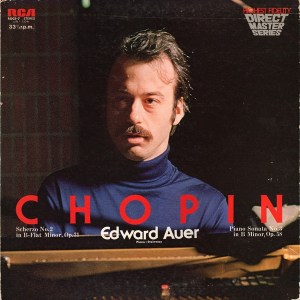
Chopin / Scherzo No. 2 / Auer – Direct to Disc

More of the music of Frederic Chopin (1810-1849)

More Direct-to-Disc Recordings with Hot Stampers

This is an IMMACULATE RCA Direct-to-Disc LP with SUPERB SOUND! This recording is every bit as good as the famous RCA Beethoven Direct Disc and ten times as rare. You will have a very hard time finding a better sounding solo piano recording.  [Or so we thought in 2008.]

The Royal Ballet – Gala Performances – on Classic Records

More Reviews of Classic Records Classical Titles

Sonic Grade: C or Better 

Probably a fairly good Classic Records album. When I played this record years ago, I thought it was one of the better Classic RCA titles. You can be sure it won’t sound like the original — [almost] no Classic record does — but it might be pretty good all things considered. One thing to consider is that the original in clean condition sells for many thousands of dollars!

Here are a few commentaries you may care to read about Bernie Grundman‘s work as a mastering engineer, good and bad.

Lincoln Mayorga, Pianist – Reverse Your Polarity!

Hot Stamper Pressings of Direct-to-Disc Recordings

Reviews and Commentaries for Direct to Disc Recordings

This Sheffield Direct-to-Disc LP is one of the best Sheffields.

Lincoln Mayorga is an accomplished classical pianist: this is arguably his best work. (I had a chance to see him perform at a recital of Chopin’s works early in 2010 and he played superbly — for close to two hours without the aid of sheet music I might add.) 

You might want to try reversing the phase when playing this LP; it definitely helps the sound, a subject we discuss below.

With the polarity reversed, this is a top quality solo piano recording in every way.

This is one of the pressings we’ve discovered with Reversed Polarity.

Reversing the absolute phase on this record recently was quite interesting. The sound of the piano itself was already very good. With the phase reversed what really changed with the sense of space surrounding it, which immediately became much more palpable. The piano, though tonally similar to the way it sounded with the phase left alone, came to life more — more solid and punchy and percussive.

How do you change the absolute phase you ask? You must either switch the positive and negative at the speaker, the amp, or at the head shell leads, or you must have a switch that inverts phase on your preamp or phono stage. (The EAR 324p we use has just such a switch and let me tell you, it comes in very handy in situations like these.) If you can’t do any of those, or are unwilling to do any of those, this record will still sound good. It just won’t sound as good.

(more…)