Albums in Focus

Carlos Santana Knows: The Louder His Guitar Gets, the Better It Sounds

Hot Stamper Pressings of the Music of Santana Available Now

Abraxas is yet another in the long list of recordings that really comes alive when you turn up your volume.

For me, a big speaker guy with a penchant for giving the old volume knob an extra click or two, it just doesn’t get any better than Abraxas.

This is a true Demo Disc in the world of rock records. It’s also one of those recordings that demands to be played LOUD. If you’ve got the the big room, big speakers, and plenty of power to drive them, you can have a LIVE ROCK AND ROLL CONCERT in your very own home.

When Santana lets loose with some of those legendary monster power chordswhich incidentally do get good and loud in the mix, unlike most rock records which suffer from compression and “safe” mixes — I like to say that there is no stereo system on the planet that can play loud enough for me. (Horns maybe, but I don’t like the sound of horns, so the point is moot.)

You may have heard me say this before, but it’s important to make something clear about this music. 

It doesn’t even make sense at moderate listening levels. 

Normal listening levels suck the life right out of it. You can tell by the way it was recorded — this music is designed to be played back at LOUD levels, and anything less does a disservice to the musicians, not to mention the listener, you.

(more…)

Abbey Road – Select Commentaries

Hot Stamper Pressings of Abbey Road Available Now
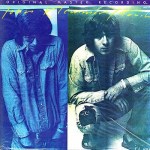
Below you will find some of the more popular commentaries we’ve written about the album.

For all you record collectors out there, please note that no pressing from 1969 has ever won a shootout. If you have a nice early UK Apple LP, we would love to sell you one that sounds better than yours, if you can spare the kind of bread we charge for the privilege of owning a masterpiece of music and sound such as this.

The Abbey Road Remix on Vinyl

The Beatles – Looking Back on Our First Abbey Road Shootout

Our Four Plus Abbey Road Shootout Winner from Way Back

A Fun and Easy Test for Abbey Road: MoFi Versus Apple

Touch – A Great Test for Tweeters

More of the Music of John Klemmer

Mobile Fidelity, maker of some of the worst sounding records in the history of the medium, is the KING on this title. We know of no better pressing than the right version of the MoFi. (There are three different stampers for the MoFi, and only one of them ever wins shootouts.)

Klemmer says pure emotion is what inspired the album’s creation. Whatever he tapped into to find the source of that inspiration he really hit pay dirt with Touch. It’s the heaviest smooth jazz ever recorded. Musically and sonically, this is the pinnacle of Klemmer’s smooth jazz body of work. I know of none better. (If you want to hear him play more straight-ahead jazz try Straight from the Heart on Nautilus Direct to Disc.)

High Frequency Testing

MoFi was famous for demonstrating on an actual scope that the standard domestic ABC pressing had nothing above about 8 or 10 thousand cycles up top, which is why they all sound insufferably dull and dead. Some MoFi copies have no real top end either, which is the reason to we do these shootouts — to find the copies that are actually mastered and pressed right, not just the ones that should have been.

There’s plenty of information above 15K I would guess on this record — all those delicate percussion instruments ring so sweetly, the highs have to be extending way up there. (This album would probably make a good test to see how well your tweeters work, as well as for turntable setup. The right tracking weight and VTA are crucial to getting all the harmonics of a record like this right.) (more…)

Dream Weaver – A Good Test Record for Gritty, Grainy Sound

More Records that Are Good for Testing Grit and Grain

Most pressings of this album tend to err in one of two ways: either they’re a little bright and get hard and gritty in the upper mids, or they’re wrong in the opposite direction, with sound that is smeary and dull.

Our best copies get the balance right — plenty of texture on the keyboards and drums, with vocals that still have presence and breathiness — and not too much grit.

An all-keyboard pop record like this was a rarity at the time. The only other instruments besides drums (and one track with guitar) are keyboards. Every song is layered with multi-tracked clavinets, organs, and Moogs — it was a remarkable feat in 1975 to create an album with nothing but keys.

Listen to the title track, the most dynamic song on the record, and you will hear just how well all of those stacked keyboards and synths work together. (Steve Winwood’s Back in the High Life borrowed a page or two from Gary’s solo debut here.)


  • If you’re a Gary Wright fan, or perhaps a fan of mid-’70s synth-pop, this title, a personal favorite of mine from 1975, is surely a Must Own.
  • In our opinion, Dream Weaver is his best sounding album, and probably the only Gary Wright record you’ll ever need. Click on this link to see more titles we like to call one and done.
  • The sound may be too heavily processed for some, making it fairly difficult to reproduce, but the best sounding pressings, played at good, loud levels on big dynamic speakers in a large, heavily-treated room, are a fun listen. They sound just fine to us.
  • 1975 was a good year for music on vinyl — here are some excellent pressings of well-recorded albums available for purchase now.

(more…)

Brothers in Arms – Not Bad When It’s Properly Mastered and Pressed!

Many copies suffer from harsh, digital-sounding highs.

Pull out your old copy and listen to the beginning of side two and you should have no trouble hearing what we’re on about.

Compare that to the silkier, sweeter top end on even the lowest-graded Hot Stamper pressing you may have picked up from your friends at Better Records and it’s unlikely you’ll find yourself going back to listening to whatever pressing you had been playing.

The comparison, we hope, will be edifying.

Want to find your own top quality copy?

Consider taking our moderately helpful advice concerning the pressings that tend to win our shootouts.

In our experience, this record sounds best this way:

And that means that it’s Robert Ludwig’s initials you should be looking for in the dead wax. Accept no substitutes.

(more…)

Discovering Reversed Polarity on Music for Bang, Baaroom and Harp Was a Breakthrough

schorymusic

Percussion Recordings with Hot Stampers Available Now

Music for Bang Baaroom and Harp is yet another one of the pressings we’ve discovered with reversed polarity on some copies. This happened many years ago, and as you can see from the commentary we wrote back then, it came as quite a shock to us at the time.

Are audiophile reviewers or audiophiles in general listening critically to records like this?

I wonder; I could not find word one about any polarity issues with this title, and yet we’ve played four or five copies with reversed polarity on side two. How come nobody is hearing it, apart from us?

We leave you, dear reader, to answer that question for yourself.

This listing has the latest information on the stamper numbers to avoid.

More stamper and pressing information can be found here.

(more…)

Compression Works Its Magic on The Christmas Eve Suite

Hot Stamper Pressings of the Music of Rimsky-Korsakov Available Now

Some notes about the compression effects we heard on side two of a Blueback pressing of The Christmas Eve Suite album back in 2012. We wrote:

Side two is even more transparent and high-rez than side one. The texture on the strings and the breathy quality of the woodwinds make this a very special pressing indeed.

The horns are somewhat smeary and do get a bit congested when loud.

There is more compression on this side two than there was on the best copy we played, and that means low level detail is superb, but louder parts, such as when the more powerful brass instruments come in, can present problems.

Note how good The Flight of the Bumble Bee sounds here.

Compression is helping bring out all the ambience and detail in the recording, and there’s no downside because the orchestra is playing softly, unlike the piece that precedes it.

A classic case of compression having sonic tradeoffs.

(more…)

Hampton Hawes at the Piano Is His Best Album

Hot Stamper Pressings of the Music of Hampton Hawes Available Now

This Contemporary Yellow Label LP has the best sound and the best music we have ever heard on a Hampton Hawes album.

When we frist dropped the needle on this one many years ago we could not believe our ears — it’s got The Big Sound, that’s for sure.

If you’re a fan of jazz piano trios playing live-in-the-studio, this Contemporary from 1958 surely deserves a place in your collection. Of course it’s a personal favorite of yours truly.

This is my favorite Hampton Hawes record of all time. He died less than a year after these sessions. Looking at the cover, you can almost see in his face his acceptance of the end he knew was coming. He plays with deep emotion here.

Ray Brown and Shelly Manne (the same rhythm section who back Joe Sample on my all-time favorite piano trio album, The Three) accompany Hawes beautifully here.

As good as The Three may be, it is not remotely as natural sounding as this Contemporary recording by Roy DuNann. Due to the multi-miking approach Lee Herschberg took for the session, Shelly Manne’s drums on The Three stretch from speaker to speaker, presenting us with a drummer whose arms are impossibly long.

On this Contemporary recording the drummer is placed in the soundfield in one fixed location and his drum kit is the size of a standard jazz kit of the ’50s. I’m good with either approach, but there’s no question which one is more natural.

Drop the needle on “Blue In Green” on side two — the sound of the bowed bass is WONDERFUL. The version of “Killing Me Softly With His Song” that opens the album is especially lovely. (One high point of this album is the interview that Lester Koenig conducts with Hampton Hawes on the back cover. Lester died soon thereafter himself.)

(more…)

Yet Another James Taylor Desert Island Disc

Hot Stamper Pressings of the Music of James Taylor Available Now

Musically this is one of Taylor’s best. Every track is good and many are wonderful. (More on that here.)

There are five or six James Taylor records that are Desert Island Discs for me. I know they probably wouldn’t let me take six of the same artists’ records to my island, but I would hope they would make an exception for James Taylor’s LPs, because they really do set a standard that few other popular performers can meet.


JT is an album we think we know well, one that checks off a number of boxes for us here at Better Records:

(more…)

Proper VTA Is Essential to Getting the Sound of Benny’s Muted Trumpet Right

Hot Stamper Pressings of Contemporary Jazz Albums Available Now

For us audiophiles both the sound and the music here are enchanting. If you’re looking to demonstrate just how good a 1959 All Tube Analog recording can sound, this killer copy will do the trick.

The sound of the muted trumpet on side two is out of this world.

It has exactly the sonic signature of good tube equipment — the ability to make some elements of a recording sound shockingly real. There are tradeoffs with tube mastering to be sure, a subject we discuss in some depth here.

The trumpet is also a very good test for turntable setup, tracking, as well as arm and cartridge compatability. You’ve got to be set up properly for every aspect for a difficult-to-reproduce instrument like the trumpet to sound right.

Accurate VTA adjustment is critical to the record reproduction. If you do not have an arm that allows you to easily adjust its VTA, then you will just have to do it the hard way (which normally means loosening a set screw and moving the arm up and down until you get lucky with the right height).

Yes, it may be time consuming, it may even be a major pain in the ass, but there is no question in my mind that you will hear a dramatic improvement in the sound of your records once you have learned to precisely adjust the VTA for each and every one of them.

VTA is not a corner anyone should be cutting.

Careful adjustment of VTA is critical to getting good sound.

Of course, so are anti-skate, azimuth and tracking weight.

(more…)